
19% Reciprocal Tariff from the U.S. Affects Some Thai Motorcycle Exports, Yet Growth of 28% is Still Expected
- Reciprocal Tariff of 19% imposed by Thailand is expected to impact exports of certain motorcycle models to the U.S. The models likely to face increased competition are those over 800cc and those between 90cc and 190cc.
- However, approximately 56% of motorcycles exported from Thailand to the U.S. remain competitively priced despite the increased import tariffs. This is expected to result in a 28% growth in the value of motorcycle exports in 2025 (YoY), despite the rising import tax issues.
Thailand ranks as the world's fifth-largest motorcycle export base, with the U.S. as its primary market.
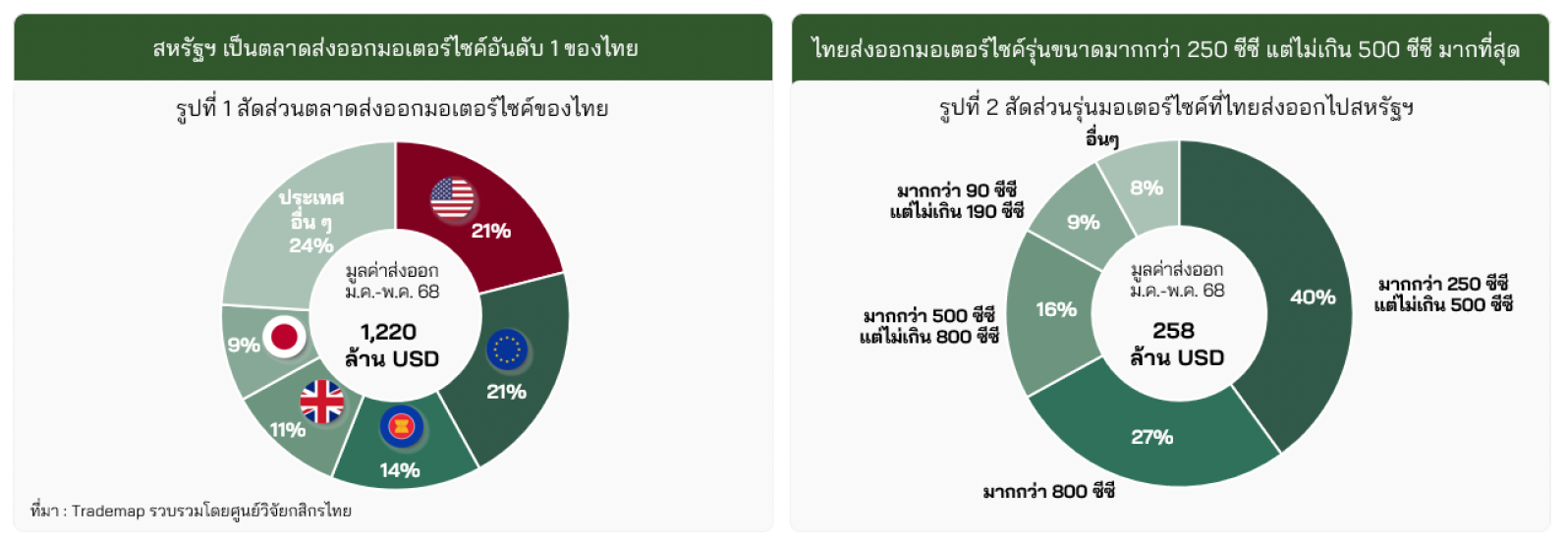
Currently, Thailand is the fifth-largest motorcycle exporter in the world (by export value), having exported to 99 countries globally in 2024, with the U.S. being the top destination. The total export value for the first five months of 2025 is approximately $258 million, accounting for about 21% of Thailand's total motorcycle export value of $1.22 billion (Figure 1). The most exported motorcycle model to the U.S. is the one over 250cc but not exceeding 500cc (Figure 2).
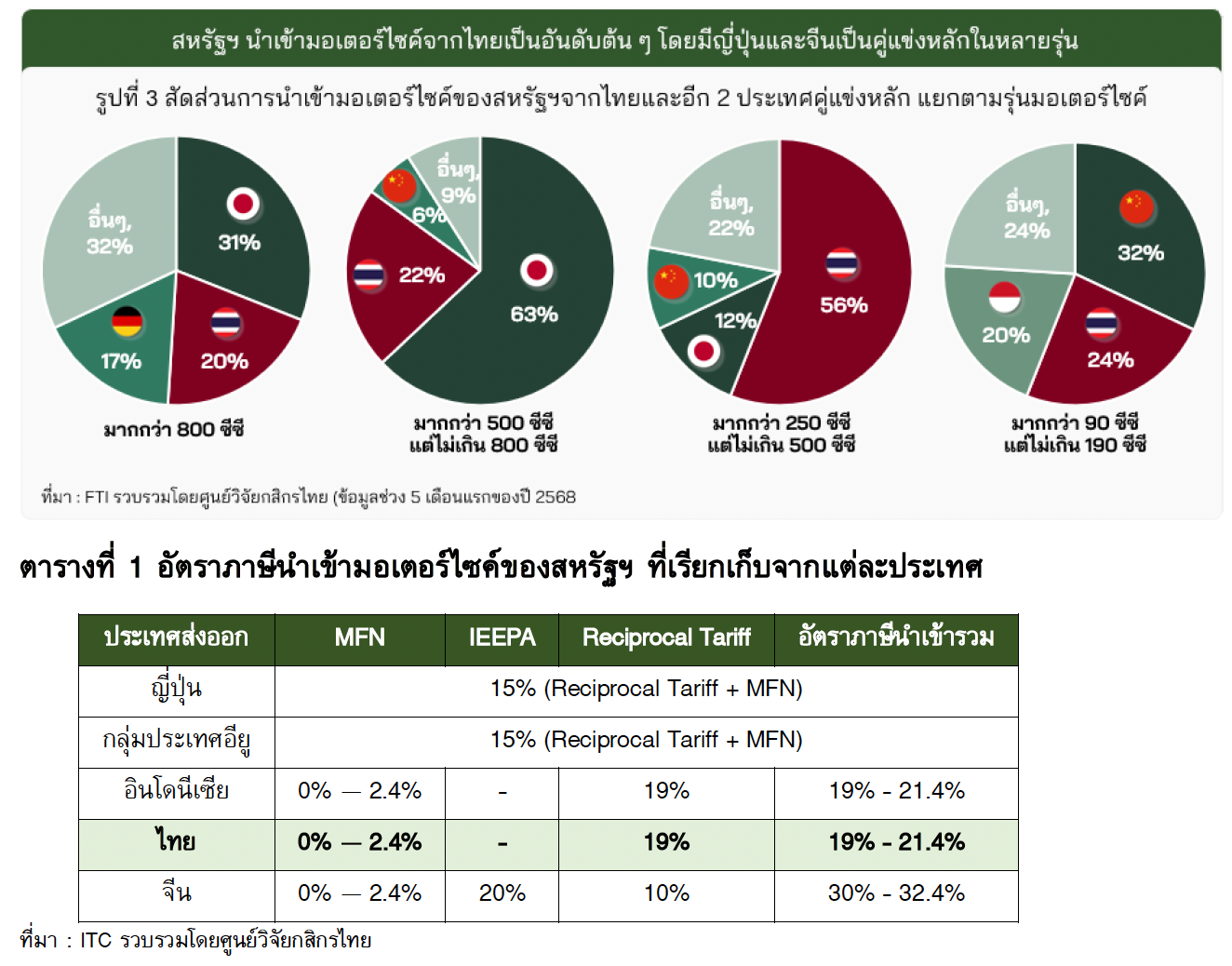 Following negotiations, the U.S. announced a 19% Reciprocal Tariff on imports from Thailand effective August 1, 2025, which immediately raises the average cost of Thai motorcycles exported to the U.S. Compared to major competitors for motorcycle exports to the U.S., such as Japan, China, EU countries, and Indonesia (Figure 3), it was found that Thailand's import tariff rate after the retaliatory tariff is higher than most major competitors, except for China (Table 1).
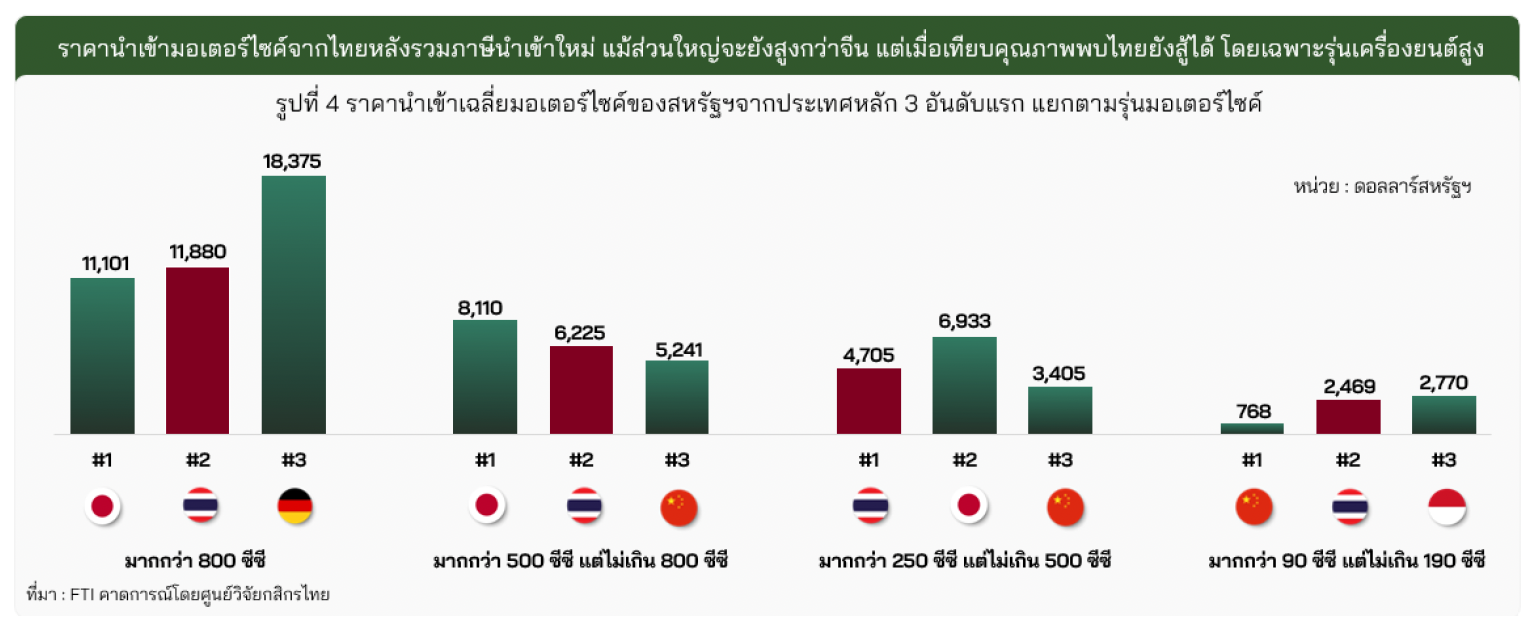
Overall, despite the increased import prices of Thai motorcycles to the U.S. due to the new tariffs (Figure 4), most models are expected to remain competitive, although some models may face increased competition due to various negative factors:
- Motorcycles expected to remain competitive are those over 250cc but not exceeding 800cc (56% of the value of motorcycle exports from Thailand to the U.S.).
Due to the new import prices after including the retaliatory tariffs, they are still about 23% - 32% lower than Japan, which is a major competitor. Although China has lower import prices, buyers of this motorcycle model prioritize quality over price, making Thai motorcycles, which are primarily Western and Japanese brands, more popular (notably, China has only an 8% market share for this model in the U.S. import market, compared to Thailand's 38%).
- Motorcycle models expected to face increased competition due to negative factors include those over 800cc and those over 90cc but not exceeding 190cc (27% and 9% of the value of motorcycle exports from Thailand to the U.S., respectively).
- For models over 800cc, the import prices from Thailand have risen above those from Japan, a key competitor, even though they were previously lower. This may lead to increased competition from Japanese-imported motorcycles.
- For models over 90cc but not exceeding 190cc, the import prices from Thailand after the tariff are three times higher than the market leader, China, which may lead price-sensitive buyers to shift towards Chinese motorcycles. However, most of the Thai imports in this category are Japanese brands, and the direct competitor is Indonesia, whose U.S. import prices are still higher than Thailand's, which may result in increased imports from Thailand and compensate for the market share lost to China.
As a result of the U.S. imposing the Reciprocal Tariff on Thailand, while some Thai motorcycle models will be affected, Kasikorn Research Center predicts that the value of motorcycle exports from Thailand to the U.S. in 2025 will still increase by about 28% (YoY), amounting to $523 million. This is due not only to the rush in exports before the tariff takes effect on August 1, 2025, but also because some brands have recently relocated production to Thailand for exporting certain models over 800cc, leading to a significant increase in export volume this year. However, the export of motorcycles from Thailand to the U.S. will still have issues to monitor in the future:
- After the acceptance of cheaper motorcycles from China in the U.S., especially for models over 250cc but not exceeding 800cc, it is noted that while China currently holds only an 8% market share of U.S. imports, the growth of Chinese motorcycle imports in this category has surged by 77% (YoY) in the first five months of 2025, while Thailand, the market leader, has only grown by 5% (YoY).
- Increased competition with domestically produced motorcycles in the U.S. as the import prices from Thailand rise, especially for larger models over 800cc, may pressure Thai motorcycles to raise their selling prices closer to those produced domestically, leading consumers to potentially shift towards purchasing domestically produced models. However, this issue depends on the pricing strategies of motorcycle manufacturers for each model, both imported from Thailand and produced domestically.