Global Tax Shocks Thai Products as Exports to the U.S. Become More Challenging
In the world of trade, tax rates are a never-ending game. For Thai exporters, facing the tax barriers in the U.S. is not just about numbers; it represents a "ripple effect" that shakes up costs and alters the battlefield for businesses across the board.
The U.S. and the Highest Tax Barriers: A Major Challenge for Thai Exporters
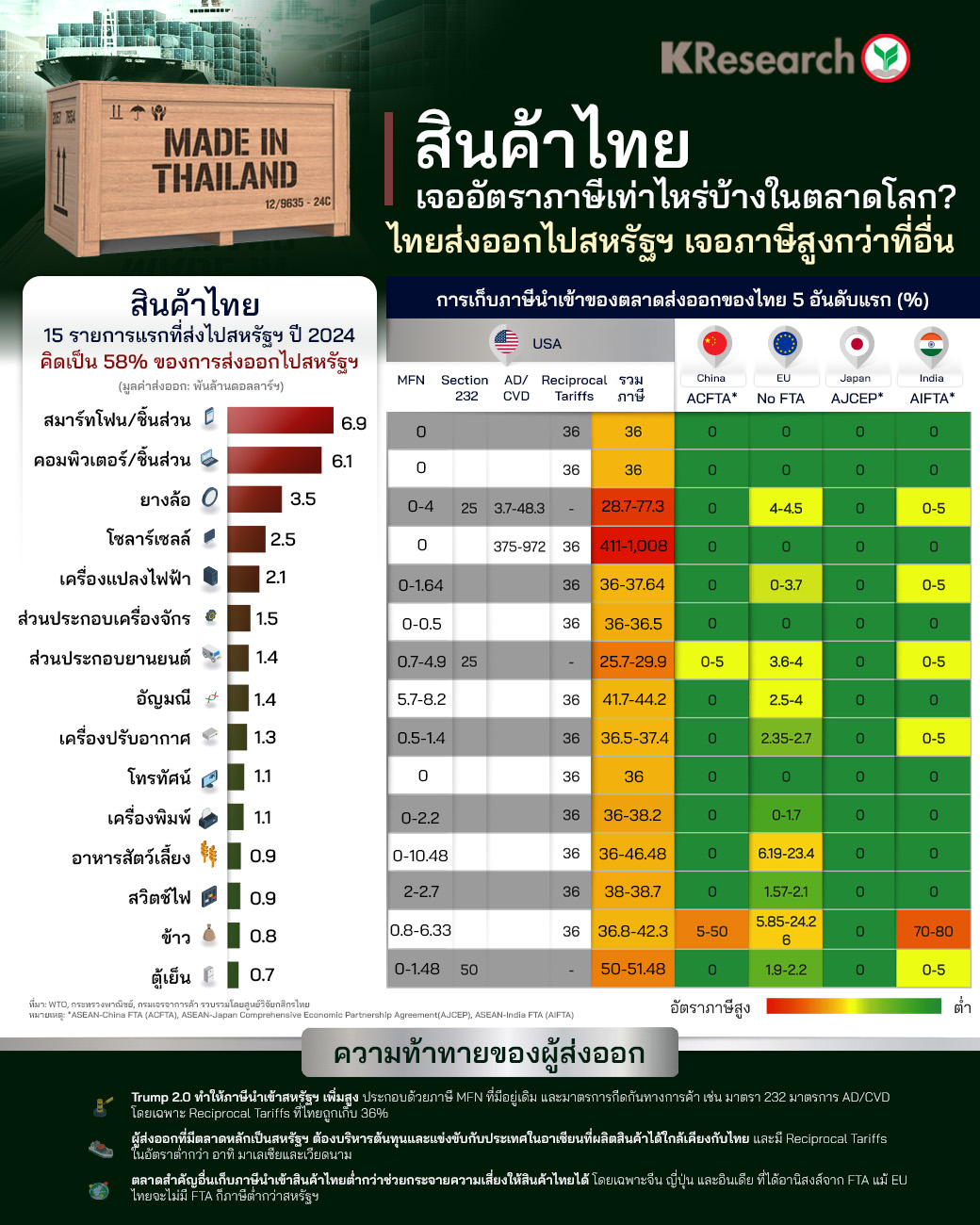
The resurgence of the "Trump 2.0" concept of imposing tariffs in the U.S. has caused the import tax on Thai goods to soar to 36% under the Reciprocal Tariffs policy, which retaliates against countries that the U.S. perceives as having "unfair tax practices." This does not even include the existing MFN tax and specific measures such as Section 232 (focused on national security) or AD/CVD (to counteract dumping and subsidies).
This means that certain Thai products face significantly increased costs when entering the American market and must contend with fierce competition from neighboring countries like Vietnam and Malaysia, which have lower Reciprocal tax rates.
Managing Costs: Turning Risks into Opportunities
As the U.S. tax barriers become insurmountable, Thai exporters must urgently adjust their cost management strategies. This includes selecting production bases, utilizing raw materials from countries with tax privileges, or even negotiating new trade terms with partners to spread risks to countries with lower taxes.
Hope Lies in Asia: China, Japan, and India as “Bridges” of Opportunity
While the U.S. increases pressure, other markets like China, Japan, and India have become safe havens with "friendly taxes" from FTAs (Free Trade Agreements) that Thailand established earlier, significantly reducing trade costs. Even though the European Union (EU) does not have an official FTA with Thailand, the tax rates imposed are still "lower than those of the U.S." in a significant way.
This signals that market diversification and geopolitical risk management will be the "new answer" for Thai businesses in an era where politics dictate economic trends.
What Thai Products Need to Know Before Exporting:
-
U.S.: Highest taxes, especially Reciprocal Tariffs at 36%
-
Malaysia: Lower taxes than the U.S., suitable as a distribution base
-
Vietnam: Direct competitor of Thailand with tax advantages
-
China, Japan, India: FTA markets that are friendly to Thai products
-
European Union: No FTA, but still imposes lower taxes than the U.S.
In the global trade game, victory does not depend solely on having "good products" but rather on "where to sell them and what taxes to face."