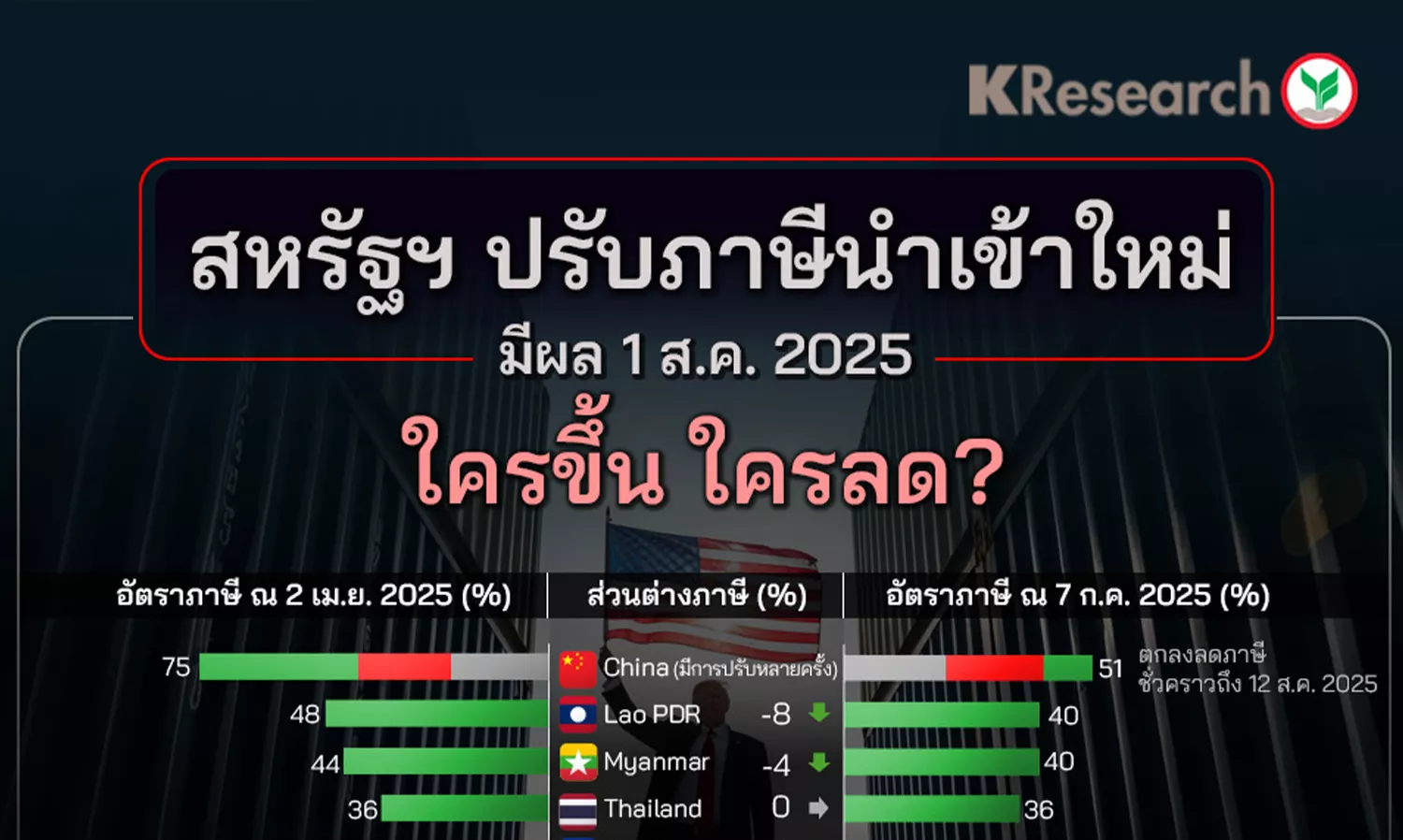
Who Gains, Who Loses? The U.S. Adjusts Import Tariffs, Effective August 1, 2025
In a world where global trade is never at rest, even a split-second change in the "import tariff rates" from a superpower like the United States can significantly impact the entire global supply chain.
.
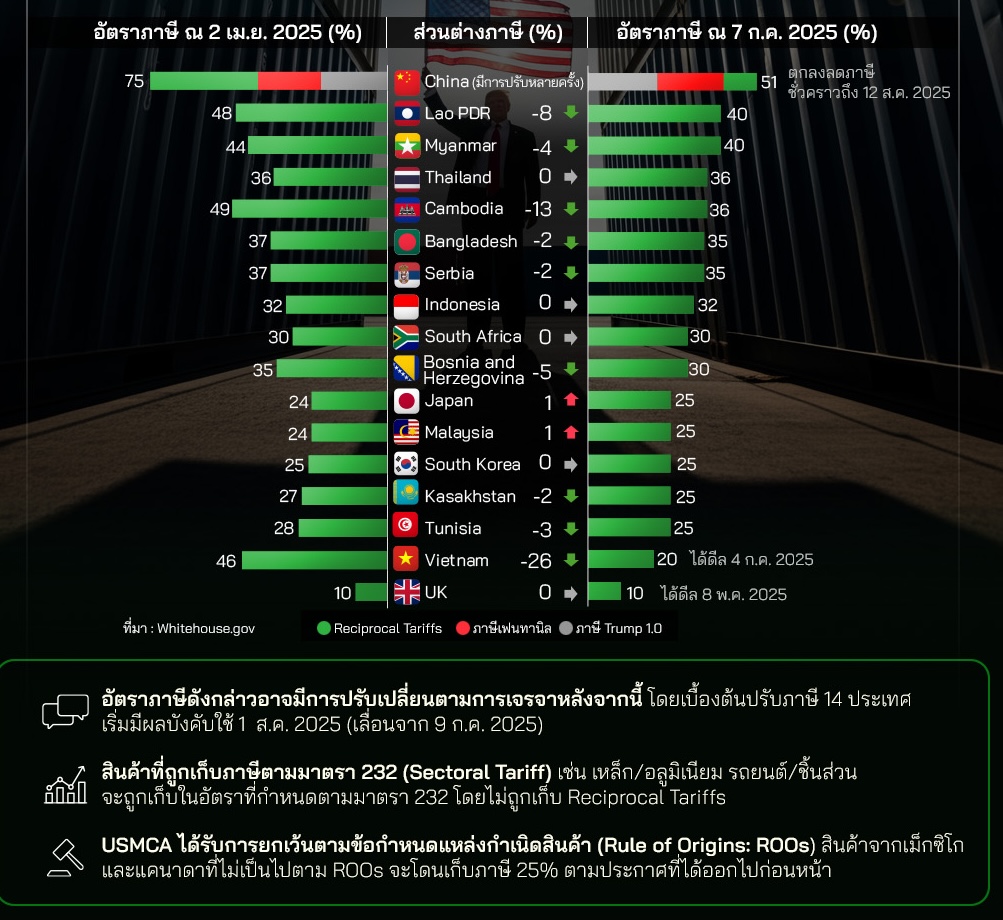
On August 1, 2025, the U.S. is set to implement new import tariffs on 14 countries, moving the date from the previously announced July 9. This new tax structure is based on three main measures, which present both opportunities and caution for traders and investors:
.
1. Section 232: National Security Tariffs
Strategic goods such as steel, aluminum, automobiles, and auto parts will be taxed under a "Sectoral Tariff," excluding them from reciprocal tariffs. This reflects the U.S. government's intention to shield domestic industries through targeted measures.
.
2. Non-compliance with Rules of Origin (ROOs) – Even under USMCA, there's no escape!
Although Canada and Mexico are exempt under the USMCA free trade agreement, imported goods that do not meet the "rules of origin" will still face tariffs as high as 25% as previously announced. This aims to encourage North American manufacturers to source more materials locally.
.
3. Negotiation Opportunities Remain Open
According to Kasikorn Research Center, these tariff rates "may be subject to change" based on negotiations between the U.S. and each country, which are still ongoing.
.
A key lesson from this phenomenon is — the world of trade is no longer a stage for the lowest prices, but rather a platform for "origins" and "clarity of sourcing."
Thai exporters sending goods to the U.S. should therefore expedite the review of their Supply Chain structures to mitigate potential tax impacts.