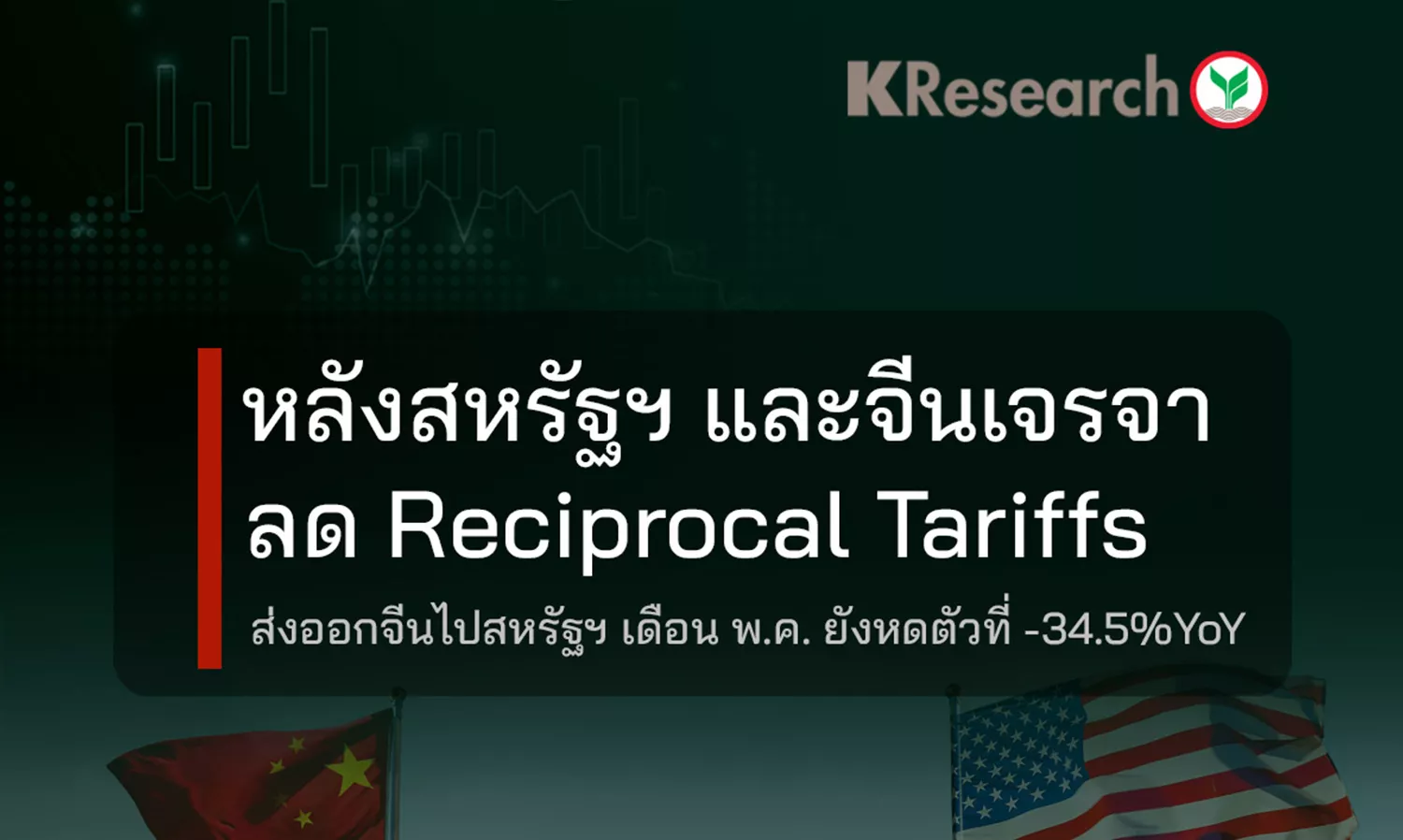
After the US and China negotiate to reduce reciprocal tariffs, China's exports to the US in May still contracted by -34.5% YoY
Although the US and China have managed to negotiate a reduction in reciprocal tariffs to 10% from the previous 125% in May 2025, the tariff rate imposed by the US on Chinese imports remains high, currently at 30% since Trump's administration took office. This has resulted in a continued decline in exports from China to the US in May 2025, down -34.5% YoY from -21.0% YoY in April 2025. Meanwhile, exports to ASEAN have slowed to a growth rate of 14.8% YoY from 20.8% YoY in April 2025, leading to an overall export growth rate from China in May 2025 of only 4.8% YoY. Imports have also contracted further from the previous month, reflecting weak domestic demand.
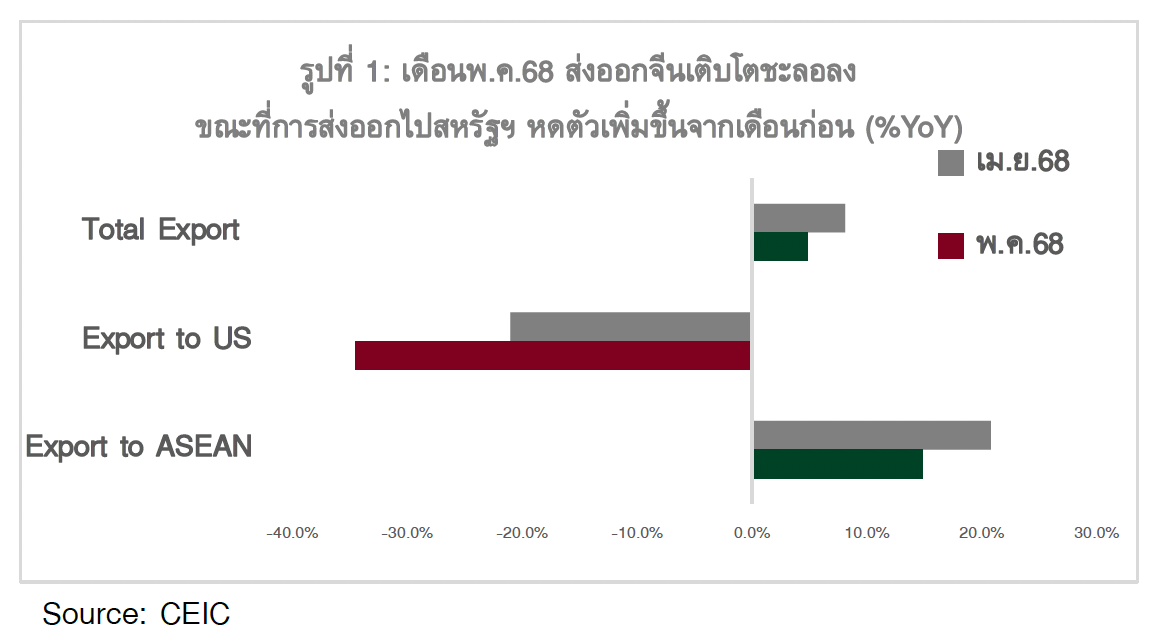
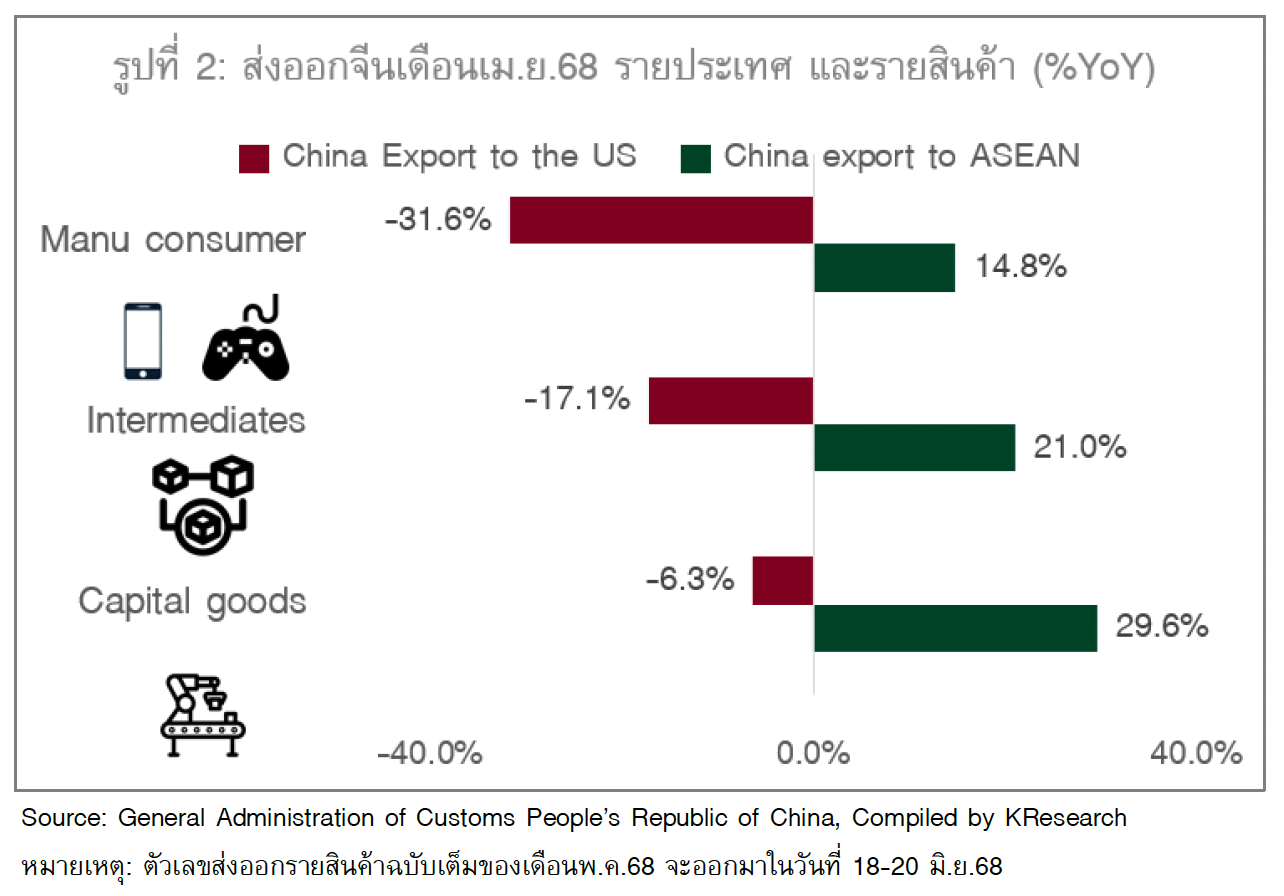
While the ASEAN market has helped cushion the decline in exports from China to the US, particularly in the intermediate goods sector (see Figure 2), future exports from China to ASEAN are expected to slow down after a surge in the first half of the year. Additionally, the tariff rates after July 9, 2025, when the postponement of tariff increases for individual countries ends, remain uncertain.
In the next 1-2 months, exports from China to the US are expected to see a temporary acceleration due to backlog shipments that were stalled by previous tariff increases exceeding 100%. However, the pace of this acceleration is expected to be limited, as current tariff rates remain high. Considering the manufacturing side, the PMI for the manufacturing sector in May 2025 was still at 49.5, below the expansion level.
- Currently, there has been no further progress in trade negotiations between the US and China. On June 5, 2025, the US President and the Chinese President had their first phone conversation, which is expected to lead to further negotiations in the near future. Additionally, we are awaiting the outcome of the appeals court's consideration after the International Trade Court suspended Trump's retaliatory tariffs on May 29, 2025.
- The Kasikorn Research Center believes that while the trade war seems to be easing compared to earlier this year, the tariff rates are still expected to remain higher than before Trump took office as President. Furthermore, non-tariff measures are likely to play an increasing role, and the technology war continues to affect China's exports, leading to a slowdown in export growth for China in 2025 compared to the previous year.