This is a challenging time for the real estate industry following the unexpected earthquake in the heart of Bangkok... How will real estate operators stand firm amidst uncertainty?

At the event "Property Hack 2025: Real Estate in the Era of Earthquakes - Deep Insights, Quick Adjustments, Ready for Every Tremor", a collaboration between the Thai Real Estate Association, the Nonthaburi Real Estate Trade Association, and Terra Media and Consulting Co., Ltd., new perspectives and in-depth information are being shared. This year, the focus is on the hottest topics in the real estate sector, providing developers with insights to adapt their businesses in a time of sudden changes in buyer behavior and market conditions.

One of the much-anticipated discussion topics is “Catching the Signals of Tremors: Real Estate on the Fault Line of Confidence,” presented by Sumitra Wongphakdee, Managing Director of TerraBKK.com, who will share insights from research on the behavior and confidence of homebuyers following the earthquake on March 28.

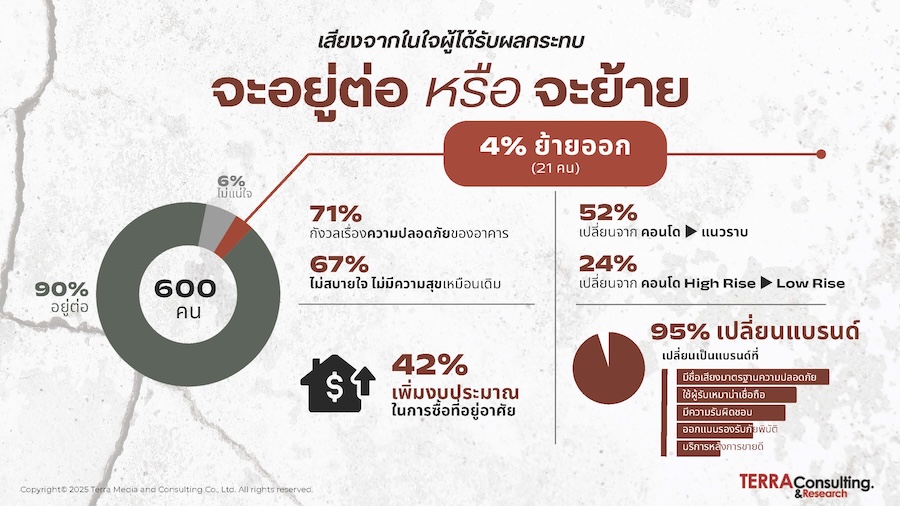
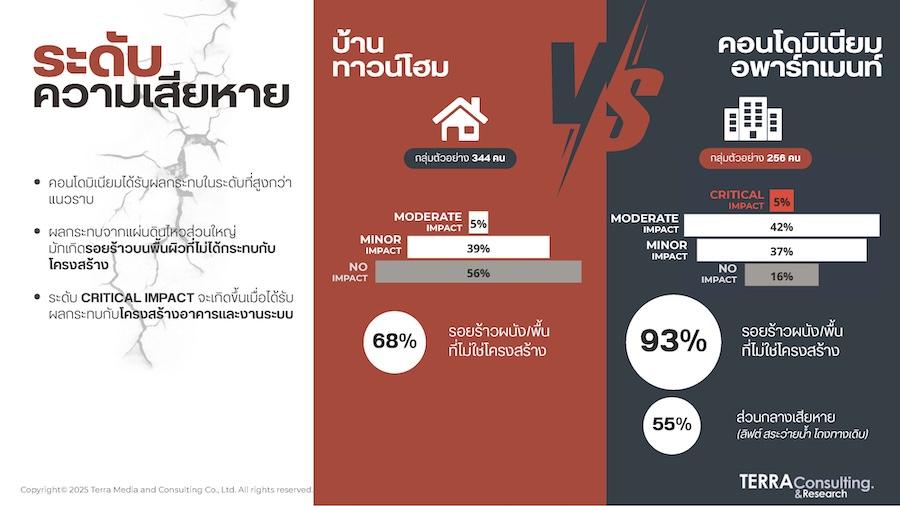
The research was conducted with a sample of 600 people during the period from April 28 to May 19, 2025, primarily in Bangkok and its vicinity, incorporating a mix of age groups and income levels. The majority of those affected were condominium residents rather than those in horizontal housing, with 68% reporting damage from wall cracks or non-structural areas, while only 5% experienced damage classified as CRITICAL IMPACT (structural and system impacts).


Earthquakes Transform Consumer Behavior
 

Despite the earthquake, only 4% of the 600 respondents decided to move out. Among them, their home-buying behavior has changed significantly.

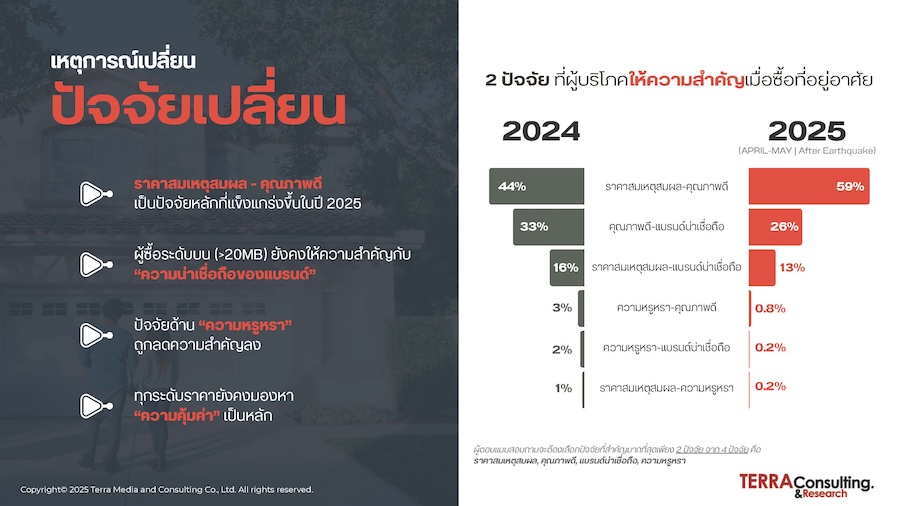
Thus, the main factor in choosing a residence after the earthquake is that consumers desire reasonable prices for good quality in the mid-range housing segment, followed by a reputable brand, while the importance of luxury factors has decreased.

TerraBKK also compared the attributes that consumers value (TOP ATTRIBUTES) and found that in 2024, consumers prioritized quality brands. However, in 2025, following the earthquake, the top choice for consumers shifted to brands with construction standards and accountability. This factor will be a game changer for many developers affected by the earthquake.

“Some developers asked how the terms 'standards' and 'quality' differ. From the consumer's perspective, 'standards' mean they want brands or companies with expertise in construction. They want to know which companies or brands the developers use for construction to feel assured about safety,” Sumitra added.


High Happiness Levels Contradict Low Economic Confidence
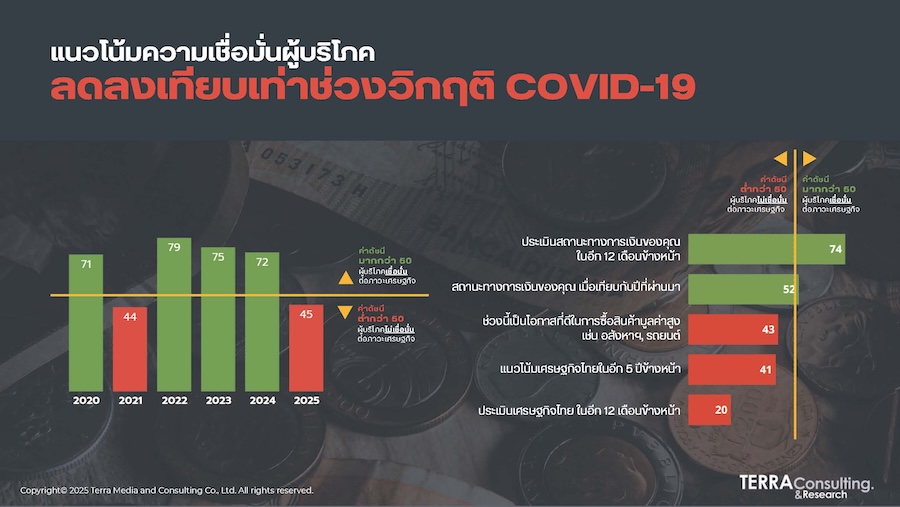
Additionally, a survey on consumer confidence in the economy revealed an index below 50, comparable to the COVID-19 crisis, which is concerning. However, when assessing their financial situation over the next 12 months, consumers feel positive, with over 74% expressing optimism. Currently, there is uncertainty about purchasing homes, contrasting with Generation X, who view the situation more positively than other generations. Similarly, higher-income groups see this as a good time to buy real estate, akin to the COVID period.

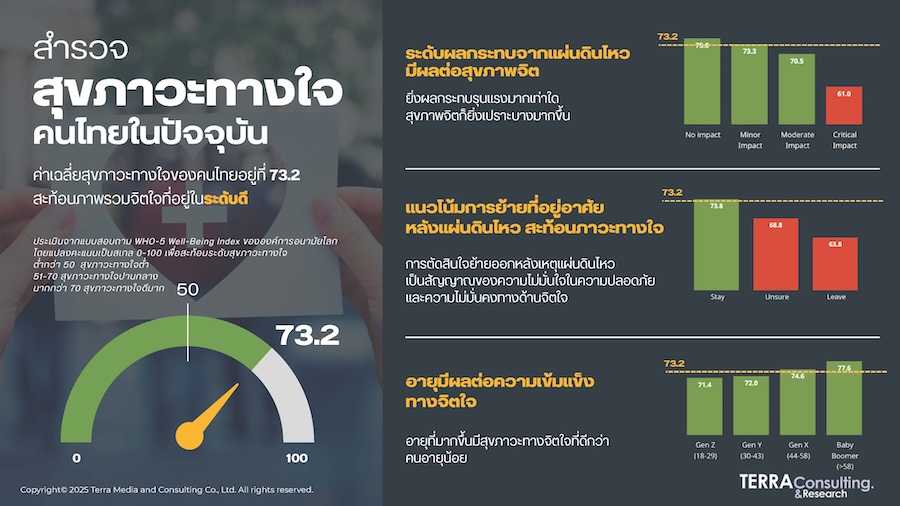
Despite the lack of confidence in the economy, the average mental well-being of Thais stands at 73.2 (assessed using the WHO-5 Well-Being Index from the World Health Organization, where scores of 51-70 indicate moderate mental health and above 70 indicates very good mental health), which is comparable to developed countries. However, those affected by the earthquake show more vulnerability, with mental health deteriorating as age decreases. Therefore, if operators want to create content or advertisements to persuade consumers, they should focus on emotional appeal.


A Good Home... Not Just a Place to Rest
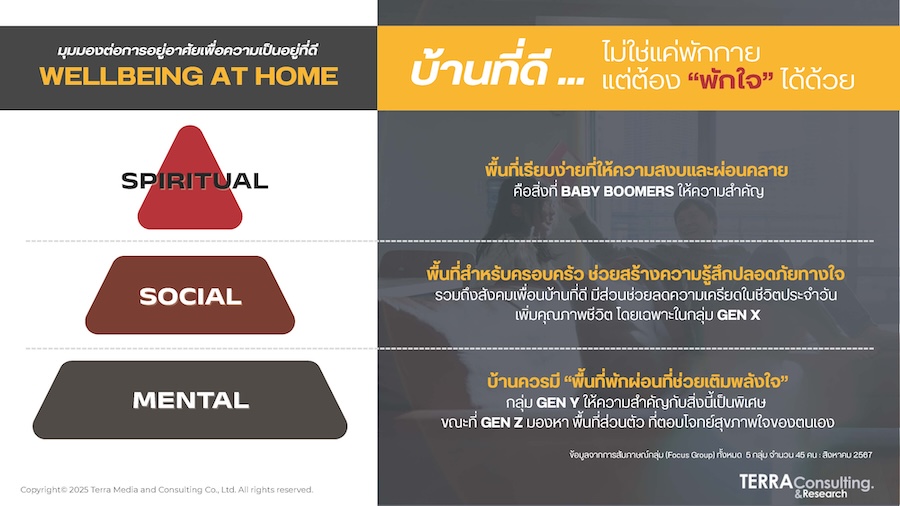

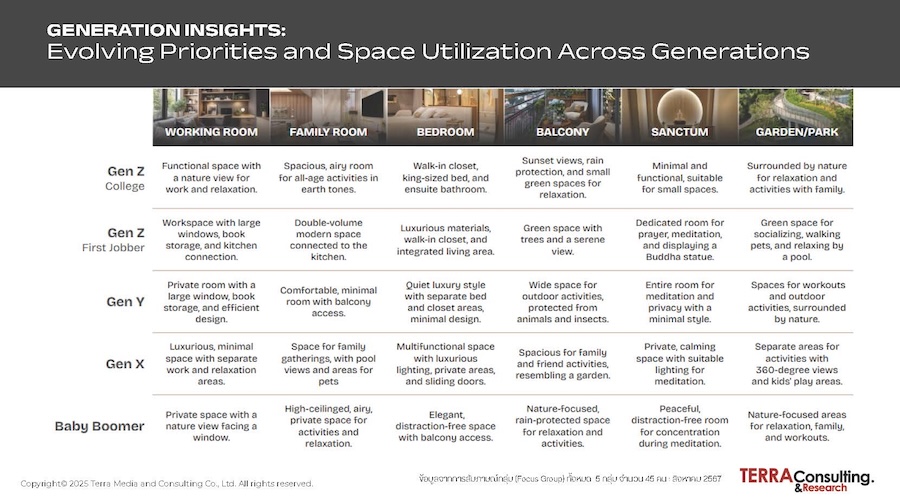
When surveying perspectives on living for well-being at home, a good home is not just a place to rest. It was found that BABY BOOMERS value simple spaces that provide tranquility and relaxation, wanting their homes to be family spaces that foster a sense of emotional safety, along with good neighborly relations. Gardens help reduce daily stress and enhance quality of life, especially among GEN X. Homes should have “rest areas that recharge the spirit,” with GEN Y placing particular importance on this, while GEN Z seeks private spaces that cater to their mental health needs.


The Housing Market Slows, but MASS-PREMIUM-LUXURY Still Sells
Data from TerraByte, a real estate supply and demand research application, reveals that the condominium market is declining across all segments, particularly in the Premium and Luxury categories, which have decreased by 4% and 5%, respectively. This reflects an increasing inventory in the market, making sales more challenging at all price levels. However, the Mass, Premium, and Luxury segments continue to see new launches, indicating a shift by operators to target higher purchasing power groups.

Meanwhile, the market for single-family homes and duplexes in the mid-to-upper range remains a viable segment, with many companies adjusting their portfolios from the Economy Segment (priced below 3 million THB) to produce in the Mass Segment (3-5 million THB) and Premium Segment (6-8 million THB).

However, in 2025, the real estate industry will still face challenges from 'the impact of the earthquake and ongoing high household debt.' The impact of mortgage rejections is most severe among buyers in the mid-to-lower price range, or those below 3 million THB, who often have unstable incomes or existing debt burdens, making it much harder to access loans. This group represents a large customer base in the real estate market.

“The townhouse market is very stagnant, but we see positive signals in the premium townhouse segment priced above 6 million THB. When inquiring with public companies that have seen high sales recently, this group is adjusting strategies, not selling in the same way as before. They are increasing green spaces, organizing project areas, and changing target demographics, resulting in a mortgage rejection rate of no more than 20%. While the upper segment is still viable, decisions are being made more slowly,” Sumitra explained regarding the operators' adjustments.

These insights reflect that “consumer concerns” have become an important roadmap indicating the true needs of homebuyers. As real estate developers, this is a clear signal that we are not just building homes... but must also create a sense of safety and security for consumers.

Download PDF File