In-Depth Look at "Real Estate in the Era of Earthquakes": Engineers, Contractors, and Developers Share Keys to Building Stability
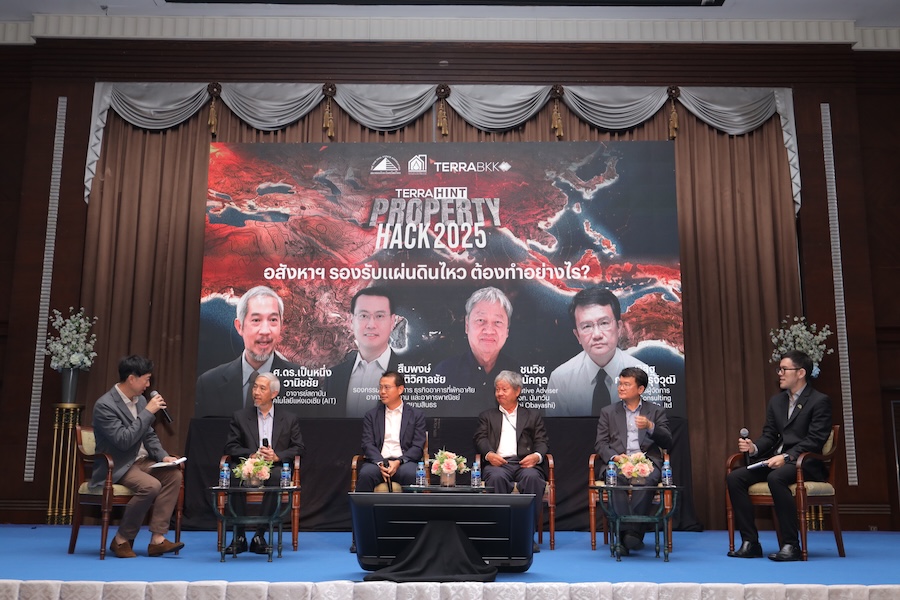
At the event "Property Hack 2025: Real Estate in the Era of Earthquakes - Deep Insights, Quick Adjustments, Prepared for Every Tremor", a collaboration between the Thai Real Estate Association, the Nonthaburi Real Estate Trade Association, and Terra Media and Consulting Co., Ltd., the aim was to unite and strengthen relationships among real estate operators in Bangkok and the regions, as well as to exchange information on a discussion platform to create knowledge and understanding that is highly beneficial for real estate operators and related businesses, enhancing the efficiency of the real estate industry to align with current conditions.


The discussion topic aimed to clarify concerns following the earthquake that shook the real estate sector in central Bangkok: How will real estate adapt in terms of construction? Thus, the discussion titled “How Should Real Estate Prepare for Earthquakes?” became a focal point of interest, featuring esteemed speakers from academia, the real estate sector, and construction, who shared their knowledge and experiences as practitioners, including:
· Chanwit Anakkul, Executive Adviser, Nanthawan (Thai Obayashi) Co., Ltd.
· Phisit Kanjanarujiwut, Managing Director, PSAA Consulting Engineers Co., Ltd.
The discussion was moderated by Preecha Kulpaisaltham, President of the Nonthaburi Real Estate Trade Association, and Akkadech Udomsiri Thamrong, President of the Chiang Mai Real Estate Association.
Was the Earthquake in Central Bangkok Really Strong?
When comparing countries with extensive earthquake experience like Japan, Taiwan, Myanmar, Indonesia, the Philippines, and Mexico, how significantly did Thailand feel the impact of the earthquake in central Bangkok on March 28?
As an earthquake expert, Professor Dr. Pen-Naung clarified that the earthquake in central Bangkok on March 28 was an "unusual" earthquake, meaning the tremors differed from typical earthquakes. The shaking was caused by the expansion of long-wave seismic waves, similar to what occurred in Mexico City, causing tall buildings to sway, compounded by Bangkok's location on soft soil, resulting in severe impacts felt by residents.
This contrasts with the earthquake that occurred in the northern region, specifically in Chiang Rai, ten years ago, which did not cause significant damage as it was a "normal" earthquake and its epicenter was in a sparsely populated area. However, the northern region is at a higher risk than Bangkok due to its location along fault lines that are sources of earthquakes. If an earthquake were to occur near a major city, it could result in thousands of injuries and fatalities.
Nevertheless, earthquakes are relatively infrequent disasters compared to others, such as floods that may occur annually, and severe earthquakes may take decades to happen. However, when they do occur, they can cause significant damage.

Case Study: Siam Sinthorn - Lessons from Earthquakes and Prepared Management
The lessons from Siam Sinthorn reflect that investment in prevention and systematic risk management can make a significant difference and is a key to sustainability in the modern real estate industry.
Supong shared experiences from handling earthquake events in Siam Sinthorn projects, which include various types of buildings such as offices, hotels, condominiums, and retail spaces. Overall, the structures of all Siam Sinthorn buildings sustained "zero damage," with only minor damage to plaster walls. This success resulted from the team's pre-existing knowledge of earthquakes, allowing for rapid and systematic action during emergencies, including:
Supong highlighted an important aspect often overlooked but significantly impacts business operations, which is "Serviceability" or "Business Continuity." The fact that building structures are undamaged is not everything; if the business cannot continue, it constitutes severe damage.
Examples encountered in many hotels include non-functional water systems due to leaks from water tanks on high-rise buildings, causing hotels to close for extended periods, and elevators being out of service. Even though the elevator shafts are robust, the elevators themselves may be damaged, such as broken cables or internal system issues, halting building operations.
Siam Sinthorn addressed these issues swiftly by inspecting all elevator cables and shutting down damaged elevators, ordering new cables to be replaced within a week. They also used thermal scanning to check the Bus Duct (copper electrical supply bars) throughout the building to identify areas with abnormal heat to ensure the building's electrical systems remained safe and operational.
The experience of Siam Sinthorn demonstrates that designing buildings to withstand earthquakes effectively involves not only structural strength but also consideration of business continuity and the recovery of internal utility systems to restore normal operations as quickly as possible.

Structural Concerns vs. Architectural Work
Of course, after an earthquake, the primary concern for the general public is the quality of construction standards that can withstand earthquakes in Thailand. No one can answer this better than Nanthawan (Thai Obayashi), a renowned Japanese construction company with expertise in earthquake-resistant buildings.
Chanwit shared his perspective on constructing buildings to withstand earthquakes, stating that building according to the designs provided by the designers, if compliant with standards, should not pose significant structural concerns.
However, what Chanwit is more concerned about is architectural work and non-structural components, particularly external precast walls that are commonly used in Thailand due to lower costs, which carry a high risk of quality control issues and may be significantly affected by earthquakes. He recommends switching to a Floor-to-Floor Hanging system to reduce forces during earthquake shaking. Although this may incur higher costs, it provides greater peace of mind in the long run. He also suggests using smart boards instead of brick and plaster, as they are easier and quicker to repair when damaged and significantly reduce construction waste.
Another concerning issue is the water tanks on rooftops, which are often made of concrete. He proposes considering using fiber tanks stacked within a concrete water storage room to enhance protection and reduce the risk of damage to the water tanks during an earthquake.
When asked about technologies or innovations suitable for earthquake resistance in buildings in Thailand at reasonable costs, Chanwit cited case studies showing that in Japan, sensors are installed every five floors to measure the frequency of waves acting on the structure, as each layer of building height experiences different impacts. Therefore, every 15-20 meters, a Point Check should be conducted to assess where and how much reinforcement the structure may need based on actual data.
Symmetry: A Sustainable Approach to Earthquake-Resistant Building Design
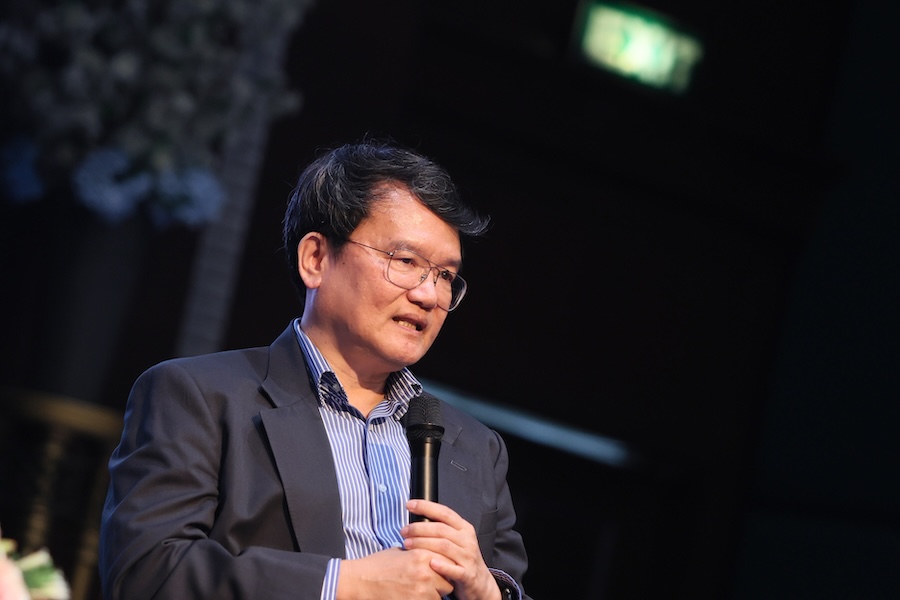
Regarding the challenges of designing earthquake-resistant buildings in the current era, Phisit explained the key principles and considerations that buildings, whether 7-8 stories or high-rise residential or mixed-use, are all affected by the structural response under earthquake forces.
However, the first consideration should be to design buildings with symmetry both vertically and horizontally, particularly ensuring that elevator shafts are centrally located and extend continuously down to the foundation, as the building's shape significantly impacts its ability to withstand earthquake forces. Each type of building has different complexities, including:
Generally, earthquake codes (earthquake codes for concrete structures) in both Thailand and abroad attempt to cover the design of all building types, establishing assumptions in design that help mitigate issues where engineers sometimes over-reinforce in unnecessary locations while under-reinforcing in critical areas that must withstand high shaking forces, especially in asymmetrical buildings.
Moreover, in countries that experience severe earthquakes, such as the United States and the Philippines, advanced design technologies known as "Performance-Based Design" are employed. Engineers use detailed computer modeling to simulate structural responses to various earthquake waveforms to analyze whether the shaking of the structure and its connections remain within acceptable limits. This method allows for precise reinforcement where needed and reduces unnecessary reinforcement in other areas.
Although Performance-Based Design is a reliable approach, Phisit pointed out its limitations in Thailand, as this process can take significantly longer than usual, up to 2-4 months. Therefore, discussions and planning with project owners should begin early to align work schedules. Currently, engineers in Thailand still tend to use more basic design methods.
Old Buildings Can Withstand Earthquakes Securely
Not only new buildings but also owners of older buildings may wonder how to prepare for earthquakes. To understand the hidden potential within structures and discover improvement methods that extend beyond just the main structure, Dr. Pen-Naung began with an interesting observation that older buildings may have a higher safety factor than newer ones. In the past, complex calculations using computers were not widespread, so engineers often designed with a significant margin, using materials that were not as strong as those available today but had thicker components and sufficient reinforcement, which may explain why some older buildings withstand earthquakes better than expected.
However, Dr. Pen-Naung expanded on the more critical dimension that earthquake-resistant design should not be limited to the safety of the main structure but should also encompass non-structural components, such as external walls, internal walls, ceilings, piping systems, electrical systems, or air conditioning systems, which can also have severe impacts on life and property. This is a design trend gaining popularity abroad.
Supong reinforced Dr. Pen-Naung's perspective by citing the case study of the Sinthorn office building, which is 40 years old but showed almost no cracks after the earthquake, confirming the observation that designs from the past emphasized caution and quality control of materials, which, despite lacking high technology, positively impacted structural durability.
The key to ensuring building strength lies in the collaboration and mutual understanding of all parties involved, from architects, engineers, contractors, to developers. Developers should play a crucial role in bridging the understanding of all parties to prevent each sector from working in isolation. Clear communication about what earthquakes are and their impacts on each area of work is essential so that everyone can design and work with overall safety in mind, such as designing facades that can withstand vibrations to prevent "Non-Structural Hazards" or falling debris.
Reducing Costs Through Common Understanding
For mid-level real estate operators looking to adapt to earthquakes without incurring excessive costs, Supong advised focusing on "Common Understanding" as a key principle. The primary issue leading to increased costs is the gap in understanding among all parties involved in the work, from architects, engineers, to operators. Whenever there is a gap in communication or misunderstandings, hidden costs arise, whether from rework, mistakes, or the use of inappropriate materials.
Therefore, a good approach is to minimize the gaps in understanding among all parties working together. When everyone has clear and aligned information and goals, operations will run more smoothly, errors will decrease, and the selection of appropriate materials will occur naturally, resulting in overall cost reductions.
Supong shared from his own experience that the systems used to withstand earthquakes only added about 1% to the total project value. This demonstrates that investing in understanding and good planning does not necessarily impose a heavy cost burden on operators at all levels.
Raising Construction Safety Standards
In conclusion, the experts provided interesting perspectives and suggestions regarding the improvement and elevation of safety standards in constructing earthquake-resistant buildings:
Another important point Chanwit emphasized is the need to change the mindset of collaboration between contractors and designers, advocating for all parties to work as "one team."
Moreover, Supong pointed out the issue of siloed organizational structures where each department works separately, such as marketing defining requirements and the design department designing accordingly, leading to gaps and unnecessary costs. He encouraged senior management to promote a workflow that connects design to construction, allowing for immediate design adjustments if construction limitations arise while maintaining the design and marketing intent.
In summary, if all parties collaborate, the challenges posed by natural disasters can transform into opportunities to create safe, high-quality buildings that truly meet future demands.