SCG Collaborates with SIIT to Pilot Low-Carbon Concrete Project with Cement-Free Prototype, Elevating Green Standards and Reducing CO2 Emissions by Over 50% to Enhance the Construction Industry for the Environment
SCG, in collaboration with the Construction and Maintenance Technology Research Center (CONTEC) at the Sirindhorn International Institute of Technology (SIIT), Thammasat University, Thai Sei (Thailand) Co., Ltd., and Fuji Poly (Thailand) Co., Ltd., has launched a pilot project to test the use of low-carbon concrete with a cement-free prototype, achieving a reduction in CO2 emissions by over 50% for the first time in Thailand at the site of the internal road construction at Fuji Poly (Thailand) Co., Ltd. in the Nava Nakorn Industrial Estate. This initiative, led by CPAC, a leader in high-quality ready-mixed concrete within SCG, marks a significant step towards achieving Net Zero goals in the Thai construction industry.

This collaboration represents an innovative development of low-carbon concrete prototypes using alternative materials to replace traditional cement, which SCG has developed and applied in conjunction with by-products. This knowledge and pilot project aim to integrate with various concrete products to elevate construction standards across infrastructure, public utilities, residential projects, and industrial and commercial construction that are environmentally friendly, aligning with the new energy plan towards the goal of net-zero greenhouse gas emissions according to the Thailand 2050 Net Zero Cement and Concrete Roadmap.
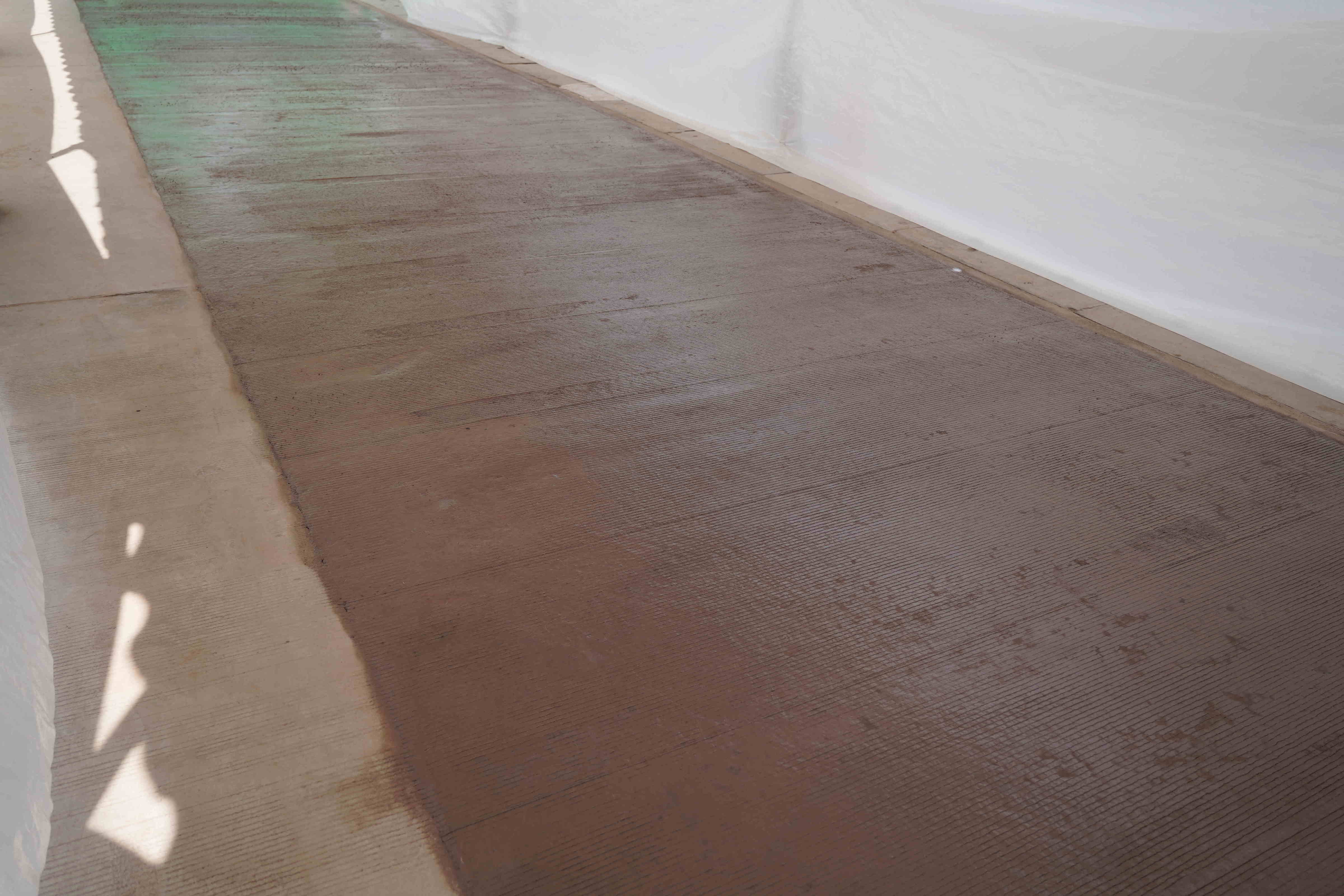
According to Prof. Dr. Somnuk Tangteerasilkul, Head of the Construction and Maintenance Technology Research Center (CONTEC) at SIIT, Thammasat University, the new cement-free concrete formula utilizes raw materials from industrial waste instead of regular cement, significantly reducing CO2 emissions while maintaining engineering properties comparable to conventional concrete. Additionally, the concrete's color is innovative, such as brown, which adds dimension to architectural design.
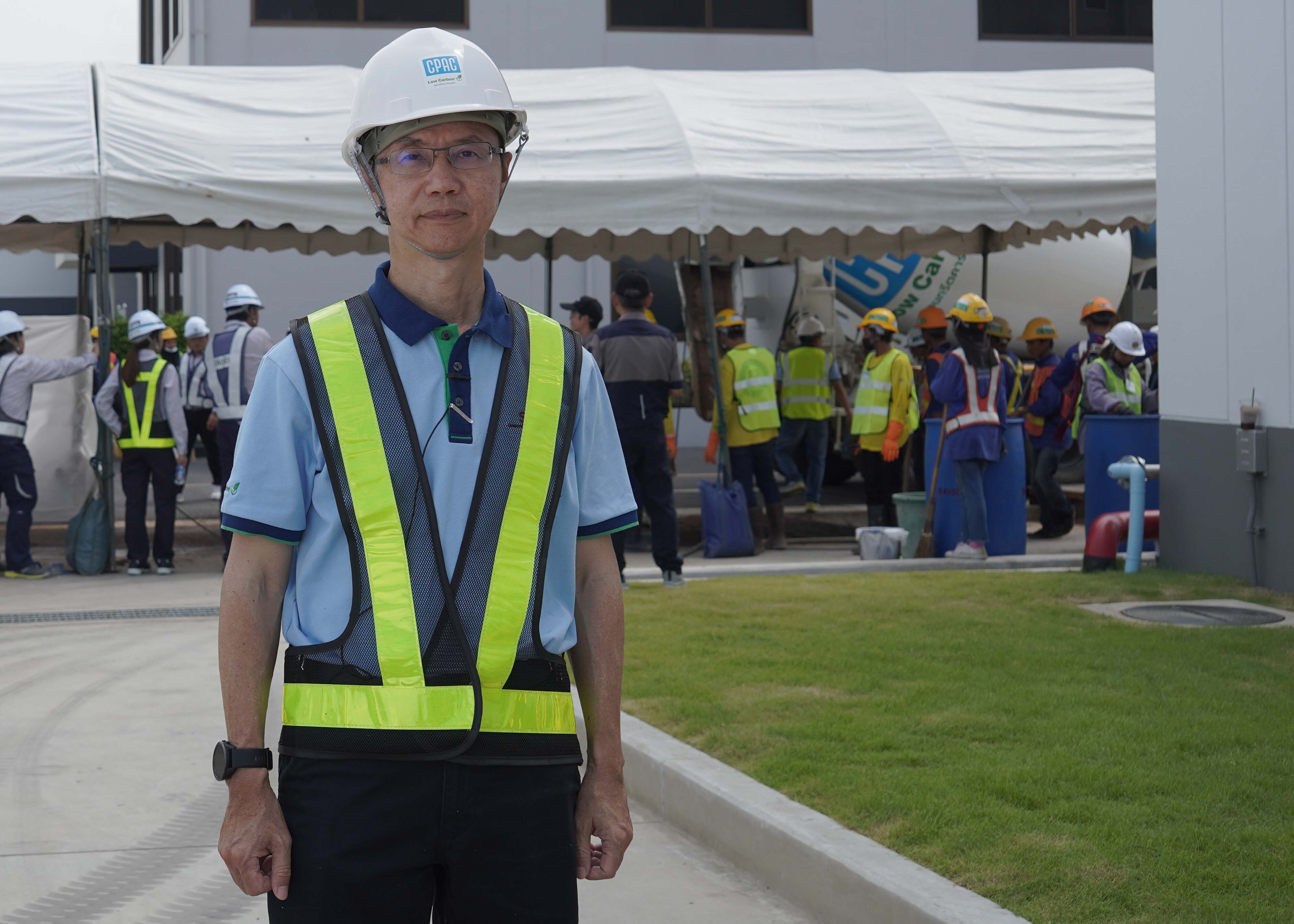
“The development of the cement-free concrete prototype aims to achieve a very low carbon footprint, potentially reaching zero or even negative in the future. By using low CO2-emitting raw materials without any cement and utilizing industrial waste, we have created a well-combined and appropriately proportioned cement-free concrete with engineering properties equivalent to conventional cement-based concrete. This technology is a first in Thailand. The concrete's color, which deviates from the usual gray structures, could be an interesting selling point in the future,” he added.
Meanwhile, Mr. Chaloemwut Sa-nguanjat, Concrete and Construction Technology Director at SCG, stated, “SCG is aware of the ongoing climate change, which is becoming increasingly severe. We have set an important goal to become a producer of cement and concrete with net-zero greenhouse gas emissions by 2050. I must say that ‘SCG’ has received support from ‘Sirindhorn International Institute of Technology (SIIT), Thammasat University,’ along with ‘Thai Sei,’ the construction contractor, and I would like to thank ‘Fuji Poly’ for providing the site for this trial. This collaboration serves as a model for us to develop green cement replacement materials into ‘low-carbon concrete,’ marking the beginning for Thailand to utilize this in the construction industry and providing a great opportunity for users to learn about new innovations and lead the Thai industry towards sustainability.”
On the other hand, Mr. Naohito Oba, Managing Director of Thai Sei (Thailand) Co., Ltd., a Japanese construction contractor, said, “In the current situation, we aim to achieve zero CO2 emissions. The new concrete, compared to the old concrete, reduces CO2 emissions by up to 50%, making it environmentally friendly and highly beneficial for Thai society. We are focused on the future of Thailand, as this concrete will transform the entire construction industry. This concrete is unique, featuring a brown color that is a great option for designers, and it can be used in building construction and infrastructure projects, offering advantages in both quality and aesthetics. Our group at Thai Sei is committed to carbon neutrality, and we will promote and disseminate concrete that builds the future. We have designed the mix using Japanese technology for collaboration in concrete development, choosing SCG as the developer. We are confident that with technology from Japan and SCG, the development of concrete products will progress positively towards carbon neutrality. We trust in our technology.”
Meanwhile, Mr. Hirohiko Minae, President of Fuji Poly (Thailand) Co., Ltd., the project owner, stated, “First of all, I would like to thank TAISEI for inviting us to participate in this project. One of our company’s goals is to work on reducing CO2 emissions. We have started thinking about how we can reduce CO2 emissions, but we feel that there are still many limitations to what we can do. If this project succeeds, I believe it will expand the scope of participation in CO2 reduction activities for society as mentioned. I have high expectations for this project and hope it will succeed and become one of the activities that help reduce CO2 emissions on a larger scale.”
This project is a significant step in creating concrete materials that meet environmental needs and can be used in various structures, such as public utilities, residential projects, and industries. SCG aims for Thailand to become a regional hub for low-carbon construction materials, reflecting a commitment to developing technology for the future and enhancing the Thai construction industry’s ability to adapt to a truly sustainable era.