Thailand Taxonomy: Transforming the Real Estate Business
As we approach the end of 2024, how has the year been for everyone? It's December already, and do you have any travel plans? Reflecting on the goals set throughout the year, some may have been achieved while others may have fallen short, but that's okay; we can continue working towards them next year. In this year-end column, we will continue discussing the transformation of the real estate business into “Green Real Estate or Green Developer” under the concept of Thailand Taxonomy, following up from November 2024's discussion on the issuance of Green Bonds related to green business practices.
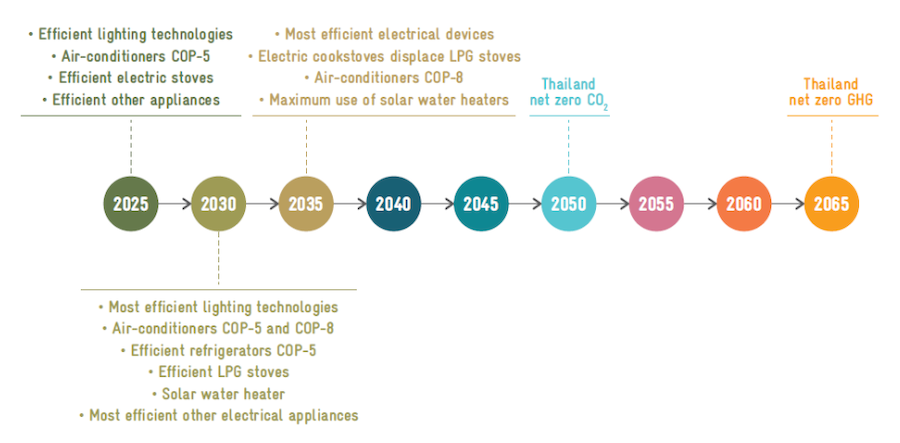
This follows the joint meeting of the United Nations, known as COP, which took place for the 21st time in Paris, France, on December 12, 2015. This agreement is part of the United Nations Framework Convention on Climate Change (UNFCCC), and Thailand is one of the countries that signed the “Paris Climate Agreement” on September 21, 2016, by General Prayuth Chan-o-cha. This signing involved over 197 countries worldwide agreeing to keep the global average temperature rise below 2 degrees Celsius. The key issue we will discuss here is the adaptation of the “real estate sector” using economic mechanisms known as Thailand Taxonomy, which aims for two targets: carbon neutrality by 2050 and net-zero greenhouse gas emissions by 2065.
“Thailand Taxonomy” and the Real Estate Business First, it should be noted that in 2024, Thailand Taxonomy has completed Phase 1 with the energy and transportation sectors, which have had the most significant impact, and is now moving into Phase 2, which includes industries with secondary impacts. This phase is currently open for public consultation on the draft standards (from October 28, 2024, to January 10, 2025) for the following industry groups:
(1) Agriculture, including livestock, fisheries, and forestry
(2) Buildings and real estate
(3) Manufacturing industry
and (4) Waste management
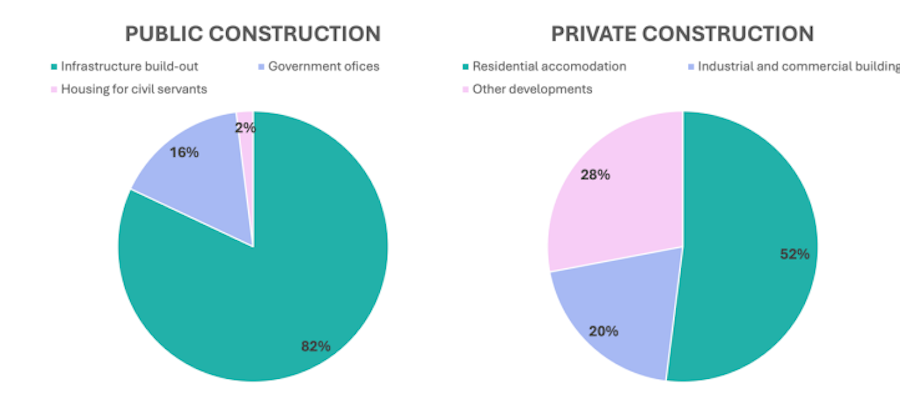
The reason the buildings and real estate sector is in the second phase is that the value of construction investment accounted for an average of 2.64% of GDP in 2021, generating employment for 2.1 million people, or about 5.4% of the total workforce. The economic sector is divided into two parts: public construction at 59% and private construction at 41%, with residential construction making up 52% of private sector investment.
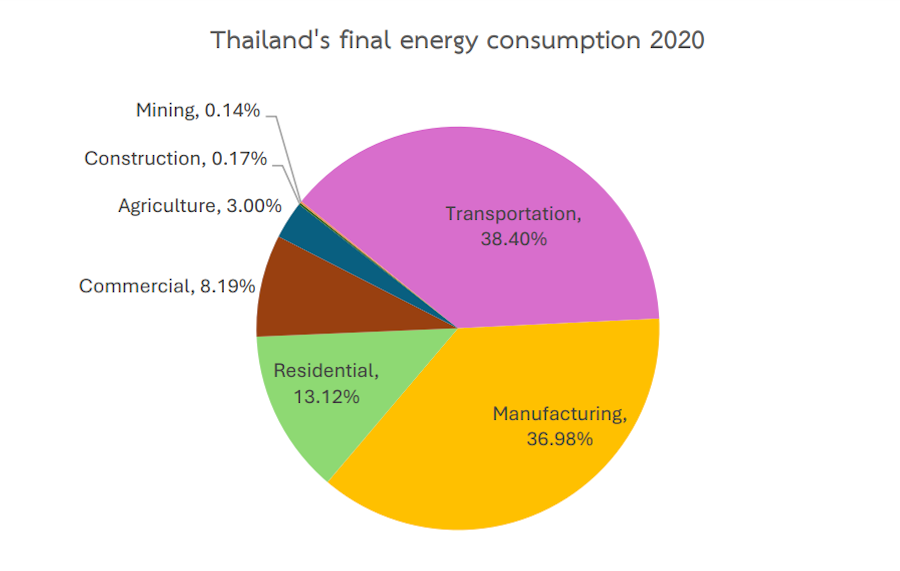
The buildings and real estate sector plays a crucial role as it has high greenhouse gas emissions, with the largest share coming from the production of construction materials such as cement, plastic, and steel, as well as resource consumption during building operations, particularly water and electricity.
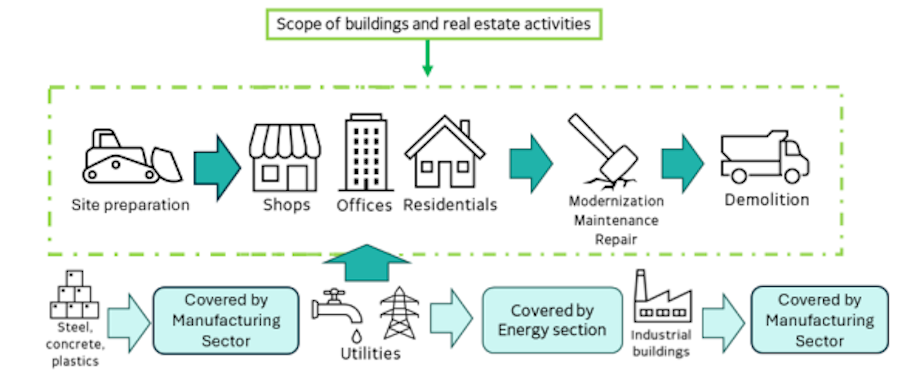
Key issues regarding climate change in the buildings and real estate sector relate to greenhouse gas emissions, which can be divided into two parts: emissions from the production process (embedded emissions) related to construction materials, and emissions from building operations (operational emissions). The scope of addressing climate change and adapting to it will consist of six activities:
(1) Construction of new buildings
(2) Renovation and improvement of existing buildings
(3) Acquisition or ownership of buildings (investment in real estate leasing and purchasing)
(4) Installation, maintenance, and repair of specialized building equipment (EV Chargers, Solar cells)
(5) Early warning systems
(6) Demolition and site preparation
The initial criteria for assessing corporate businesses within the scope of Thailand Taxonomy will categorize the level of those businesses into three levels:
Green means organizations that have made changes according to the standards set in the Thailand Taxonomy measures.
Yellow means organizations that are in the process of making changes and have plans according to the standards set in the Thailand Taxonomy measures.
Red means organizations that have not yet made changes according to the standards set in the Thailand Taxonomy measures.
If operators can effectively reduce greenhouse gas emissions, whether through modern technology in operations, using clean energy, improving operational processes, or adopting green building standards, they will have greater access to funding sources and various tax benefits.
Although Thailand Taxonomy currently relies on the voluntary participation of operators and is not yet a “regulation” like mandatory laws, if the “Climate Change Act” is enacted, it is likely that the principles of Thailand Taxonomy will be adopted as standards for operators in the building and real estate sector to follow. The status of the Climate Change Act is currently undergoing legal impact assessments and is expected to be presented to the Climate Change Policy Committee in December 2024, then submitted to the Cabinet for consideration before being sent to the Office of the Council of State for review of the draft law before pushing it to the parliamentary session. It is anticipated that this process will be completed and enforced by 2027, aligning the Climate Change Act with the principles of reducing greenhouse gas emissions as stipulated by Thailand Taxonomy.
Therefore, operators in the building and real estate sector should prepare for adaptation. At the very least, organizations should have a “carbon footprint assessment” to get ready for the upcoming changes, as the future trend of measuring an organization's carbon emissions may become a new standard that needs to be reported, similar to financial statements.
By Khun Prabhan Sak Raksaiwan, Managing Director of LWS Wisdom and Solutions Co., Ltd.