
Kasikorn Research Center Predicts Economic Growth in the Second Half of the Year, Maintaining GDP Forecast for 2024 at 2.6%
Kasikorn Research Center maintains its GDP forecast for 2024 at 2.6%, expecting higher growth rates in the second half of 2024 compared to the first half. It emphasizes monitoring the impacts of flooding issues, the slowdown of major economies, and household debt, which is projected to remain close to 90% of GDP over the next 1-3 years. This limits the opportunities for new loan growth, with Thai bank loans expected to grow no more than 1.5% this year amid declining borrowing capacity of debtors.
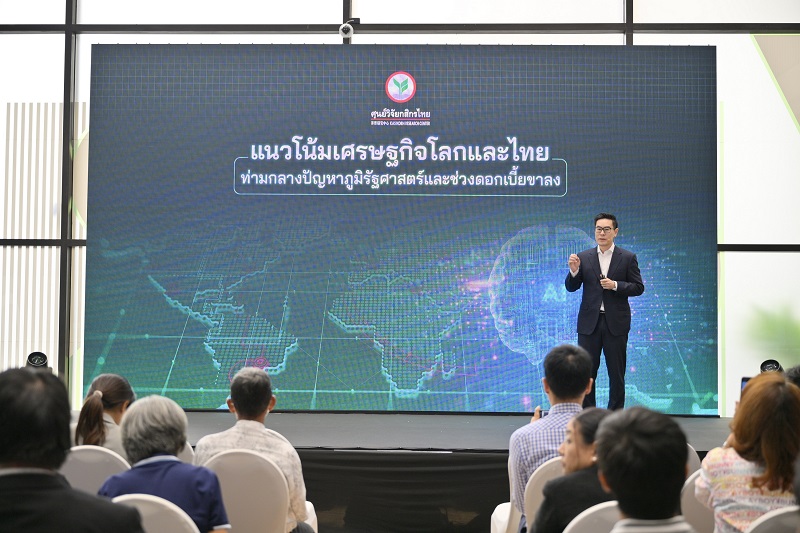
Mr. Burin Adulwattana, Managing Director and Chief Economist of Kasikorn Research Center stated that the Fed has signaled a further 2% interest rate cut by 2026, marking the beginning of a downward interest rate cycle. Meanwhile, China's economy is likely to grow below the 5% target in 2024 due to the ongoing real estate crisis, and the Chinese government has not yet implemented clear domestic economic stimulus policies, compounded by trade restrictions from the West. In Europe, Germany's economy shows signs of fragility, affected by geopolitical conflicts that increase uncertainty for businesses. Attention must also be paid to the upcoming U.S. presidential election, as it will impact trade, investment policies, and international relations.
For the economic outlook for the remainder of 2024, the Kasikorn Research Center maintains its Thai economic growth forecast at 2.6%, supported by a recovery in exports, tourism, and government economic stimulus measures. The Thai economy in the second half of 2024 is expected to grow faster than in the first half, driven by the export and investment base and the high season for tourism, along with government economic stimulus measures. However, the impacts of flooding, the slowdown of the global economy, and weakened domestic demand remain risks to Thailand's economy in the near future.
Ms. Natthaporn Treeratnasilkul, Deputy Managing Director of Kasikorn Research Center noted that global geopolitical issues create uncertainty for the Thai economy, presenting both opportunities and risks. Opportunities arise as Thailand is centrally located, while risks stem from the impacts of global trade restrictions and intensified competition. If a Trade War 2.0 occurs, with the U.S. potentially imposing a 60% tariff on imports from China and 10-20% on imports from other countries, it could lead to another wave of production relocation from China, particularly for labor-intensive goods that have not yet been taxed under Trade War 1.0. This may not yield significant benefits for Thailand and could increase pressure on Thai industries in the future, especially in production sectors like electric vehicle manufacturing, which may face oversupply issues as reliance on exports and domestic markets may not grow as expected.
Ms. Thanyalak Watcharachaisurapol, Deputy Managing Director of Kasikorn Research Center stated that ongoing global geopolitical issues are expected to keep safe-haven asset prices, like gold, supported, as they have consistently reached new highs. Investors should be aware that the volatility of various assets has also increased, especially post-COVID. Therefore, caution in investing and effective risk diversification is essential.
Regarding the Thai industry, it is expected to face challenges from four main issues in the remainder of the year: 1. Flooding, with impacts likely to worsen if the situation escalates in central and southern regions; 2. High currency volatility; 3. Competition with foreign products; 4. Rising costs, particularly from minimum wage increases. All four issues affect agriculture, production, and services, primarily impacting SMEs. For the entire year of 2024, it is estimated that the automotive, housing, and construction sectors will struggle due to shrinking income indicators.
In the financial sector, the main challenge remains household debt, which is expected to stay close to 90% of GDP over the next 1-3 years, limiting opportunities for new loan growth significantly. Thai bank loans are projected to grow no more than 1.5% this year amid declining borrowing capacity of debtors. A survey on household debt in Q3 2024 revealed that over half of respondents with home or car loans have faced repayment issues, leading them to enter debt restructuring programs with financial institutions. This problem is linked to low income levels and minimal savings, making them more vulnerable than other debtor groups. Additionally, the survey found that 8.2% of respondents rely on informal debt and require assistance with debt restructuring, financial planning, and increased access to new loans within the system, alongside sustainable solutions to enhance income stability for debtors.