Property Faces 10-Year Debt: Thai Real Estate Won't Be the Same Again as Home Values Rise and Household Debt Soars, with 80% of Home Loans Rejected
At the Bangkok Jaturathit seminar: Property Faces 10-Year Debt, organized by prop2morrow, a real estate marketing consultancy operating online at www.prop2morrow.com, on September 19, 2023, at the KBank Siam Pikanet Theater, leading real estate entrepreneurs exchanged information from both government agencies and private sector operators to reflect on the past decade in the real estate business and its future direction. This sector is crucial for driving the Thai economy, and the event featured esteemed speakers discussing the intricacies of real estate.

Dr. Wichai Wiratthakhan, Acting Director of the Real Estate Information Center (REIC), painted a picture of the housing market over the past 30 years, starting from before the 1997 economic crisis, when the housing market was booming with 150,000-170,000 units of houses and condominiums registered annually in the Bangkok metropolitan area. However, during the 1997 Tom Yum Kung crisis, the real estate market severely slowed down, leading to a development of housing that matched the demand of Thai people, with annual registrations dropping to about 30,000 - 40,000 units during the five years following (1999-2003). The market rebounded to 106,969 units again in 2010, in line with urban expansion and new investments, before slowing down again during the major flooding crisis in 2011, dropping to 80,000 units per year.
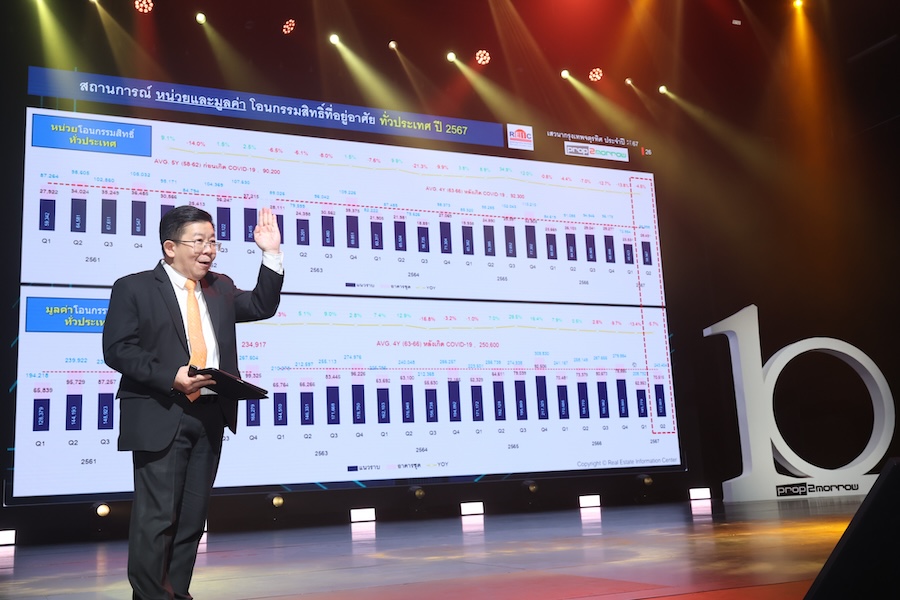
In the last decade, starting from 2014, the average number of completed houses registered in the Bangkok metropolitan area was 134,000 units per year, gradually declining to below 100,000 units per year from 2021 to 2023, with 99,000 units registered. This decline was influenced by the LTV measures introduced in 2019 and the COVID-19 pandemic in 2020-2021, alongside a still-declining economy, leading to a slowdown in the housing market. This year, it is expected that about 100,000 units will be completed and registered in the market.
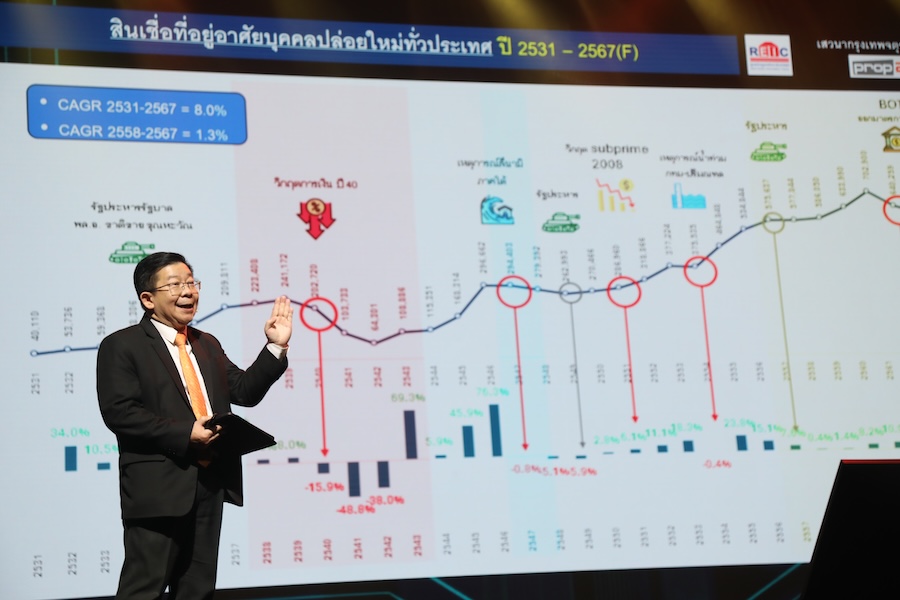
New Loan Disbursements Down -8.9% During COVID-19
Meanwhile, new personal housing loans nationwide over the past decade have been valued at over 500 billion baht per year, peaking in 2018 at 700 billion baht, before declining by -8.9% in 2019 and dropping to over 610 billion baht in 2020-2021 due to the heavy impact of the COVID-19 pandemic. In 2023, the total value was 670 billion baht, and in 2024, it is estimated that the value of new personal housing loans nationwide will be around 650 billion baht, a decrease of -4% from the previous year, partly due to the economic situation and high household debt levels, along with an increase in loan rejection rates for properties priced below 3 million baht up to 10 million baht.
LTV – COVID-19 Causes New Project Launches to Drop Significantly, the Lowest in 10 Years
Regarding the number of new project launches in 27 provinces over the past decade (2014-2024), the average was 100,000-130,000 units per year, with over 170,000 units launched in 2018. However, during the heavy COVID-19 pandemic in 2020-2021, the number of new project launches fell below 100,000 units per year, hitting a low of just over 76,000 units in 2021. In 2023, the number increased to 141,134 units, and by the end of this year, it is expected that the number of new project launches will be around 136,153 units, while the value of new projects continues to rise, remaining at over 400-600 billion baht per year. In 2024, the value of new project launches is expected to exceed 744 billion baht, down from the previous year's high of 785.35 billion baht, reflecting a continuous increase in home prices and developers shifting towards building more expensive homes.
New home sales in 2014 were at 127,797 units and gradually decreased before peaking at 158,168 units in 2018. In 2023, the number was 121,829 units, a decrease of -3.2% from the previous year, while this year is expected to see a slight increase of 0.2% to approximately 138,466 units.
Trend of Difficulty for Citizens to Buy Homes Due to Income Growth Not Keeping Up with Home Prices, Increasing Elderly Population, and Hope for Foreign Purchasing Power to Stimulate the Condo Market
Dr. Wichai further stated that regarding the ability to purchase housing, comparing economic growth rates and income growth rates against home price growth rates, it reflects that it is becoming increasingly difficult for the general public to buy homes. Home prices are exceeding the income-generating capacity of citizens. The average housing price compared to GPP per Capita in the Bangkok metropolitan area from 2014-2023 shows a CAGR of 5.4% for average housing prices and a CAGR of 1.4% for GPP per Capita Income. Therefore, the per capita income in 2023 averaged 347,900 baht or 30,000 baht per month, while the average home price is 7 million baht, making it very challenging to apply for loans from financial institutions.
This is evident from the number of property transfers nationwide in the first quarter of this year, which decreased by -13.8%, with the transfer value also dropping by 13.4%. In the second quarter, the number of property transfers decreased to -4.5%. Although the government has introduced economic stimulus measures through the real estate sector since April 9, 2023, such as reducing transfer and mortgage fees for homes and condos priced below 7 million baht (based on assessed value and mortgage limits per contract registered in the same transfer), effective until December 31, 2023, reducing transfer registration fees from 2% to 0.01%, and mortgage registration fees from 1% to 0.01%, along with tax deductions for self-builders, the housing market remains challenging.
Moreover, the housing market and real estate sector are filled with challenges due to rapidly changing demographics, with an average of 100,000 new homes being built annually. In the coming years, Thai society will enter a stage where the elderly will make up over 25% of the population, while the birth rate declines, couples marry without children, and more people remain single.
However, there are still new opportunities from the increasing demand of foreign buyers purchasing properties in Thailand. In 2018, foreign ownership of condominiums was at 10%, but in the first two quarters of this year, it increased to 13.6%. Therefore, both the government and private sectors need to find answers regarding the appropriate management of actual purchasing demand and purchases through nominee arrangements.
Household Debt Soars to 90% Among Gen Y, Willing to Accumulate Debt and Default
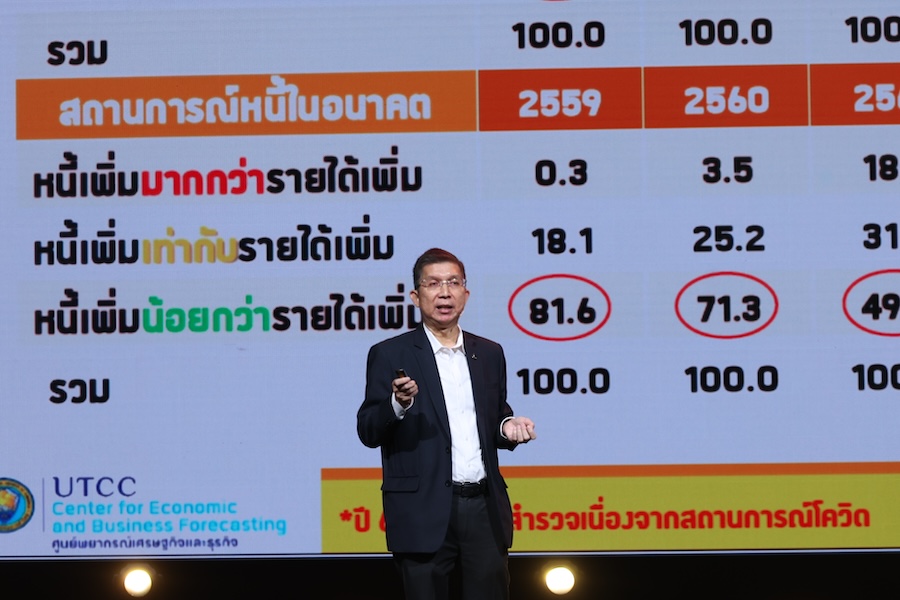
Mr. Phaijit Phaechin, Deputy Managing Director of the National Credit Bureau, stated that in the second quarter of 2023, Thailand's GDP grew by 2.3% compared to the same period in 2022, which grew by 1.9%, reflecting only a 0.4% growth. The first quarter saw a growth of 1.5%. Over the past decade, GDP growth has remained below 5%, contrasting with the continuous high growth of personal loans, which even increased during the COVID-19 pandemic, used for daily living expenses due to the overall economic downturn and external factors. Meanwhile, housing loans have remained stable, except during periods when the Bank of Thailand implemented LTV measures to control purchases of second homes, which significantly increased housing loans, but then declined again. Recently, in the second quarter, after the government announced seven measures to assist the real estate business, housing loans were issued to high-risk homebuyers to promote home ownership.
Consumer confidence indices over the past decade have continuously declined, currently standing at 57.7%, down from over 60% last year, due to consumer distrust in government management, politics, the economy, and geopolitical factors.
Meanwhile, the Bank of Thailand's policy interest rate remains stable at 2.5% after several rounds of increases over the past 2-3 years, even though the Fed recently cut interest rates by 0.50%. This has led to a decrease in new housing loan disbursements, especially in 2023-2024, as the policy interest rate has risen, impacting demand for housing purchases and loan applications. Currently, many Thais face a mismatch between income and expenses, with debt increasing more than income by 46.4%, raising concerns that many Thais have debts exceeding their income, primarily due to economic issues. It is expected that this year, the average household debt will exceed 600,000 baht per household due to rising living costs, while income has only slightly increased.

Data from April 2023 showed that household expenses were around 18,000 baht, indicating that those earning less than 30,000 baht per month have daily living expenses reaching 113.2%, with another 25% going towards debt repayment, resulting in Thailand's household debt reaching 90.8% of GDP. The Gen Y group is notably burdened with high debt, including personal loans, car loans, credit card debt, and housing loans, making it increasingly difficult for Thais to access home loans in the future, as they tend to prioritize personal and car loans over home purchases, leading to a significant debt burden while the quality of borrowers declines.
According to the Credit Bureau, the group of debts that are not yet NPLs can revert to normal debts or become NPLs in the future, with the first group being those overdue for 31 days but not exceeding 90 days, showing a continuous upward trend, especially in personal loans and credit cards. The second group is housing loans, and the third is car loans. Previously, individuals would default on personal loans first, followed by credit cards, car loans, and housing loans. However, the trend has reversed, with people prioritizing personal loans and credit card debts to manage living expenses, leading to a willingness to pay high interest rates. This growing debt burden among Gen Y is expected to gradually extend to Gen X in the future.
Organizing a Large Structure to Accommodate Foreign Buyers of Condominiums

Mr. Prasert Baetduyasaht, President of the Thai Condominium Association, stated that from his 30 years of experience in the real estate sector, this year has been particularly challenging, with declining sales and transfers in the housing market for properties priced below 10 million baht. This has led developers to focus on the luxury housing market priced above 10 million baht. However, he still believes that the real estate market has hope as a second home for foreigners and people worldwide, as Thailand's housing market is on par with global standards (Thailand is Global), similar to London. Thai people are known for their hospitality, excellent healthcare, and education, with many renowned international schools in Bangkok and major provinces ready to accommodate foreign families relocating to Thailand for their children's education.
What needs to be promoted is the adjustment of laws regarding foreign ownership of housing, increasing the allowable condominium ownership from 49% to 70%, while preventing land ownership that could impact agricultural land, thus preventing illegal acquisitions and ensuring the government receives tax revenue from foreign buyers. Therefore, this year marks a crucial time for organizing the housing market structure for foreigners.
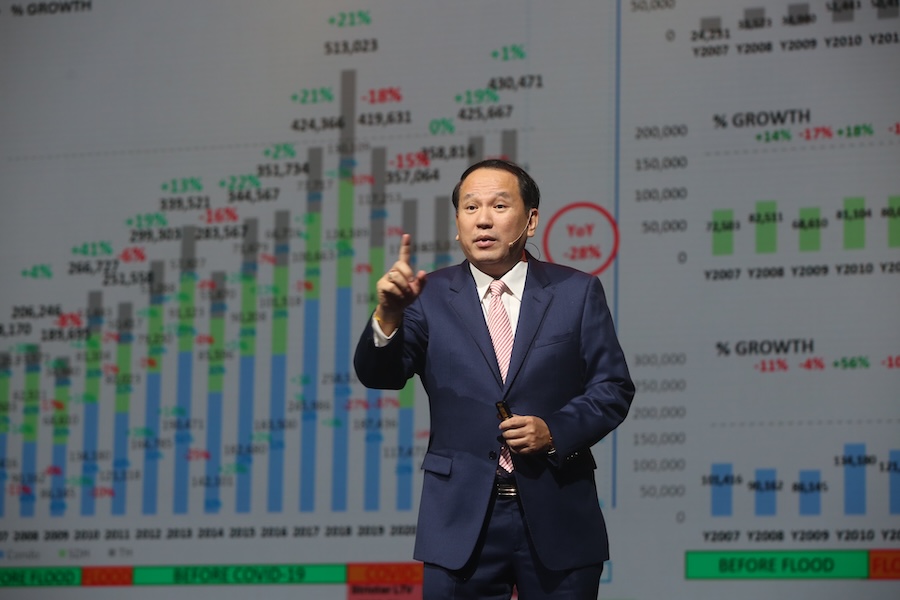
“Thailand must adjust its structure to accommodate foreigners living in Thailand in the long term; otherwise, future generations will suffer. We must also adapt to the markets and foreign agencies, as many new condominium projects can achieve 49% sales immediately, provided they are registered legally to avoid future domestic issues. In the past, only one-third of transactions were registered correctly, while the rest were conducted through nominee arrangements,” Mr. Prasert stated.

For the real estate business to continue, it must adapt in terms of products, channels, pricing, organizational structure, and access to foreign customers, as the foreign market changes rapidly. For instance, earlier this year, many Myanmar customers purchased condominiums, but after the Myanmar government closed the country, the number of buyers decreased. Similarly, Chinese buyers have shown increased interest in purchasing condominiums in certain locations, such as Rayong, due to the establishment of electric vehicle manufacturing bases in the EEC area, while the number of Japanese customers residing in Ayutthaya has declined. Therefore, it is essential to continuously monitor changing demands in each market.
Stimulating Future Demand Does Not Address Long-Term Investment Needs

Mr. Kirati Satasuk, CEO of CP Land Public Company Limited, stated that the real estate market has invested resources in marketing and promotions, leading to growth even during market contractions, without considering the actual market conditions and customer needs. Initially, the focus was on location (where), product design and pricing (what), and then reaching out to customers (who). However, the current market conditions have changed significantly, requiring real estate developers to adjust their mindset, starting with understanding customer needs before designing products (what) and selecting locations (where).

“In the past, to achieve quick results, resources, money, and promotions were heavily invested, which might have accelerated growth temporarily. However, over the long term, when resources run out, the world changes, but what remains constant is the mindset of people wanting affordable prices and good locations, leading to longer decision-making times and a desire to negotiate prices. When buying a home, people want to secure the largest possible loan, making it crucial for sellers to ask themselves whom they will sell to without facing loan rejections later,” Mr. Kirati stated.
In the current situation, the demand for homes has shifted. Previously, the government encouraged homeownership, leading to increased household debt, which does not align with current income levels. The desire for homeownership among the new generation has changed, with many no longer wanting to own a home. Real estate developers must adapt to new models, focusing on developing rental products or long-term investment options, as well as designing residences that reflect diverse identities, catering to thinkers, successful individuals, and creating unique experiences.
Proposing the “Singapore Model” to Attract Foreigners to Reside in Thailand

Mr. Uthen Lohachitpitak, CEO of Pruksa Holding Public Company Limited, stated that the current LTV criteria impact the disbursement of horizontal housing loans, requiring buyers to establish discipline in their repayment capabilities. The reduction of loan interest rates has led to a 3% expansion in the real estate market over the past 2-3 years (2021-2023), while the sales of horizontal homes have expanded annually, with a value of 391.31 billion baht in 2023. However, homes priced below 3 million baht have remained stable, and homes priced between 3-5 million baht have decreased compared to the previous year, while demand for homes priced below 15 million baht has also declined in the past year.

“As a developer of both horizontal and condominium housing, we support the development of real estate in the Singapore model, creating a creative industry that attracts people to live in family single offices. This will help draw investors and high-income individuals to reside in Singapore, with approved rights for population migration, generating investments and job creation in the economy of no less than 1 trillion US dollars, attracting interest from foreigners from China, India, Indonesia, etc.,” Mr. Uthen stated.
Key factors impacting the horizontal housing market include urban changes, COVID-19, and technology, along with the increasing proportion of the aging society (Aging Society), necessitating that horizontal housing trends cater to diverse groups living together as families while utilizing technology to enhance efficiency and meet the demand for a good quality of life (Well Being), which is a significant global trend. Therefore, Pruksa is currently developing hospitals alongside housing to provide health services, launching the Vimud Hospital to meet the needs of customers in their projects and the general public.