Gold Exports Boost Thai Exports in July 2024, Surpassing Expectations at 15.2% YoY
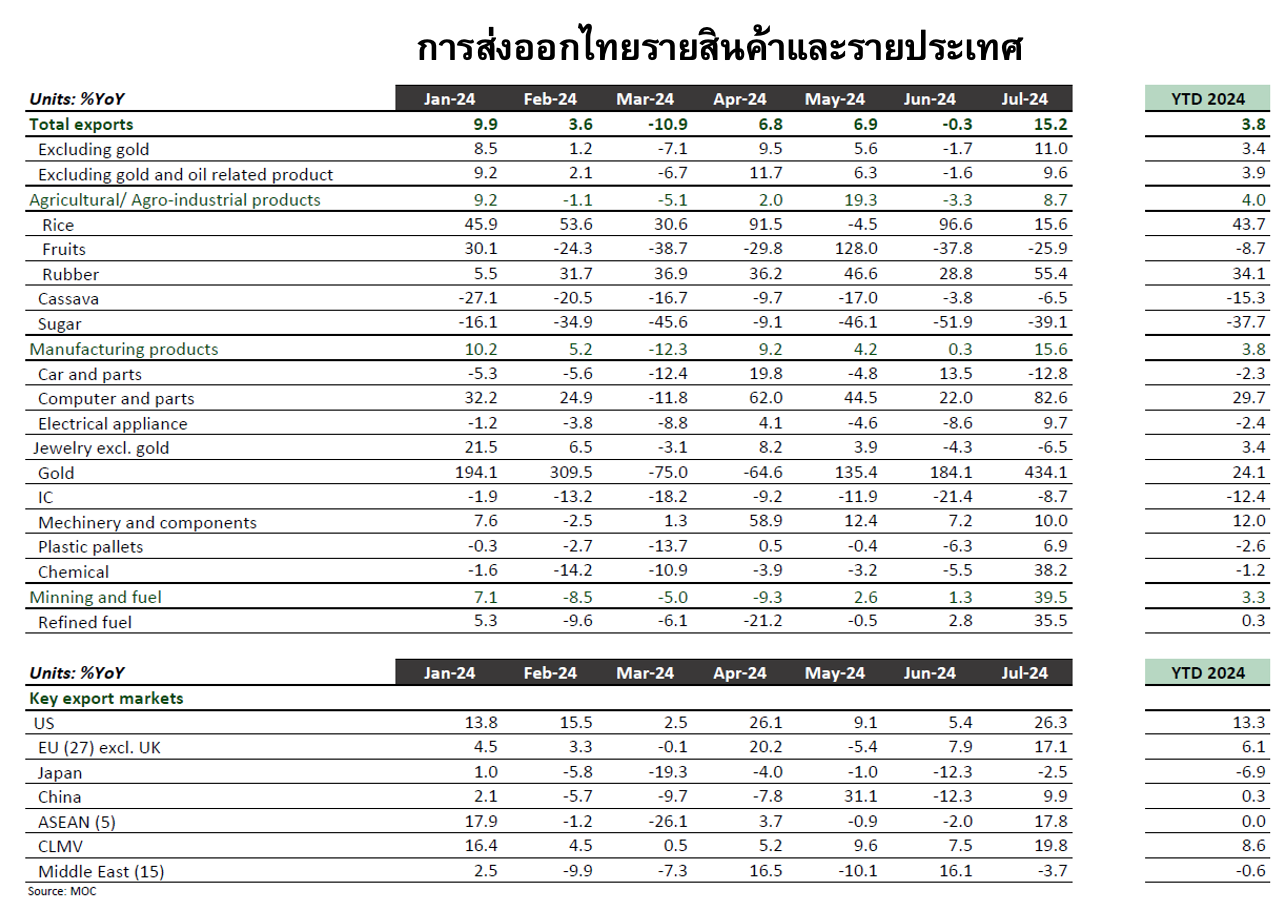
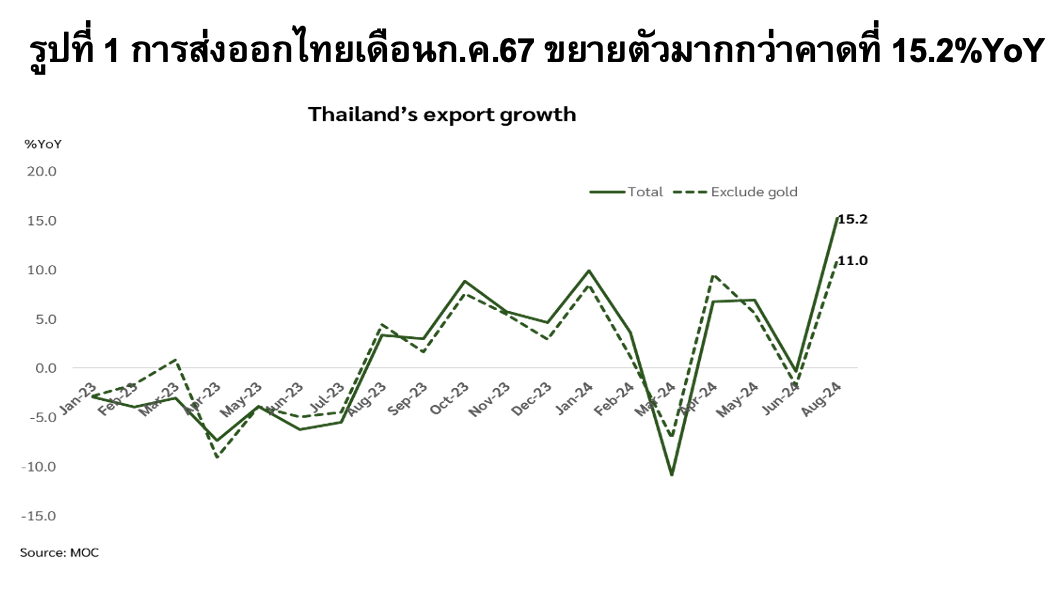
Thai exports in July 2024 grew by 15.2% YoY, exceeding market expectations of 7.0% YoY. This growth is attributed to a low base in July 2023, such as the decline in refined oil exports due to global market prices at that time. Additionally, Thai exports in July 2024 were significantly supported by gold exports, which surged by 434.1% YoY due to factors related to both volume and price, amidst ongoing tensions in the Middle East and the likelihood of major central banks, particularly the U.S., reducing interest rates in the near future. Excluding gold, Thai exports in July 2024 would have grown by 11.0% (see Figure 1).
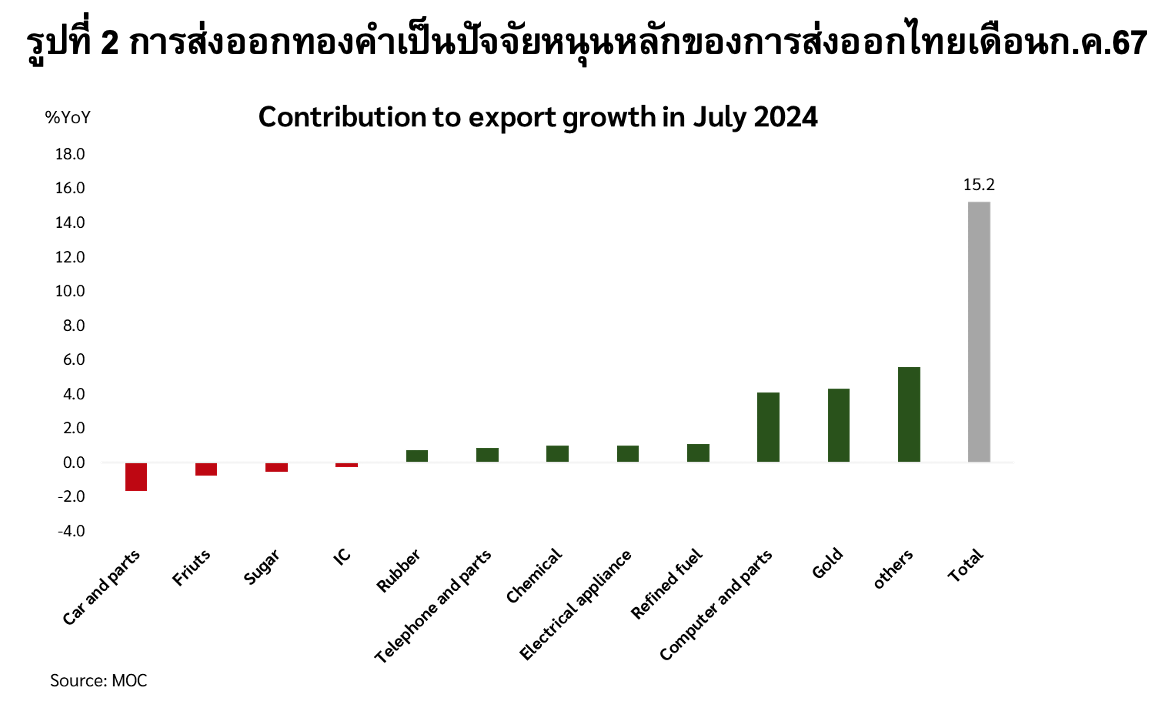
Moreover, exports of several industrial products continued to expand, including computers and equipment, as well as hard disk drives. However, exports of cars and components contracted this month by -12.8% YoY, with declines observed in major markets such as Australia and ASEAN countries, including the Philippines (see Figure 2).
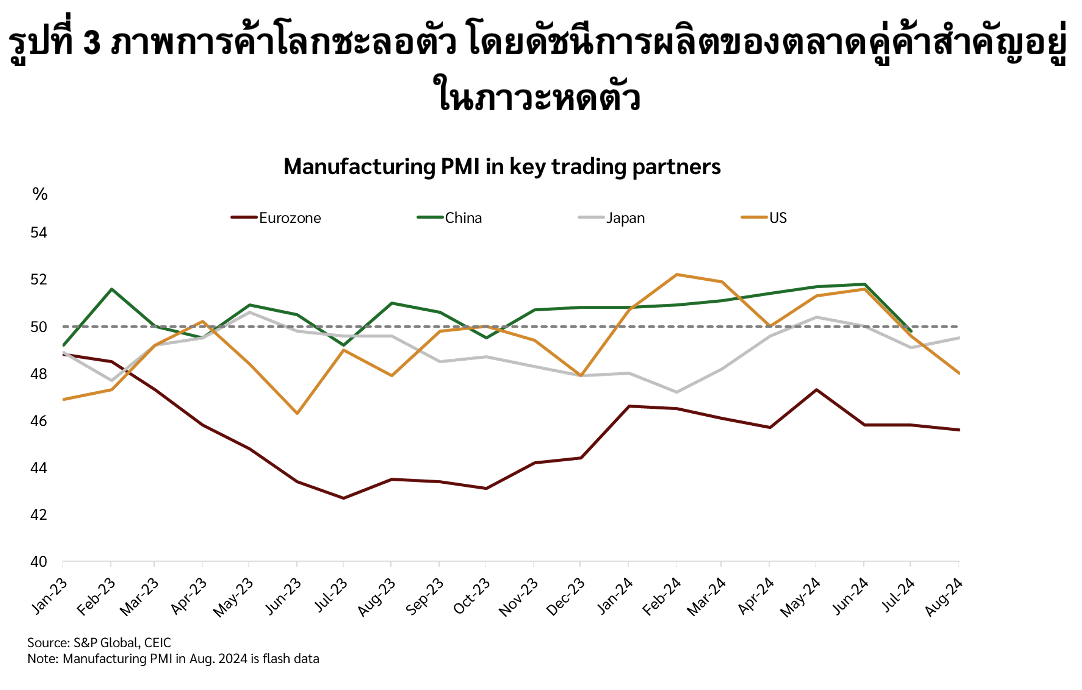
However, despite the strong growth in Thai exports in July 2024, the overall export outlook remains pressured by a slowing global economy and weakened purchasing power in trading partner countries. The Purchasing Managers' Index (PMI) for manufacturing in Thailand's key trading partners in July and August 2024 is mostly below 50, which could negatively impact Thai exports in the near future (see Figure 3).
Additionally, there are pressures from declining competitiveness in Thailand, as well as increasing negative risks from weather uncertainties that could affect agricultural production. Therefore, the Kasikorn Research Center maintains its forecast for overall Thai exports in 2024 to grow by 1.5%, but there is an increasing possibility that Thai exports could grow more than expected, especially if gold exports continue to expand at a high rate.