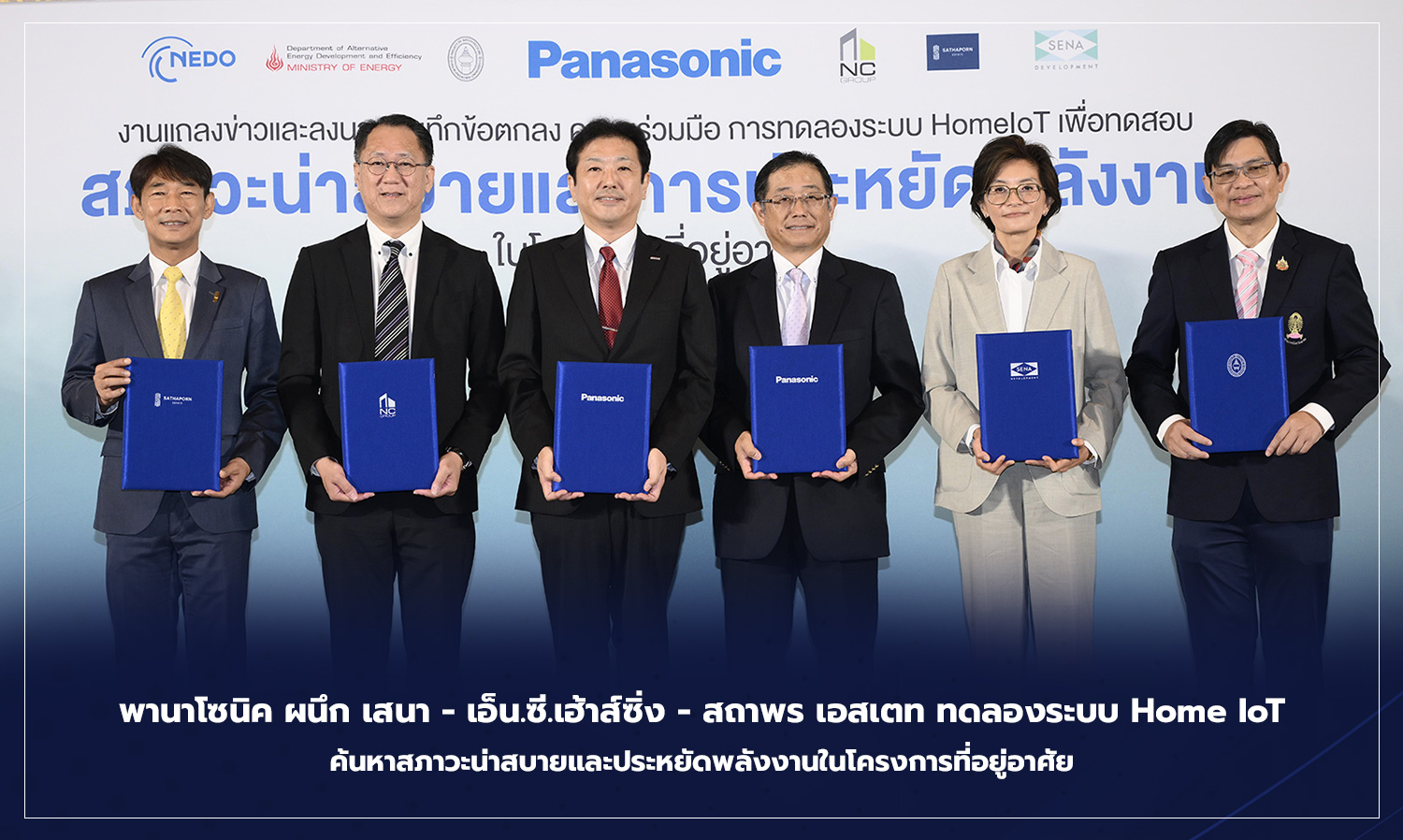
Panasonic Partners with Sena - N.C. Housing - Sathaporn Estate to Test Home IoT System for Comfortable and Energy-Efficient Living in Residential Projects
Panasonic and Chulalongkorn University are elevating research on "Testing Home IoT Systems for Comfortable and Energy-Efficient Living in Residential Projects" by collaborating with three major developers: Sena, N.C. Housing, and Sathaporn Estate to create sustainable housing innovations. They are testing the installation of Home IoT systems in model homes to find comfortable living conditions that reduce energy costs for Thai residents. The Thai government, through the Department of Alternative Energy Development and Efficiency, Ministry of Energy, and the Japanese government, through the New Energy and Industrial Technology Development Organization (NEDO), are jointly committed to enhancing energy security and supporting the development of energy-efficient housing designs in Thailand's future.
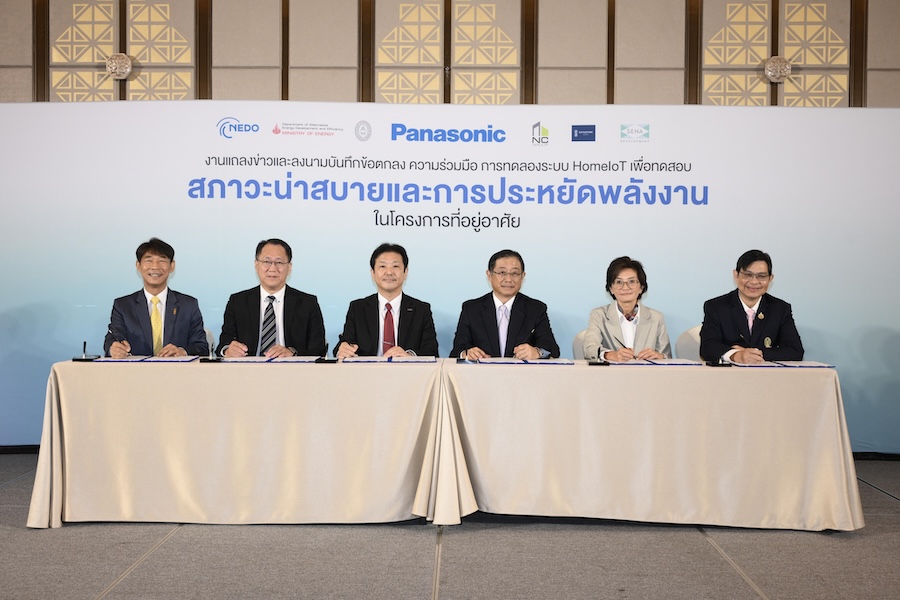
Panasonic is developing Home IoT solutions to enhance comfort and reduce energy costs.
Mr. Masaaki Isozaki, Chief Technology Officer of Panasonic Electric Works Japan, stated, "With the vision of 'Panasonic GREEN IMPACT,' which is Panasonic's long-term environmental mission aimed at improving everyone's quality of life in a sustainable environment, Panasonic strives to innovate accessible solutions by building on existing products to address quality of life issues in housing. The first solution developed by Panasonic to meet this vision involves using Home IoT technology and algorithms to help control living conditions. We expect the research results to identify 'comfortable living conditions' specifically for Thais, leading to future housing technology development that aligns with the lifestyle of the Thai people."
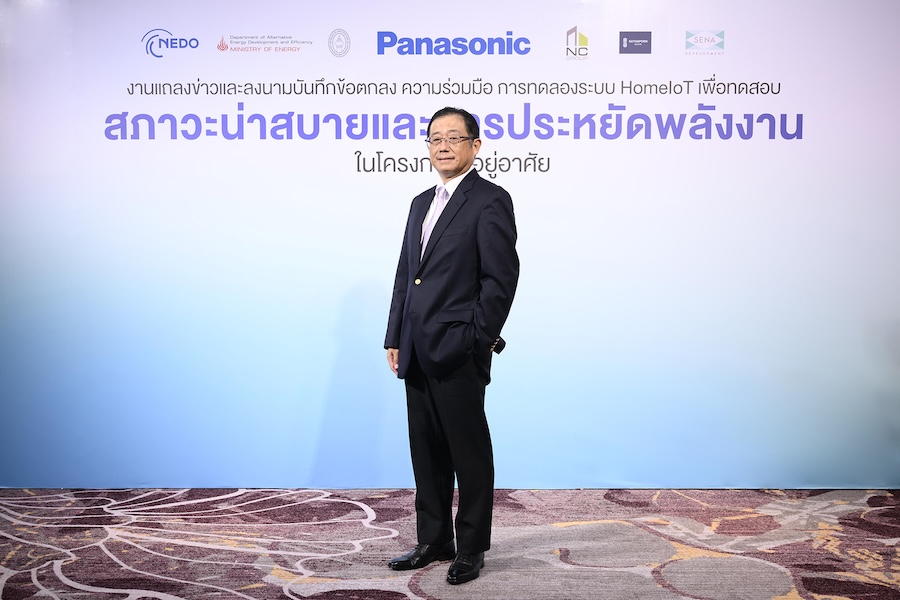
Mr. Hidekatsu Ito, Managing Director of Panasonic Solutions (Thailand) Co., Ltd., said, "Panasonic has been working on solutions to address the concept of sustainable quality of life development. We recognize the importance of housing as a critical starting point for improving various aspects of human life. We believe that when a home provides comfort to its residents, it helps reduce the burden on the world, leading to sustainable living. This is the basis for our research project on comfortable living conditions for Thais in collaboration with the Faculty of Architecture at Chulalongkorn University to develop a system that creates comfort using technology."
This project began in 2022 with the construction of a Zen Model housing prototype at the Faculty of Architecture, Chulalongkorn University, simulating comfortable living conditions and collecting data before testing it in a real home within the Sena Grand Home project in Bangna Km. 29, in collaboration with Sena Development Public Company Limited and Hankyu Hanshin Properties Corp. at the end of 2023.
This year, Panasonic will accelerate the validation of the system's functionality as a technology that supports energy reduction in homes, testing the system in 12 actual residences from three leading real estate developers: Sena Development Public Company Limited, N.C. Housing Public Company Limited, and Sathaporn Estate Company Limited, which have been long-term partners of Panasonic. Each home features unique architectural designs in different contexts, presenting an interesting challenge for testing. Additionally, support has been received from the International Project Promotion Office of NEDO, Japan, which provides funding to expedite research success, along with collaboration from the Department of Alternative Energy Development and Efficiency, Ministry of Energy of Thailand, to support data provision and promote this concept into future energy-efficient housing policies.
The Thai and Japanese governments are jointly committed to enhancing energy security.
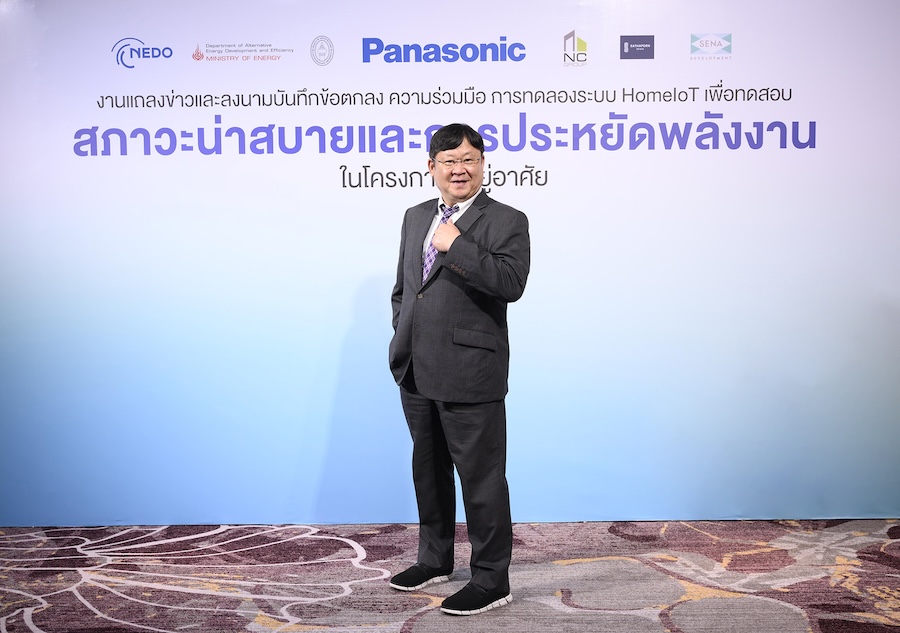
Mr. Takashi Naruse, Executive Director of the International Project Promotion Office of NEDO, Japan, stated, "NEDO is one of the largest public research and development management organizations under the Ministry of Economy, Trade and Industry of Japan (METI), with a primary mission to promote research and development in energy, environmental technology, and industrial technology. The goal is to apply research results practically and address social issues through international cooperation with countries such as ASEAN, China, India, the United States, and the European Union. In Thailand, NEDO collaborates with government agencies including the Ministry of Energy, Ministry of Industry, Ministry of Higher Education, and Ministry of Science, Research and Innovation to implement various demonstration projects in energy conservation technology, alternative energy, carbon reduction, environmental quality improvement, and industrial development.
The Home IoT system testing project to evaluate "comfortable living conditions and energy efficiency" in residential projects conducted by Panasonic Solutions (Thailand) Co., Ltd. and Chulalongkorn University is a significant initiative that will lead to sustainable energy reduction in Thailand's residential sector in the future. NEDO has thus provided budget support to accelerate the testing of the system's effectiveness and confirm its success more quickly, pushing for a carbon-neutral society in Thailand.
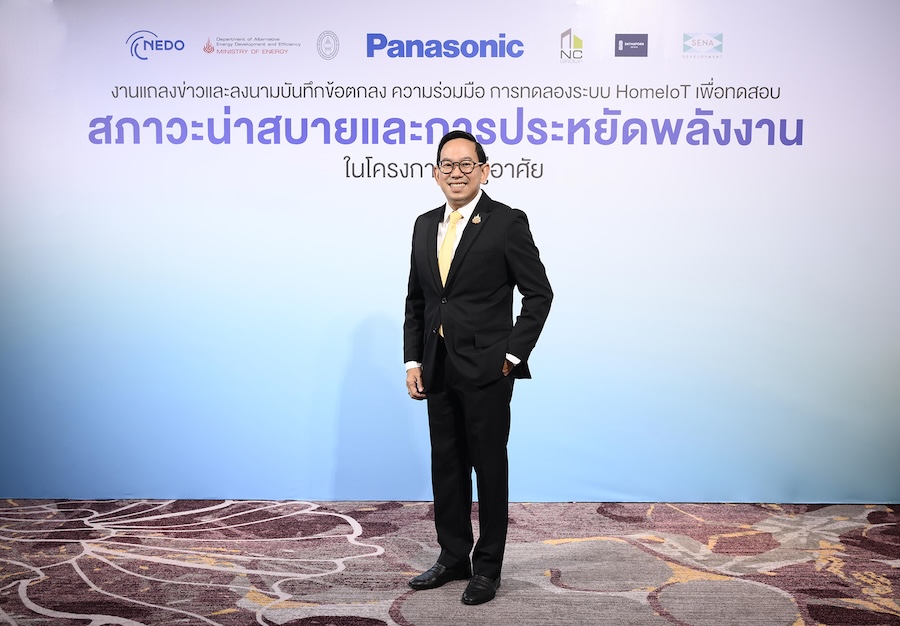
On the Thai side, Mr. Watthanapong Kurovat, Director-General of the Department of Alternative Energy Development and Efficiency (DEDE), Ministry of Energy, stated, "This project is a significant step towards energy security as it demonstrates energy conservation in households in Thailand, focusing on air conditioning systems, which consume a lot of electricity. By utilizing IoT technology to control and reduce air conditioning usage while designing spaces appropriately, we can maintain and create a comfortable environment that aligns with the lifestyle of residents, location, and house design. The department will provide policy advice, coordinate with other agencies, and facilitate various aspects, and will expand the results from this project, including promoting related measures in the future.
"This demonstration project serves as a showroom. If we can commercialize the technology showcased, it will help stimulate the economy and enhance energy security for the country. It benefits both Thailand and Japan and comes at a timely moment to reduce household electricity consumption, especially as electricity prices have risen significantly. It aligns with the Ministry of Energy's 2022 energy conservation plan, which promotes the use of IoT to enhance energy savings in households. Furthermore, it encourages the adoption of energy innovations in Thailand's real estate sector to collectively create a low-carbon society in line with global trends."
Chulalongkorn University utilizes the BIM system combined with Home IoT to discover real comfortable and energy-efficient conditions.
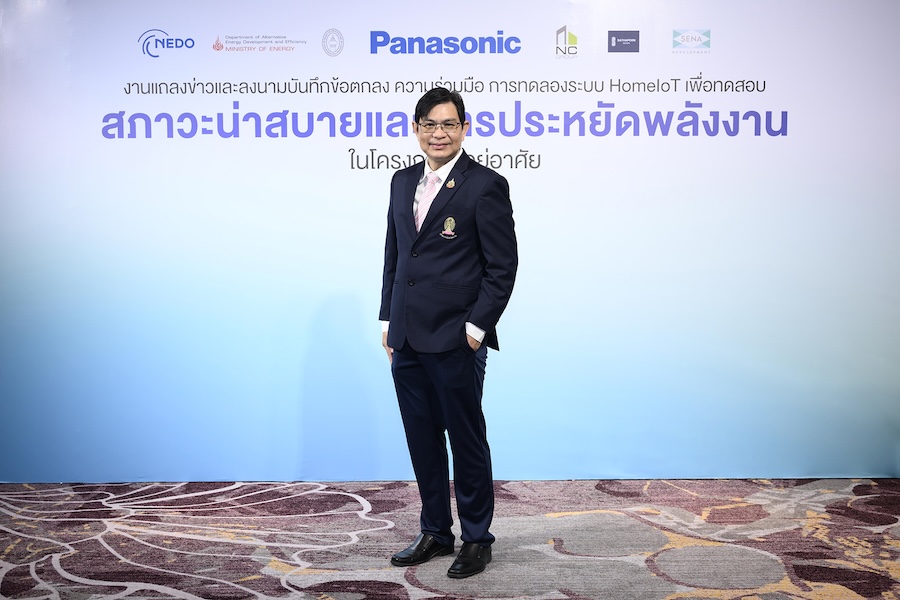
Assistant Professor Sarayut Sapsuk, Dean of the Faculty of Architecture at Chulalongkorn University, revealed, "This project started from the hypothesis that setting the air conditioning at 25 degrees Celsius may not be the best energy-saving method and not the most suitable temperature for Thais. Therefore, we have been experimenting to find the Predicted Mean Vote (PMV) or comfortable conditions for Thais since 2022 through the ZEN Model housing prototype, which uses BIM (Building Information Modeling) for design, and various systems within the house are controlled by the digital Home IoT system.
The experimental design to find the PMV for Thai people is a key aspect that Chulalongkorn University, in collaboration with Panasonic's research team, has been working on to establish experimental conditions in various residential settings and prove energy savings in real comfortable conditions. Currently, we can process preliminary PMV results indicating that we can manage indoor spaces to keep residents comfortable while saving on electricity costs. Additionally, the data collection and management of indoor conditions using IoT devices through the BIM and Digital Twin platforms represent another effort by the research team to achieve sustainability under conditions that maintain such states.
In managing indoor spaces for residents, air conditioning units, fans, switches, and temperature and humidity sensors will be installed, operating through Panasonic's Comfort Air and Home IoT systems within two-story reinforced concrete houses, approximately 140-180 square meters. The experimental devices will be installed according to designs suitable for different house types, analyzed through Panasonic's software, resulting in each building potentially having different numbers and positions of devices. The experiments will last for one year to observe performance across Thailand's seasons, measuring and collecting data on the system's energy-saving effectiveness by monitoring changes in various factors such as temperature and wind speed.
Sena - N.C. Housing - Sathaporn Estate supports 12 homes for research to discover 'comfortable conditions and energy efficiency.'
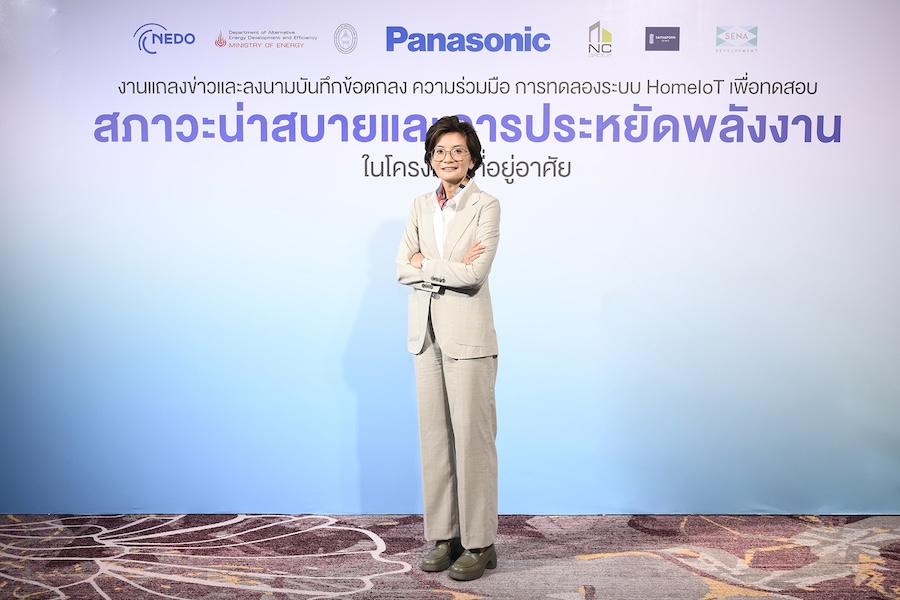
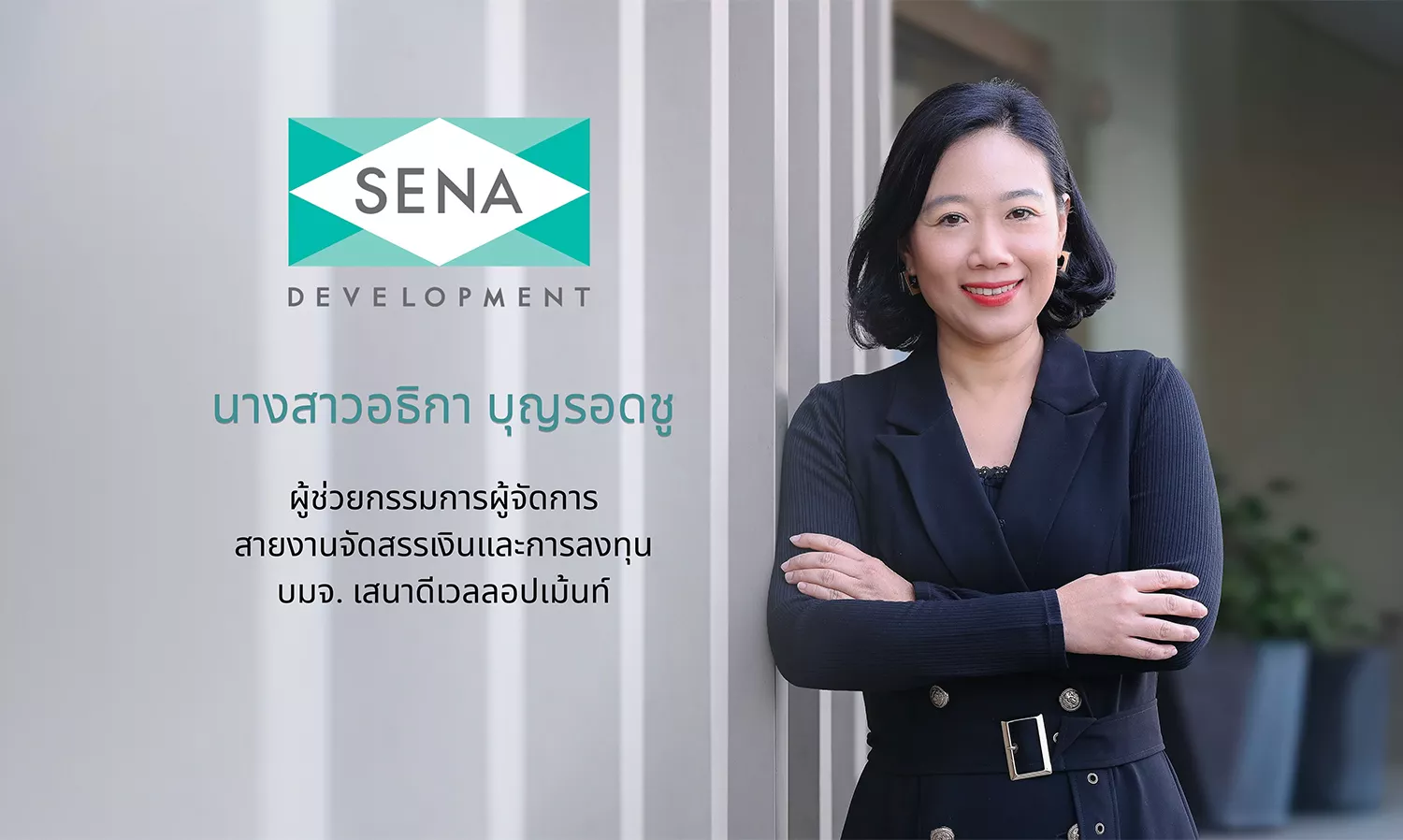
Dr. Kesara Thanyalaksana, Managing Director of Sena Development Public Company Limited, stated, "Sena Development has supported research to find comfortable conditions since the initial phase by allowing Panasonic to test the system in the model homes of the Sena Grand Home project in Bangna Km. 29 at the end of 2023, as we see this as a project that adds value to sustainable housing development, aligning with Sena Development's environmental and energy conservation philosophy, 'SENA Low Carbon,' which promotes a Decarbonized Lifestyle, emphasizing every detail of living. Not only do we develop quality housing, but we also develop products, services, and new businesses to enhance the quality of life for all ages, allowing residents to live sustainably and contribute to reducing environmental impacts."
For this collaboration, Sena Development has supported four model homes in the Sena Village Bangna Km. 29 project, consisting of two THANN+ twin houses, approximately 35 square wah, with a usable area of 165 square meters, and two THEE+ townhomes, approximately 27 square wah, with a usable area of 140 square meters, for testing purposes. The company hopes to develop effective housing technology based on the SENA Low Carbon concept, focusing on energy savings and comfort for residents' quality of life.
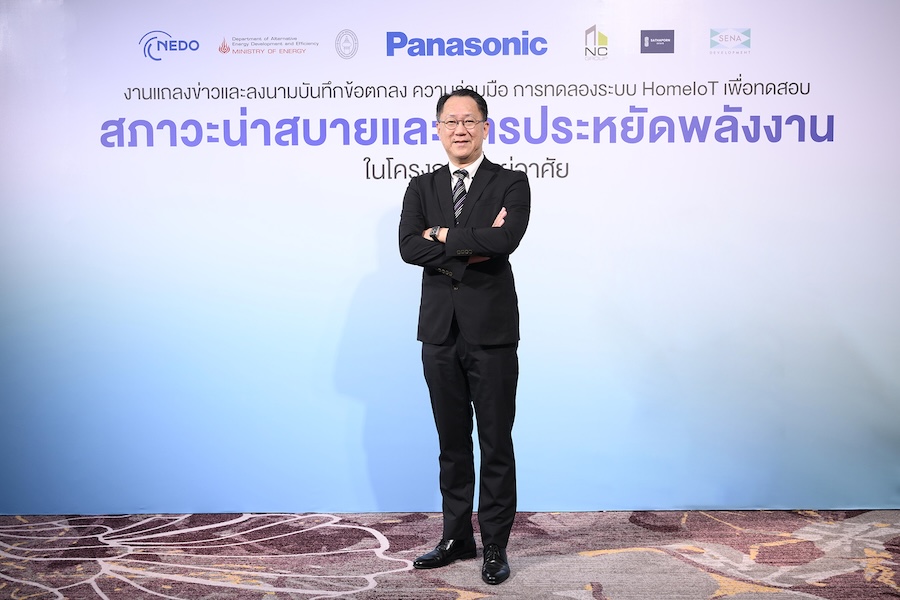
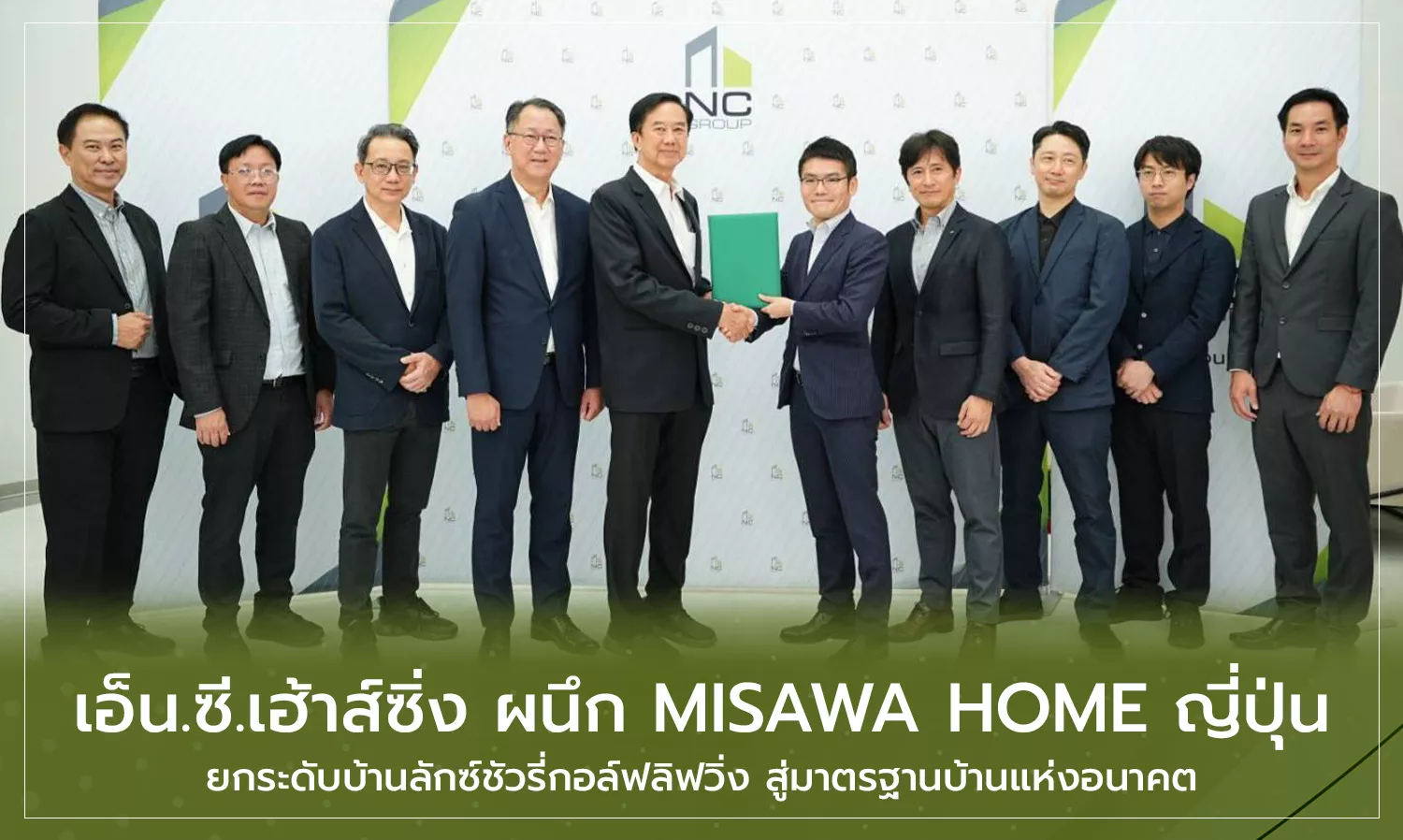
Mr. Somnuk Tantathodtham, Managing Director of N.C. Housing Public Company Limited, stated, "Our company has been a real estate operator alongside Thai people for over 30 years, operating under the concept of Home Expert Living Care, prioritizing customer needs by integrating technology into projects to enhance value and convenience while also focusing on the environment through innovative designs that connect technology. Our Product Roadmap concept, NCXT (NC Cross Innovation & Home Technology), ensures residents enjoy convenience, safety, and health, promoting long-term quality of life for better living. Therefore, collaborating with Panasonic is another significant step towards developing sustainable and energy-efficient housing for Thais. Our company has supported four model homes in the Fah Greenery NEOLA project in Rangsit, Klong 2, consisting of two Modish twin houses, approximately 39 square wah, with a usable area of 140 square meters, and two Louis single houses, approximately 57 square wah, with a usable area of 155 square meters, designed under the concept of 'An Environment Designed for Better Living,' emphasizing the creation of comfortable living conditions within homes, aligning with N.C.'s sustainable project development philosophy."
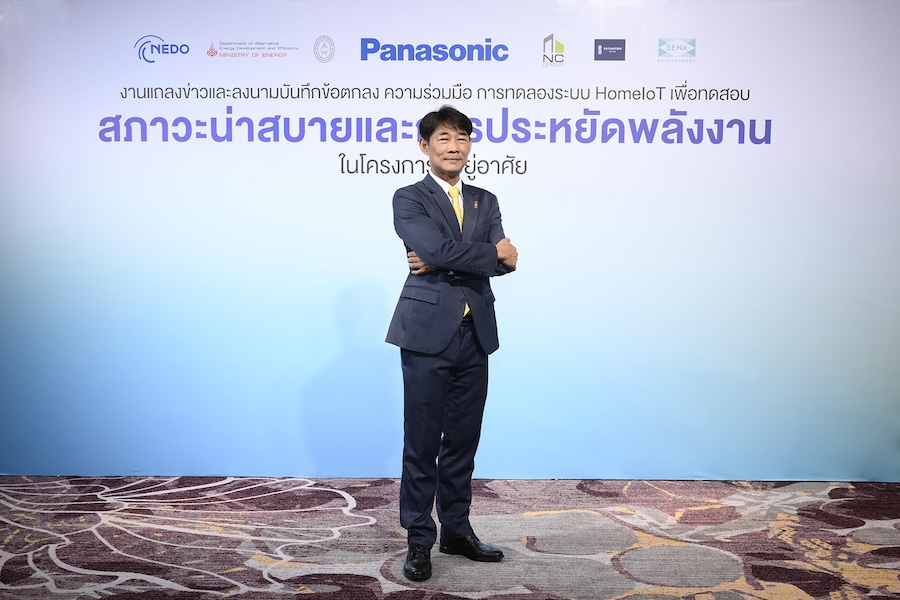
On the other hand, Mr. Sunthorn Sathaporn, CEO of Sathaporn Estate Company, stated, "Sathaporn Estate is a real estate brand that emphasizes integrating sustainability into every process, including business, society, environment, and energy conservation. Our entire Sathaporn team adheres to this philosophy in developing residential projects across all locations.
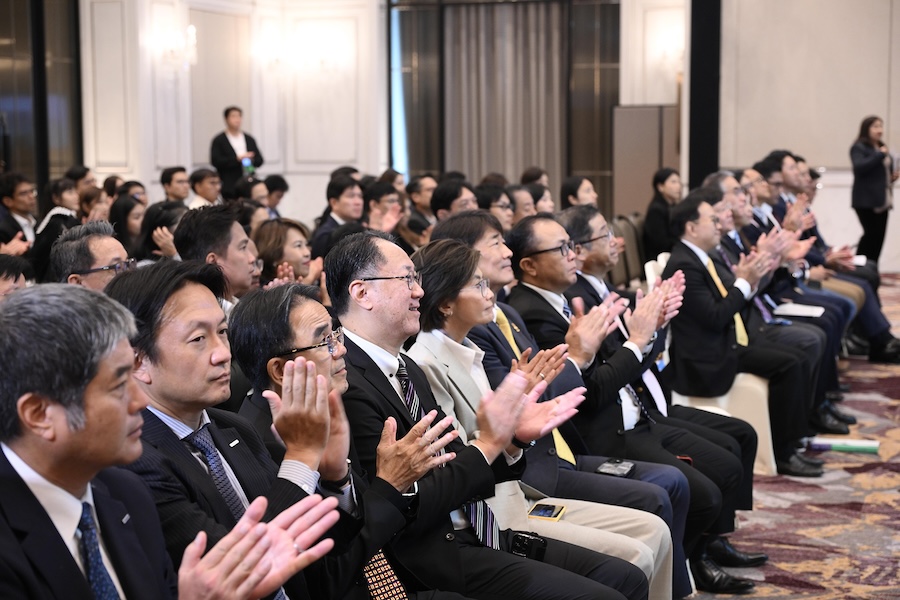
For this collaboration, the company has provided four completed homes from the project The Eternity Greenwood Rangsit - Wongwaen (THE ETERNITY GREENWOOD Rangsit - Wongwaen), which has received four Thailand Energy Awards from the Ministry of Energy, including one Companion single house, 53.7 square wah, with a usable area of 220 square meters, and three Beloved single houses, 50.6 square wah, with a usable area of 185 square meters, for Panasonic to conduct independent research to derive beneficial guidelines for good living conditions, comfort, and energy management through technology, aiming to advance housing innovation suitable for Thailand. The hope is to integrate the results into architecture, engineering, and technology for the development of more sustainable homes in the next generations of Sathaporn Estate."