WHA Mega Logistics Center Tepharak Km. 21 Building B Receives LEED Gold Green Building Certification
WHA Corporation Public Company Limited (WHA Group) is a leader in logistics, industrial estates, public utilities, energy, and digital business in Thailand and Southeast Asia. Under its logistics operations, the WHA Mega Logistics Center Tepharak Km. 21 Building B has been certified with LEED Gold Version 4.1 BD+C for warehouses and distribution centers. The LEED (Leadership in Energy and Environmental Design) Version 4.1 is the latest green building standard set by the U.S. Green Building Council and serves as the future benchmark for sustainable green building design and construction practices.
WHA Group is committed to developing its logistics business to minimize environmental impact and promote the health of people in all business activities by comprehensively implementing sustainability strategies. The WHA Mega Logistics Center Tepharak Km. 21 Building B is a project we aim to achieve LEED v4.1 GOLD certification for new construction warehouses and distribution centers (NC WDC), which not only transforms Thai warehouses towards sustainability but also positively impacts the industry in its serious pursuit of sustainable development.
The primary objective of LEED NC WDC is to enhance the efficiency of commercial projects in terms of operations, human health, costs, and environmental friendliness. This concept is highly beneficial for both developers and property tenants, helping to save overall operational costs and increase property value.
WHA Mega Logistics Center Building B is located on Tepharak Road Km. 21 in Samut Prakan Province, designed and developed under green building principles to control energy and water usage, reduce carbon emissions, and manage waste. This warehouse building complies with LEED standards and has been certified at the Gold level, evaluated based on its environmental impact reduction, carbon dioxide emissions, and enhancement of indoor environmental quality that promotes the well-being of its occupants.
The building area includes sections for storage, office space, and multipurpose areas such as storage rooms and machine rooms. The entire warehouse area does not use air conditioning but employs natural ventilation design principles. WHA Mega Logistics Center Tepharak Km. 21 Building B strictly adheres to LEED certification assessment criteria in its building management and operations, with the following details:
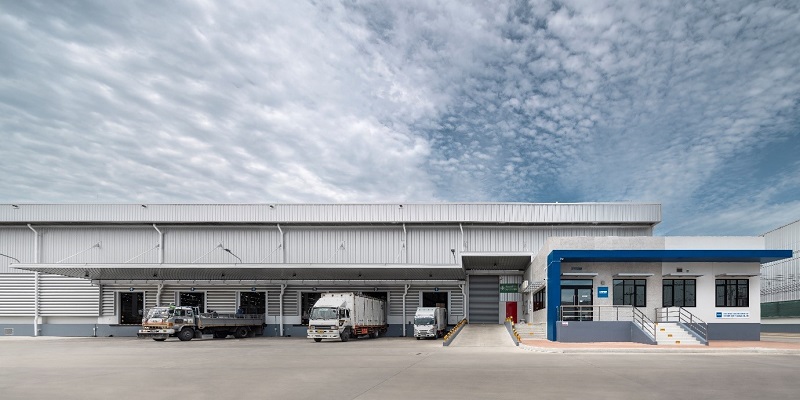
WHA Mega Logistics Center Tepharak Km. 21 Building B
Energy Use
The building's structure and systems are designed for energy efficiency, such as using insulated roofs, walls, and windows, along with efficient HVAC systems and lighting.
High-performance structures include heat-reflective glass, lightweight concrete walls, and roof insulation that helps prevent heat from entering air-conditioned areas, thereby reducing energy consumption for cooling and lowering energy costs. Additionally, rooftop solar systems can reduce energy consumption. With these approaches, the building aims to achieve Net Zero goals and reduce greenhouse gas emissions by 140,000 kilograms per year.
Water Use
The design aims to reduce water consumption both inside and outside the building by selecting water-saving fixtures, including dual-flush toilets, urinal flush valves, faucets, and showers, targeting a reduction of over 50% in indoor water use, equivalent to 358,000 liters per year.
Indoor Environmental Quality
The indoor environment is designed for the well-being of building users, featuring systems that enhance fresh air circulation and effective air filtration to eliminate dust and fine particles. Additionally, low-carbon interior materials such as paints, coatings, adhesives, flooring materials, and a no-smoking policy throughout the building ensure safety and health for all occupants.
Lighting
This warehouse building mitigates the impact of rising temperatures in the surrounding area by installing sunshades and reflective roofs to prevent light pollution. The lighting used in the building has passed BUG standard testing and is installed in appropriate positions to direct light correctly.
Material Use
To help reduce waste, the building has designated central areas for collecting recyclable waste such as cardboard, paper, glass, metal, and plastic, as well as sorting hazardous waste such as chemically contaminated waste before disposal. Furthermore, construction or decorative materials containing recycled components are selected to promote a circular economy.
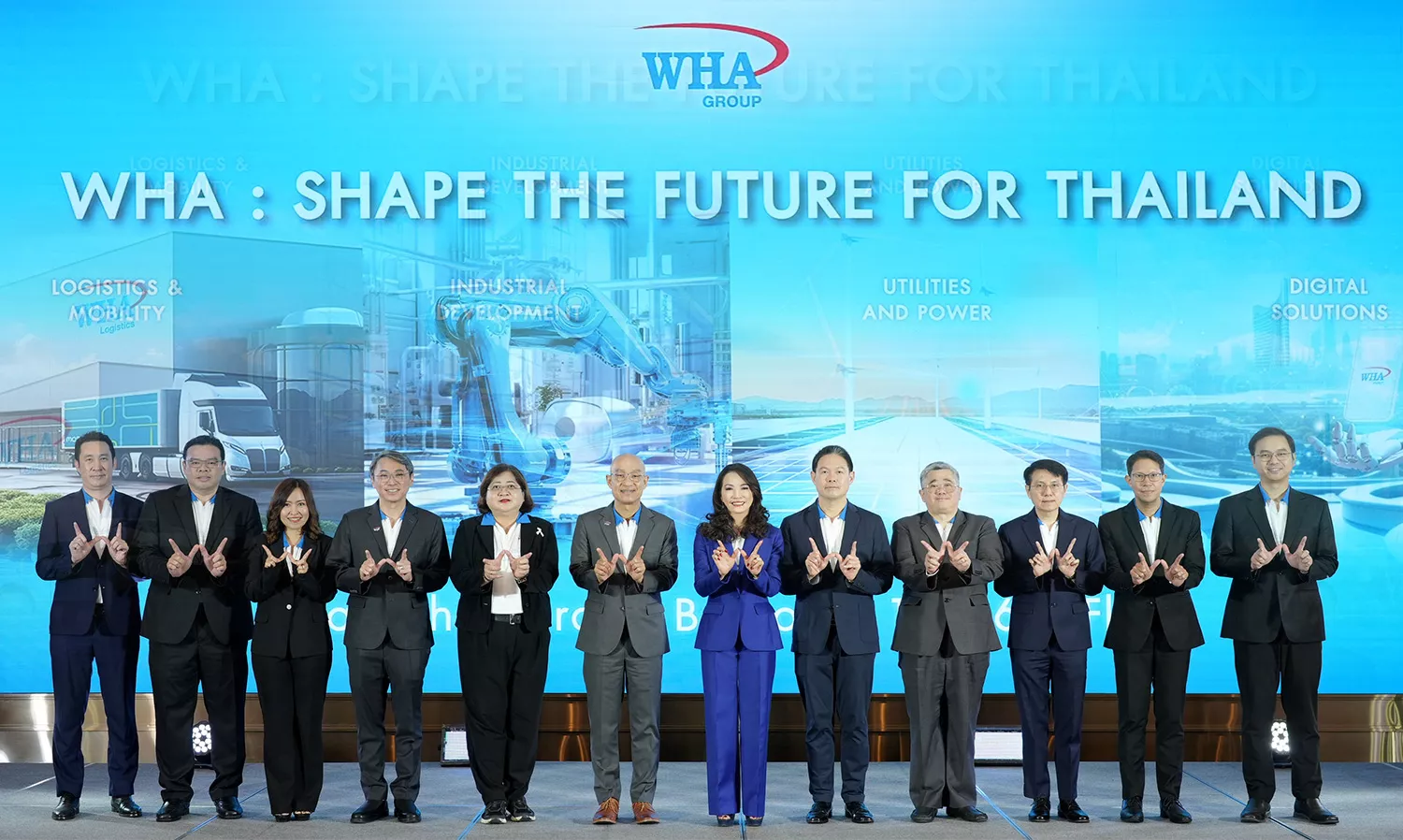
The LEED certification of WHA Mega Logistics Center Tepharak Km. 21 Building B and the planning of future projects that consider environmental impact and long-term operational cost reduction reinforce that WHA Group's logistics business is ready to move towards a sustainable future, aligned with WHA's mission: WE SHAPE THE FUTURE, aiming to be “The Ultimate Solution for Sustainable Growth.”