Raising Pets in a Condo: Who Says It's Difficult?
To help new pet owners understand their little ones better.
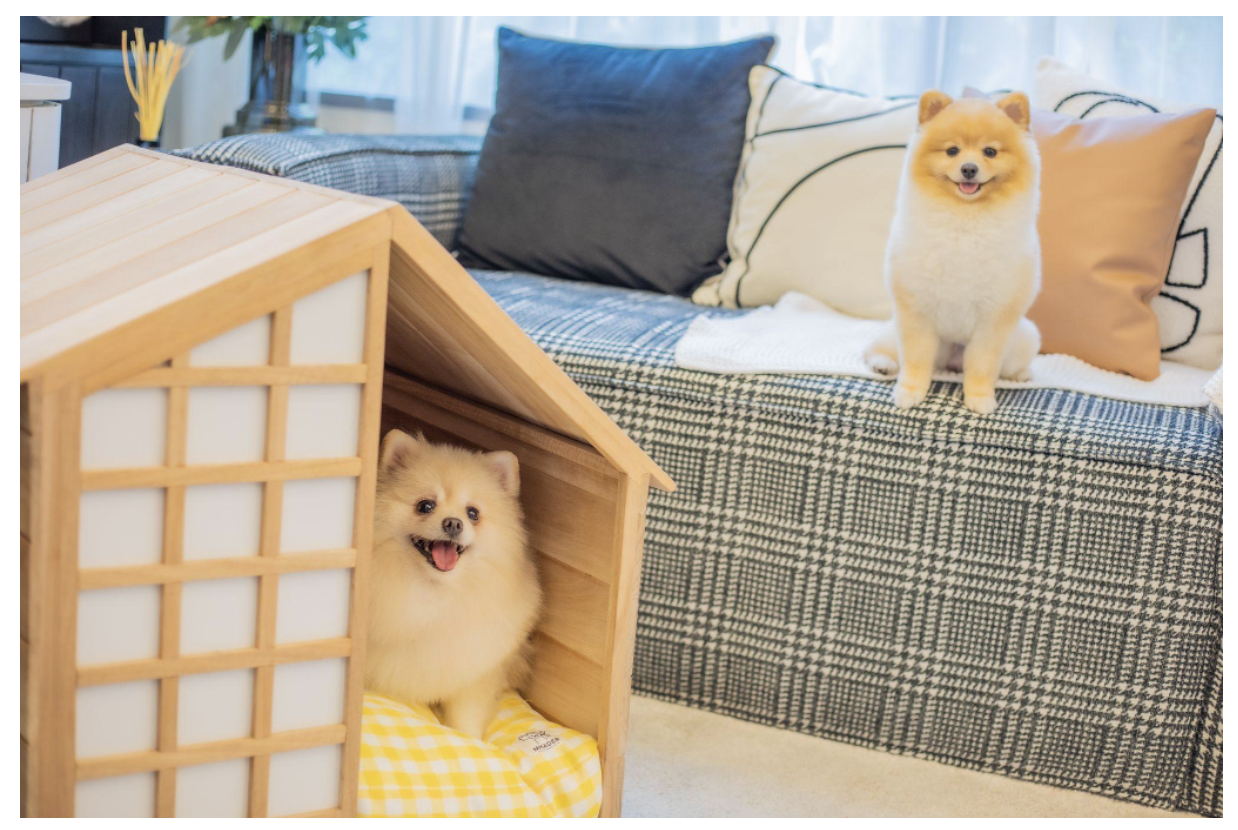
Photo by Origin Play Sri Lasalle Station Sale Gallery
Before we get to know the adorable pets of each breed, let's first explore a little insight into the trending Pet Humanization phenomenon that has gained popularity recently.
Pet Humanization refers to behaviors that strengthen the bond between pets and humans. This trend arises from modern individuals choosing to remain single or couples opting to raise pets as family members instead of having children. With changing societal attitudes towards pets, many people now view their pets not just as animals but as companions with emotional needs and rights similar to humans.
Currently, more people are moving into condos due to the convenience of transportation connected to the city center, close to workplaces and amenities. However, there is still a desire to keep pets in condos, although many projects still do not allow pets and lack sufficient facilities for them.
Let's look at which types of pets have personalities and behaviors suitable for condo living.
As many of us know, the most popular pets are dogs and cats. Each type and breed of these pets has different characteristics. Cats can be kept in condos without much concern about size, breed, or weight. However, for dogs, there are various breeds and sizes. The suitable dog sizes for small living spaces like condos are toy and small breeds.
Toy Dogs typically weigh no more than 4 kilograms and require minimal space. Examples of toy breeds include:
- Maltese: weighs 3–4 kg, height 7–9 inches
- Chihuahua: weighs 1–4 kg, height 6–12 inches
- Pomeranian: weighs 1.3–3.1 kg, height 6–7 inches
- Yorkshire Terrier: weighs 1–3 kg, height 7.8–8.6 inches
Caution: Be mindful of their bones and teeth. Avoid giving large or hard-to-digest food, as their digestive systems are not strong. They should have some light exercise for good health.
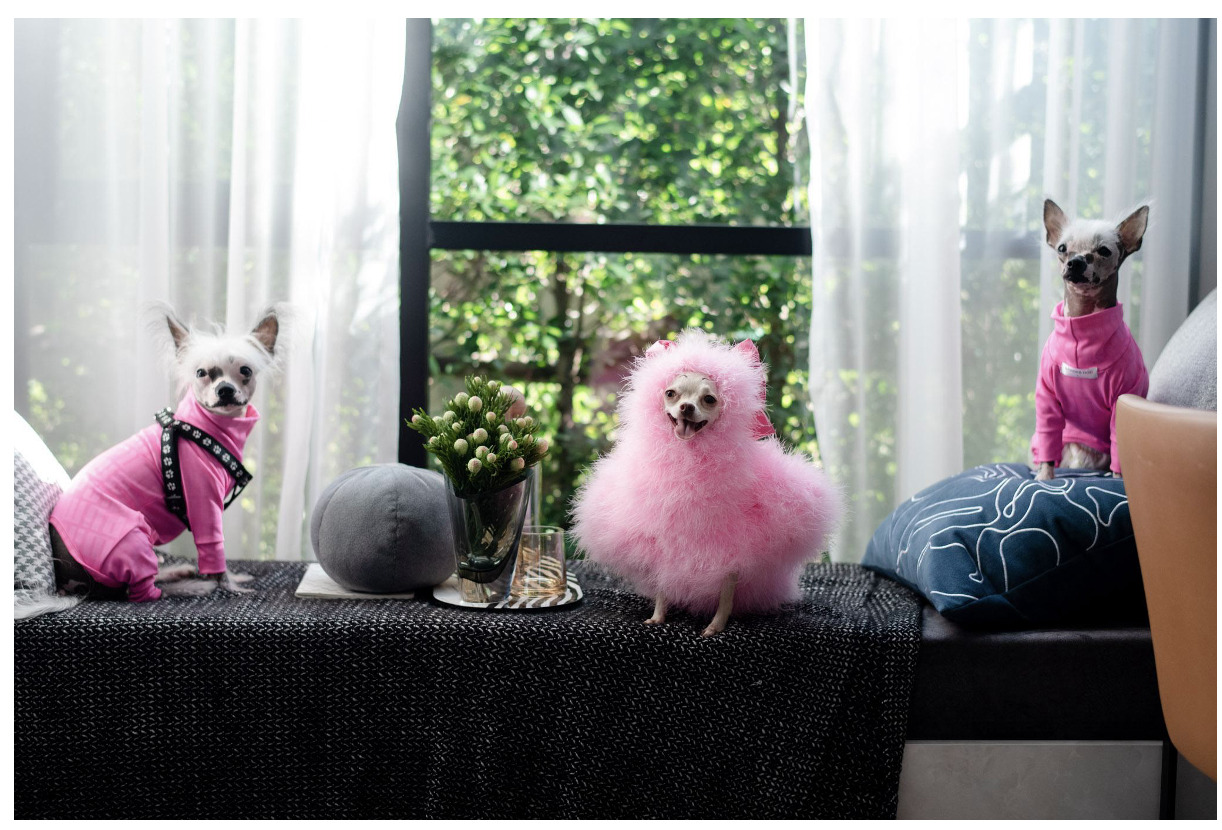
Chihuahua, a toy dog. Photo by Origin Play Sri Lasalle Station Sale Gallery
Small Dogs are another size suitable for condo living. Generally, they weigh between 5–10 kg. Examples of small breeds include:
- Pug: weighs 6–8 kg, height 10–13 inches
- Corgi: weighs 10–12 kg, height 10–12 inches
- French Bulldog: weighs 7–12 kg, height 10–13 inches
- Beagle: weighs 10–11.3 kg, height 13–15 inches
Caution: Be aware of their weight pressing on their joints and reduce heavy exercise impacts on their legs and spine.

French Bulldog, a small dog. Photo by Origin Play Sri Lasalle Station Sale Gallery
VCA Animal Hospital states, “Dogs are basically social animals that enjoy the company of their peers.”
Did you know? Dogs originated from the wild!
Many studies suggest that dogs are descendants of wild canines, which explains their intelligent behaviors, survival skills, socialization with packs, and adaptation to human society. This led humans to domesticate them for work in early times, spreading globally and resulting in various breeds. This reflects their need for spacious areas to run and play, as they require open spaces to breathe easily, unlike cats.
Meeting areas with other dogs for social development are essential. However, due to their instincts, some dogs may use urine to mark territory, while others may bark or growl. Therefore, cleanliness and safety of these areas should be prepared.

Dogs playing in open spaces
So, what is the ideal environment for dogs?
Let's hear recommendations from the veterinarians at Thonglor Pet Hospital:
- Resting Area: Should be quiet and private with adequate light for various temperatures. It should be dry and clean for hygiene.
- Bathroom Area: Typically, dogs urinate about 6 times a day and defecate 1–3 times a day, usually after eating or drinking, after playing, and after waking up.
- Play Area: Should allow for relaxation, turning, and running. Small dogs need appropriate exercise for their size, such as running, playing with toys, and light running. Interactive toys can help develop their skills, but jumping should be avoided to prevent joint issues or other health problems. Exercise helps reduce stress, lowers the risk of various diseases, and supports their mental health to prevent aggression and emotional problems.
Dog toys should be chewable to promote strong bones and teeth.

Dog toys
Cat owners need not worry about their pets' weight.
Most breeds have similar weights, but the differences depend on fur length. Short-haired cat owners can relax about this. Examples of short-haired breeds include:
Short-Haired Cats
- British Shorthair: weighs 4–7 kg
- American Shorthair: weighs 3–5 kg
- Sphynx: weighs 3–6 kg
- Siamese: weighs 3–4 kg

Sphynx, a short-haired cat
Long-Haired Cats
Long-haired cats require more care, suitable weather conditions, and housing design considerations. Examples of long-haired breeds include:
- Scottish Fold: weighs 6–8 kg
- Persian: weighs 3–5 kg
- Maine Coon: weighs 3–8 kg
- Ragdoll: weighs 4–9 kg

Maine Coon, a long-haired cat
Precautions for Cats: Be aware of congenital heart diseases or those arising from heart muscle abnormalities. Monitor their symptoms, diet quality, and stress levels, as these are often found in certain breeds. Skin diseases are also a concern for Sphynx cats due to their hairless skin being sensitive to sunlight.
Long-haired cats require special attention as they need grooming. Owners must ensure proper nutrition for coat health, brush their fur to prevent shedding, and regularly check drainage systems for potential fur blockages. Temperature control is equally important, as cats cool down by panting or releasing heat through their paws, unlike humans who can quickly cool down through skin and sweat.
The Origin of Cats:
Instinct plays a crucial role in defining a cat's behavior. Cats are descendants of Proailurus, early hunters with claws that helped them climb trees for safety or to observe prey from heights. This trait has persisted, as cats still love to climb vertical spaces, feeling secure and observant when up high.
According to veterinarians from Thonglor Pet Hospital:
“Cats enjoy stretching, jumping to high places, hiding, and it is notable that some cats cannot play well with others.”
Key behavioral ranges for cats include three main points: stretching range of 29–36 cm, jumping range of 150–180 cm, and a balcony width of no more than 5 cm.
What is the ideal environment for cats?
Veterinarians from Thonglor Pet Hospital recommend that a cat's area must be clean and have more details than a dog's.
- Play Area: This is the largest living and relaxation area for cats. It should allow for running, hiding, or climbing high places to keep them healthy and entertained. It doesn't need to be as spacious as for dogs but should suffice for exercise.
- Feeding Area: This should be a quiet area, avoiding dining rooms or places that may cause disturbances. Water and food should be placed separately and away from the litter box.
- Resting Area: Cats prefer to sleep in sunny spots and natural heat sources. They enjoy high places and often choose the most suitable area for themselves. “The more private the area, the more it can reduce stress and anxiety.”
- Bathroom Area: The litter box should be placed in a quiet area that is accessible at all times and private to prevent stress.
Did you know that dogs and cats see differently than we do?
In addition to pet behaviors, the way they perceive colors is also fascinating. When compared to humans, dogs and cats have different color perception abilities.
The cone cells in their retinas can absorb light wavelengths from three types of color pigments: red, blue, and green, allowing humans to see other colors and distinguish between them.
Dogs and cats have only two types of cone cells, which means they see images in shades of gray, yellow, and blue but have difficulty perceiving red and green.
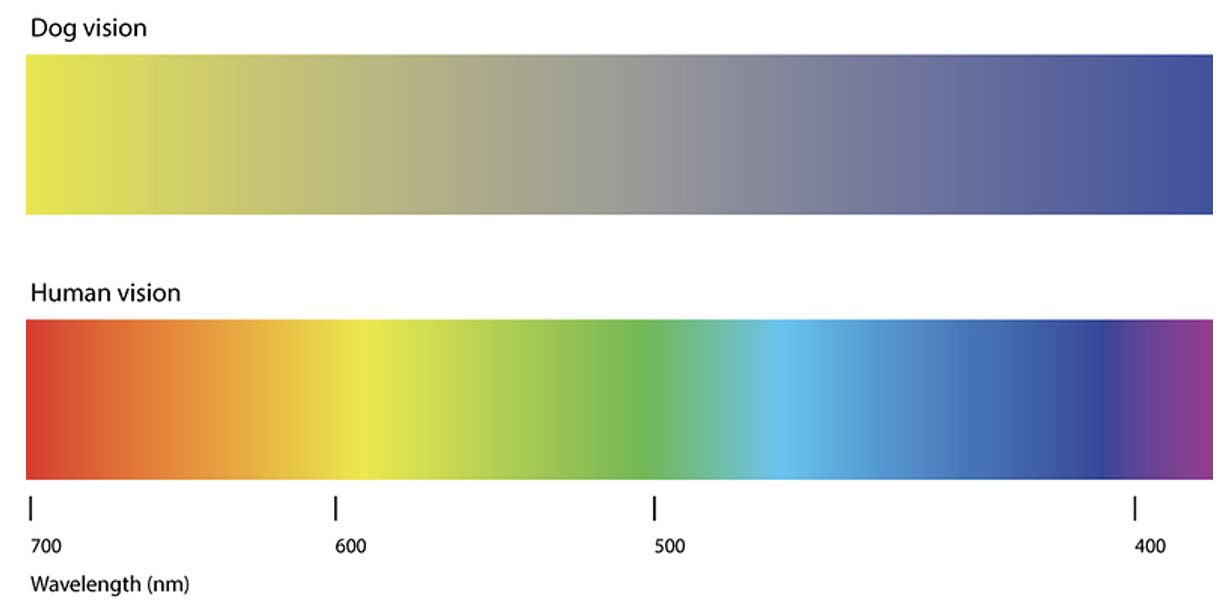
Color perception between animals (top) and humans (bottom). Photo by thehoundproject.com
Recommended colors that affect feelings: are shades of gray, which are primarily perceived by pets.
- Yellow stimulates pets to be more active.
- Blue and nature-inspired colors create a calming and relaxing atmosphere.
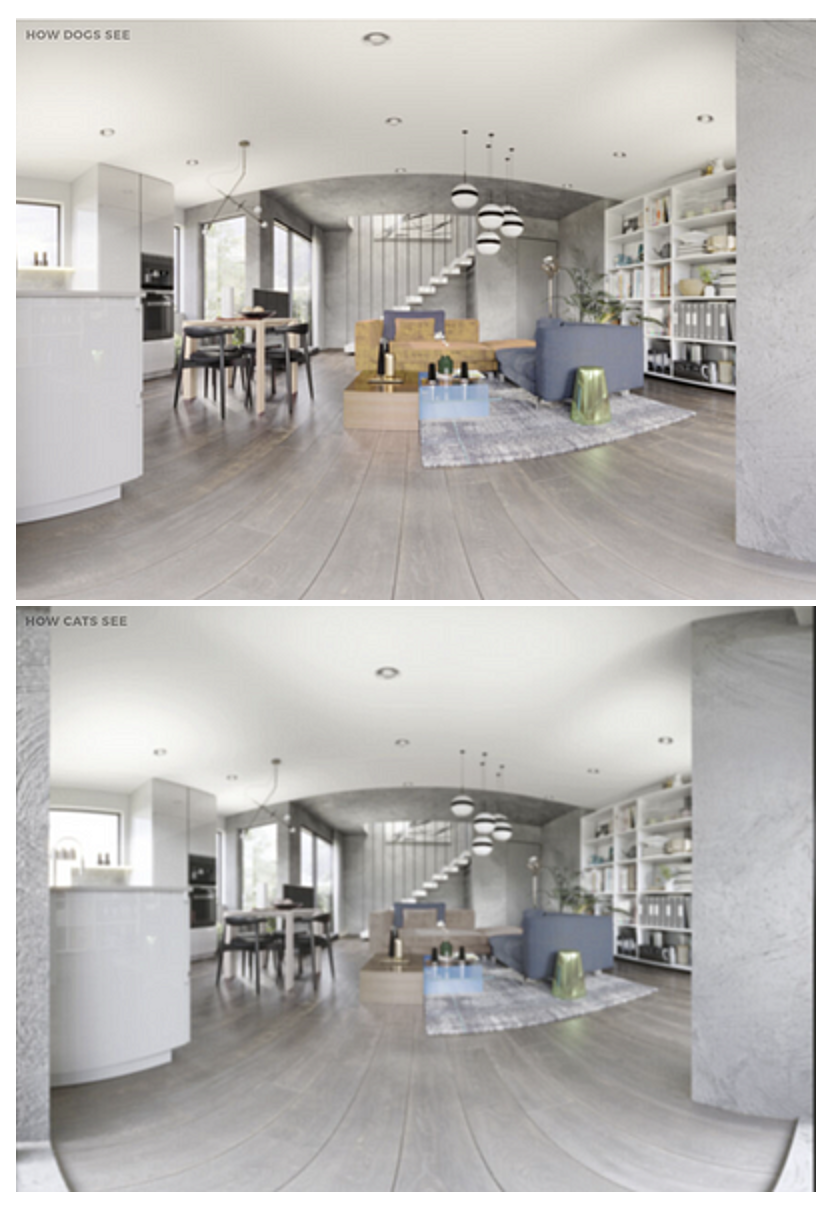
Visual representation of how humans, dogs, and cats see, respectively. Photo by HomeAdvisor
With all this information, new pet owners should now understand that our little pets have different needs and preferences. We believe that pets are family members, and thus, living arrangements must adapt and evolve to accommodate their lifestyles.
The concept of developing suitable condominium projects to meet the needs of cohabitation between humans and pets has emerged.
Thanks for the images from:
: Website thehoundproject
: Website LiveScience
: Website HomeAdvisor