Monitoring Housing Trends for Seniors: What Kind of Homes Meet the Needs of the Silver Generation?
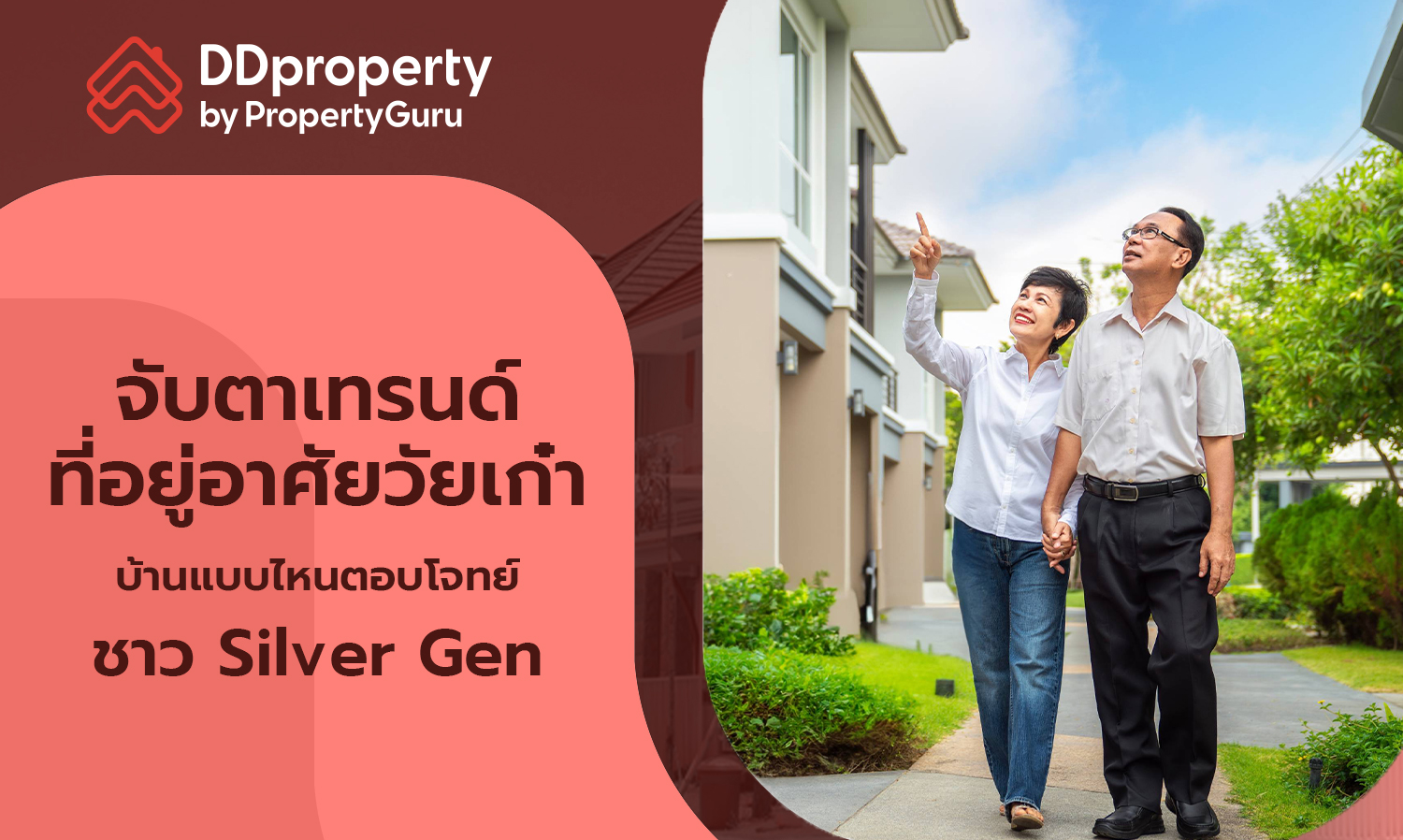
Currently, Thailand has fully entered a Complete Aged Society. Data from the Department of Provincial Administration, Ministry of Interior, reveals that as of December 31, 2023, 20% of Thailand's population is aged 60 and over, and this number is expected to increase significantly due to a clear decline in birth rates. The Kasikorn Research Center predicts that Thailand will reach a Super-Aged Society by 2029, earlier than previously estimated in 2031.
However, Thailand's transition into an aged society presents both opportunities and challenges that both the public and private sectors must monitor. According to Krungthai COMPASS, the market value of the elderly or Silver Generation in Thailand is expected to grow continuously at an average of 4.4% per year, reaching 2.6 trillion baht by 2030, equivalent to 12% of Thailand's economic value. This has led to a trend in businesses catering specifically to this consumer group, as they have significant spending power and financial readiness. Many businesses, including the housing market, are adjusting their strategies to target this new demographic.
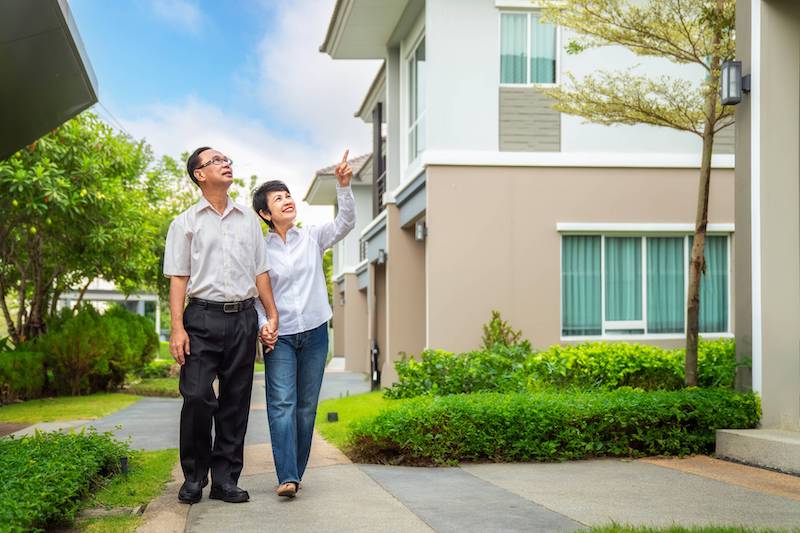
Update on Demand for Seniors: "Chiang Mai" Captures the Hearts of Retirement City Dwellers
Data from the latest consumer sentiment survey on the housing market by DDproperty, Thailand's number one real estate platform, reveals that over 3 in 5 (62%) Thai consumers are thinking more about retirement planning, especially among those nearing retirement and those with moderate incomes. Chiang Mai is the most desired city for retirement living (27%), thanks to its natural environment and development in various aspects, followed by Bangkok (15%), Chiang Rai (12%), Phetchabun (10%), and Phuket (9%), while 16% have no specific location in mind.
The primary goals for life after retirement focus on financial matters, with over 2 in 3 (70%) hoping to be debt-free, followed closely by financial independence and having sufficient savings for medical expenses (63% and 61%, respectively). This reflects that financial liquidity and planning for healthcare expenses are crucial factors for a comfortable retirement.
48% of seniors have funds ready to purchase a new home. The latest DDproperty Thailand Consumer Sentiment Study shows that nearly half (48%) of Thai consumers aged 60 and over have sufficient savings to buy a home, which is higher than consumers in other age groups. Meanwhile, 42% reported that they have saved halfway, making them a high-potential target group to watch. Over 1 in 3 (37%) plan to buy a home within the next year, with the main reasons being a desire for more personal space (45%), followed by investment purposes and selling their current home at a good price (both at 32%).
Focus on "Home Size - Proximity to Public Transport" First. The internal factors that seniors prioritize when deciding to buy or rent a home include home size (58%), emphasizing sufficient living space for various activities and convenience. This is followed by average price per square meter (49%), amenities within the home (39%), and design and construction (27%). Measures or projects that facilitate home ownership and the reputation of the real estate developer both account for 23%.
As for external factors considered by seniors when choosing to buy or rent a home, more than half (56%) prefer projects that are easily accessible by public transport to enhance travel convenience and reduce the risk of driving themselves due to potential physical limitations. This is followed by location safety (52%), project location (43%), infrastructure and amenities in the area (31%), and the area's development and proximity to hospitals/healthcare facilities (both at 26%) to facilitate access to medical services.
Seniors hope to renovate their living rooms to suit their lifestyle. The area in the home that seniors want to change the most to accommodate retirement living is the living room (23%), as it is the main space for various activities. They want to modify it to meet their lifestyle and daily routines. The bedroom and bathroom follow (16% and 12%, respectively), as these areas need to be improved for safety and stability to support careful movement and reduce the risk of unexpected accidents while facilitating daily life.
Tips for Preparing Homes for Retirement
Universal Design is a concept focused on designing environments, creating spaces, and objects that everyone in society can fully and equally benefit from, without the need for special adaptations for specific groups. It considers usability for all, regardless of age, gender, or physical characteristics.
This has led to the principle of Universal Design becoming increasingly important in residential design today, ensuring that homes can accommodate consumers of all ages smoothly and safely, especially seniors.
In addition to purchasing homes in projects that incorporate Universal Design, DDproperty has shared guidelines for designing and modifying homes to support senior living, focusing on enhancing safety, reducing accident risks, and eliminating hazardous blind spots. This will help seniors confidently engage in various activities independently. Here are five key areas to adjust for senior-friendly homes:
The Living Room is where seniors spend a significant amount of their daily activities. This space should be designed to be open and well-ventilated throughout the day, with plants to enhance freshness or air purifiers to maintain clean air. Furniture should have simple functions, be easy to use, and be appropriately sized—not too large to clutter the room. Furniture should be arranged close to the walls to maximize open space, with no clutter on the floor to allow seniors to walk easily and prevent tripping, as well as accommodate wheelchair access.
Additionally, daily necessities, hobbies, and essential items or medications should be placed on tables, shelves, or cabinets at suitable heights that seniors can reach without bending too low. Allocating space to support daily lifestyles will help seniors carry out their routines smoothly, and as they become more self-reliant, it will boost their confidence in performing various activities independently.
The Bedroom is a crucial part of the home where seniors spend most of their time resting. The bedroom for seniors should be located on the ground floor to reduce stair use and be in a quiet area with privacy and good ventilation. It should be designed to accommodate living needs, such as:
- The floor should be made of shock-absorbing materials, and there should be no level differences to prevent tripping and falling.
- The bed should be appropriately sized for seniors, adjustable in height, with side rails, and the mattress should not be too hard or soft, with a space of 90-100 cm beside the bed to accommodate wheelchair use or for caregivers to assist.
- Install grab bars where sitting and standing occur, and have smart lighting that can automatically turn on and off based on movement to guide from the bed to the bathroom, or use remote-controlled lights.
- Have a bedside table that is easily accessible, and furniture like wardrobes or shelves should be at suitable heights for seniors, not too high for easy access.
- There should be no door sills to prevent tripping; choose sliding doors with an easy-to-use locking system that requires minimal effort and accommodates wheelchair access.
The Bathroom is another area that requires attention due to the high risk of slips and falls. Besides ensuring the bathroom is at least 200 cm wide to accommodate wheelchair use, it should have designated zones for safety:
- In the dry zone, choose wall-mounted sinks that can support the weight of seniors leaning on them, or opt for half-counter sinks for wheelchair accessibility. Faucets should be lever-type, and the toilet should be a standard height with grab bars installed for easier sitting and standing.
- In the wet zone, the shower seat should be sturdy, appropriately sized and high for seniors, with grab bars for assistance. The showerhead should be positioned beside the seat, and a temperature-controlled valve should be used. Importantly, floor tiles should have a slip resistance rating of R10 or higher, or anti-slip coatings should be applied to prevent slips when the floor is wet.
Stairways should be adjusted if the senior's bedroom is on the upper floor or if there is a need to access the upper levels of the house, as this can cause knee pain or increase the risk of tripping and falling. Therefore, stairs inside and outside the house should be appropriately wide, with risers no higher than 15 cm and treads at least 30 cm wide.
- The stair nosing should be a different color from the stair surface to clearly distinguish the steps. Handrails should be installed on both sides at a height of 80 cm from the ground, with adequate lighting. Additionally, it is recommended to install a "stair lift" to assist seniors in moving between floors without having to walk.
Garden and Landscape Around the House is another area that seniors enjoy for relaxation and gardening as a hobby. Therefore, the space should be made pleasant and orderly:
- The entrance and garden paths should be smooth and not uneven, and avoid using stones that may cause loss of balance or slipping. If the garden is spacious, seating areas should be provided for enjoying nature, with seating that includes armrests or grab bars for easy standing.
- If there is a ramp leading to the house, it should have a slope of no more than 1:12, with a flat area at least 150 cm in front of the ramp, and continuous edges and grab bars along the ramp. Use non-slip surface materials or add anti-slip tape to improve shoe grip. The walkway should be at least 90 cm wide to accommodate wheelchair use.
- If seniors enjoy gardening, raised beds at a height of about 60-80 cm or vertical gardening should be chosen to reduce bending or frequent sitting and standing, which can cause back pain or dizziness leading to falls.
Enhancing Home Ownership Opportunities for Seniors with Reverse Mortgages
However, seniors still face challenges when applying for loans to purchase homes. The main obstacles in securing a mortgage stem from unstable income and employment (75%), as they may no longer have a steady job. This is followed by insufficient down payment (63%) and lack of necessary documentation (38%). Therefore, a "Reverse Mortgage" or home loan for seniors is an interesting alternative to help seniors have easier access to home ownership. This mortgage model resembles selling the home to the bank gradually, allowing seniors to continue living in their homes during their later years while receiving monthly income.
Seniors aged 60 and above can mortgage their owned homes or condos with the bank. The bank will assess the home's value along with the average age of the borrower and gradually pay the homeowner monthly. This alleviates retirement expenses while allowing the borrower to retain ownership of the home until death or until they decide to sell it. Once the contract term is completed, the home or condo will belong to the bank, which can then sell it at auction.
Reverse Mortgages are an appealing option that helps reduce concerns for seniors wanting to have a home for retirement without worrying about future living costs. Additionally, DDproperty, Thailand's number one real estate platform, has compiled news and informative articles in the real estate sector that benefit consumers of all ages looking for suitable housing, along with information on buying/selling/renting listings and reviews of interesting real estate projects in various locations across the country, helping everyone prepare confidently before deciding on their living arrangements.