Exploring the Pet Parent Trend: Treating Pets Like Children, Dog and Cat Owners Spend an Average of 41,000 Baht Per Year Per Pet
Latest Trends of Pet Parents in Thailand for 2024: Data from The 1 Insight and CRC VoiceShare reveals that since the post-COVID era, the number of households with pets has been steadily increasing, contrasting with the declining birth rate in Thailand each year. Since 2020, sales of pet products have consistently grown, with a 14% increase in 2023.
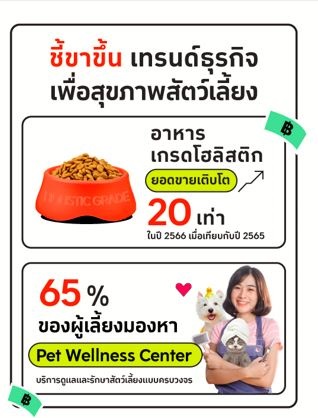
Pet owners are increasingly becoming high-value users (HVUs), with 65% identifying as Pet Parents who treat their pets like children, spending an average of 10,000 to 20,000 Baht per pet annually. In terms of pet ownership trends by generation, Gen Y ranks as the top cat owners, while Gen Z shows the highest spending growth on pet products at 46%. The rising trend in pet health businesses includes holistic pet food and comprehensive Pet Wellness Centers.
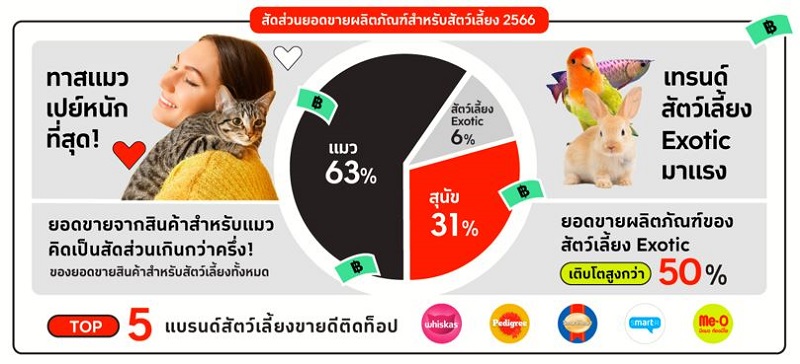
In terms of spending behavior, cat products account for 63% of total pet product sales, as cat products offer a wider variety that meets the needs of Pet Parents compared to other pets. The top-selling items across all pet categories include cat food and treats, cat litter, and cat toilets. There is also a growing trend in exotic pet ownership, such as fish, rabbits, and birds, with spending on exotic pet products increasing by over 50%, while sales for cat products grew by 8% and dog products by 6%.
Popular brands include Whiskas, Pedigree, SmartHeart, Smarter, and Mio. As the Pet Parent trend continues to grow, some pet owners are prioritizing and investing in "holistic pet food," which benefits their pets' long-term health. Brands in this category have seen sales grow over 20 times in 2023, including Orijen, Canagan, Yora, Happy Dog, and Nutrience, often found in specialized pet stores.
Regarding pet ownership behavior, over 65% of Thais treat their pets as family members, known as Pet Parents, while 33% keep pets for companionship and 2% keep pets for therapeutic purposes. The most popular pets remain as expected.
Rank 1: Dog ownership at 63%
Rank 2: Cat ownership at 49%
Rank 3: Exotic pet ownership at 12%
The top three popular exotic pets include fish, rabbits, and birds. Additionally, it is noted that pet owners in Thailand primarily acquire their pets through purchases from stores or farms, except for cat owners, where 50% adopt stray cats. This change aligns with the global “Adopt, Don’t Shop” campaign, encouraging people to adopt stray animals rather than buying from farms.
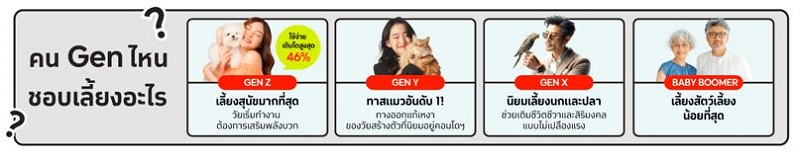
Examining the relationship between age groups and pet ownership behavior, it is found that overall, Gen Z has the highest dog ownership and spending growth at 46%, while Gen Y has the highest proportion of cat owners due to their busy lifestyles and preference for condo living, making cats a suitable choice for animal lovers in their building phase. Gen X has the highest proportion of fish and bird owners, as these pets add liveliness to homes without imposing much burden on owners, and may also enhance fortune according to beliefs. Baby Boomers are noted to be the least likely to own pets among all age groups.
Moreover, current pet owners are also spending on various "services" for their pets each month, with the top three most popular services being:
Rank 1: Grooming, bathing, and spa services
Rank 2: Pet boarding services
Rank 3: Swimming and exercise facilities
Over 65% of pet owners want to use ‘Pet Wellness Centers’ or comprehensive pet care services that include general care and specialized veterinary services, allowing owners to leave their beloved pets in worry-free care when necessary. 40% of pet owners desire more ‘specialized clinics’ and 27% want more ‘Pet Parks’ for exercise, although these services are still not widespread in Thailand. Coupled with the ongoing growth of the Pet Parent trend, all this data indicates significant business opportunities in pet health products and services, as well as in real estate that can cater to high-income Pet Parents.
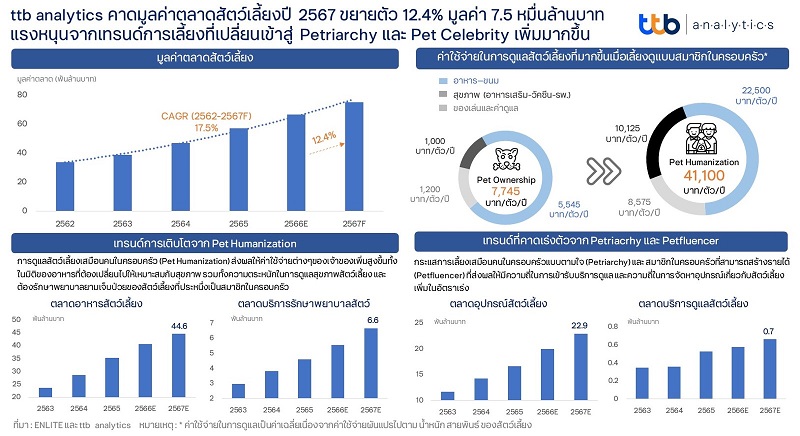
According to data from TTB Economic Analysis Center or TTB Analytics, it is estimated that the Thai pet market will be valued at around 75 billion Baht in 2024, an increase of 12.4% from 2023, driven by the evolution of pet care towards Pet Humanization, Petriarchy, and Pet Celebrity, significantly increasing spending on pet care.
It is estimated that the cost of caring for pets as family members will average around 41,100 Baht per pet per year, which is higher than the cost of free-range care at about 7,745 Baht per pet per year, with significantly lower expenses for pet supplies, care, and food.
In addition to the trends of Pet Humanization and Petriarchy, some pets may evolve from their personal traits to become “family members who can generate income” through their unique characteristics that attract broader social attention, or Pet Celebrities, and are developed as pets with followers on social media (Petfluencers). When their traits or characteristics are showcased through storytelling or content creation by their owners on social media, these pets can generate income through various content created by their owners for their followers. This leads to not only increased expenses related to pet supplies and care but also a significantly higher frequency of spending compared to those who treat their pets as ordinary family members (Pet Humanization).
Meanwhile, the pet food and veterinary services sectors have experienced growth due to the increasing trend of treating pets as family members (Pet Humanization) over the past 4-5 years, resulting in the pet food market in 2024 expanding to a value of 44.6 billion Baht, with a 5-year average market growth rate (CAGR) of 17.0%. This aligns with veterinary services, where the market value has increased due to the awareness of pet health care and the need for medical treatment for pets regarded as family members, leading to a continuous growth in the value of veterinary services at an average 5-year CAGR of 21.7%, reaching a value of 6.64 billion Baht in 2024.