JLL Reveals Thai Real Estate Ready for Continuous Adaptation in 2024
The Thai commercial real estate industry shows strong growth potential in 2024, driven by the ongoing recovery of the country's tourism sector, a growing manufacturing sector, and an increasing preference for leasing high-quality projects (flight-to-quality) as well as environmentally friendly and user-friendly projects (flight-to-green) across various core businesses. According to JLL (NYSE: JLL), a leading global real estate consulting and services firm, the Thai real estate market is expected to clearly signal its readiness for adaptation in the coming 12 months through the promotion of domestic policies and building confidence in the domestic market to respond to the current global macroeconomic volatility.
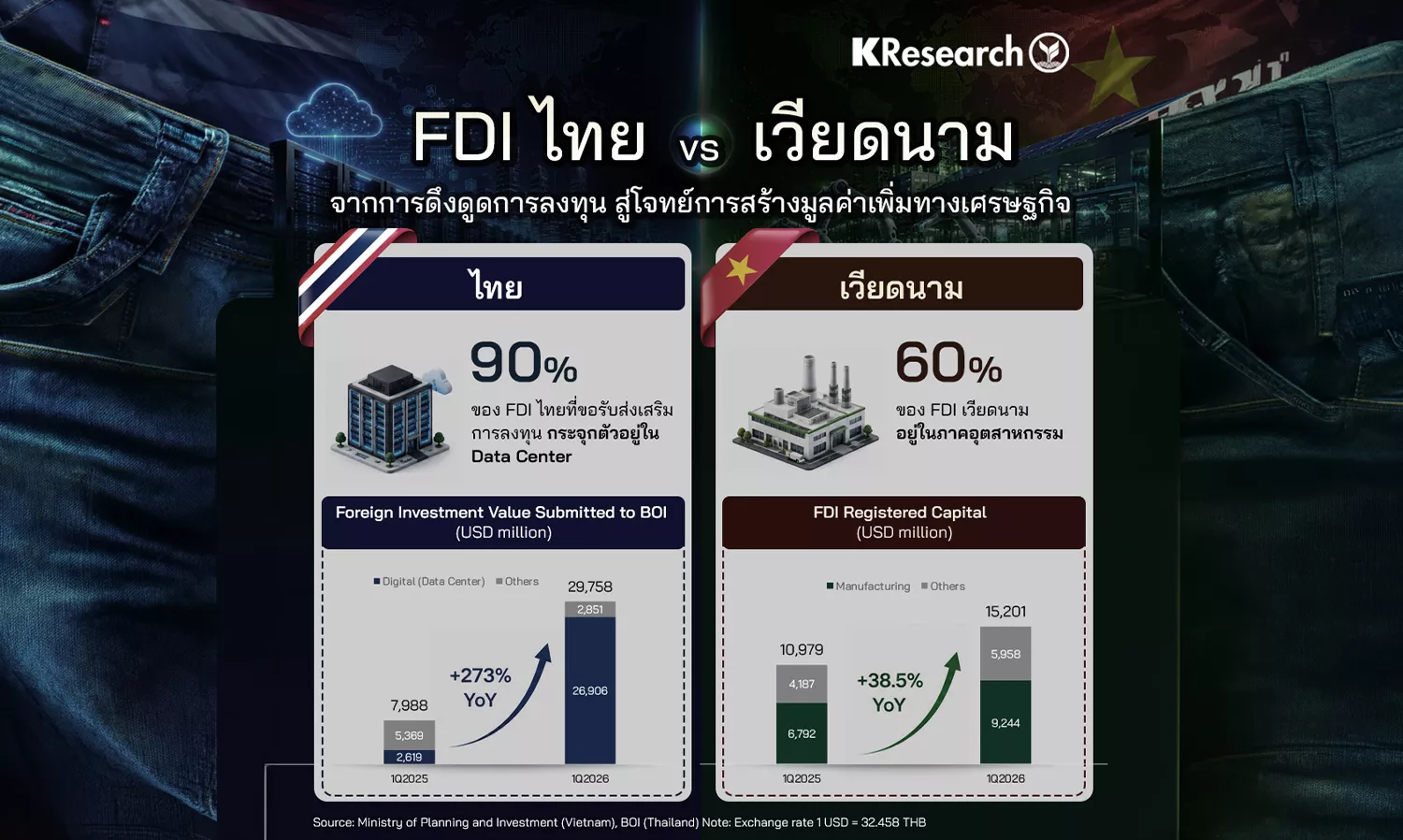
Key statistics from 2023 indicate the dynamic movement of the Thai real estate market, including a significant year-on-year investment growth of 66% in targeted industries, alongside a 152% increase in tourist arrivals compared to the previous year, surpassing government targets. This signals a strong recovery in demand within the service sector. Additionally, the demand for high-quality office space in Bangkok's Central Business Area (CBA) continues to grow, particularly among multinational corporations (MNCs).
Michael Glancy, Managing Director of Jones Lang LaSalle (Thailand) Limited (JLL), stated, "Despite facing challenges from the global economic situation, Thailand has consistently demonstrated its outstanding potential. The commitment of policymakers to enhance infrastructure strategies and A-grade real estate in Bangkok will drive significant growth and help mitigate the impacts of macroeconomic volatility, high costs, and other geopolitical factors."
Throughout 2024, JLL forecasts that the main growth drivers influencing the Thai real estate market will include four key factors:
The Arrival of the Mega-Project Era
In 2024, the Thai and Southeast Asian real estate markets will be influenced by strategic improvements in infrastructure and the quality of A-grade real estate in Bangkok. The Bangkok real estate market is set to undergo a transformation with up to 10 global mixed-use development projects, expected to add over 900,000 square meters of A-grade office space, more than 300,000 square meters of retail space, 5,400 luxury condominium units, and 5,900 hotel rooms in the Central Business Area by 2028. The emergence of these premium real estate projects will make Bangkok an attractive destination for investors, MNCs, and skilled foreign labor.
Challenges from Old Building Supply
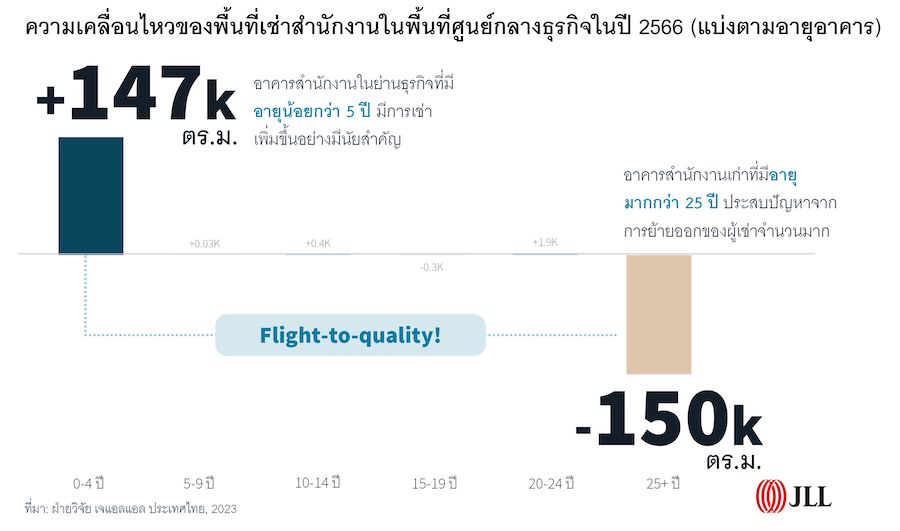
Over 60% of office space in Bangkok and its vicinity is over 20 years old. The incoming premium supply poses a challenge to the competitiveness of these older buildings. Office building owners with strategic investment and creative management will gain a competitive advantage over other market players. Therefore, strategic planning for building upgrades is crucial to meet the changing demands of the market.
According to JLL, older office buildings over 10 years old in the Central Business Area that have undergone major renovations can maintain rental rates close to the market average, while unrenovated buildings continue to see tenant departures and ongoing rental reductions. The rental rate gap between these two groups has increased by 8.8% as of Q4 2023. This trend is not limited to the office market, as the flight-to-quality and flight-to-green trends are increasingly evident in the retail and logistics warehouse markets, with potential expansion into the hotel and residential sectors.
Integration of ESG Concepts
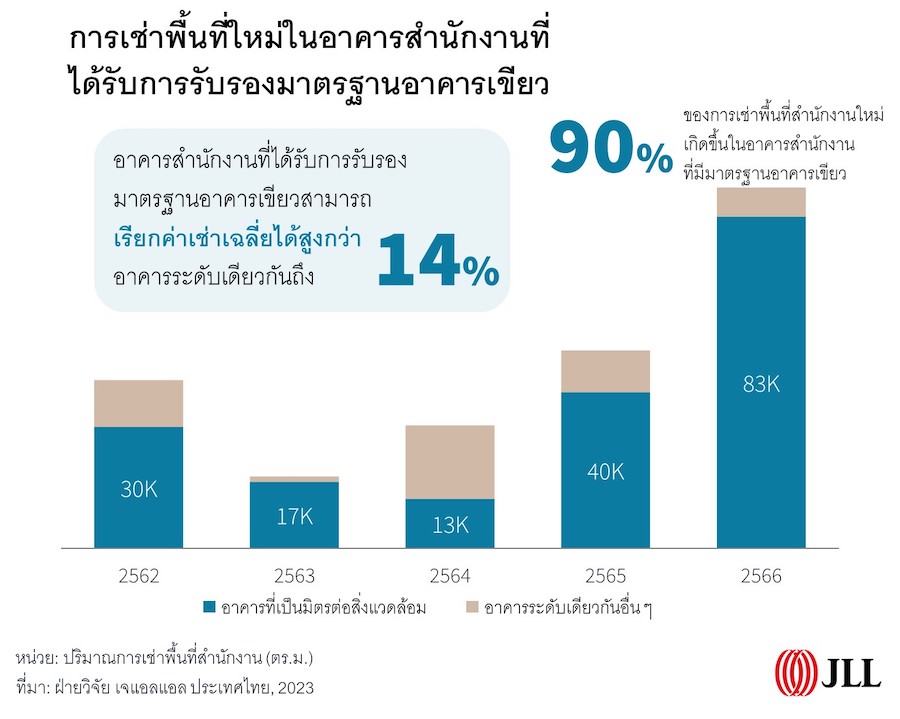
The ESG concept has become essential in Bangkok's office market, with developers and investors committed to adhering to standards through various certifications such as LEED and WELL. MNCs, which are significant demand drivers for office and logistics space, often require the use of ESG-certified office spaces. JLL's database indicates that over 90% of new office leases in the past five years occurred in environmentally friendly buildings, which can command rental rates 14% higher than comparable non-certified buildings, thus increasing pressure on older buildings that have not yet achieved ESG certification.
The Importance of Foreign Investment
There is no denying that foreign investment is crucial for the growth of the Thai real estate market, bolstered by significant capital inflows into Thailand. In 2023, over 65% of office space was leased by MNCs. Additionally, foreigners purchased at least 10% of the condominium units sold in Bangkok last year. As Thailand continues to attract foreign investment, JLL believes there are opportunities to enhance competitiveness through alternative measures such as extending land lease terms and providing investment incentives for certain asset types regulated by the government.
Looking ahead to the next 12 months, JLL predicts that the Thai real estate market will experience continuous growth and development, driven by the four aforementioned trends, with a focus on ESG, the refurbishment of older buildings to meet the rapidly changing demands of tenants, and strategic approaches to attract foreign investment, ultimately creating mutually beneficial conditions for all stakeholders in Thailand's real estate sector.
Rattawat Kuvisitsuwan, Senior Assistant Managing Director of Advisory and Asset Management Services for Hotels at Jones Lang LaSalle Limited (JLL), stated, "In the past 10 years, over 47% of transactions involving non-land assets have come from the hotel business, demonstrating strong investment attraction in the tourism sector and a solid foundation for our rapid recovery. If the ownership model of real estate by foreigners in Thailand develops further, it will open more opportunities for foreign investors in the tourism and service industries."
Anavil Chiamprasert, Head of Research and Consulting Services at Jones Lang LaSalle (Thailand) Limited (JLL), stated, "In the face of global economic volatility, the Thai real estate market not only maintains stability but is also ready to develop across various asset types, making Thailand a significant destination for foreign investment in the Asia-Pacific region."