Metthier Updates 5 Trends in Smart Facility Management for Sustainable Business
The real estate management business is gaining attention due to the increasing demand for residential and commercial spaces worldwide. According to Global Market Insights, the real estate management market is valued at approximately $1 trillion in 2023, with an expected annual growth rate of at least 13% from 2023 to 2032. The Asia-Pacific region is projected to see an average annual growth rate of 15.5%, driven by urban expansion and investment in smart city development, particularly in major countries like India and China.
In Thailand, the real estate management market is valued at several tens of billions of baht and is also experiencing continuous growth, especially in the real estate sector and other industries such as office buildings, industrial factories, hospitals, and health centers. However, the shortage of labor remains a significant challenge in this business, leading to an increased demand for hiring specialized companies. Service providers are developing various technologies and solutions to meet customer needs, whether it’s improving efficiency, reducing energy costs, or complying with environmental regulations. Additionally, when categorized by service type, the demand for cleaning services holds the largest market share among real estate management service providers in Thailand, followed by security services.
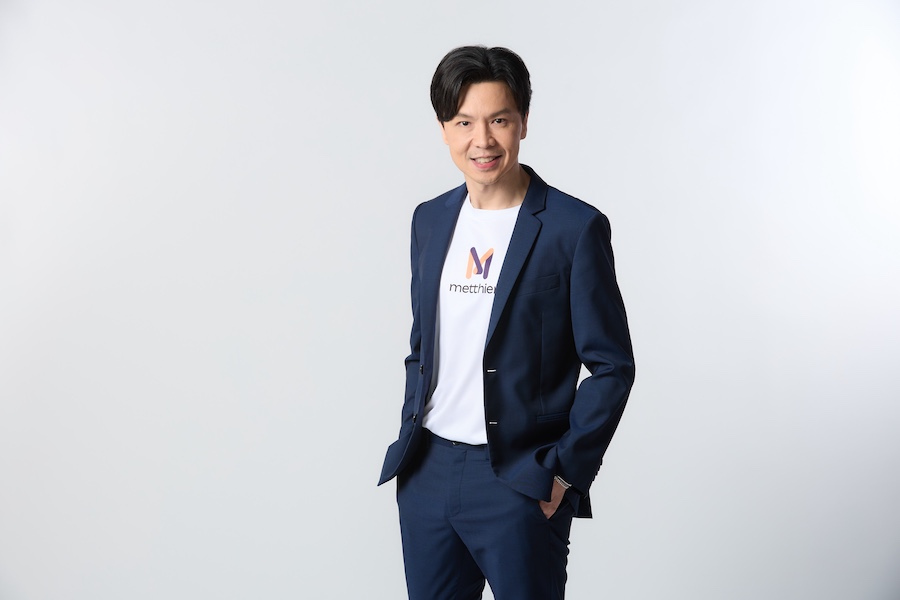
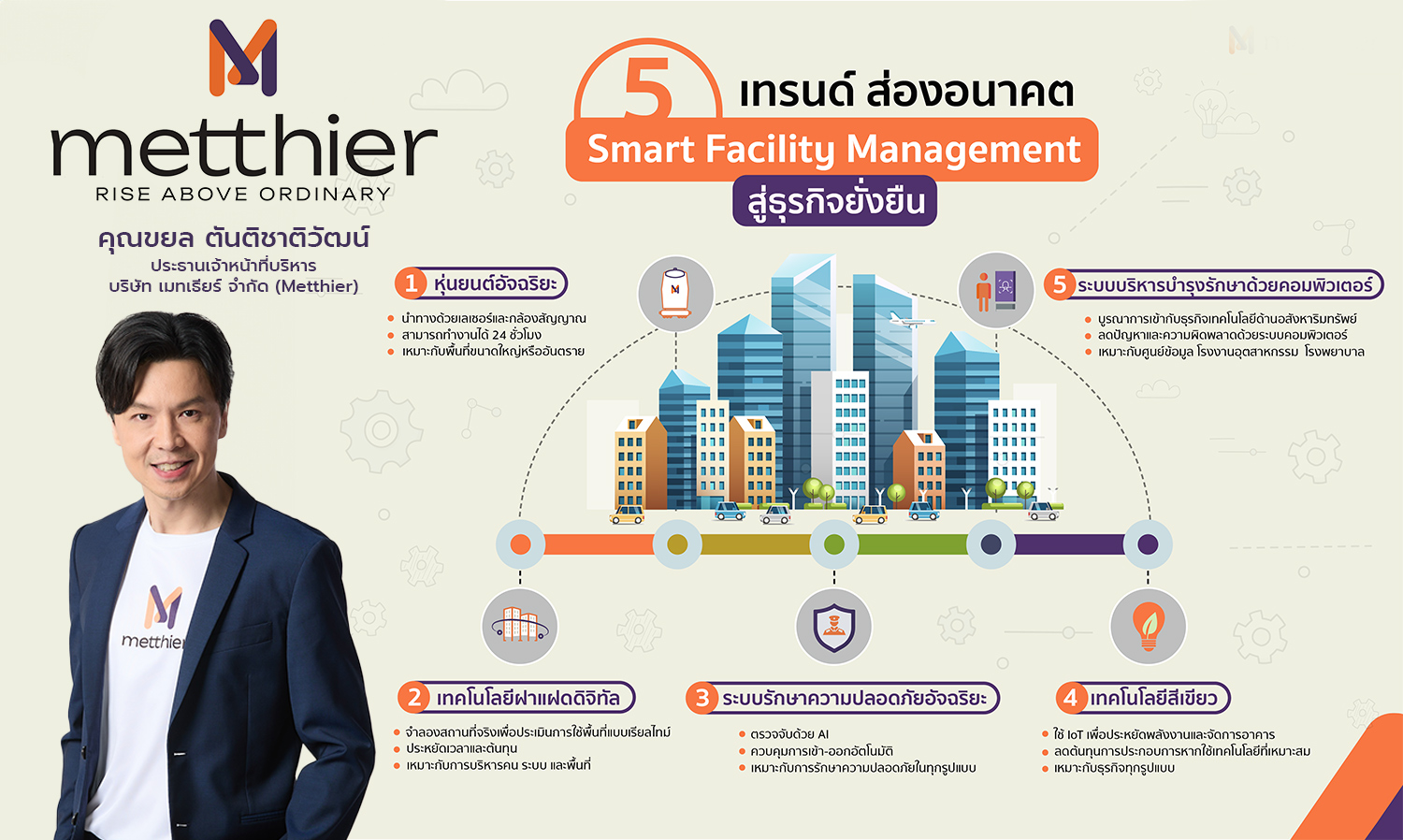
Mr. Kayan Tantichatiwat, CEO of Metthier Co., Ltd. (Metthier), a comprehensive smart real estate management service provider, stated that the direction of the real estate management business is becoming increasingly competitive, particularly regarding the application of technology to enhance service delivery. In 2024, the trend of Smart Facility Management will see the integration and application of technologies such as Artificial Intelligence (AI), Big Data, and the Internet of Things (IoT) in various forms to promote sustainability in management and improve the quality of life for people. The main trends of interest include:
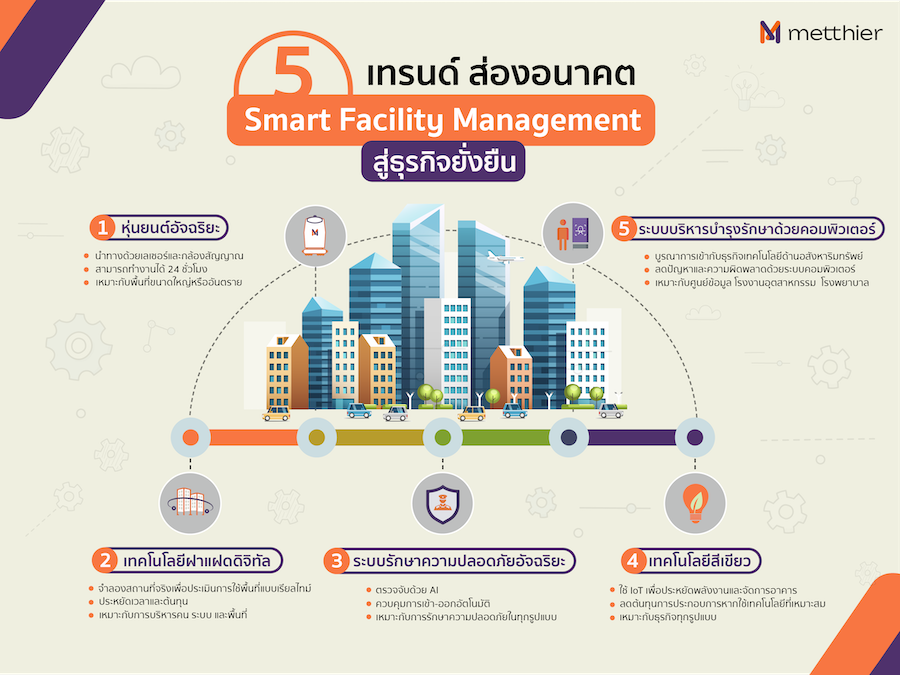
Intelligent Robots (Autonomous Robotics) are playing a crucial role in managing large properties such as buildings, offices, hotels, and airports. These robots are not intended to replace human labor but to enhance work efficiency, increase safety, and reduce risks for employees, especially in tasks involving hazardous chemicals or unsuitable environments. For instance, cleaning robots can operate quickly, accurately, and comprehensively using laser navigation and signal cameras, working 24 hours a day, significantly reducing cleaning time. Currently, these robots have advanced to the point where they can operate autonomously and recharge themselves. The technology of Autonomous Robotics is transforming the landscape of large facility management and creating new opportunities for businesses in the future.
Digital Twin technology is rapidly gaining popularity in the real estate business. It builds on Digital Mapping and 3D Visualization, applied for real-time space usage assessment, allowing immediate data input and result simulation. This technology aids in decision-making and data management, significantly reducing potential future risks. Everything can be assessed on a computer screen without the need for physical site visits, saving time and costs while meeting the needs of today’s workforce. Digital Twin is thus a key element in elevating and transforming real estate management into a fully digital era.
Smart Security Systems place Thailand as a leader in the Smart Security market among ASEAN countries, both in market value and technological advancement. In real estate management, Smart Security technology is utilized in various areas, including controlling building access through facial recognition technology, smart surveillance cameras, and intelligent license plate readers. Although these technologies have been around for several years, they continue to evolve. For example, AI is now used to detect faces or license plates for building access control, integrating with relevant agency systems to enhance security.
Green Technology remains a hot topic, with increasing interest as environmental concerns are no longer just trends but essential considerations for businesses. Companies must prioritize “environmentally friendly” practices, considering production processes, management methods, and equipment that enhance the efficient use of natural resources. Furthermore, Green Technology accelerates Smart Facility Management, whether through energy savings using IoT or calculating carbon emissions from design to material selection and building management to minimize carbon output. These efforts enable businesses to operate sustainably and reduce operational costs with proper planning and appropriate technology choices.
Computerized Maintenance Management Systems (CMMS) are expected to play a larger role in Smart Facility Management, particularly in managing various environments such as data centers, industrial factories, hospitals, electrical rooms, and other critical areas where errors could lead to significant financial loss, safety issues, or public health impacts. There is also ongoing discussion about integrating CMMS with various systems, including financial software, data management, business intelligence systems, energy management systems, and PropTech platforms.
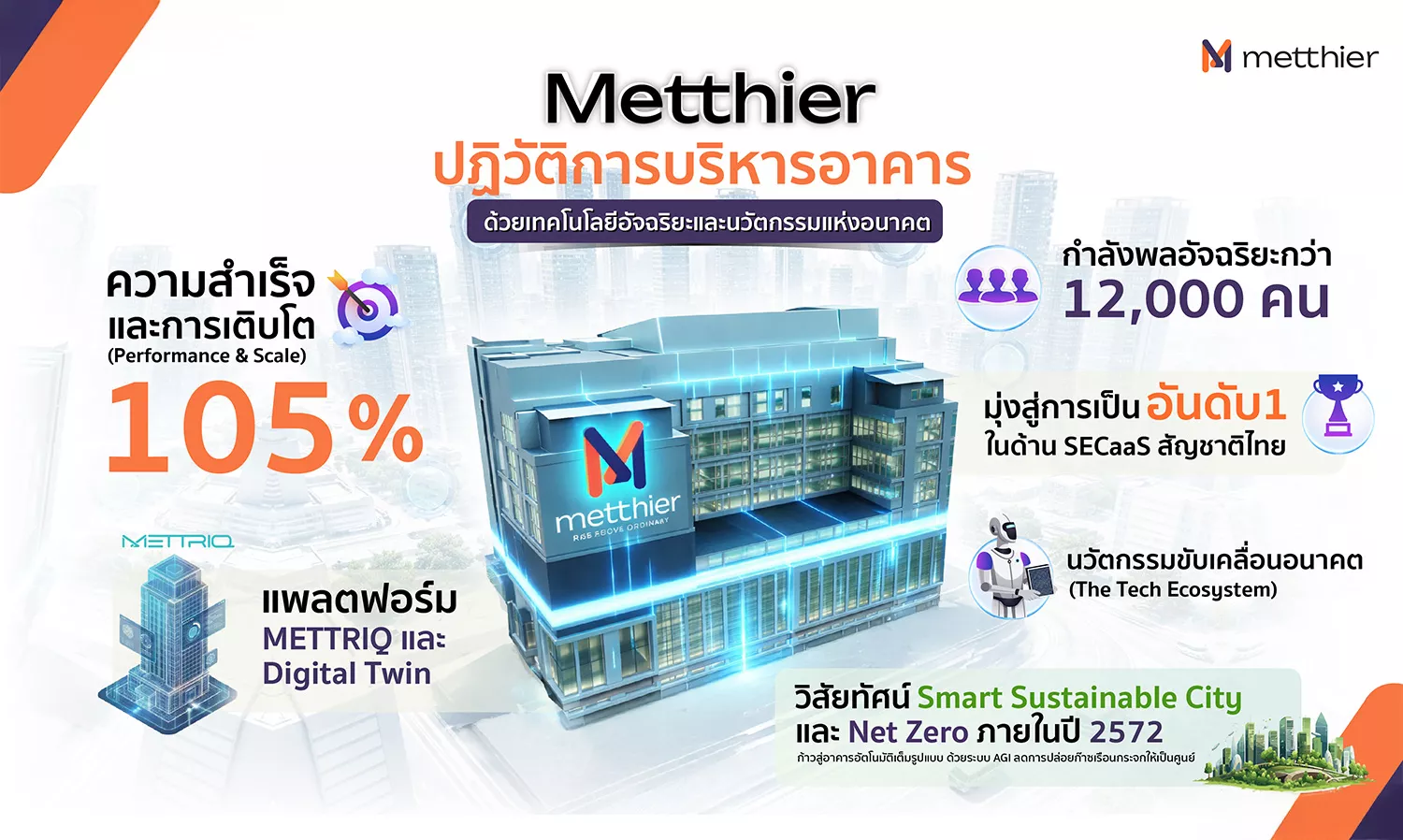
“The Smart Facility Management business in Thailand still has significant growth potential across industries, residential sectors, and other businesses, including office buildings, mixed-use developments, and hospitals, which continue to show good growth rates. Metthier has over 6,000 professional employees ready to provide real estate management services of all kinds, including smart security systems supported by the Metthier Intelligent Operation Center (MIOC) and future technologies such as AI CCTV, Digital Twin, 3D Visualization, Digital Mapping, Smart Robotics, and MettLink, a real-time alert platform for security and cleaning staff, enhancing the efficiency of personnel and systems within buildings. Metthier is committed to transforming and elevating Thailand's Smart Facility Management to an international level while providing a better quality of life and safety for everyone,” Mr. Kayan concluded.