Real Estate Expert Predicts 'Mixed-Use TOD' is Difficult to Achieve in Thailand, Citing Legal Barriers for Private Development
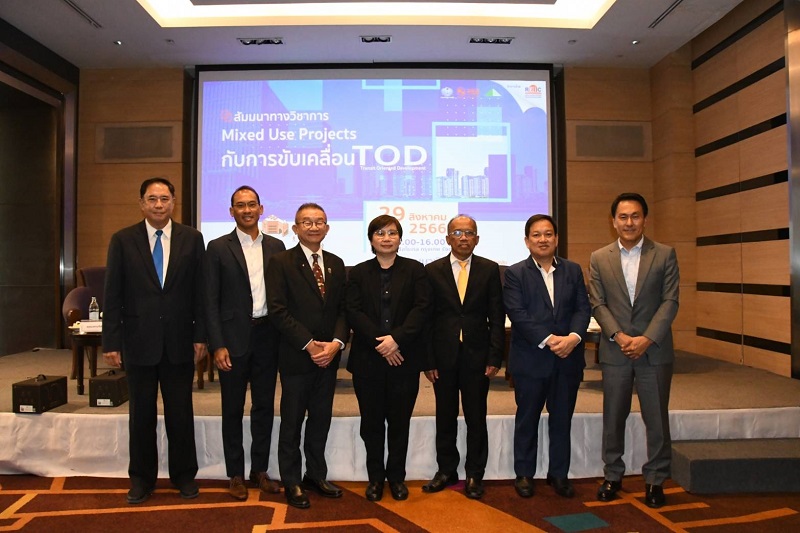
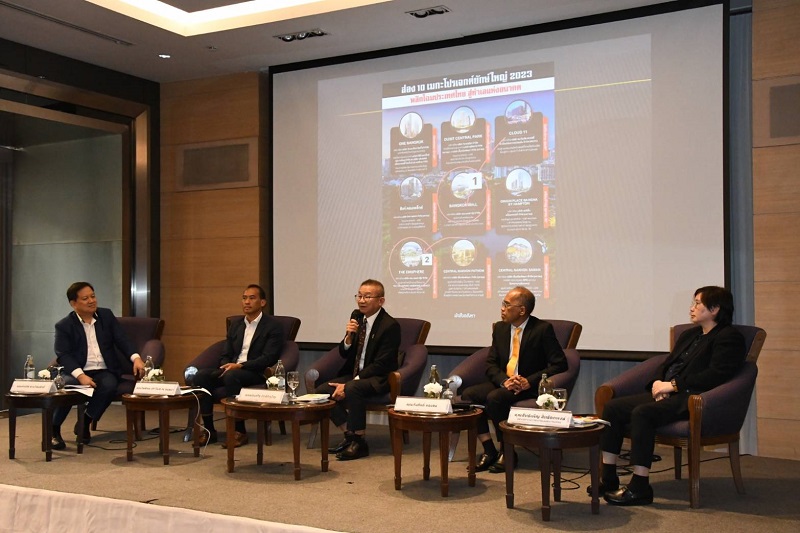
The seminar on Mixed Use Projects and the Promotion of TOD (Transit Oriented Development), organized by the Real Estate Information Center of the Government Housing Bank, gathered insights from experts in real estate development regarding the alignment of Mixed Use Projects with TOD initiatives from various perspectives.
Mr. Raingsak Thongsom, Director of the Transport and Traffic System Development Division, acting as a Senior Transport Scholar at the Office of Transport Policy and Planning (OTP), stated that TOD, or urban development studies with transportation infrastructure systems, is one of the strategies outlined in the 18th National Strategy, focusing primarily on developing areas around rail systems. Currently, Thailand is still developing in a TAD (Transit Area Development) manner, which involves dense development around stations but lacks proper planning. Most private developers focus on projects near transport systems without integrating them into the projects. The government has been studying the feasibility of cases in other countries such as Japan, South Korea, Germany, France, and China, revealing that Thailand still lacks a serious organization to drive TOD, along with legal tools that are hindered by issues related to land reform, expropriation, and urban planning from the limitations of various agencies.
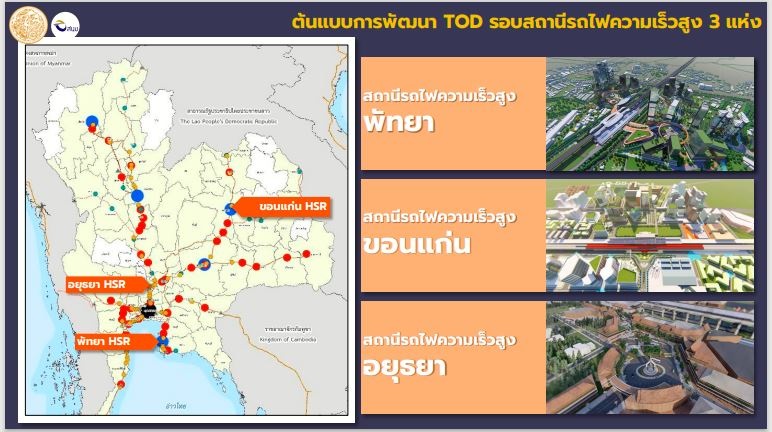
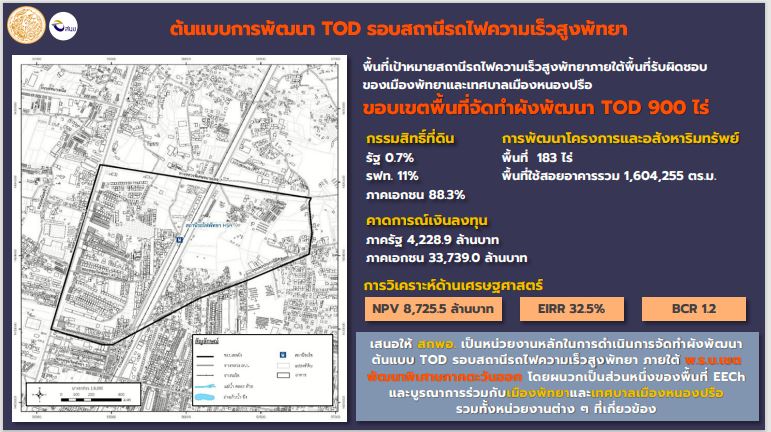
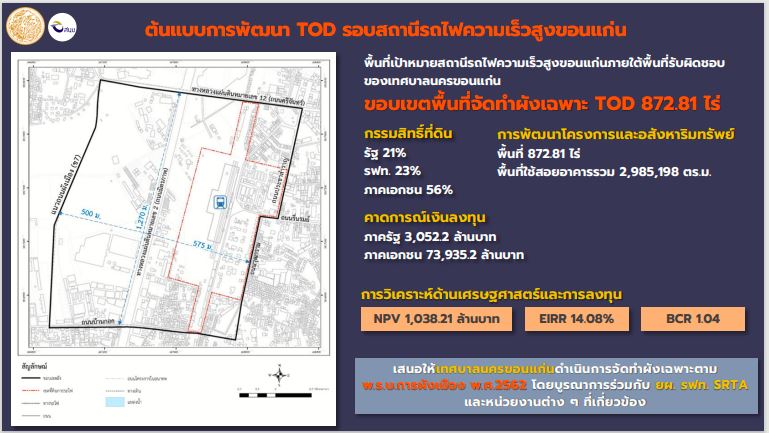
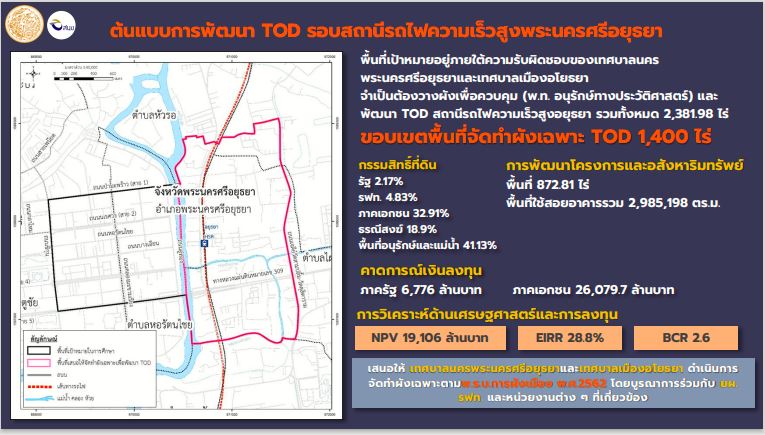
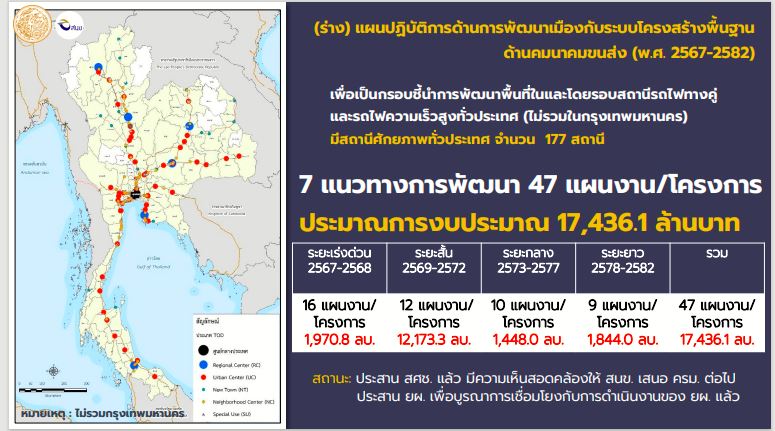
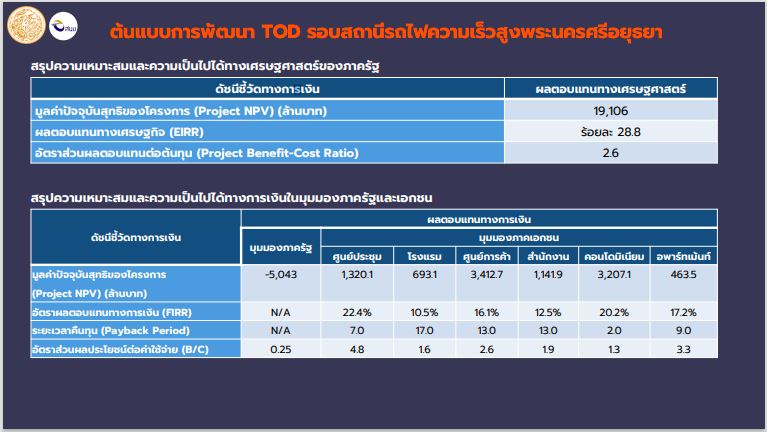
Previously, there was a draft action plan for urban development with transportation infrastructure systems (2024-2039) that includes 7 development strategies and 47 projects, with a budget of approximately 17.436 billion baht. The targeted model areas for TOD development around three high-speed train stations will be in Pattaya, Khon Kaen, and Ayutthaya, as they are potential areas to support major railway routes and have connectivity. Meanwhile, Bang Sue Station, Siriraj Station, and Makkasan Station in Bangkok are also interesting areas with potential but are not yet fully developed. If Thailand can develop train station areas to integrate with mixed-use areas, it could significantly increase value, potentially generating an economic return of up to 28.8%.
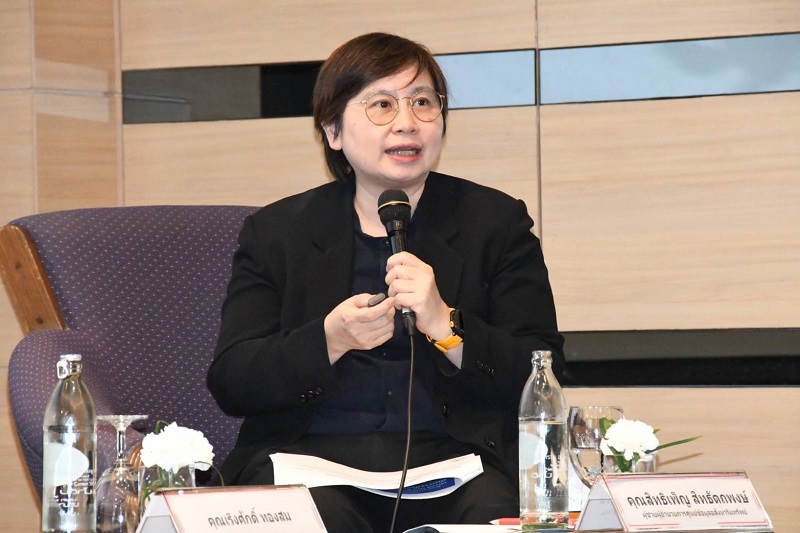
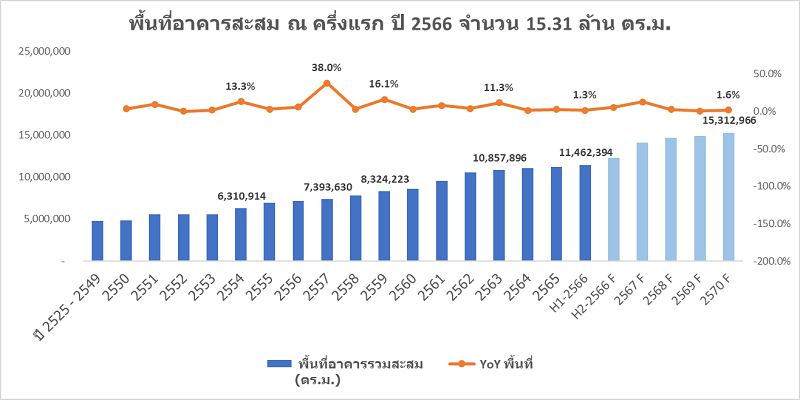
Ms. Sitthiphen Sitthathapong, Assistant Director of the Real Estate Information Center, mentioned that currently, the Mixed-use projects surveyed in Bangkok and its vicinity have a total construction area (GFA) of 15,312,966 square meters. In the first half of 2023, 110 completed projects accounted for a total construction area (GFA) of 11,462,394 square meters, while 16 projects under construction or planned for completion in the second half of 2023 to 2027 will add approximately 3,850,572 square meters.
In the first half of 2023, completed Mixed-use projects available for lease or sale primarily consisted of office space at 39.7%, followed by retail space at 31.4%, residential condominiums at 22.5%, hotels at 5.9%, and serviced apartments at 0.5%.
Considering future Mixed-use projects, the Pathumwan zone is expected to see significant growth in supply, with announced future supply reaching 1,711,990 square meters by 2027, accounting for 14.9% of the current completed supply (11,462,394 square meters). Future supply will come from several large projects such as One Bangkok, Central Embassy Phase 2, and Aman Nai Lert Bangkok.
The Silom-Sathorn-Bangrak zone is another area with high growth potential, with announced future supply of 732,585 square meters by 2027, representing 6.4% of the current completed supply. Future supply will also come from several large projects such as Dusit Central Park, Supalai Icon Sathorn, Park Silom, and Grande Centre Point Lumphini.
Demand for Mixed-use projects in Bangkok and its vicinity for “office buildings” has a total supply of 4,627,314 square meters, with an average rental rate of 76%. It is expected that future supply will increase by another 1,514,784 square meters from the second half of 2023 to 2027.
The “retail space” in the first half of 2023 had an area of 3,622,357 square meters, with an average rental rate of 85%, primarily supporting retail spaces for other building types (Supporting Retail). Future supply is expected to increase by approximately 1,115,156 square meters, mainly in the Pathumwan area.
The “residential condominiums” in Mixed-use projects in the first half of 2023 had a total of 27,534 units planned, with 23,946 units sold, representing 87% of the planned units, leaving 359 units available for sale. An increase of approximately 7,099 units of residential condominiums is expected in the future (from the second half of 2023 to 2027).
The “hotels” in Mixed-use projects in the first half of 2023 had a total supply of 14,232 rooms, with an expected future supply of 4,341 rooms.
Room rental prices indicate that the riverside area commands the highest rates at 15,500 baht per night, followed by Ploenchit/Witthayu, Siam/Chidlom, and Silom/Surawong with rates above 10,000 baht per night. The average occupancy rate for hotels in Bangkok during normal times is between 70% and 80%.
The “serviced apartments” in Mixed-use projects in the first half of 2023 included 3 projects with 774 rooms, with one announced future project, One Bangkok, expected to have around 400 rooms, scheduled for completion by the end of 2023. Serviced apartments continue to perform relatively well compared to hotels, as they have a higher proportion of long-term customers, with an average occupancy rate exceeding 70% since mid-2022.
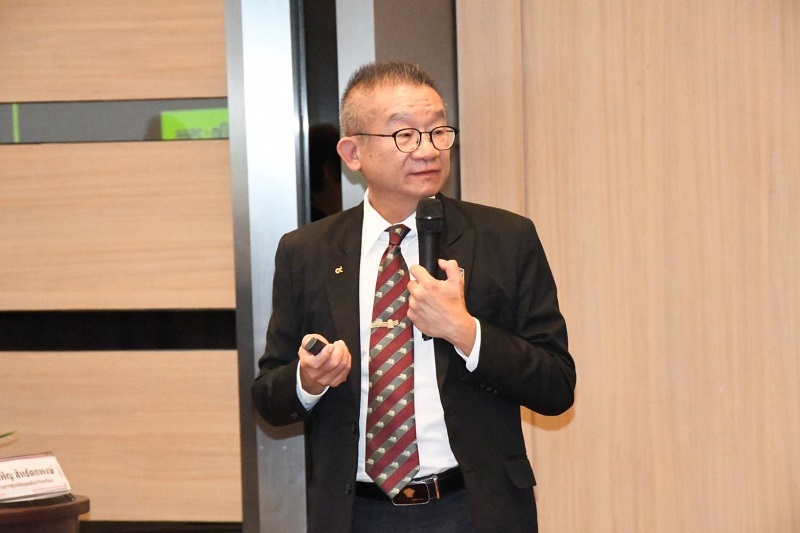
Mr. Thaninrat Pakdeepinyo, former senior executive of Central Pattana Public Company Limited, stated that in the next 5 years, retail space is expected to increase by another 8 million square meters, with continuous new openings from major retail developers in various provinces, central Bangkok, and Bangna. Recently, retail developers have adjusted to increase food zones in shopping centers to 50%, while the fashion zone has been reduced from 50% to only 20%. This change is partly due to the evolving shopping behaviors of customers.
This overall picture reflects that if retail areas or mixed-use projects are developed as part of the electric train, rail, or transportation systems, it will likely enhance traffic for travel and shopping, aligning with the tourism sector and facilitating easier access for tourists to shopping destinations.
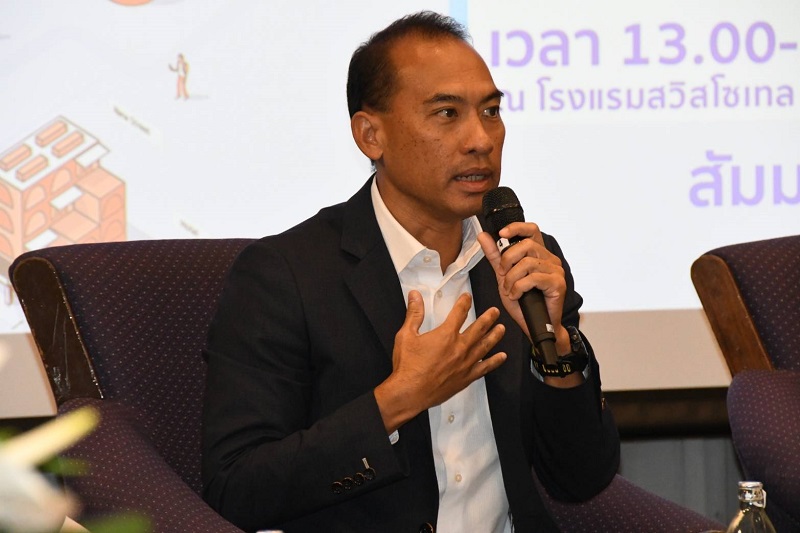
Regarding this, Mr. Kittipol Pramoch Na Ayutthaya, Executive Director of Samakorn Public Company Limited, commented that pushing for mixed-use projects to develop into TOD will be challenging due to the current disjointed operations of the government, which complicates coordination. In contrast, private entities work collaboratively within organizations to analyze customer issues continuously. Additionally, legal regulations regarding urban planning that affect residential buildings or road widths remain contentious. These issues make collaboration between the government and private sectors difficult. However, if TOD is to be realized, the government must amend the laws, which is believed to be challenging due to the complexities of proposing amendments involving multiple parties and potential complaints.