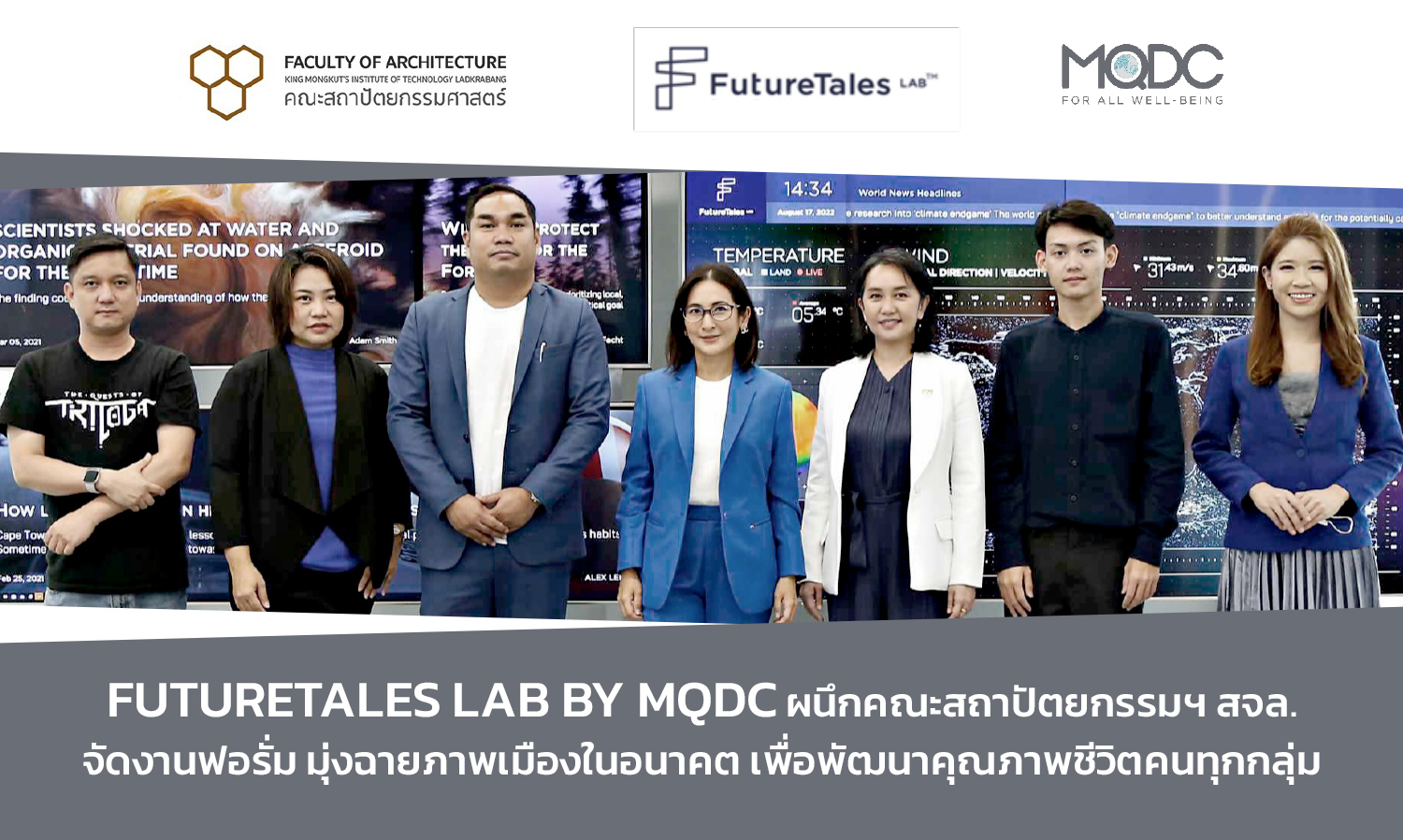
FutureTales Lab by MQDC Partners with KMITL's Faculty of Architecture to Host Forum Aiming to Envision Future Cities for Improving Quality of Life for All
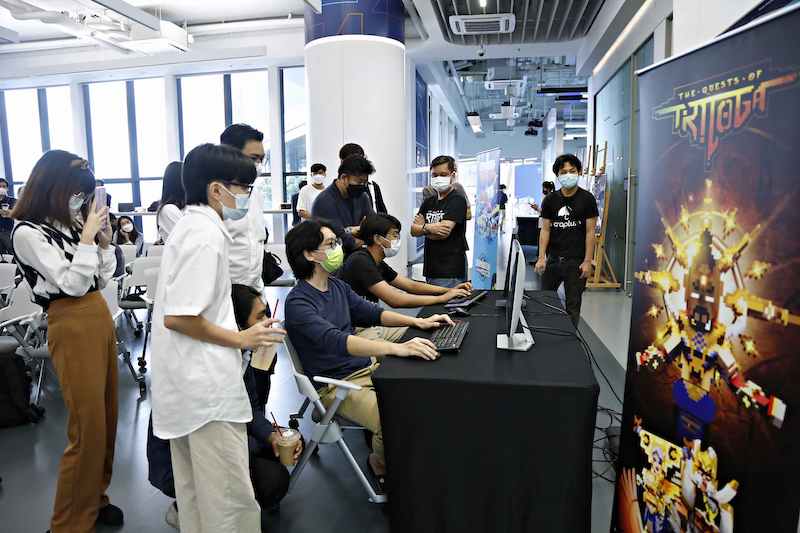
The Future Studies Research Center, FutureTales Lab by Magnolia Quality Development Corporation Limited (FutureTales Lab by MQDC) collaborated with KMITL's Faculty of Architecture, Arts, and Design to organize the first forum of the year under the theme “Future Habitat for the Next Generation: Envisioning Future Cities to Improve Quality of Life for All”. This forum discussed urban development and the importance of future housing design for everyone, aiming to open perspectives and expand knowledge in future studies and opportunities in the Metaverse. Participants experienced showcases from Metaverse experts and future city design showcases, attended by students, design professionals, architects, innovators, and those interested in housing design at FutureTales Lab by MQDC on the 8th floor of True Digital Park and via Facebook Live.
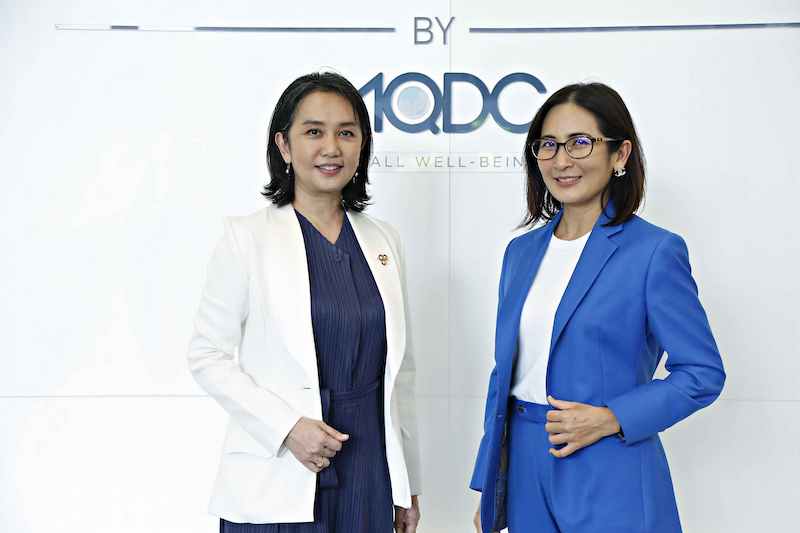
Dr. Kandee Liewphairoj, Executive Director of the Future Studies Research Center, FutureTales Lab by MQDC revealed that this forum represents a collaboration between FutureTales Lab by MQDC, as experts in future studies, and KMITL's Faculty of Architecture, a leading institution in urban and housing design in Thailand. The goal is to create a platform to inspire thoughts on urban development that considers everyone's future under the theme “Future Habitat for the Next Generation: Envisioning Future Cities to Improve Quality of Life for All”, to portray the development of future cities.
This initiative also aims to extend into the development and design of cities in the virtual Metaverse, bridging the real and virtual worlds without creating gaps and inequalities.
Asst. Prof. Dr. Anthika Sawatsri, Dean of the Faculty of Architecture at KMITL, stated that the overarching goal of education today and in the near future is to develop the country's people to be ready as Global Citizens, as national and global issues will require significant international cooperation. Housing and urban development are critical examples since the world is interconnected. Therefore, university education related to designing human living environments must collaborate with industries that have networks of knowledge and partners to assist higher education in developing people. This collaboration between KMITL's Faculty of Architecture and FutureTales Lab by MQDC aims to engage the new generation in defining and designing the future cities where they will live and face global challenges.
“The role of universities today has changed significantly due to uncertainty, redundancy, and unpredictability. Even if we do not wish to change, the currents of the world and society will push us to adapt. Universities may not be able to adjust as quickly as industries, but industries also lack sufficient time for in-depth knowledge education. Therefore, it is crucial to foster collaboration between education and industry to enhance each other's potential and create human resources that align with industry needs, similar to the collaboration between KMITL's Faculty of Architecture and FutureTales Lab by MQDC, which is one of many partnerships that will transform universities from University to Multi University,” Asst. Prof. Dr. Anthika added.
Dr. Kandee further elaborated in a keynote speech titled “5 Technology Phenomena that Impact Your Lifestyle”, stating that the latest technological phenomena are increasingly evident and will change our lives and urban development. There are five phenomena: 1. Big Data & AI - AI technology is evolving towards Near-Human Emotion, capable of recognizing human faces, gestures, and emotions, and using AI to analyze and reduce crime through Crime Predicting AI. The University of Chicago has found a 90% accuracy rate, which the U.S. government plans to use for city analysis, applicable in Thailand's three southern border provinces, as well as in exploring unfamiliar areas like space with AI in expedition. MQDC and FutureTales Lab are closely monitoring developments in space as well.
2. Robotics & Automation - We will see robots increasingly integrated into human life, moving beyond industrial applications to service sectors, such as Autonomous Delivery Robots, AI-Powered Companion Robots, and Modular Robot Arms for Creative Makers, as well as smart homes controlled by AI.
3. Internet of Everything - This refers to everything being connected to the internet, leading to Internet of Behavior and Internet of Senses, which connects the internet to human senses for maximum efficiency in meeting human needs.
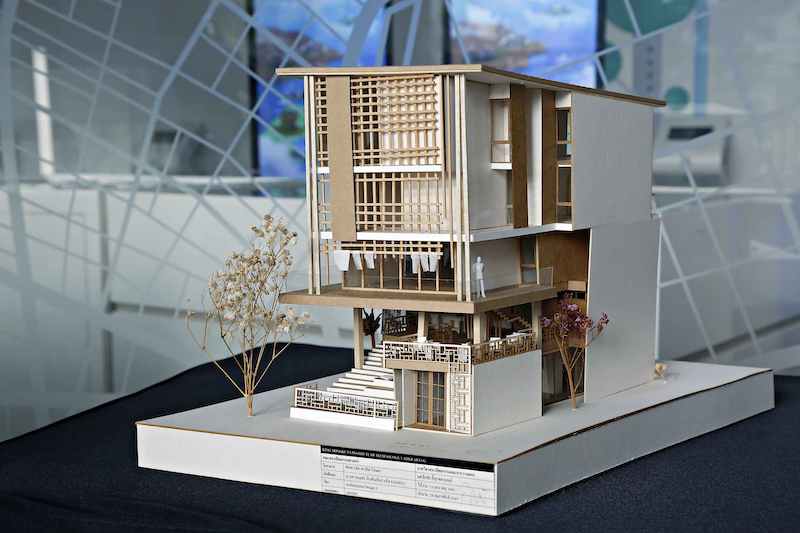
4. Printing Technology - Current printing technology has advanced significantly, transforming production, construction, and our daily lives, including 3D Printing Construction for building structures, First-Ever Fully 3D Printed Rocket, Smart Food Printers, and 3D Printed Personalized Pills at Home.
5. Extended Reality - This involves 3D interactive experiences that blend real-world perspectives with real-time technology, such as Microsoft Holoportation, which simulates 3D models of people, animals, or objects for seamless real-time interaction, and Personal AI Digital Twins, which digitally replicate physical entities.
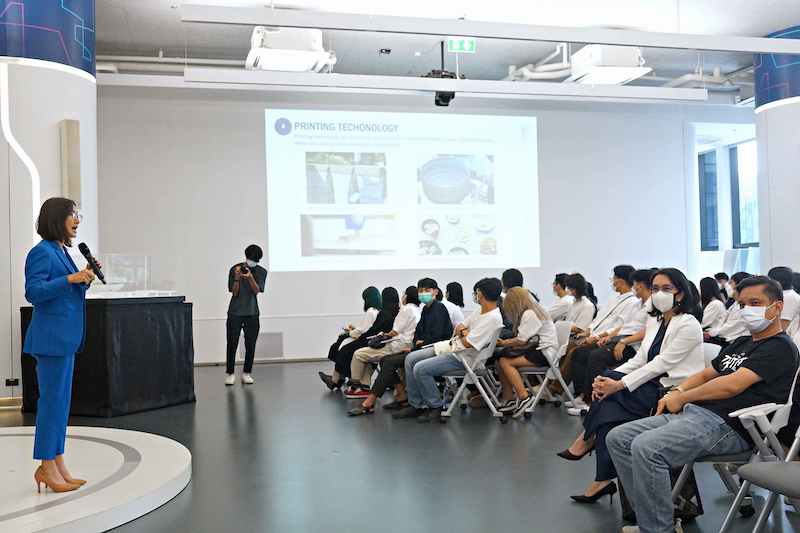
“It is evident that all these technological phenomena are evolving rapidly, faster than previously anticipated. What was expected to occur in another 5-10 years may happen sooner. Therefore, as futurists and urban developers, we must closely monitor these changes, as everything is transforming at an accelerated pace, to ensure that our designs align with the rapidly changing future,” Dr. Kandee concluded.