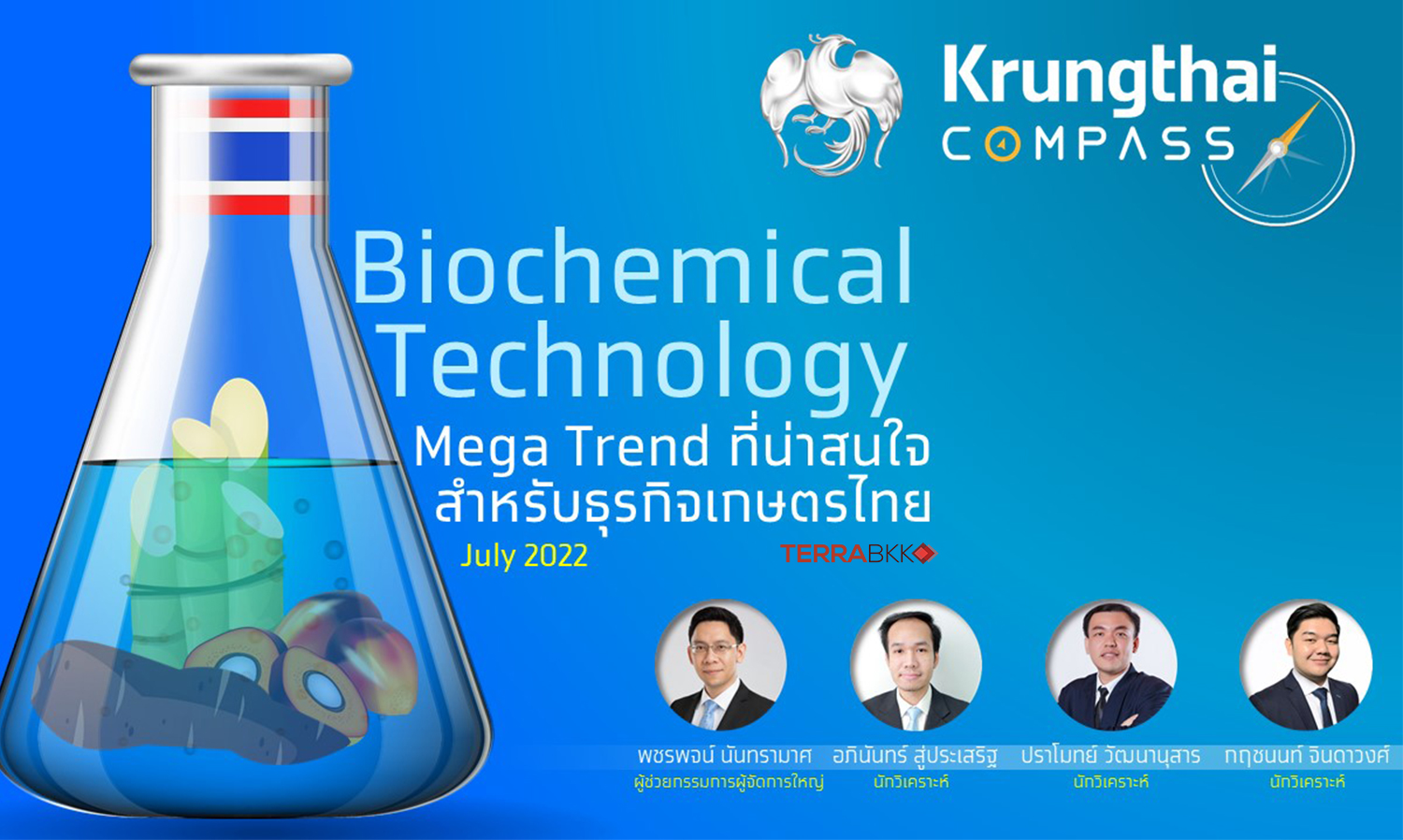
Krungthai Highlights the Growing Trend of Biochemical Products as an Opportunity to Add Value to Thai Agriculture
Krungthai COMPASS Research Center indicates that biochemical products are on the rise globally, driven by a shift towards new economic models that prioritize environmental friendliness and sustainable development (Bioeconomy - Circular Economy - Green Economy: BCG Economy). This trend presents opportunities for high-value business expansion for operators in the agricultural sector, particularly sugar factories, cassava starch plants, and palm oil refineries.
Dr. Pacharaporn Nantharamat, Assistant Managing Director of Krungthai Bank, stated that Thailand has the potential to become a hub for the development and production of biochemical products due to its advantages in agricultural raw material sources. Biochemical products are chemicals and biochemicals that can be used in various industries, offering high added value and aligning with the new environmentally friendly economic model or BCG Economy.
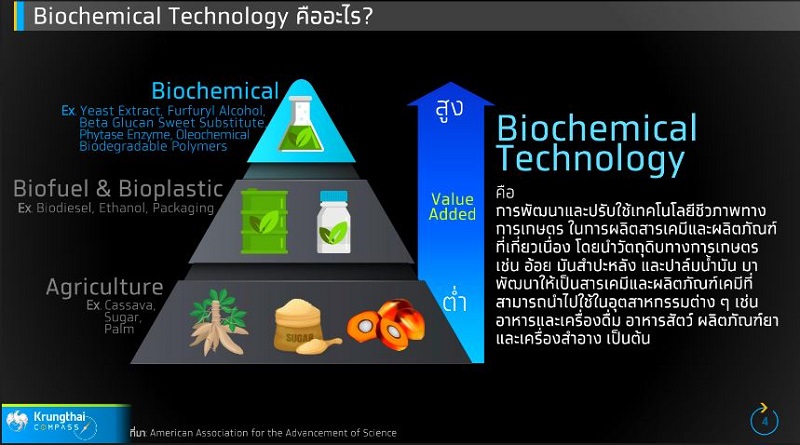
“This market has strong supporting factors and significant growth potential, driven by consumer behavior that increasingly favors health-conscious and environmentally friendly products. Additionally, it can add value to Thai agricultural products by approximately 18-188 times. Furthermore, it receives robust support from the government. The global biochemical market is expected to reach USD 78.83 billion by 2028, growing at an average annual rate of 9.1%. Meanwhile, the biochemical market in Thailand is projected to be worth USD 3.769 billion or over 120 billion baht by 2028, with an annual growth rate of 14.2%, indicating a trend of growth exceeding that of the global market,”
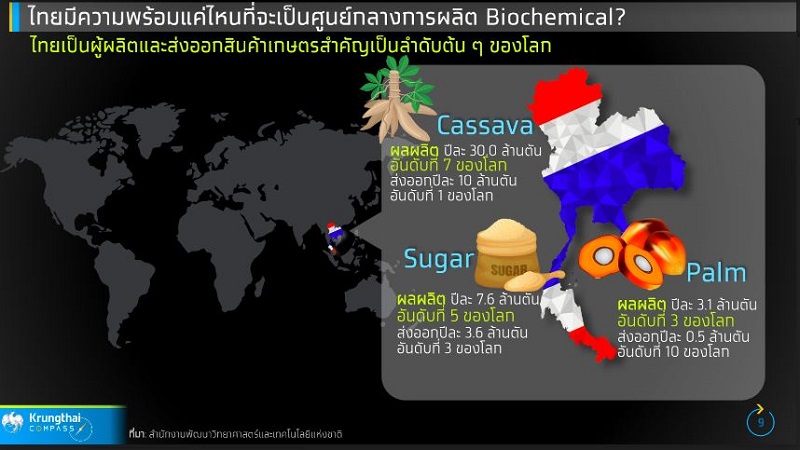
Mr. Apinun Supasert, Analyst at Krungthai COMPASS Research Center, further mentioned that the biochemical products expected to grow well include ingredients used in food, such as sweeteners, nutritional enhancers, and immune-boosting substances, as well as components for pharmaceuticals, cosmetics, and medical devices. If Thailand invests more in these product categories, it will not only enhance the value of Thai agricultural products but also reduce imports from abroad, which have previously exceeded USD 1.4 billion annually or over 47 billion baht.
“Agricultural operators looking for opportunities to enter this market to add value to their products include sugar factory operators, cassava starch plants, and palm oil refineries, as they can leverage their existing businesses, experience, and raw materials. Expanding into the biochemical market is therefore not difficult, presenting opportunities for operators from SMEs to large enterprises,”
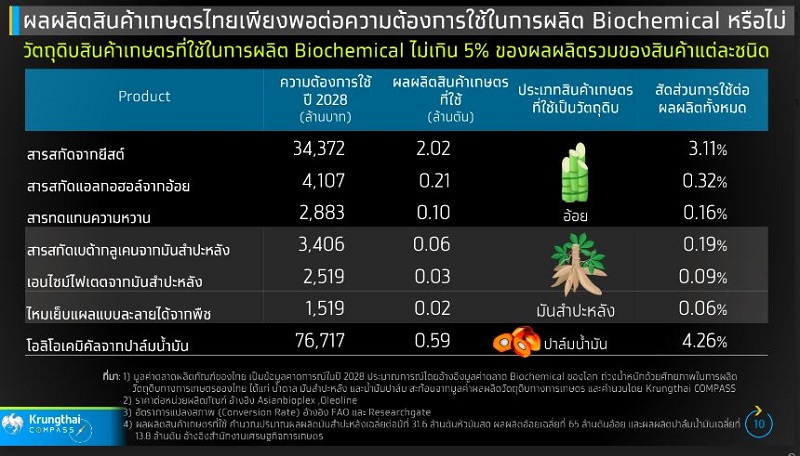
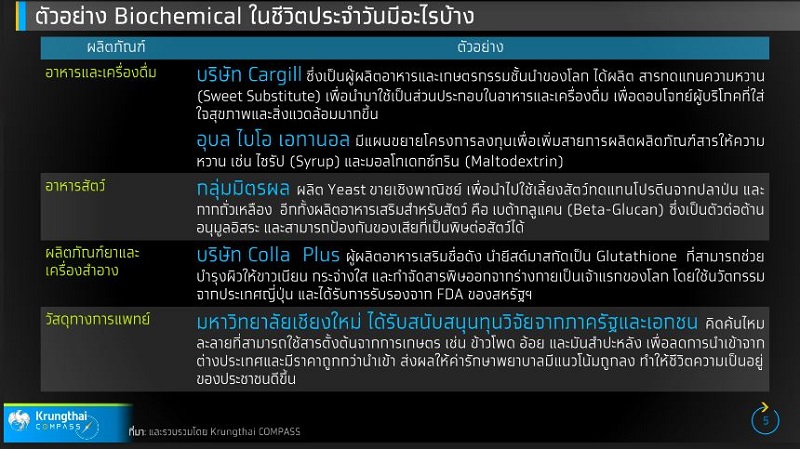
Mr. Kritsanan Jinda Wong, Analyst at Krungthai COMPASS Research Center, recommended that since most biochemical products require significant investment in research and development, the key factor for Thailand to become a center for biochemical production is the government's crucial role in promoting and supporting investment, as well as research and development of products that can be commercialized. This is especially important for Thai operators already in the agricultural production chain. Meanwhile, operators must prioritize sufficient raw material sources, as the main cost of this business comes from raw materials. Additionally, fostering collaboration within the ecosystem, including research and consulting agencies from the government and educational institutions with expertise, is essential to ensure that biochemical products are utilized diversely and meet health and environmental needs more effectively.