Exploring Trends in an Aging Society: What Housing Appeals to Retirees?
A report from the Thai Institute for Research and Development of the Elderly reveals that by 2022, Thailand will fully transition into a Complete Aged Society, taking just 17 years since 2005 to become an aging society, contrasting sharply with the declining birth rate. According to the National Statistical Office, the total number of births in 2021 was 544,570, the lowest since records began, marking the first year that deaths outnumbered births in Thailand. This decline is partly due to COVID-19 fatalities and an increasing number of Thais choosing to remain single or delay having children, leading to a demographic imbalance.
Planning for Future Leisure: Where to Retire?
The aforementioned trends have prompted consumers, whether single or childless, to pay more attention to planning for their later years. Data from DDproperty’s latest Thailand Consumer Sentiment Study shows that consumers are increasingly prioritizing planning for retirement housing. Chiang Mai is the most popular city for retirement living (24%), followed by Chiang Rai and Chonburi (10% and 8%, respectively). More than half (52%) indicated that the main attraction of these locations is proximity to nature or green spaces, followed by being near healthcare facilities for convenience (49%) and close to public transportation for easier travel (44%).
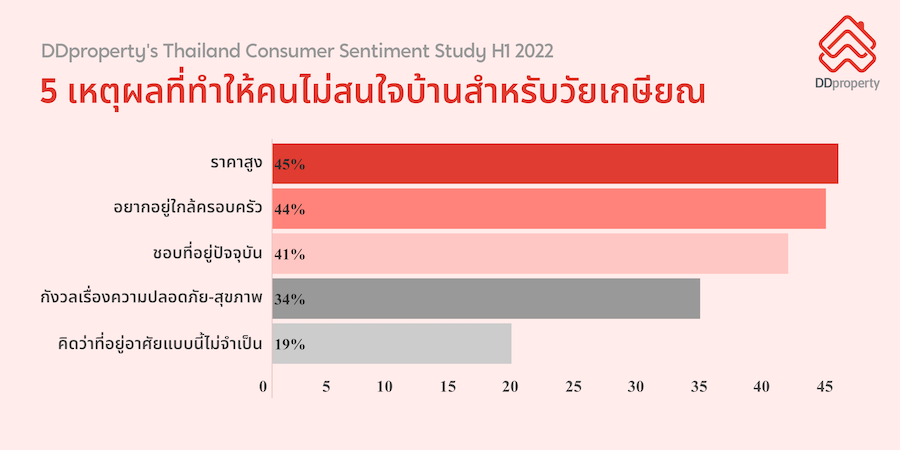
However, despite interest in retirement housing projects, significant barriers remain, primarily financial constraints and family ties. About 45% of consumers across all age groups believe that retirement village projects are too expensive, followed by a desire to stay close to family and grandchildren (44%), a preference for their current home (41%), concerns about safety and health (34%), and viewing retirement housing as unnecessary (19%).
Older adults (aged 60 and above) face similar barriers to moving into retirement properties as younger consumers, but their top three concerns differ. More than half (52%) prefer to stay in their current homes and with family (51%), followed by concerns about costs being too high (43%). This reflects that most older adults are more comfortable and prefer living in familiar environments with family rather than moving to retirement housing where they would need to adapt, even if it means being around peers.
Monitoring Changes in Senior Housing Demand Post-COVID
- A Healthy Home is Essential The COVID-19 pandemic has significantly heightened awareness of health care among consumers of all ages, especially among older adults who are at higher risk of severe illness. Three-quarters of consumers aged 60 and above (75%) reported that COVID-19 made them more aware of the importance of maintaining good health. This shift not only affects lifestyle choices but also alters housing preferences. A majority of older adults (74%) are willing to pay more for properties with health and environmentally friendly features, while two-thirds (69%) consider adequate ventilation and natural light essential for their homes, even after the pandemic ends. Clearly, older adults are increasingly prioritizing health care, which influences their choice of homes that provide comfort and support for their health, especially as they spend more time at home.
- Tech-Savvy Seniors Embrace PropTech The prolonged pandemic has posed significant challenges for property purchasing, prompting older adults to learn new technologies to facilitate smoother property transactions. Survey data shows that nearly half of consumers aged 60 and above (48%) prefer selecting properties online. Additionally, 44% have participated in online housing exhibitions, and 39% have taken virtual tours, indicating that older adults are adapting to real estate technology (PropTech) not just for information but also to utilize features that meet their needs, transforming their home-searching behavior into a digital age experience.
- Housing Size is a Key Attraction When deciding to purchase a home, the most important internal factor for older adults is the size of the residence, with 55% prioritizing adequate living space for various family activities. This is followed closely by considerations of amenities and measures/projects that facilitate home ownership (48% and 47%, respectively). Older adults perceive that buying a home later in life may pose challenges in securing loans or shorter repayment periods, so government support could help financially prepared seniors become homeowners more easily.
Moreover, the top three external factors that older adults consider when choosing to buy/rent a home focus on enhancing their current lifestyle. More than half (56%) desire projects that are conveniently located with access to public transportation, followed by location (52%) and safety of the area (44%), ensuring they can live comfortably and engage in activities without worry, even when alone.
New Leisure Lifestyles: “Nursing Homes vs. Senior Housing/Condos” – Which is the Answer?
Consumers of different ages have varying lifestyle needs, including older adults. Some may seek privacy, wish to engage in activities with peers, or look for housing with health services to support those who are single or have children who cannot provide enough care. DDproperty, Thailand's leading real estate marketplace, offers guidance on choosing retirement housing to help consumers plan their final homes that meet their lifestyle needs as they transition into retirement.
- Nursing Homes are residential projects with staff and professional nurses available 24/7, equipped with medical care facilities tailored to the varying levels of dependency among older adults. They are suitable for seniors needing special care or who cannot care for themselves. Nursing homes provide three meals a day and activities to foster relationships among residents. Basic accommodations include shared rooms, private rooms with monthly fees, or special single-family homes requiring an upfront fee for maintenance/improvement and monthly stay fees. Nursing homes are ideal for seniors with regular income or pensions. Currently, there are various types and price levels of nursing homes starting from a few thousand baht, based on the needs of older adults and the complexity of care required. However, with the increasing number of seniors in Thailand, affordable nursing home options may become insufficient, so interested individuals should check qualifications before planning to reserve a spot in a nursing home.
- Senior Housing/Condos are residential projects designed for self-sufficient, healthy seniors who wish to socialize. These residences prioritize convenience and safety for older adults, with staff available 24/7 and comprehensive communal areas and amenities similar to regular housing projects, along with lifestyle activities for social engagement. Sales options include 30-year lease rights, lifetime residency rights, or outright purchase, with prices ranging from hundreds of thousands to millions of baht. This is suitable for seniors with substantial savings and a systematic financial plan. Seniors must prepare their finances before deciding to purchase and have additional savings for daily expenses, as they are responsible for food, cleaning, activities, and medical costs. Although senior housing/condos can be relatively expensive, they offer comfort that allows older adults to live independently and safely, embodying a 'Young at Heart' lifestyle.
Retirement housing projects are a trend to watch amid the growth of Thailand's aging society. While it may seem distant for seniors planning to stay in their family homes, adapting residences to accommodate older adults' lifestyles is crucial. As seniors may not be as agile as younger individuals, homes should be designed and equipped to facilitate safe living, reducing the risk of unexpected accidents. DDproperty, Thailand's number one real estate marketplace (https://www.ddproperty.com), provides articles and useful information for buyers, sellers, and home seekers, serving as a comprehensive source for property listings and helping consumers study and find retirement homes or adapt their homes to best support family members of all ages.