CBRE Reveals Key Trends to Watch in the Real Estate Market for 2022
As the Omicron variant of COVID-19 may lead to significant changes in Thailand's economy, CBRE Thailand, a leading global real estate consulting firm, has unveiled important trends and risks in the Thai real estate market that businesses should monitor in 2022. This includes the residential market, office space, retail space, industrial and logistics space, as well as the hotel market.
Ms. Rungrat Veerapakarnkun, Managing Director of CBRE Thailand commented, "2022 is another challenging year that will require the real estate market to adapt and move more proactively, preparing to face the unpredictable. Customers are becoming more selective and their demands are increasingly complex. Meanwhile, investors and developers will face challenges in presenting suitable products in a continuously evolving market. Therefore, it is crucial for all parties to be aware of the new trends emerging to adjust their strategies and operations accordingly to their businesses."

Mr. Rattawat Kuvisitsuwan, Head of Research and Project Development Consulting at CBRE Thailand added, "The Bank of Thailand has forecasted GDP growth for 2022 at 3.4%, up from 0.9% in 2021, largely depending on the number of incoming tourists and the performance of the export sector. Government policies and measures regarding the COVID-19 situation in the first two quarters of 2022 will be extremely important as we enter a year where the Omicron variant is spreading. Given the current uncertainty, there are several significant risks to watch this year."
The risk of new COVID-19 variants and vaccine responses to the virus will impact business operations and market confidence. Government responses and public reactions to the situation will be critical. Government decisions regarding financial policies, stimulus measures, regulations, and other significant decisions will dictate market movements. The tourism sector is a key driver of the country's economy, and the disruptions faced by other businesses during the two years of COVID-19, combined with the uncertainties ahead, make net income for the population a challenge like never before. Additionally, the recovery of each business sector will not be uniform and will adjust gradually.
Residential Market
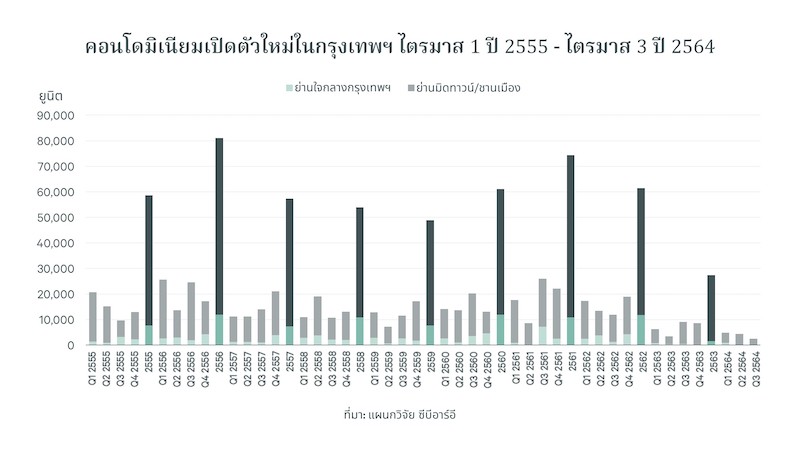
Last year was a sluggish year for the condominium market in central Bangkok, with no new project launches for nearly three consecutive quarters, marking the first time in history. Meanwhile, demand for low-density residential properties remains strong, driven by buyers seeking homes with larger spaces and more flexibility. This year, developers will carefully consider launching new projects, focusing on genuinely meeting the needs of domestic buyers, as speculative buyers have largely exited the market. CBRE predicts that the sales rate in the condominium market will continue to slow, as owner-occupiers tend to take more time to make decisions and consider their options thoroughly. For markets with a strong customer base, such as projects near universities or those with branded residences, performance will continue to be positive. Despite low interest rates and other policies aimed at stimulating the real estate market, purchasing power remains a critical factor, and buyers are still looking for the best deals, as they have become more aware of the challenges developers face.
New Condominium Launches in Bangkok Q1 2012 - Q3 2021
Source: CBRE Research Department
Ms. Atitaya Kasemlawwan, Head of Residential Project Sales at CBRE Thailand stated, "This year, the demand from buyers looking for owner-occupied homes will become more complex. Operators need to adopt more proactive strategies to sell remaining units while also creating unique selling points for their projects, considering the changing needs of owner-occupiers. The residential trend will focus on larger spaces and functions related to needs arising post-COVID-19, such as multifunctional rooms for families, green or open spaces, health considerations, and technology."
"In the resale market or the second-hand residential market, the COVID-19 situation has had some positive effects by releasing rare units for sale that were unavailable during normal market conditions. At the same time, demand for overseas real estate continues to rise due to various factors, such as providing convenience for descendants and fulfilling lifestyle needs, prompting financially unburdened Thai buyers to expand their real estate investment portfolios," added Ms. Papinriya Phungkhueankhan, Head of Retail Residential Sales.
Summary of Trends to Watch
• Operators are responding to the needs of domestic buyers looking for owner-occupied homes
• Niche markets, such as high-end projects with hotel management, will perform well
• Buyers continue to seek the best deals due to ongoing purchasing power pressures
Office Space Market
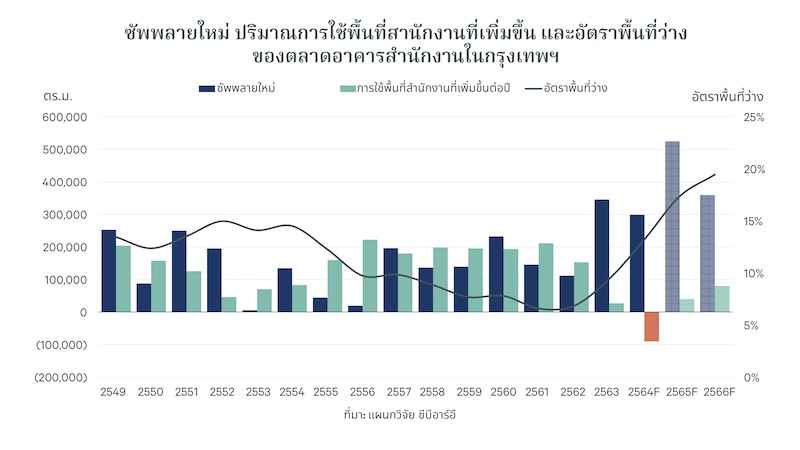
The office space market should have clearer guidelines for implementing hybrid work models to ensure effective operations, cost control, and maintain employee engagement and commitment to the organization. The role of headquarters will be continuously reviewed to assess how much physical space is necessary and how to maximize the use of each square meter. Additionally, standards regarding environmental, social, and governance (ESG) will become increasingly important as multinational companies set carbon neutrality goals or aim for net-zero greenhouse gas emissions by 2030. Changes in office space utilization will render many older office buildings unsuitable for modern workplaces and hinder the ability to retain and attract talented employees. With the continuous influx of new office projects into the market, many older office buildings in Bangkok that have not been renovated or updated will become outdated.
New Supply, Increased Office Space Utilization, and Vacancy Rates in Bangkok's Office Market
Source: CBRE Research Department
"Tenants need to explore various options for relocating or expanding office space to high-quality buildings that will be completed in the near future, as the trend for new office spaces with improved quality is on the rise. Additionally, workplace strategy will be crucial for tenants to align with future work practices. Office building owners entering a competitive market must proactively prepare by upgrading and incorporating new elements into their projects to meet ESG requirements. It is essential to maintain occupancy rates in buildings rather than focusing solely on rental price per square meter," Ms. Rungrat added.
Summary of Trends to Watch:
• Clearer guidelines for hybrid work models
• Tenants and building owners will begin adopting sustainability policies as ESG becomes important
• New office buildings increase competition while tenants seek quality office space
Retail Space Market
The retail market is one of the most affected by COVID-19 and has been directly impacted by various government-imposed restrictions. The Thai retail industry must develop and adapt alongside these restrictions. After receiving government assistance in 2021, it will be interesting to see what policies the government will implement in 2022 to boost market confidence. Flexible lease structures and terms will gain more importance to cope with market uncertainties.
Moreover, tenants must decide how best to adapt, as omnichannel sales and the changes that come with this trend affect storefront strategies. Flexible businesses, such as food and beverage operations, continue to cautiously expand while adjusting strategies, such as downsizing space, changing store formats, and selling online. CBRE believes there will be investments in technology aimed at enhancing customer experiences, such as artificial intelligence (AI), virtual reality (VR), and automation systems.
Ms. Jariya Tamtrongkitkul, Head of Retail Space at CBRE Thailand commented, "Retailers will seek ways to create business collaborations with other companies to bring new experiences to their brands. Retail space owners will need to work closely with tenants to increase flexibility in lease terms while being open to new approaches to bring people back to the projects."
Summary of Trends to Watch:
• Flexible lease structures and terms
• Retail space owners and retailers adapt together under various restrictions
• In-store promotions, events held in retail spaces, and creating new experiences to attract customers
Industrial and Logistics Space Market
In the industrial and logistics space market, supply chains will continue to evolve in 2022 as manufacturers strive to build resilience in their networks to protect their businesses from future disruptions. Relocating production closer to suppliers may help drive growth in both industrial and logistics spaces in Thailand. Logistics properties will place greater emphasis on ESG in terms of operations, such as safety projects at job sites and employee welfare. The frequency and complexity of changes in travel restrictions both domestically and internationally negatively impact site visits, contract signings, and slow down decision-making for property purchases and related lease transactions.
Mr. Adam Bell, Head of Industrial and Logistics Space at CBRE Thailand remarked, "Tenants should contract with landlords in advance to develop properties tailored to their specific business needs (Built-to-Suit). At the same time, landlords will need to provide various facilities to meet tenant demands."