Prospect REIT Management Shares Investment Insights for 2022, Advising Investors to Diversify Portfolios for Long-Term Risk Mitigation
Over the past two years, the COVID-19 pandemic has propelled the world into a state of challenges across various dimensions, including health, food, communication, and travel restrictions. According to the article 2021 Was The Year of Extremes on Investopedia, written by news editor Caleb Silver, 2021 is marked as one of the most difficult years in history. The emergence of K-Shape business growth has led to inequality, where only those in the upward K-Shape have survived.
This unexpected change serves as a warning that constant adaptation is crucial, and it is essential to stay updated with knowledge from expert agencies to navigate every situation effectively. This includes managing investment portfolios. Prospect REIT Management Co., Ltd., as the trustee manager of the Prospect Logistics and Industrial Property Fund, or PROSPECT REIT, has provided insights on investment strategies and adaptations to help investors confidently enter 2022.

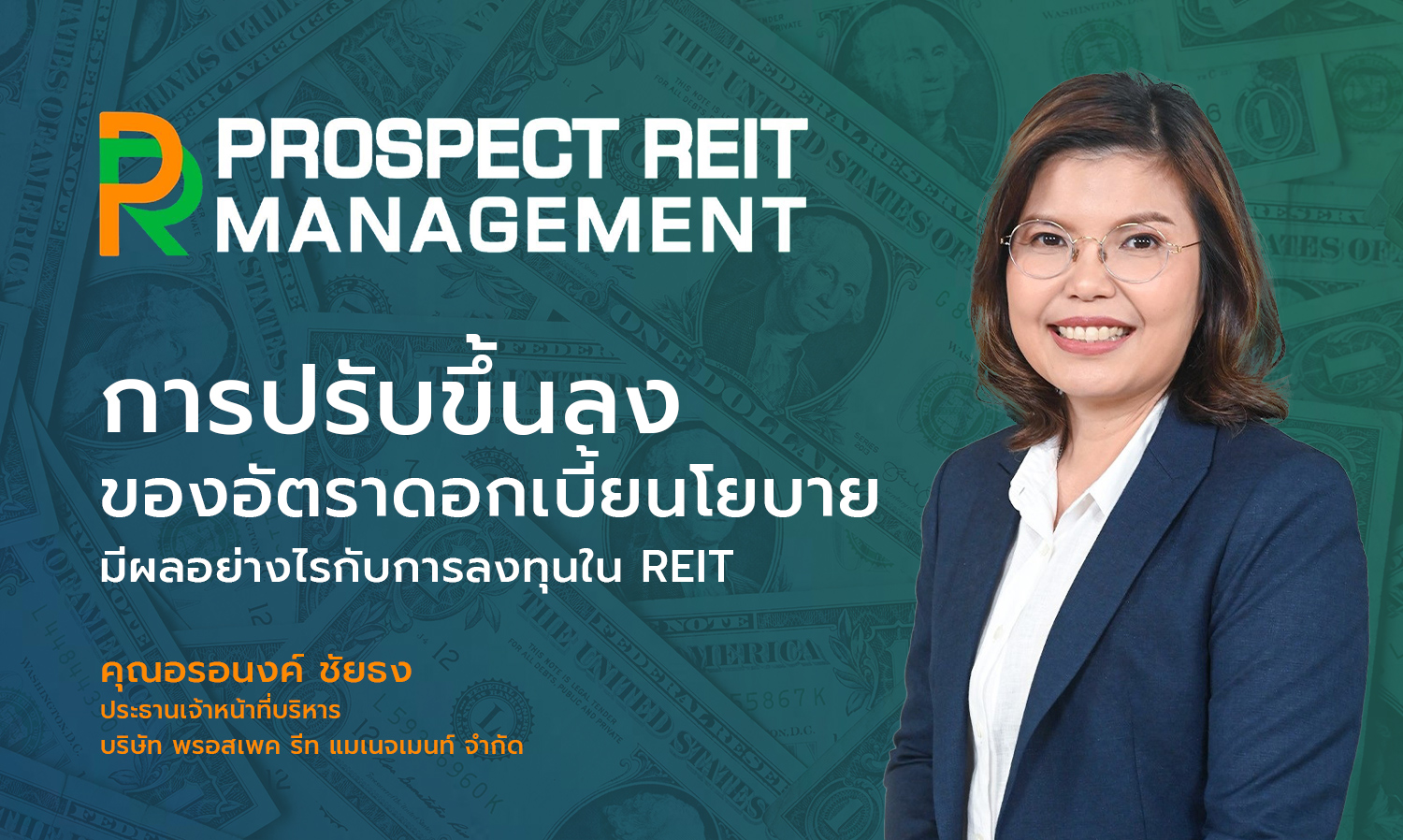
Ms. Oranong Chaitong, CEO of Prospect REIT Management Co., Ltd., commented that amidst the rapid changes driven by the COVID-19 pandemic, investors must consistently recognize the importance of risk diversification, which includes:
1) Diversifying asset selection in investment portfolios by investing in various asset types such as bonds, debt securities, stocks, digital assets, mutual funds, or even REITs, each carrying different risk considerations.
2) Diversifying risks across various business sectors, focusing on growth sectors such as healthcare, medical equipment, logistics, and e-commerce.
“Investment strategies for investors in 2022 should not only emphasize risk diversification but also consider the quality of assets. Information is crucial for making effective investment decisions. While we recognize that risk is important, investing in quality and sustainable assets can alleviate concerns, as excessive worry may hinder portfolio growth,” she stated.
For those interested in investing in REITs, which offer a balanced investment approach that is neither overly aggressive nor too conservative, several factors should be considered:
1) Are the assets within the REIT of high quality?
2) What types of businesses do the assets in the REIT belong to, and where are they located to maximize risk diversification?
3) What is the investor's preference for REIT sectors, what types of assets do they prefer, and what level of risk can they tolerate?
4) The stability and long-term returns from management by a trusted and experienced trustee manager.
After its first anniversary, PROSPECT REIT has shown stable growth and has outperformed its operational targets. Ms. Oranong noted that the strong performance of PROSPECT REIT has positively impacted the distribution of benefits to unit holders at a high and consistent rate over the past year, instilling confidence in both existing and new investors, as reflected in the unit price of PROSPECT REIT, which has risen above the IPO price and net asset value (NAV).
“Regarding our goal to expand total asset value to 10 billion baht within three years, the trustee manager plans to focus on acquiring quality assets to support growth. Our independent investment policy allows us to seek assets beyond the original property owners (Sponsors), and we are also exploring properties from other owners. The assets we are targeting will be located in prime areas, not far from logistics hubs, close to airports, ports, and major roads for convenient domestic and international travel,” Ms. Oranong explained.
Therefore, when choosing to invest in REITs, investors should select those with quality assets and strong performance, which will help manage investment risks and enhance overall portfolio safety. However, investors should also prioritize risk diversification within their portfolios to ensure sustainable growth, rather than temporary gains.
Source: https://www.investopedia.com/2021-year-of-extremes-5213265