Monitoring Rice Production After Flooding Through High-Frequency Indicators
Analysis by
Apinun Suprasert
Kritsanan Jinda Wong
Krungthai COMPASS
Key Highlights
- Krungthai COMPASS estimates that the actual damaged rice production will be around 1.6 million rai, accounting for only 2.3% of the total rice cultivation area in the country, with an estimated total damage value of approximately 5.4 billion baht. The majority of the damaged rice production is located in the provinces of Nakhon Ratchasima, Nakhon Sawan, Chaiyaphum, Si Sa Ket, and Phichit, due to prolonged flooding.
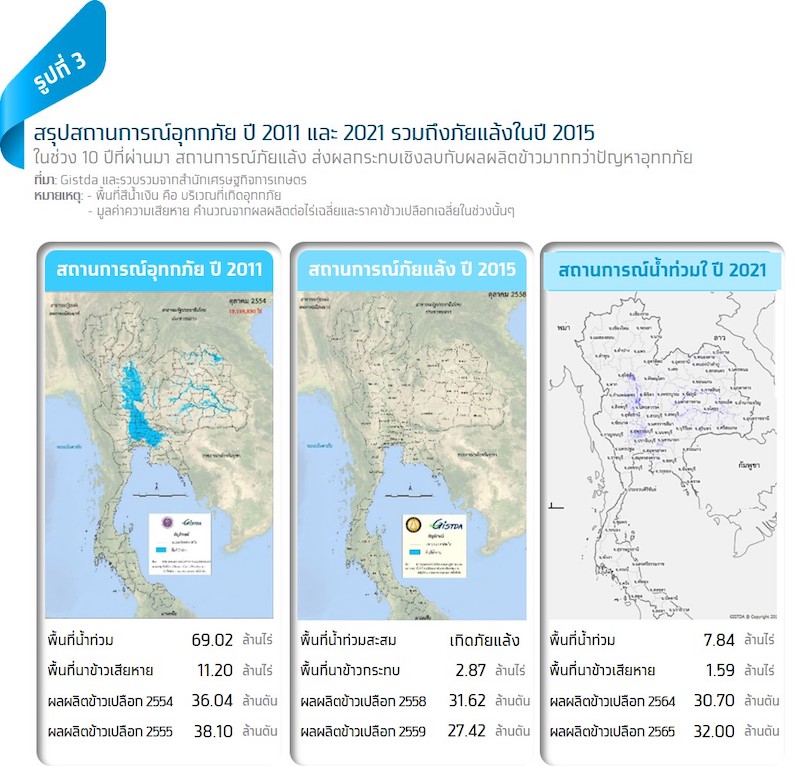
- The impact of the flooding in 2021 has been less severe compared to the major flooding in 2011 and the drought in 2015. The 2011 flooding affected 11.2 million rai of rice cultivation, resulting in a total damage value of 43.6 billion baht, while the drought in 2015 affected 2.9 million rai, with a total damage value of approximately 10.5 billion baht.
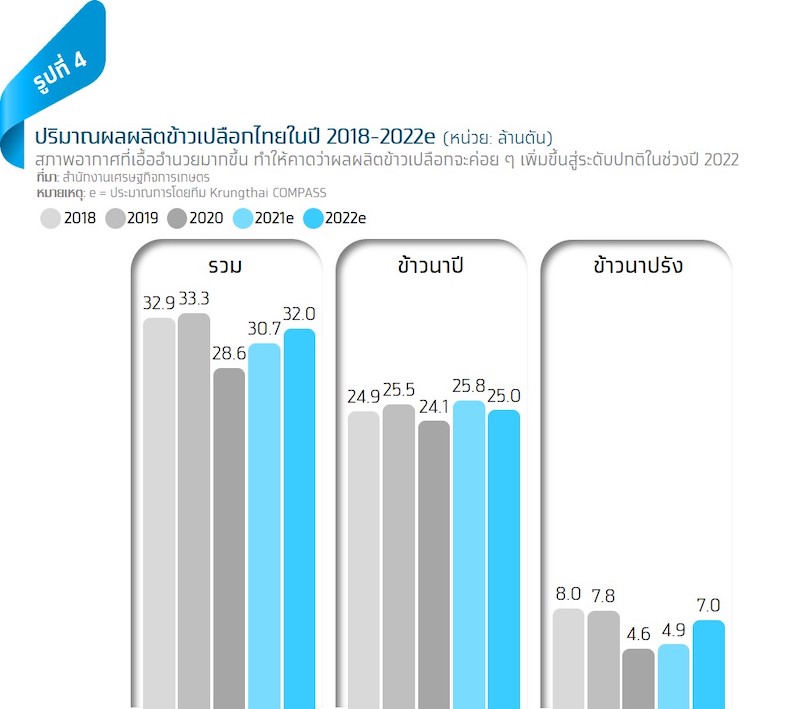
- This flooding has increased water levels conducive to cultivation, leading to expectations that in 2022, paddy rice production will rise to 32 million tons, an increase of 6.3%. However, exports still face intense price competition, as the rice production of competing countries like Vietnam and India is also expected to increase, putting downward pressure on domestic rice prices.
Amid various challenges faced by farmers and stakeholders in the rice supply chain, particularly in production and export, there are significant issues such as the excess production capacity of mills (almost double the amount of paddy rice available each year). Additionally, domestic consumption has not increased and is trending downward due to health-conscious trends. Exporting rice has also become more difficult, as the average export price of Thai rice remains higher than that of competitors, with the risk of being undercut by the increasingly popular soft rice from Vietnam in the global market. There are concerns and questions about whether this year's flooding, which has affected many areas across the country, including the North, Northeast, and Central regions, will further exacerbate the rice business. How significant will the impact be, and which areas and provinces will be most affected?
How advanced are the tools for assessing the impact of natural disasters?
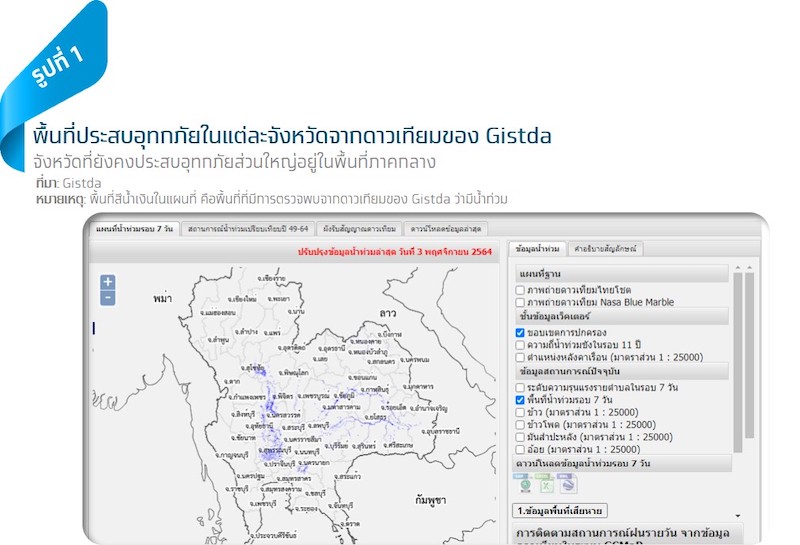
Currently, satellite technology is being used to analyze the impact of natural disasters, replacing the previous method of field surveys, which sometimes resulted in delayed and outdated information. Satellite imagery is classified as High-Frequency Indicator data, with updates occurring daily, allowing for real-time monitoring of the latest natural disaster situations. For example, satellite maps from GISTDA as of November 3, 2021, show that there are still provinces experiencing flooding, including those in the Central region such as Sukhothai, Phitsanulok, Khon Kaen, Chaiyaphum, Nakhon Ratchasima, Ubon Ratchathani, Nakhon Sawan, Uthai Thani, Chainat, Lopburi, Saraburi, Suphan Buri, Sing Buri, Ang Thong, Phra Nakhon Si Ayutthaya, and Pathum Thani.
How much rice production has been damaged? Which provinces have suffered the most damage?
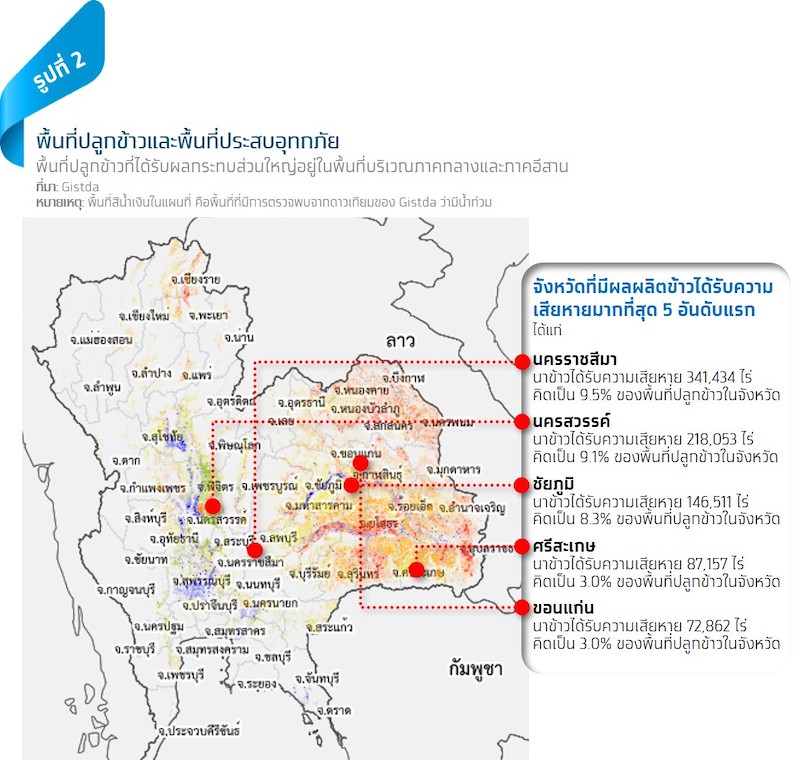
According to satellite data from GISTDA, approximately 3.9 million rai of rice cultivation has been affected by this flooding. Krungthai COMPASS estimates that the actual damaged paddy rice production will be around 1.6 million rai, or only 2.3% of the total rice cultivation area in the country, with an estimated damage value of about 5.4 billion baht. The majority of the damaged rice is in the growth stage or rice that has already flowered and is ready for harvest. Rice that has just been sown is expected to withstand the water, and if the area is not flooded for an extended period, the damage will be minimal, as rice can typically tolerate flooding for at least 15 days. Based on preliminary assessments, the top five provinces expected to suffer the most damage are Nakhon Ratchasima, Nakhon Sawan, Chaiyaphum, Si Sa Ket, and Khon Kaen, in that order.
Damage comparison with the 2011 flooding and the 2015 drought
Compared to the damage from the major flooding in 2011 and the drought in 2015, this year's flooding has resulted in significantly less damage. Data from the National Water Resources Office and the Office of Agricultural Economics indicates that the 2011 flooding affected 11.2 million rai of rice cultivation, with a total damage value of 43.6 billion baht, which is eight times greater than this year's damage. The 2015 drought affected 2.9 million rai, with a total damage value of approximately 10.5 billion baht, which is about twice the damage of this event. Furthermore, this flooding is not expected to significantly impact rice production and is likely to increase the usable water levels in reservoirs, which will benefit the dry season of 2022.
What will the direction of the rice business be in 2022?
Krungthai COMPASS predicts that in 2022, paddy rice production will increase to approximately 32 million tons, a 6.3% year-on-year increase due to favorable weather conditions and water availability for cultivation. While exports are expected to improve, they will not increase significantly, estimated at around 6.5 million tons, which remains low compared to the average of 9-10 million tons exported annually from 2007 to 2018. This is due to the strengthening Thai baht, making it harder for Thai rice to compete with the lower prices of competitors like Vietnam and India. Additionally, it is anticipated that the rice production of Thailand's key competitors, such as Vietnam and India, will also increase due to favorable weather conditions for cultivation, intensifying competition in the global rice market. Therefore, it is expected that the wholesale price of Thai rice will trend downward, with estimates for the first half of 2022 indicating that the average wholesale price of 5% white rice will be around 11,270 baht per ton, a decrease of 21.1% year-on-year, while the average wholesale price of 100% jasmine rice will be around 18,668 baht per ton, a decrease of 20.7% year-on-year. Furthermore, high shipping costs remain a factor that burdens the profit margins of the business.
Implication:
Although this flooding has not significantly impacted rice production, rice mill businesses still face risks due to raw material shortages relative to overall production capacity, coupled with the need to compete on price to maintain production levels, resulting in high production costs. Meanwhile, wholesale rice prices are pressured by the export market, leading to low margins for rice milling businesses. Additionally, if there are leftover stocks that cannot be sold in time, the risk of stock losses increases. Natural disaster risks are difficult to control and impact the volume of paddy rice production. Therefore, stakeholders in the rice business should closely monitor natural disaster situations, with current information available from both domestic and international agencies, which Krungthai COMPASS has compiled as follows:

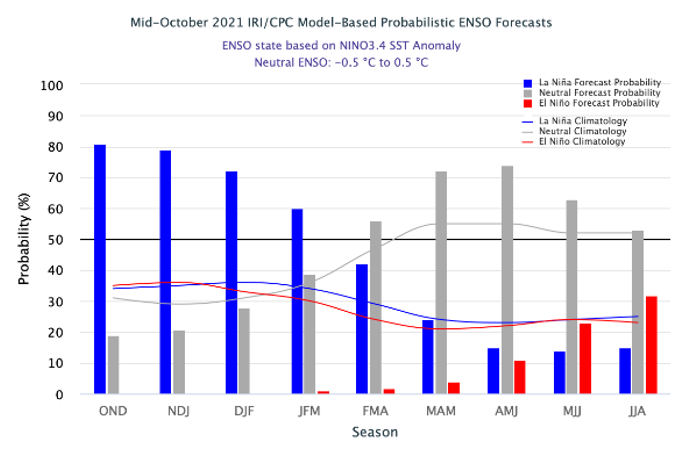
1. Trends of El Niño or La Niña >>> https://iri.columbia.edu/our-expertise/climate/forecasts/enso/current
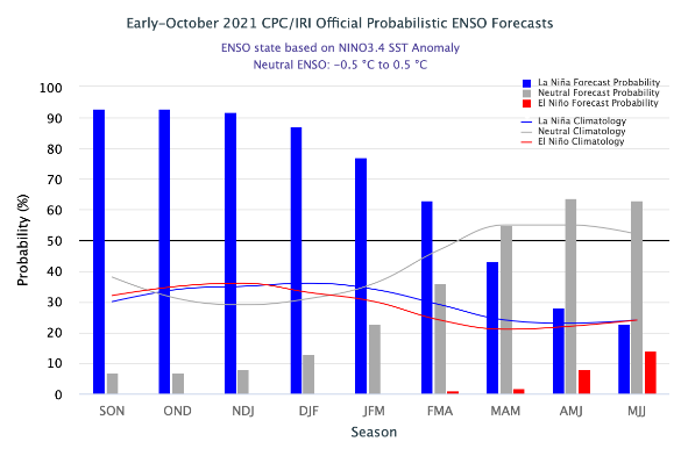
This shows the probability forecast for the occurrence of El Niño (drought) or La Niña (excess rainfall). The latest data indicates that the likelihood of La Niña occurring in early next year has decreased. The forecast from early October 2021 shows that the probability of La Niña (blue bar graph) from January to March is 65-85% (bottom left image), but the mid-October 2021 forecast shows that the probability of weather conditions being in La Niña during the same period has decreased to 45-72% (bottom right image), corresponding with the probability of normal weather conditions (gray bar graph), which was 12-35% in early October 2021 (bottom left image) but increased to 28-55% in the mid-October 2021 forecast (bottom right image).
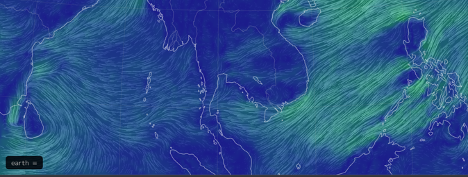
2. Wind and storm direction >>> https://earth.nullschool.net/
This shows the movement and direction of wind and storm systems. In November 2021, the wind patterns indicate that winds are moving through the Northeast and Southern regions of Thailand, resulting in continued rainfall in those areas. If a storm moves through Thailand, it will be represented as a swirling wind pattern.
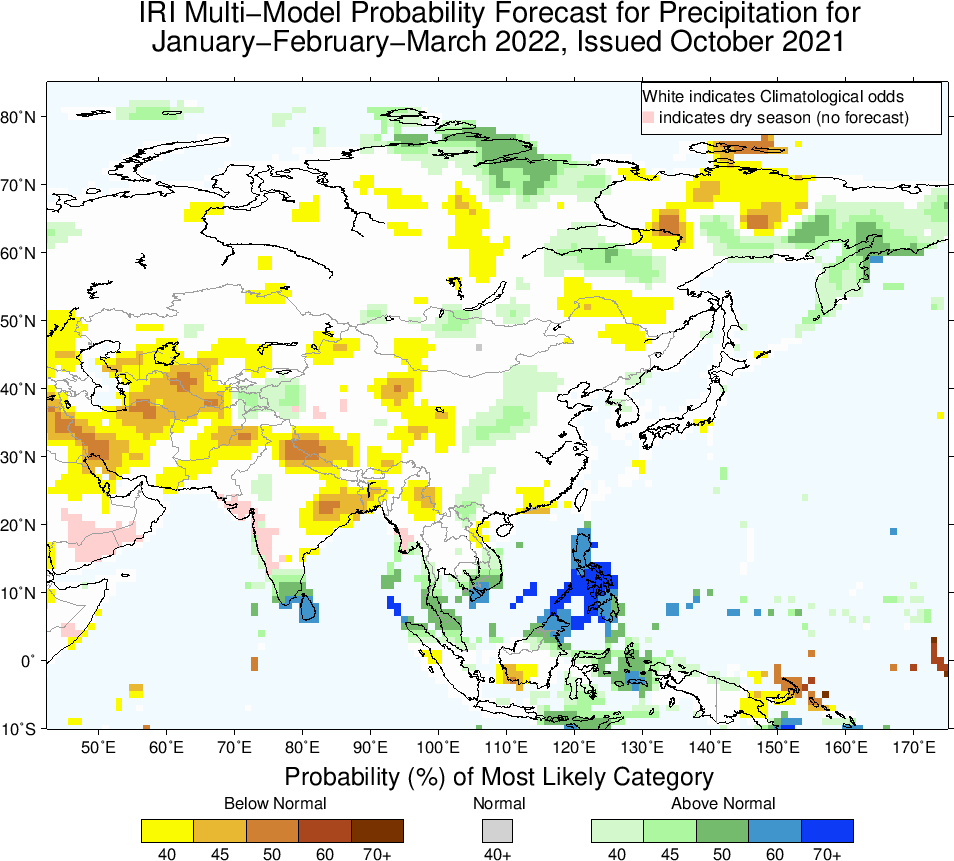
3. Rainfall forecasts >>> https://iri.columbia.edu/our-expertise/climate/forecasts/seasonal-climate-forecasts/
This shows rainfall forecasts for different areas. If an area has a white band (in the Normal group), it indicates that the area will receive normal rainfall. For example, from January to March 2022, it is expected that the Northern, Northeastern, and Central regions of Thailand will receive normal rainfall, while the Southern region will receive above-normal rainfall (green band).
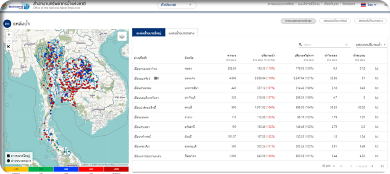
4. Usable water levels in reservoirs by region >>> http://nationalthaiwater.onwr.go.th/dam
This considers the actual usable water levels in reservoirs; if below 30%, it indicates a crisis level.
5. Flood area data from GISTDA satellites >>> https://flood.gistda.or.th/
The blue areas indicate regions experiencing flooding, with data updated daily.