
Lumpini Wisdom Identifies 4 Consumer Behaviors Transforming Service Work
Lumpini Wisdom highlights that today's consumer behaviors prioritize "speed-value-everywhere-anytime-convenience". This compels businesses to integrate technology into service development to meet the current and future demands of consumers.
Mr. Prabhand Sak Raksaiwan, Managing Director of Lumpini Wisdom and Solutions Co., Ltd. (LPN Wisdom or LWS), a research and consulting firm in real estate development under LPH Development Public Company Limited (LPN), discussed the research findings from the Service Development Centre (SDC) regarding service development. He noted that following the outbreak of the COVID-19 pandemic, consumer behaviors have rapidly changed, particularly in the demand for services that need to be quick, valuable, and available 24/7, along with the convenience of service access. This has forced service providers to adapt by utilizing technology for data collection and customer demand analysis (Data Analytics) to enhance service offerings that align with current and future customer needs.
.jpg)
According to the SDC's survey of residents in communities managed by LPP Property Management Co., Ltd. (a subsidiary of LPN), it was found that residents prioritize online channels for communication and information. The survey also revealed that over 90% of respondents order products online and more than 80% use food delivery services. This aligns with data from the Electronic Transactions Development Agency (ETDA) and We Are Social in collaboration with Hootsuite, which indicated that in the 5.0 era, Thailand had over 46 million internet users in 2021 (almost tripling since 2009) out of a total population of 66 million.
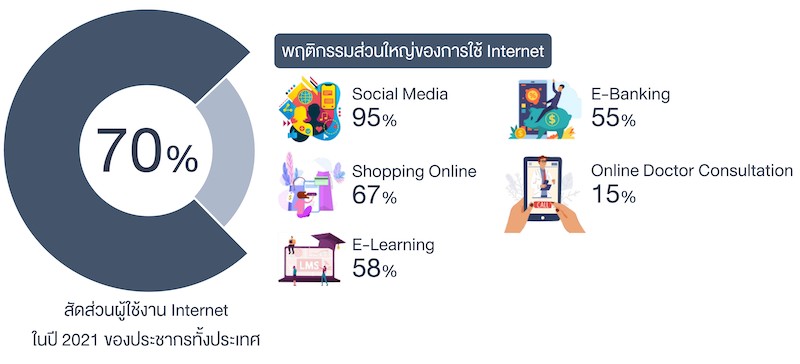
The changing consumer behavior that emphasizes technology and access to information for decision-making is a crucial factor that compels service businesses to adapt and develop services in line with consumer behaviors, focusing on four main components:
- Speed of access to consumers: The role of technology in daily life has accelerated access to information about products and services, allowing purchasing decisions to be made with just a touch. This necessitates that sellers quickly reach consumers in terms of product and service quality, encouraging rapid decision-making by using communication technology to relay information from providers to customers swiftly. Service development must also prioritize convenience and speed, with many businesses enhancing communication and service channels online to minimize direct contact and accelerate access to service seekers. For example, health services through Telehealth allow consultations with doctors or health experts online, while financial institutions offer services for money transfers, payments, and more through various applications. Technologies like Beacon send Bluetooth signals to users' smartphones within range, notifying them of useful information immediately.
- Creating value in services: Developing services that provide value for consumers involves designing services that enhance user satisfaction through efficient management systems, reducing wait times by implementing appointment systems, and offering service packages tailored to individual needs. This approach also saves on transportation costs and optimizes product sizes for shipping. For instance, cloud-based management services for residential living utilize technology to reduce costs for unit owners, such as Smart Lighting Control systems that save electricity and track usage.
- Everywhere, Anytime (24/7): Access to technology and changing lifestyles have made quick responses to service users essential, including efficient real-time service systems. Today's consumers dislike waiting, making real-time responses a core aspect of service delivery. AI systems can handle initial inquiries in call centers, transferring complex issues to human staff when necessary, providing a better experience than having to call back later.
- Developing services to create future customers: Service development should not only address current needs but also leverage data analytics to anticipate future consumer demands. For example, Virtual Reality (VR) technology can simulate environments, enhancing the shopping experience in real estate by allowing potential buyers to explore properties without visiting them physically. Analyzing customer behavior to offer new services creates new business opportunities and meets future customer needs.
“The COVID-19 pandemic has accelerated the adoption of technology, providing an opportunity for businesses to develop services that align with consumer behaviors more easily through data collection and analysis. This leads to the creation of services that are convenient, fast, easy to use, and unique, offering a special experience to consumers,” said Mr. Prabhand Sak.