Bank of Thailand Collaborates with Thai Bankers Association to Implement Sustainable Debt Relief Measures for COVID-19 Affected Borrowers
Due to the mutation of the coronavirus (COVID-19), the pandemic has become highly uncertain, with prolonged and fluctuating trends that have severely impacted the Thai economy. Each economic sector is recovering slowly and unevenly. Therefore, traditional short-term debt relief measures, such as temporary debt moratoriums or short-term debt restructuring, are no longer adequate to help all parties navigate this crisis.
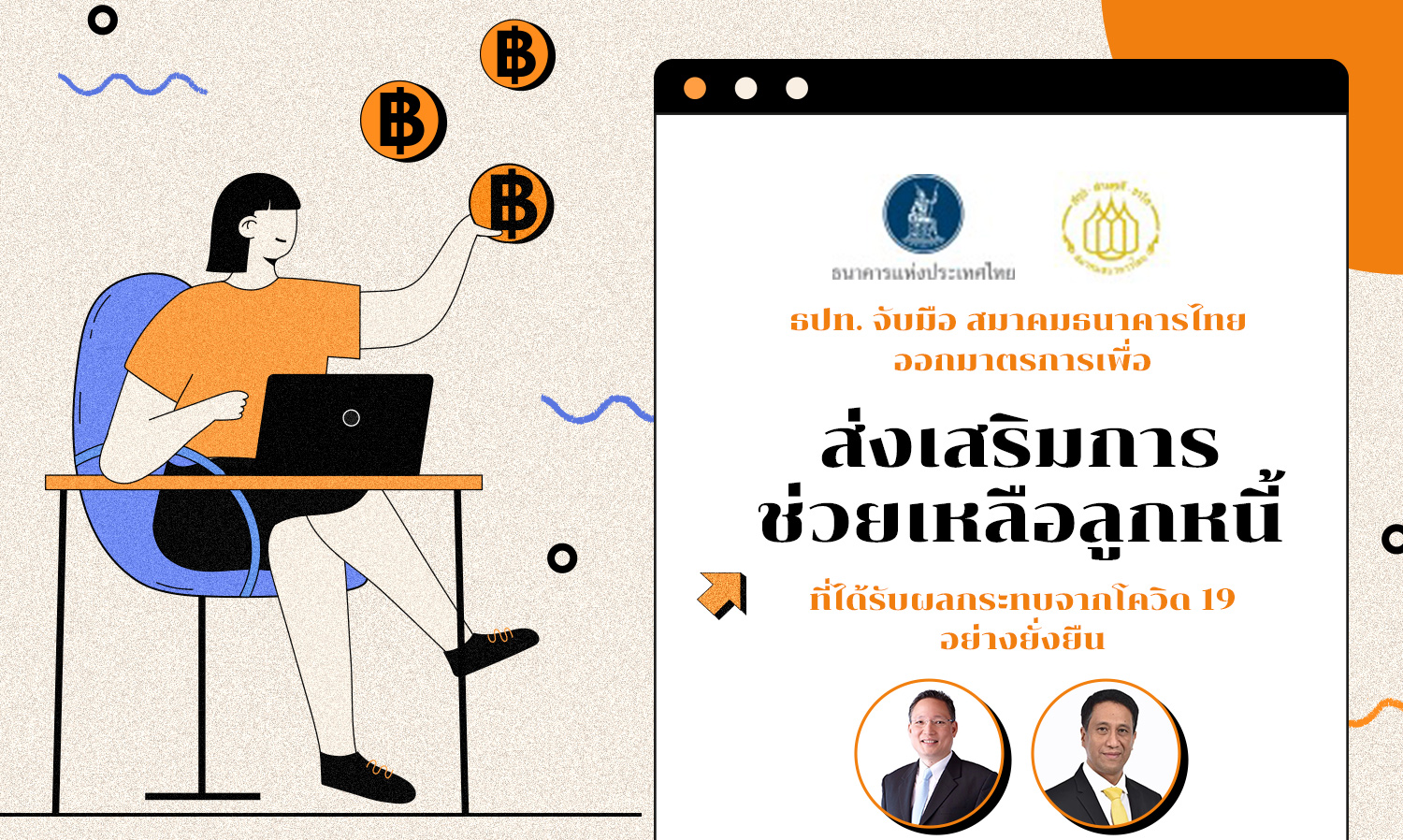
In this regard, the Bank of Thailand (BOT) and the Thai Bankers Association have agreed to promote measures to sustainably restructure debts for borrowers affected by the pandemic in the long term, aligning with the borrowers' income forecasts. For instance, during periods when borrowers' incomes have not yet returned and may take a long time to recover, their debt repayment burdens should remain low, gradually increasing over time. This approach is not about temporarily deferring or pausing debt repayments. The assistance strategy follows the BOT's announcement on additional measures to promote sustainable debt relief for COVID-19 affected borrowers, made on August 20, 2021.
Regarding the rumors about reducing principal and interest (haircuts), the BOT and the Thai Bankers Association would like to clarify that both agencies have closely discussed and agreed that it is essential to expedite the implementation of various measures to effectively assist borrowers during the COVID-19 situation. The fundamental principle is that borrowers suffering from COVID-19 should receive the most help, tailored to their specific problems, without creating incentives for unaffected borrowers to stop repaying their debts (moral hazard). This is to ensure that financial institutions remain a vital mechanism capable of adequately and equitably assisting distressed borrowers.
Mr. Ronadol Numnon, Deputy Governor for Financial Stability at the BOT explained, "To align with the intention of providing additional assistance to borrowers in crisis, the BOT has considered adjusting regulatory guidelines to facilitate ongoing support, including reducing access restrictions to measures. This includes providing flexibility in the application of classification criteria and reserve requirements to lessen the cost burden on financial institutions that assist borrowers beyond merely extending repayment periods. Additionally, the extension of the reduced contribution rate to the FIDF fund to 0.23% until the end of 2022 allows financial institutions to pass on the reduced costs to mitigate impacts on businesses and the public continuously."
At the same time, Mr. Payong Srivanit, President of the Thai Bankers Association stated, "Banks will expedite the implementation of these additional assistance measures as a means to support borrowers. Each bank will develop specific product programs to provide options for assisting borrowers, particularly in restructuring debts to align with the issues faced by each borrower group quickly. This will enable all borrower groups to sustain their businesses through this crisis. The product programs for debt restructuring will vary and align with the problems of each borrower and group, ensuring fairness for both borrowers and creditors, so that assistance effectively reaches the targeted borrower groups."
The BOT and the Thai Bankers Association aim for the debt restructuring measures tailored to the issues of each borrower group to help all borrowers sustain their businesses through this crisis together.
Bank of Thailand
Thai Bankers Association