Demand for Office Space in Thailand Remains Strong as Tenants in the Asia-Pacific Show Increased Interest in Long-Term Expansion
A recent regional tenant survey by CBRE on office space expansion plans, the shift to hybrid working, and workplace design trends to enhance engagement, innovation, and collaboration.
According to the 2021 CBRE Asia-Pacific Future Office Market Survey released today, companies leasing office space plan to expand their office footprints in the Asia-Pacific region more in the long term and are adopting strategies to increase flexibility and hybrid working in new formats.
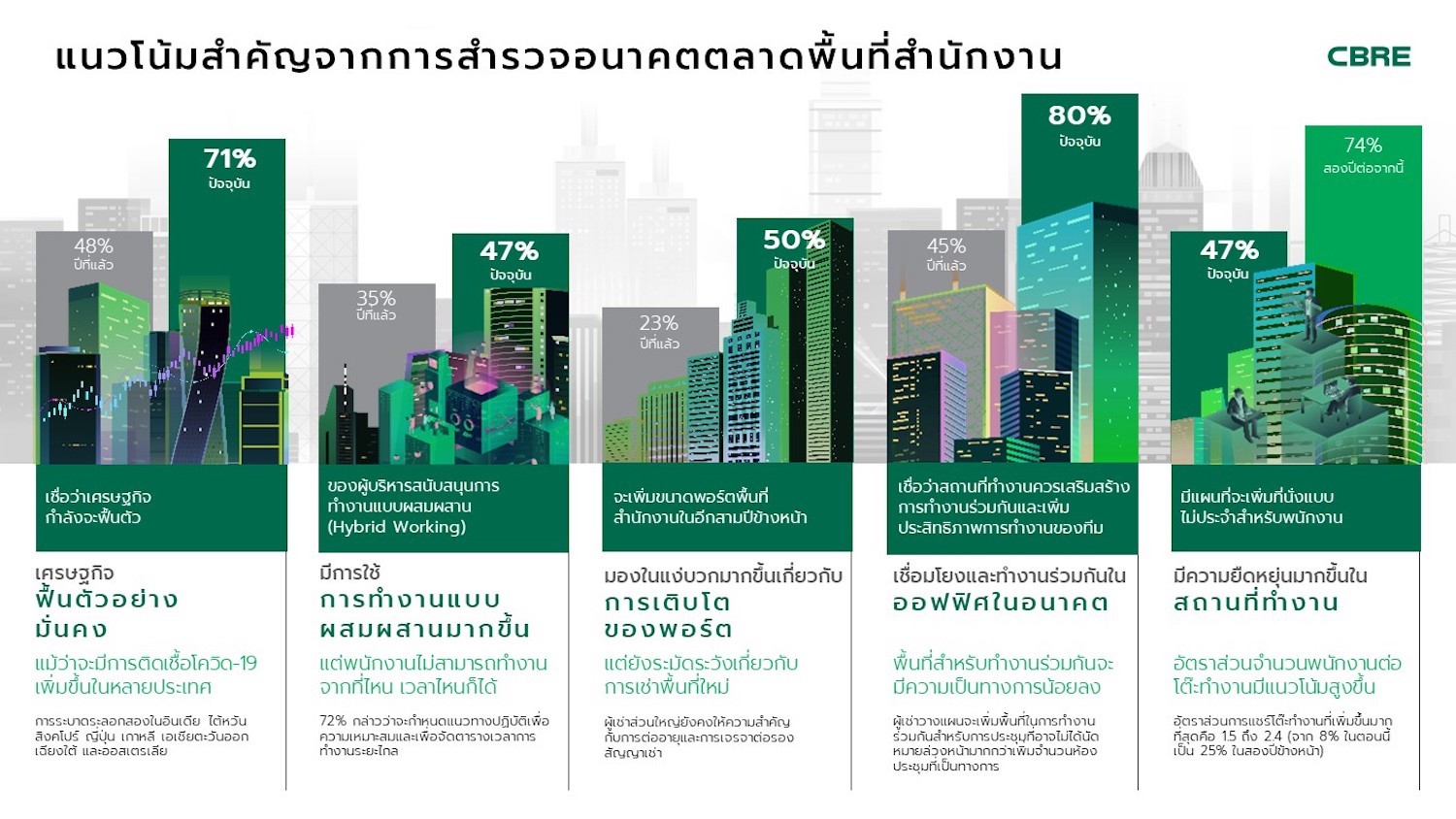
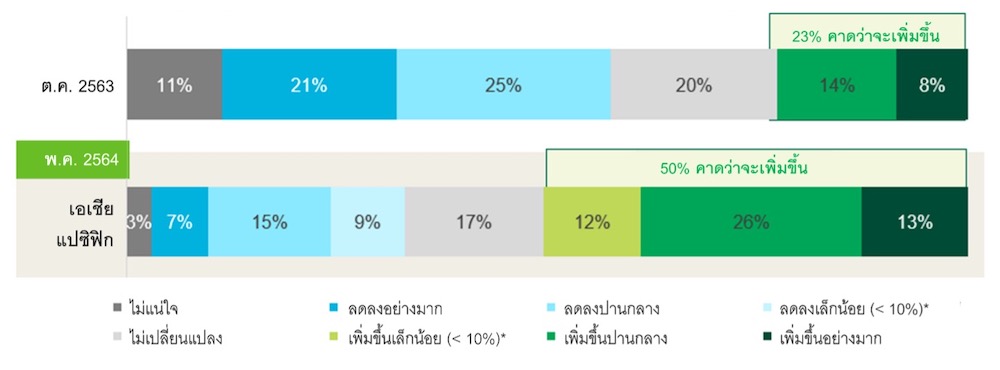
The survey of office space tenants across various industries and countries in the Asia-Pacific found that approximately 50% of respondents indicated an intention to increase office space in their real estate portfolios over the next three years, a significant increase from just 23% in October 2020.
Companies in Asia are the primary group looking to expand their space, particularly technology firms and certain investment and insurance companies. For multinational corporations, consolidating branches and seeking the highest quality spaces remain priorities, but some multinationals still aim for long-term expansion, such as technology companies.
Chart 1: How do you expect your company's real estate portfolio to change in the next three years?
Source: CBRE Asia-Pacific Future Office Market Survey 2021, July 2021
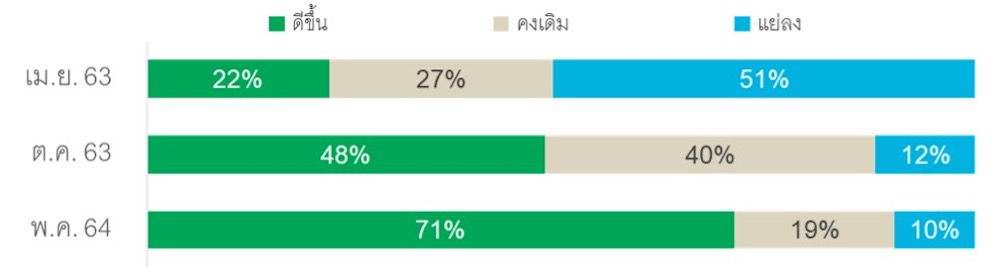
Supporting tenants' expansion plans is a significant improvement in business confidence across the region. The majority of respondents, or 71%, believe that current market conditions are improving, a substantial increase from 22% and 48% of respondents in April 2020 and October 2020, respectively. Respondents in China and the Pacific exhibited the highest levels of confidence, while India and Southeast Asia, including Thailand, showed the least.
While unpredictable infection rates will continue to affect the region's overall recovery in the near future, vaccination programs across the region have strengthened companies' confidence.
Chart 2: What is the current business condition of your company?
Source: CBRE Asia-Pacific Future Office Market Survey 2021, July 2021
As recovery accelerates and vaccination rates increase, confidence among tenants is bolstered, leading companies to intend to bring employees back to the office while increasing flexibility and work options.
With effective control of the pandemic, survey respondents expect employees to work in the office more frequently than from home, making hybrid working the norm. Meanwhile, companies are beginning to establish remote work policies based on each company's practices or approvals, allowing managers to set team work schedules and determine the appropriateness of remote work. CBRE believes that these changes in work patterns indicate that hybrid working will have a limited impact on future office space demand.
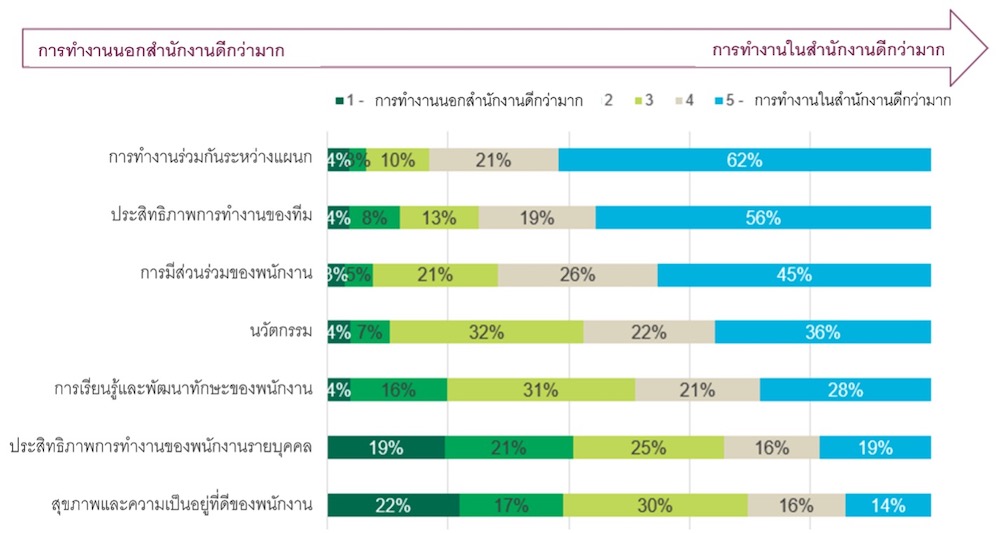
Ms. Rungrat Veerapakarnun, Head of Office Space at CBRE Thailand, stated, "In Thailand, the trial of remote work during the lockdown has yielded satisfactory results, prompting many companies to allow employees to work outside the office. Conversely, it has stimulated a reassessment of workforce strategies and emphasized the importance of reducing office space rental costs. However, rather than diminishing the demand for office space due to the expectation of increased remote work, CBRE believes that tenants will still require offices, which will be enhanced with digital technology, providing diverse workspace arrangements to accommodate different employee work styles and making workplaces more effective in supporting collaboration, teamwork, employee engagement, and innovation."

Chart 3: Ratings on various aspects comparing office workspaces to remote work.
Source: CBRE Asia-Pacific Future Office Market Survey 2021, July 2021
"Offices will be designed to promote collaboration and connectivity more than ever before, and workplace designs will need to be adjusted accordingly. CBRE anticipates an increased demand for informal meeting spaces and common areas in offices, and with hybrid working, companies will consider reducing the number of large meeting rooms as employees work individually and hold smaller team meetings more frequently. At the same time, tenants are likely to expect more from building owners in providing the solutions and services needed for hosting meetings and large events," said Ms. Ada Choi, Head of Research, Analytics, and Data Management at CBRE.
The results of this survey also have significant implications for real estate investors, many of whom are closely monitoring the recovery of office space demand and trying to adjust their investment strategies to benefit from the trends observed among tenants in this survey.
"Currently, quality office projects in the Asia-Pacific are an attractive opportunity for investors, contrary to the economic cycle. Investors should be aware of the clear intentions of tenants to expand their space in the medium term, especially among businesses in Asia. Assets with a strong tenant history that support growing sectors such as technology, media, and telecommunications (TMT) and companies based in Asia are well-positioned to perform better and should be prioritized, as these assets are likely to attract investors looking for the best quality projects. Additionally, CBRE recommends that investors monitor the increasing demand for spaces that address health, technology, and flexibility, as well as consider providing flexible office space and meeting areas tailored to tenant needs," said Dr. Henry Chin, Head of Investor Thought Leadership and Head of Research at CBRE Asia-Pacific.
To download the 2021 Asia-Pacific Future Office Market Survey report, click here.