Collaboration Efforts to Manage Construction Worker Camps Amidst the COVID-19 Crisis
<\/p>
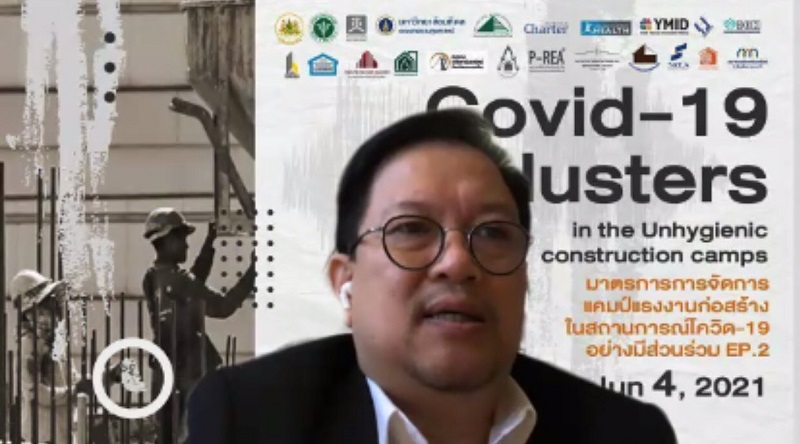
Summary of Key Issues from Government and Private Sectors on Managing "Construction Worker Camps" During the Third Wave of COVID-19<\/span> from the workshop "Measures for Managing Construction Worker Camps in the COVID-19 Situation: Participatory Approach EP.2" organized by the Thai Real Estate Association <\/strong><\/span>to provide a platform for all sectors to share perspectives and expedite strategies to prevent the spread of COVID-19 to construction worker camps.<\/strong><\/span><\/p>
<\/p>
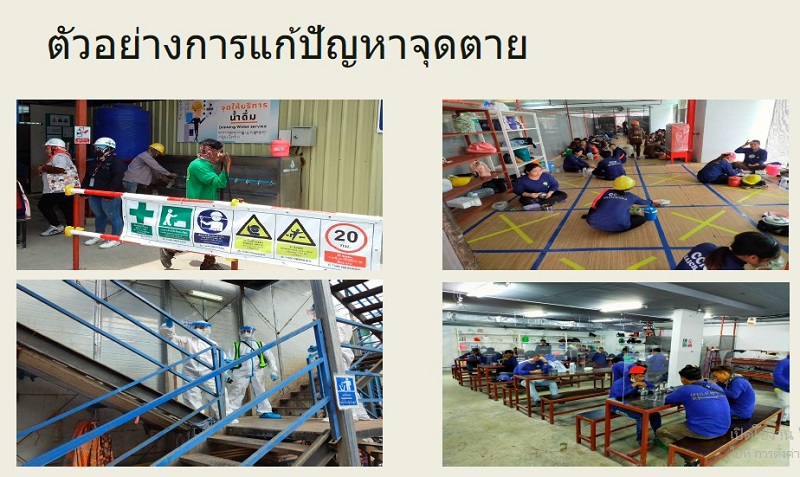
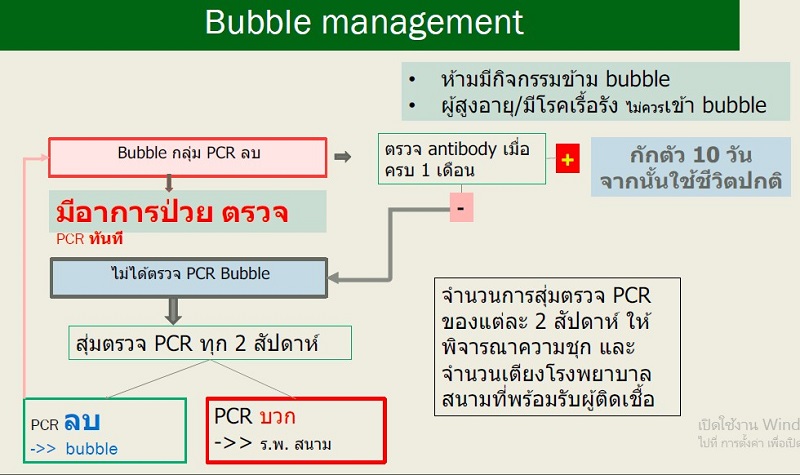
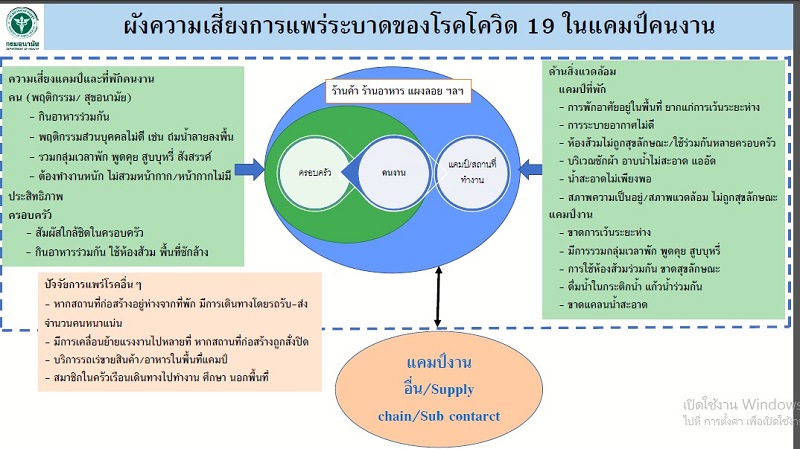
Dr. Wanna Harnchaoworakul, Field Epidemiologist and Expert from the Department of Disease Control, Ministry of Public Health<\/span> stated that Thailand is currently in the third phase of COVID-19 spread, with increasing daily infection numbers. The framework for controlling emerging infectious diseases aims to focus on slowing the spread, reducing mortality, and preventing infections in hospitals to mitigate overall impacts. Certainly, worker camps are another high-risk area that requires monitoring, as they are a group at high risk of transmitting the virus to connected vulnerable groups. The critical points of worker camps are primarily from common contact points<\/span> and daily living within the camp. For example, the drinking water service points require shared hand contact with faucets. During this time, a preliminary solution is to modify the drinking water service area to reduce contact, such as using foot-operated faucets or allowing workers to bring their own containers, glasses, or water bottles to minimize shared use. Additionally, designating dining areas into separate sections is recommended, such as marking spaces on the ground for family dining with social distancing or using partitions on dining tables, or staggering meal times to reduce crowding. Furthermore, in common contact areas such as stair railings, door knobs, and handles, which may be overlooked, behavior adjustments are necessary. For instance, wearing gloves when touching stair railings or increasing the frequency of cleaning and disinfecting these surfaces. The Ministry of Public Health has previously implemented measures for companies, work sites, and worker camps, announced on May 26, 2021, outlining key measures such as movement restrictions, advising against the movement of workers or returning to their hometowns from high-risk areas, and controlling travel from accommodations to construction sites along the entire route. Additionally, all provinces are instructed to survey the number of work sites and construction worker camps, especially those with foreign workers, to monitor densely populated camps and conduct random inspections at least every 2-3 months, including monitoring workers with a history of working in factories, construction sites, or markets from outbreak areas. Employers must maintain a register of employees and subcontractors and hire workers legally. In residential areas, construction sites, and worker camps, COVID-19 control measures must adhere to the DMHTTA principles: wearing masks, maintaining a distance of 1-2 meters, frequent hand washing, daily symptom screening, registering workers daily, not sharing meals or drinks, and refraining from social gatherings during this period. However, the management approach for construction worker camps during this time may not require waiting for swab tests but could opt for random saliva sample collection to manage areas based on the severity of the outbreak, which can be categorized into three groups. If positive results exceed 10%, Bubble & Seal measures may need to be implemented. The Bubble & Seal measures can be implemented if there is no outbreak in the camp. If it can be done for the entire camp, that would be ideal, but it is crucial to separate high-risk individuals, such as the elderly and those with underlying health conditions, from the Bubble & Seal. Implementing Bubble & Seal for the entire camp requires excellent management strategies, considering the environment of each camp, the lifestyle of workers, the number of workers within the camp, and their connections with outsiders. These factors must be analyzed to find effective management strategies, as implementing Bubble & Seal without understanding the environmental context may lead to stress among workers and subsequent issues.<\/span><\/p>
<\/p>
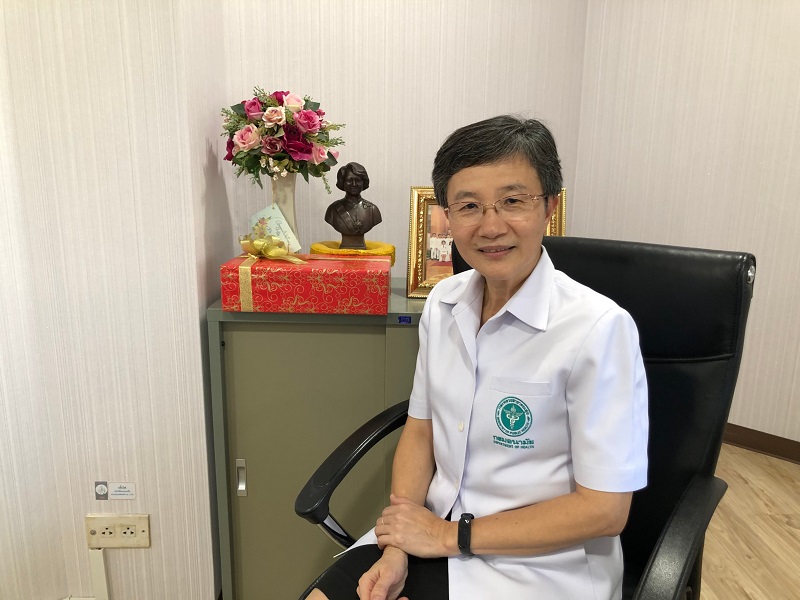
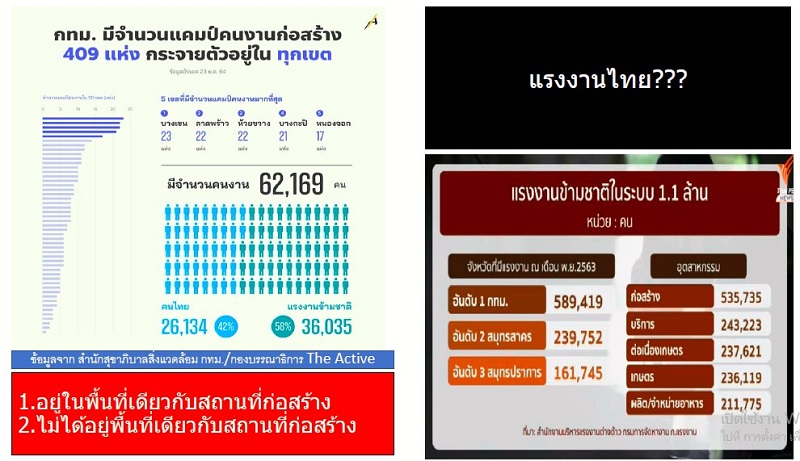
Dr. Ampon Janthawiboon, Public Health Academic Expert from the Department of Health, Ministry of Public Health<\/span> stated that COVID-19 has spread across various industries, with factors influencing outbreaks in factories stemming from close working conditions, shared lunch spaces, and communal items like drinking glasses, as well as socializing after work. Environmental factors also play a role, particularly if factories have inadequate ventilation. Currently, there are 409 construction worker camps in Bangkok, housing a total of 62,169 people, with approximately 26,000 Thai workers and around 36,000 foreign workers.<\/span> Businesses play a crucial role in implementing measures and operations to control outbreaks, from conducting thorough cleanings, analyzing causes and risks if an outbreak occurs, to enhancing measures from individual to organizational levels, and evaluating to reopen operations once conditions improve. <\/p>
<\/p>
Risks in construction worker camps primarily arise from lifestyle behaviors, hygiene, and culture. Recently, there have been proposals for employers to collaborate in improving and designing systems to elevate the quality of life standards for workers in terms of food, living conditions, sleeping arrangements, bathrooms, and drinking water to reduce risks. This push requires cooperation from employers.<\/span><\/p>
During this discussion, representatives from Westcon Company Limited, a construction contractor<\/span> indicated that 2-3 of their worker camps have been inspected for control and monitoring measures, with some areas needing improvement, such as shower facilities. Previously using large bathtubs, they have been advised to add showers and partitions to reduce contact points. Moving forward, they will develop worker camps based on the additional recommendations received.<\/span><\/p>
<\/strong><\/span> However, it must be acknowledged that adapting shower areas to comply with control and monitoring measures is challenging, as construction worker camps in Bangkok have limited space. Implementing shower facilities will require additional space, so the company will need to find ways to adapt to control and monitoring measures, possibly by staggering shower times for workers.<\/span><\/p>
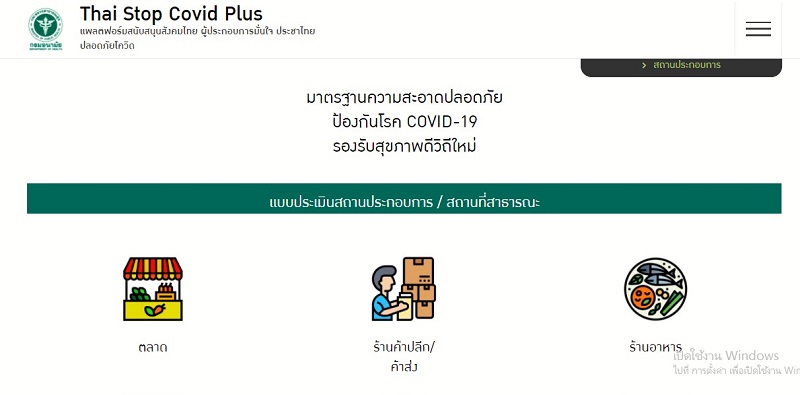
It is evident that improving conditions within worker camps for control and monitoring will enhance the quality of life for workers. Employers are encouraged to prepare by checking their worker camps using the website <\/span>Thai Stop Covid Plus<\/a> <\/span><\/strong> from the Department of Health to assess their business risks and preventive plans before incidents occur. <\/p>
<\/strong><\/p>
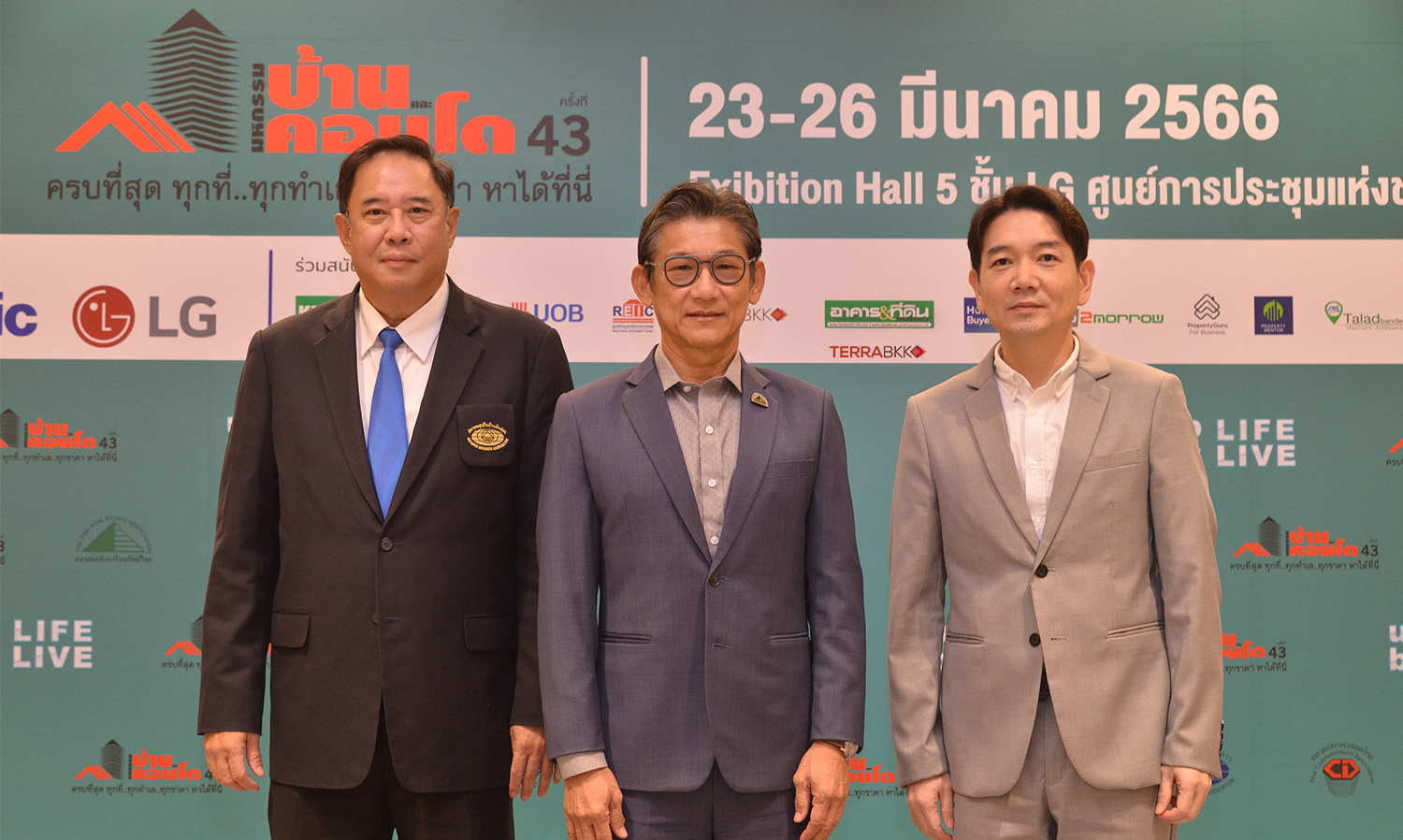
Mr. Pornnaris Chuanchaisit, President of the Thai Real Estate Association<\/strong> stated that the COVID-19 issue spreading within the labor cluster is a significant concern that requires urgent preventive measures. Employers must collaborate with the government to find prevention strategies and tighten measures. From the perspective of the real estate sector, construction workers are a crucial workforce for the business. Therefore, if screening is necessary, employers are ready to invest more to care for workers fully,<\/span> even if it increases costs, as it is minor compared to the potential losses from having to close worker camps or halt construction projects, which could have a more significant impact on the real estate business. It also helps keep workers within designated areas, reducing the spread of the virus to other camps. Currently, I believe we must expedite controlling the outbreak effectively. <\/p>
<\/p>
<\/p>  <\/p>
<\/p>
 <\/p>
<\/p>
 <\/p>
<\/p>
 <\/p>
<\/p>
 <\/p>
<\/p>
 <\/p>
<\/p>
 <\/p>
<\/p>
 <\/p>
<\/p>