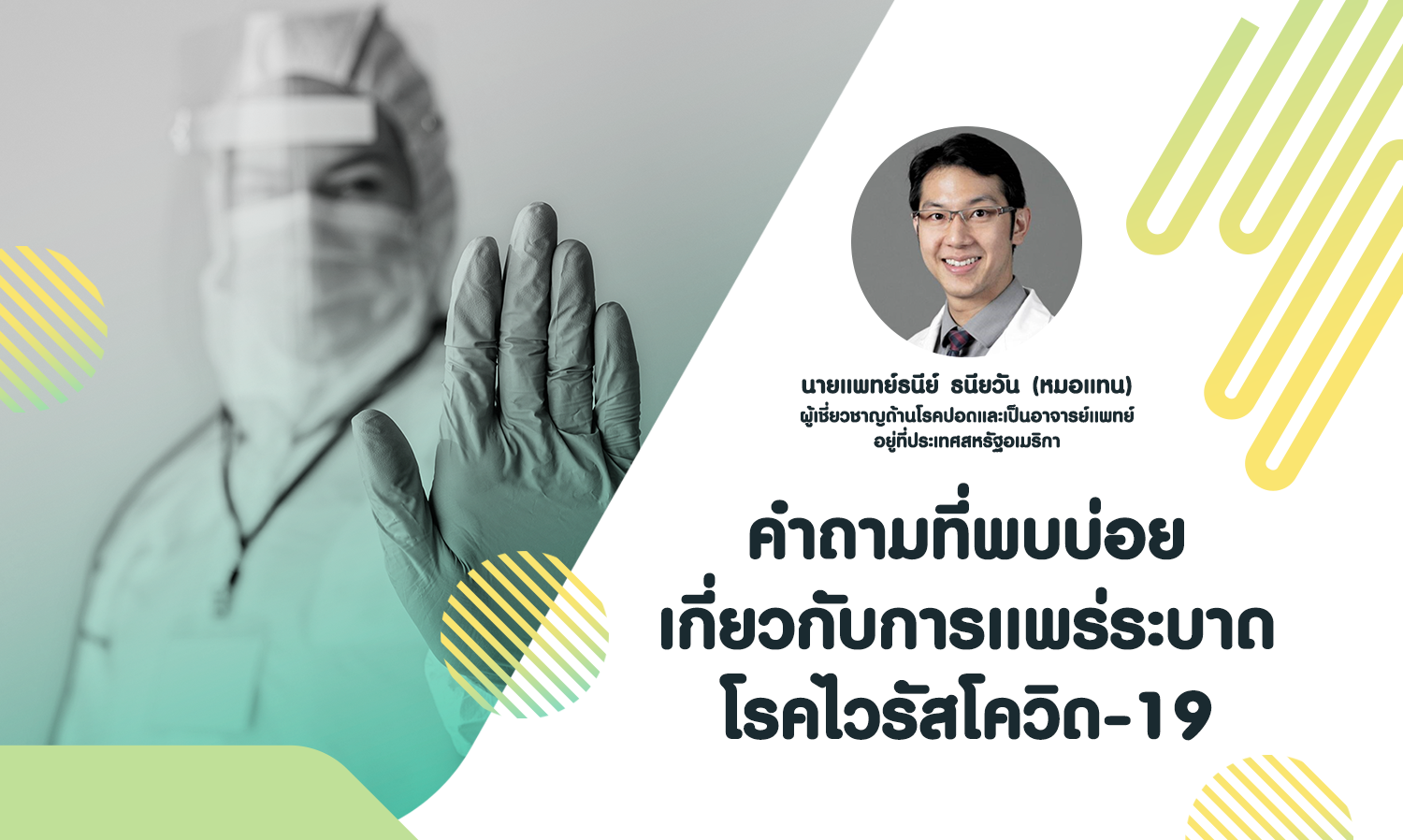
Frequently Asked Questions About the COVID-19 Pandemic
Experts have identified common questions from patients during the COVID-19 pandemic, such as how the virus spreads, how long it survives, and prevention methods.
Dr. Thanee Thaniyawan (Doctor Tan), a lung disease specialist and medical professor in the United States, stated that even though we have been facing the COVID-19 pandemic for nearly two years, patients frequently ask how the virus spreads and how long it lasts. The medical answers to these questions are as follows: 1. The virus can be transmitted through direct contact with contaminated surfaces or objects, such as mobile phones, wallets, banknotes, tables, chairs, doors, or other items, which can lead to the virus entering the mouth, eyes, or nose, resulting in infection. 2. The virus can also be transmitted through respiratory droplets from COVID-19 patients when they cough, sneeze, or speak loudly while being in close proximity, whether knowingly or unknowingly, as the virus can spread up to 2 meters (approximately 6 feet).
Another type of droplet that many are concerned about is the smaller airborne particles, which can remain suspended in the air for hours and can travel further than 2 meters. Regular masks may not effectively prevent transmission through this method, making infection easier. Even if a patient is not present in the area at all times, the virus can still linger in the air, allowing those who pass by to inhale it. However, studies have shown that airborne transmission is not the primary cause of COVID-19 infections currently, although certain situations may lead to airborne particles, such as being in poorly ventilated enclosed spaces like meeting rooms, entertainment venues, or gatherings where infected individuals are present for extended periods, coughing, sneezing, singing, or shouting. Examples of diseases that can be transmitted via airborne particles include chickenpox, measles, and tuberculosis.
The COVID-19 virus can survive in the general environment for 3-4 days, depending on the type of surface. The virus does not thrive on copper surfaces, where it can survive for only 4 hours. On cardboard, it can last up to 24 hours, while on plastic, it can survive for about 3-4 days. However, since we cannot know which surfaces are contaminated and for how long, it is essential to regularly clean our hands using alcohol gel or soap, especially before touching our face or eating. Additionally, some individuals use disinfectant sprays on various items, such as bedding, pillows, and household objects, which is beneficial, but it is important to ensure proper ventilation after spraying, as inhaling the spray can irritate the respiratory tract, trigger asthma, or cause pneumonia, particularly in those with lung diseases or other chronic conditions. Therefore, it is advisable to wait for the spray to dissipate before entering the area to minimize risk.
Another common question is how long the COVID-19 virus can withstand heat. The virus is easily killed by UV light or high temperatures. If exposed to a temperature of 75 degrees Celsius for about 3-5 minutes, the virus will die. However, drinking hot beverages does not prevent infection and may even be harmful. For those who like to wear gloves while shopping, this method does not provide much help, as gloves can also become contaminated. It is better to wash hands frequently instead.
Moreover, we should wear face masks at all times when going outside. This method not only helps prevent us from contracting the virus but also protects others in case we are unknowingly infected without showing symptoms. Studies show that approximately 30-35% of infected individuals may have mild or no symptoms at all, which is a significant number. If these individuals go out, they may unknowingly spread the virus. Additionally, if we test positive for the virus, we should self-isolate for 14 days as per medical advice.
This video was produced with support from EOLIFEMED Co., Ltd., a distributor of CPAP/BPAP equipment from Australia, focusing on providing knowledge about modern medical tools related to sleep.
For more information, you can watch the video at https://youtu.be/-YXlYRhujCk