Real Estate Agents Struggle as COVID Hits Foreign Market Hard, Says 'Elite Card' Fails to Stimulate Actual Purchases
The domestic real estate situation is not looking good, as the COVID pandemic has directly impacted consumers' purchasing power. Many potential homebuyers and condo seekers are facing rejection rates as high as 80% when applying for loans. Although the government is preparing to introduce new measures to stimulate the real estate market this week, including extending the 90% reduction in land and property tax for another year and extending the 0.01% transfer fee reduction for another year to boost purchasing power for homes priced up to 3 million baht.
On the side of operators, new strategies must be developed to launch sales campaigns, especially in the foreign market where purchasing power from foreign investors, particularly from China, has nearly vanished over the past year. Recently, two major real estate developers, Raimon Land Public Company Limited and AP Thailand, signed an MOU to join the 'Elite Flexible One' program of the Thailand Elite Card project to sell real estate to foreigners in exchange for the benefits of the Elite Card.

Rental Returns on Thai Condos 'Dwindle', No Longer Attractive to Foreigners
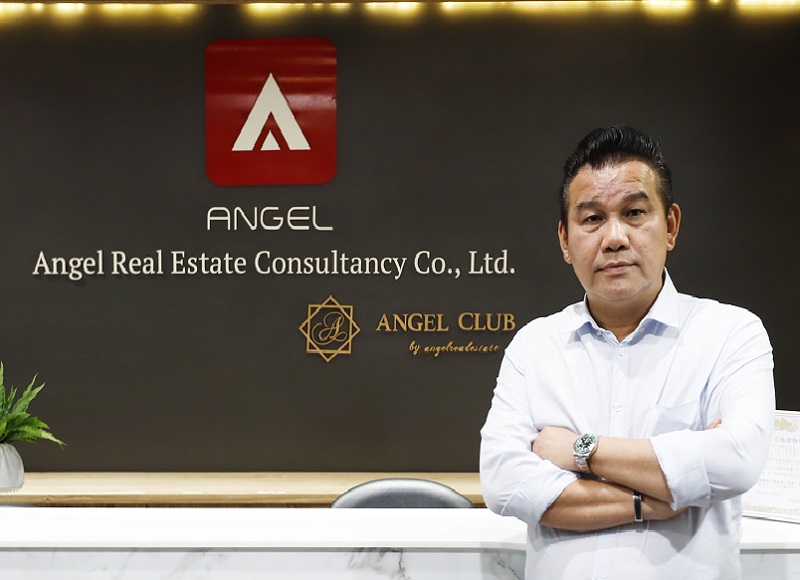
Mr. Simon Lee, Chairman of Angel Real Estate Consultancy Co., Ltd., a leading marketing and sales consulting firm in Thailand, especially in the foreign quota sector, revealed to TerraBKK that last year, Chinese clients transferred ownership of about 2,000 condo units. Although this is an increase from 2019, it remains low compared to 2018, when 3,200 units were transferred. The decline in transfers is largely due to the difficulties Chinese buyers face in transferring money for real estate purchases, as the Chinese government controls the outflow of funds. This has forced companies to assist Chinese clients in transferring money through other platforms, leading to increased costs and fees for international money transfers. In 2021, it is expected that foreign clients will transfer ownership of around 3,000 condo units.
The COVID pandemic has severely impacted businesses worldwide, making it difficult to rent out Thai condos. Rental returns have dropped from 5-6% per year to around 2%. This decline in rental yield makes investing in real estate for rental purposes unattractive to foreigners. Additionally, countries like Turkey offer benefits such as free passports to investors or buyers of real estate, attracting clients from Brunei, Myanmar, Cambodia, Hong Kong, China, Taiwan, and Middle Eastern countries to invest in Turkey, leading to a decrease in the popularity of Thai real estate compared to other countries.
Thai Real Estate in the COVID-19 Era: 'Brutal' Market Conditions Lead to Foreign Brokers' Demise
Mr. Simon further stated that COVID-19 has a silver lining; it has helped prevent Thai real estate prices from skyrocketing, allowing operators to adjust prices to reflect actual costs. Even though new projects are being launched, the low land prices and stable construction costs mean there is no upward pressure on condo prices, which is beneficial for the purchasing power of Thai consumers.
In the foreign market, it is evident that since the outbreak of COVID-19, the business of foreign quota brokers in Thailand has been significantly affected, leaving only two players in the market: DWG, a Singaporean real estate broker, and our company, Angel. In 2020, we experienced our first loss in ten years due to the decline in business and the disappearance of other brokers, indicating that the foreign market will struggle to recover.
'Elite Card' Fails to Stimulate Demand from Foreign Buyers
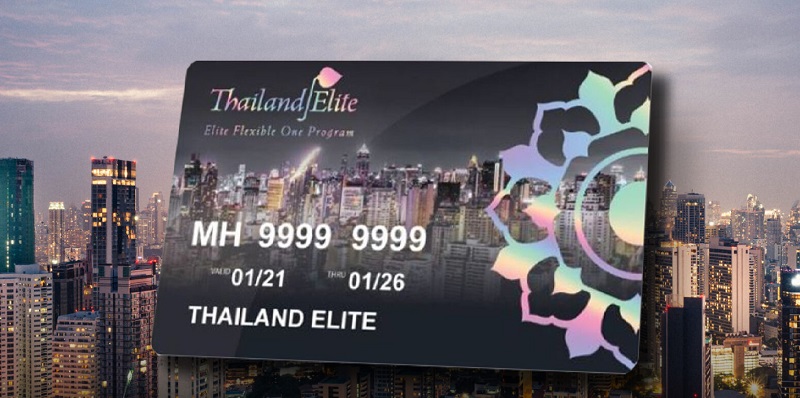
For members of Elite Flexible One, foreign investors or clients purchasing condos participating in the program will receive benefits such as a 5-year visa, airport services, and more. The criteria have been adjusted to allow clients to purchase real estate under leasehold agreements as well. Additionally, regarding the transfer process, if foreign clients cannot travel to complete the transfer, they can authorize the property developer to act on their behalf, provided the full amount is transferred, with evidence of the transfer being a bank certificate.
Mr. Simon believes that in terms of selling to foreign investors, brokers must assist clients with international transfers. However, offering condos with an Elite Card to provide clients with a 5-year visa to stay in Thailand will likely not significantly increase foreign demand for Thai real estate, as the cost of the Elite Card is included in the condo price, making it less attractive.
Conversely, if the government genuinely wants to stimulate the Thai real estate market among foreigners, it should consider enhancing the privileges for foreigners purchasing Thai real estate, such as offering a 5-year visa for families (up to 4 people) for condos priced at 10 million baht, along with expanding BOI privileges for investors residing in Thailand. The presence of foreigners will help stimulate domestic spending, leading to increased foreign currency circulation in the economy.
Regarding the domestic real estate market, the government's measures to extend the 0.01% transfer fee reduction for another year to stimulate purchasing power for homes priced up to 3 million baht is a positive step. However, the government should also consider reducing mortgage registration fees to 0.01% and expanding the price range for homes and condos from 3 million baht to a maximum of 7 million baht, as well as extending leasehold agreements from 30 years to 50 years. Additionally, the government should establish long-term measures to continuously stimulate the market for better outcomes.

Thai Real Estate Association President Reveals Transfer Fee Reduction of 0.01% Not Yet Implemented, Clients Requesting to Delay Transfers
Mr. Pornnaris Chuanchaisit, President of the Thai Real Estate Association, stated that after the government announced the reduction of the transfer fee to 0.01% in early January, clients who had booked purchases and were preparing to transfer ownership of various housing and condo projects have requested to delay their transfers until this measure is implemented. This has directly impacted small and medium-sized real estate operators who need cash flow to sustain their businesses.
Therefore, in the coming years, it is advisable for the government to plan or hold meetings to obtain cabinet approval before announcing measures to the public, to avoid a vacuum where clients delay transfers as seen this time.
It is acknowledged that currently, real estate developers are like stunted trees with yellowing leaves, waiting to wither. Although the government has intervened, it has still not been able to stimulate the actual purchasing power of clients, especially with the transfer fee reduction measure to 0.01% for homes priced up to 3 million baht, as this client group is the most affected and often faces loan rejections from banks.
Thus, to stimulate purchasing power and increase tax revenue for the state, it is recommended that the government widen the price range for homes and condos, as there are still many clients wanting to buy homes priced up to 7 million baht, who have actual purchasing power. The government could also consider reducing the transfer fee to 0.01% for homes priced between 1-3 million baht and maintaining the 2% transfer fee for the remaining price of the home, for example, for a 7 million baht home, clients would pay 0.01% on the first 3 million baht and 2% on the remaining 4 million baht.
If the government can implement this, it would enable clients with purchasing power to make decisions to buy homes during the period of these measures.
As for the LTV measures, it is still hoped that the Bank of Thailand will expedite the unlocking process, as currently, there are no investors eager to jump back into real estate investment as in the past, but there may be a growing number of clients with purchasing power looking to buy residences.
For 2021, it is anticipated that horizontal real estate will remain a viable segment, particularly in the price ranges of 3-5 million and 5-7 million baht, as demand for certain projects remains strong. However, the segment priced below 3 million baht remains concerning, as it is the group most affected by COVID and may need to rely on government relief measures. After the new round of financial injections, the government should also expedite finding job opportunities to support the growing number of unemployed workers.

Real Estate Experts Propose Government Offer Free Visas to Foreign Clients Purchasing Real Estate Over 1.5 Million Baht for 3 Years
Ms. Sumitra Wongphakdee, Managing Director of Terra Media and Consulting Co., Ltd., stated that the government's desire to assist the real estate sector for foreigners is commendable. Foreigners coming to Thailand represent various groups, including tourists, business operators, and those purchasing real estate for residence or investment. In the past, foreign clients have been a significant purchasing power that helps drive our economy, as their purchasing power is often higher than that of Thais.
For amending laws regarding foreign ownership of real estate, it will take time and cannot be implemented immediately. The government's linking of the Elite Card with the right to hold real estate by requiring additional purchases for visa extensions is a step forward.
However, it is essential to separate two issues: the sales of the Elite Card, which have not performed well in the past, and the purchase of real estate by foreigners, which has not previously included any visa privileges.
In the current view, the Elite Card priced at 500,000 baht for 5 years seems reasonable compared to previous Elite Cards. However, when analyzing the real estate that foreigners are currently purchasing, most are in the price range of 2-5 million baht. If they need to buy an additional Elite Card, this could increase their costs by 10-25%, which is likely unattractive to buyers.
If developers cover the cost to facilitate clients in transferring this amount, it would cut into their net profits, and at certain price levels, it may be nearly impossible due to the high costs of 15-25%. Therefore, it is not surprising that this measure has not effectively drawn foreign purchasing power back!
At this point, I urge the government to plan anew and unlock the rights of foreigners to hold real estate in Thailand, allowing anyone who owns property priced over 1.5 million baht or not classified as BOI to receive at least a 3-year visa.
As for the issues surrounding the Elite Card, they should be addressed in detail regarding specific offers and services and should not be tied to long-term conditions. Countries that have implemented free visa measures, such as Japan, Malaysia, Australia, and even the United States, have successfully stimulated their domestic economies.
In conclusion, Thailand must create a new S-Curve that does not solely focus on the industrial sector. Our country is an excellent international education hub, with a robust system of international schools and universities. Opening the country to foreigners will help increase income in the 'service sector,' which generates significantly higher revenue than the 'labor sector,' as students typically stay for more than three years.