"Futurists": A New Profession Set to Transform Thailand's Economic and Social Development
The rapid and significant changes in technology, society, and the environment are posing challenges for both public and private organizations in strategic planning and policy-making. Therefore, "futuristic thinking" has become one of the essential leadership skills.
Leading countries such as Singapore, Finland, the United Kingdom, Japan, South Korea, and Malaysia all emphasize "futuristic thinking" as a tool for collaboration with various government agencies to establish long-term development policies that lead to the desired future.
What is the role of a "futurist"?
A "futurist" analyzes potential future scenarios by processing statistical data to reflect what needs to be prepared and how to adapt across various dimensions, predicting economic and social changes in three critical areas for Thailand's new decade: social systems, environmental changes, and shifts in the global value chain.
The primary task of a futurist is to forecast opportunities and the likelihood of future events by analyzing contextual factors, trends, and the envisioned future. This understanding helps to grasp changes and the anticipated impacts, both positive and negative, while seeking preventive measures or innovations to address various issues.
Currently, international organizations such as the Asian Development Bank (ADB) and the United Nations Development Programme (UNDP) are seriously applying futuristic thinking in planning for long-term economic, social, governance, and national security recovery and development strategies. Leading and developed countries have successfully implemented these strategies.
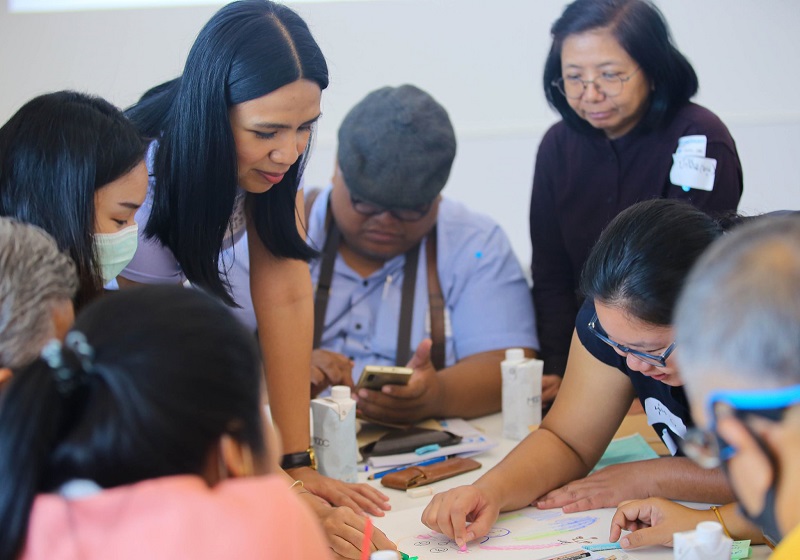
“Futurists” are transforming Thailand's economic and social development in the new decade.
Thailand is also prioritizing "futuristic thinking." The National Innovation Agency (Public Organization) or NIA established the "Innovation Foresight Institute (IFI)" in 2018.
In addition to enhancing various capabilities in Thailand, the IFI is also accelerating the development of more futurists to create innovative policies that serve as strategies for driving organizations and the country into the future.
Since the establishment of the IFI, it has studied futuristic issues related to spatial changes in innovation districts and the future outlook for developing social innovations in specific areas.
In 2021, the IFI will analyze trends in social issues and needs that represent the main changes for Thailand in the new decade from 2021 to 2030, while forecasting opportunities for innovations that will help improve and elevate quality of life in three dimensions:
Social System
Economic changes, demographic structures, and political governance models are leading to increasing differences and inequalities in the social system. The government must act as a facilitator to promote social innovations and public services that are accessible to all citizens.
Emphasis should be placed on decentralizing management and encouraging public participation to create opportunities for diverse ideas and promote greater equality within the social system.

Climate Change
The current public health crisis is not the only challenge; environmental crises such as global warming, plastic waste, PM2.5 dust, and natural disasters like wildfires, floods, droughts, and earthquakes are also significant challenges of the 21st century, all stemming from human behavior, both directly and indirectly.
Economic and production systems focused on efficiency and profit are critical issues we must recognize and urgently innovate to effectively and sustainably address these problems.

Global Value Chain
The trade war between the U.S. and China continues, and with a new U.S. leader, it will be interesting to see how this impacts the global value chain, affecting upstream, midstream, and downstream producers, as well as consumers. Will there be changes in technology regimes? Who will control this large procurement system? Thailand, especially large companies, will undoubtedly be affected.
In a situation where Thailand is facing multiple challenges, these crises require new operational approaches that can sustainably address the issues at hand. This presents an opportunity for innovative businesses if they can leverage data from future forecasts to develop and rehabilitate the country in the long term, leading to network connections, business recovery, and strengthening business models together.