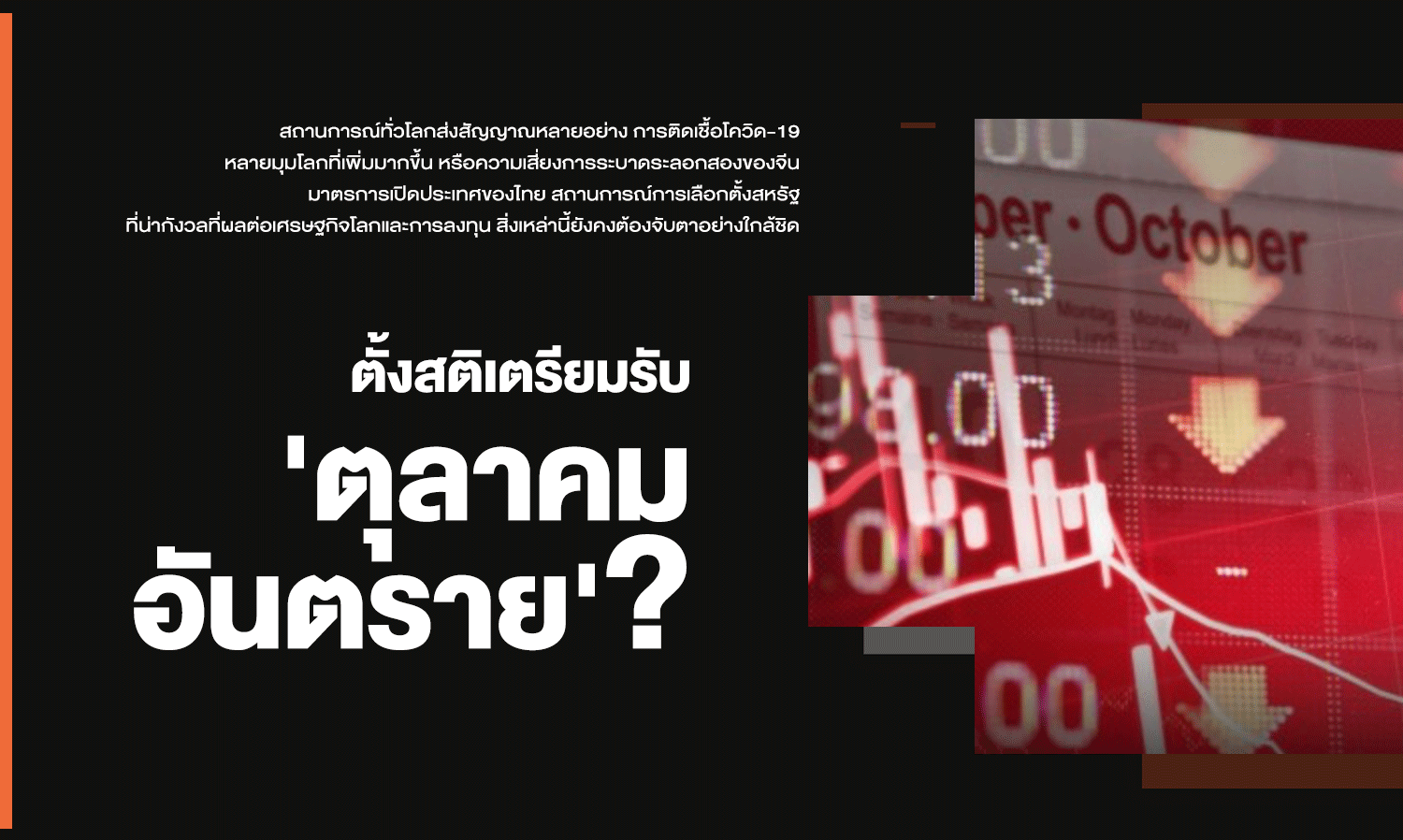
Prepare for 'Dangerous October'?
Global situations are sending various signals, including rising COVID-19 infections in many parts of the world, the risk of a second wave in China, Thailand's reopening measures, and the concerning U.S. election situation that could impact the global economy and investments. These issues need to be closely monitored.
This October is a unique month compared to previous years. We should closely watch investments, diversify risks, and hold some cash as we wait to get through the end of this year.
The global situation is sending unusual signals that we have never encountered before. China seems to have managed the pandemic relatively well after implementing strict travel restrictions during the Chinese New Year in January. This week marks a significant festival celebrating autumn and National Day, lasting eight days, with an expected 600 million travelers, mostly within China, raising concerns about potential new infections.
India is on track to surpass the United States in COVID-19 cases (over 6.4 million infections and nearly 100,000 deaths). Europe is worried about a second wave, while the U.S. is experiencing a rapid increase in cases across 29 states. The daily infection rate is around 40,000, with over 900 deaths per day (7.3 million infections and over 200,000 deaths).
The U.S. presidential election is under global scrutiny because chaos could impact the stability and economy of every country. President Trump's concerns are evident as his approval rating is relatively low (43%) following a debate with Democratic representative Joe Biden (51%) on September 29, which has tarnished the image of American politics. The president has hinted to his supporters to prepare for protests and possible violence if the election results do not align with expectations.
Tensions have escalated as President Trump and his wife tested positive for COVID-19 on October 1, requiring quarantine and possibly treatment during a critical campaigning period.
If chaos erupts in America during this election, the global financial and banking economy will be significantly shaken. The existing vulnerabilities will lead many countries to struggle and find it hard to recover.
Investments in the stock market and certain industries in America may seem worthwhile at first glance. For instance, major tech stocks that dropped about 30% in March last year have rebounded, only to fall again last week by about 10-12%, but have since recovered. Many investors are hesitant to sell their stocks despite knowing that this month is risky, fearing they might miss out on profit opportunities (FOMO) is evident in the current stock market.
For example, popular companies have provided substantial returns over the past year, such as AAPL 109%, WMT 21%, BABA 78%, TSLA 810%, AMZN 86%, etc. Such returns can create a dependency and may lead to overlooking potential dangers.
Retail investors, who have recently entered the stock market, are increasing daily, creating a new culture in global stock markets. Communication technology, the convenience of using various apps without fees, and quick decision-making leave little time for reflection. Daily stock price fluctuations can be surprising; when news breaks, even without confirmation, massive trading can occur within minutes. (Retail investors account for about 37% of the U.S. stock market, with Robinhood App having over 13 million members and new users increasing by 1 million per month.)
Professionals managing large investments, who previously paid little attention to retail investors, now must adapt because they cannot resist the trend. While rational investment analysis still has some relevance, its importance is diminishing.
October in Thailand has a history of political tension. One reason is the bureaucratic changes in leadership positions during this period. Students, having been back in school for a while, begin to form groups and relationships for expression, leading to various political protests.
This October, while we are in a new normal era, the Thai people have excelled in reducing the risk of infection and are starting to return to social life. However, risks remain as the pandemic may re-enter from abroad, including neighboring regions. A cautious and thorough approach to economic reopening is beneficial. However, if another outbreak occurs in Thailand or China, especially if it coincides with the American political crisis (China also has a major parliamentary meeting this month, which could lead to some political turmoil), the negative impacts will affect everyone, from stock market investments to grassroots workers.
What we can do now is to stay mindful and invest according to our risk tolerance. For instance, if the stocks or businesses we invest in lose value overnight by 30-40%, we must maintain discipline until the end of the year and allocate the remaining funds as reserves. There will definitely be opportunities to return to the stock market or other businesses at discounted prices.
For those who have recently retired from government service or private business, first of all, congratulations! Even though this year is a "special" year, we embrace every situation wholeheartedly. Plan to take care of your health, both physically and mentally. Exercise regularly, meditate, and find time to be in a quiet place for peace of mind, allowing your body to recover gradually. Having good health and a cheerful mind is a worthwhile investment. Importantly, spend quality time with loved ones, neighbors, and the community we rely on during both hardships and joys.
Let us pray that if a major global crisis occurs, it will ease rather than intensify. However, if it is unavoidable, the unity of the Thai people, which we have demonstrated in controlling COVID-19, can be applied to revitalize the country's economy for a stable future.
SOURCE : www.bangkokbiznews.com