
Filing 'Taxes': How Much 'Income' is Required?
Final Stretch Before the Deadline for Filing "Taxes" for the Year 2019 via Online Channels, Ending on August 31, 2020. Let's Review and Understand How to Calculate "Income"!
As we approach the final stretch before the deadline for filing personal income tax for the year 2019 via online channels, which ends on August 31, 2020, let's take a moment to review and understand how to calculate "income"!
..Do I need to file taxes if my salary is 15,000?
..How much income do I need to have to pay taxes?
..If I have this much income, how much tax do I owe?
etc.
These and many other questions often arise during the tax filing period (this year from January 1 to August 31, 2020) for those who have never filed taxes before. If you're looking for a simple starting point to calculate your income for tax filing, it might be best to start with this equation.

Before knowing whether you need to pay taxes or how much, or if you will receive a tax refund, you must first determine your “net income”. The basic calculation can be done easily, step by step.
The first step is to get to know your “income” to calculate your taxes.
The term "income" here refers to the total income that each person receives throughout the year from various sources. Personal income is divided into 8 categories as follows:
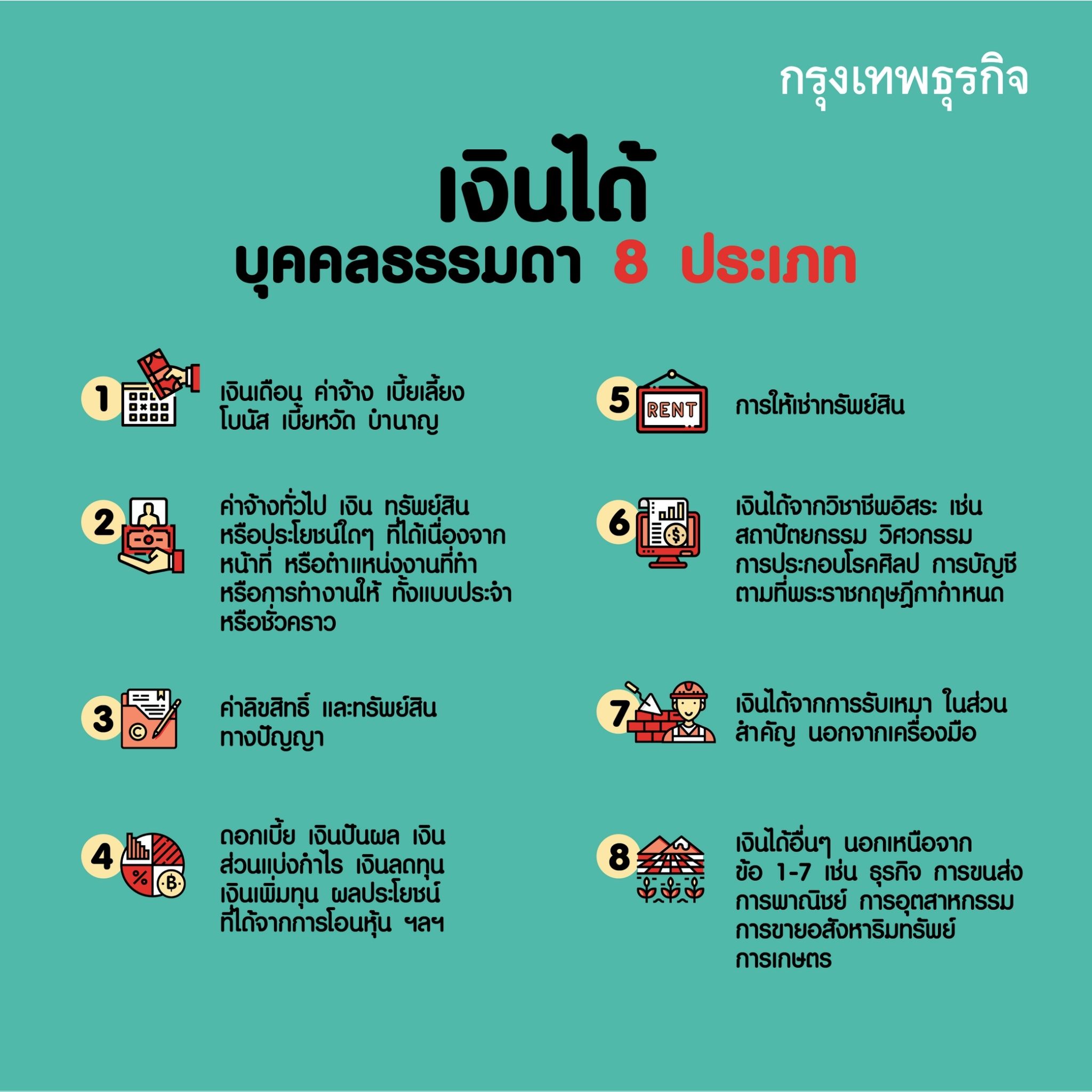
- Type of Income 1
- Salary, wages, allowances, bonuses, pensions
- Rent received from the employer
- The value of living in a house provided by the employer without paying rent
- Any debts paid by the employer that the employee is responsible for
- Type of Income 2
- Fees, commissions, discounts
- Subsidies for work performed, meeting allowances, bonuses
- Rent received due to job responsibilities or positions held
- The value of living in a house provided by the payer without paying rent
- Any debts paid by the payer that the income earner is responsible for
- Money, property, or benefits received due to job responsibilities or positions held, whether permanent or temporary
- Type of Income 3
- Goodwill value
- Royalties or other rights
- Annual payments or income received from wills, legal acts, or court judgments
- Type of Income 4
Interest, dividends, profit shares, capital reductions, capital increases, benefits from stock transfers, etc.
- Type of Income 5
- Rental income
- Breach of lease agreements
- Breach of installment sale agreements where the seller regains the property sold without returning any money or benefits received
- Type of Income 6
- Income from freelance professions such as law, medical practice, engineering, architecture, accounting, fine arts, or other professions as specified by royal decree
- Type of Income 7
Income from contracts where the contractor must invest in providing materials, aside from tools
- Type of Income 8
Income from business, commerce, agriculture, industry, transportation, real estate sales, or any other income not specified in types 1 to 7.
The key point to understand is, “What type of income do we have?” This will lead to calculations that can reduce expenses corresponding to the type of income and ensure accurate information is filled out when filing personal income tax in the next steps.
SOURCE: www.bangkokbiznews.com