
Is the Dollar Losing Value, or Is This the Intent of the United States?
The dollar weakened by 5% in July, marking the most significant depreciation in a decade. This has sparked discussions and analyses suggesting that the dollar's role as a leading global currency is diminishing. Today, we will explore the reasons behind this depreciation.
- Is the dollar really on the verge of losing its status as the world's primary currency?
To determine whether the dollar remains the world's primary currency, we should start by examining its share in the foreign exchange reserves of countries worldwide. Currently, the dollar accounts for over 60% of the total reserves of all countries combined, and there is no indication that this trend is declining.
Another point to consider is whether most global trade and currency exchanges are still conducted in US dollars. Today, over 80% of global currency transactions are still carried out in dollars, and this trend shows no signs of decreasing. If this trend were to decline, it would indicate that international currency exchanges no longer require the dollar as a medium, reflecting a reduced necessity for the dollar in the economic system.
In summary, we are unlikely to see the dollar lose its status as the world's primary currency anytime soon, and countries will continue to use their own currencies against the dollar as a benchmark.
- So why has the dollar depreciated so sharply this time?
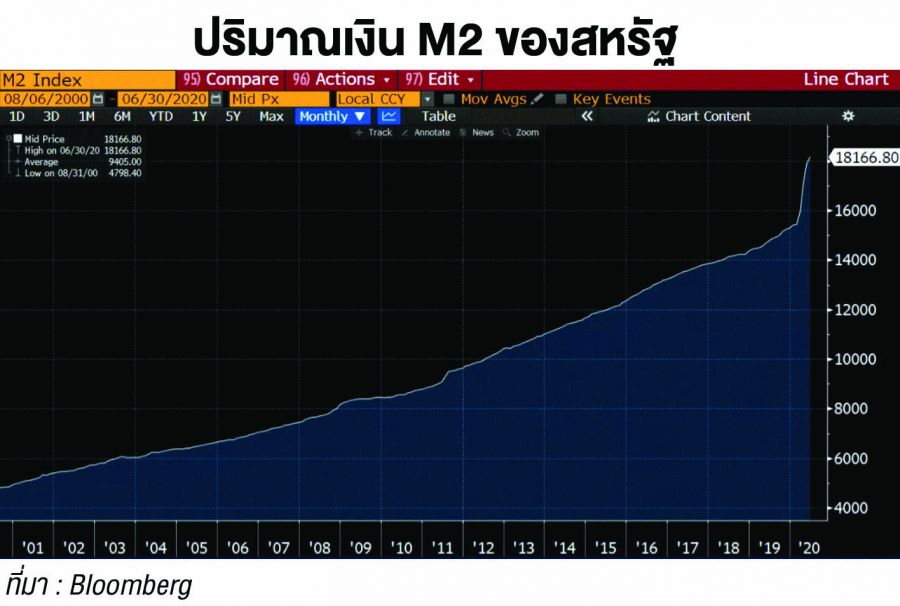
Apart from the severe economic downturn caused by the COVID-19 crisis, the recent monetary stimulus measures in the United States have led to a historic increase in the supply of US dollars, rising by 20% from $15.5 trillion to $18 trillion. According to the basic principles of supply and demand, when the money supply increases, the value of the currency decreases. This increase in money supply is the primary reason for the dollar's significant depreciation this time.
To stimulate economic recovery, in addition to monetary and fiscal policies, a weaker currency also plays a supportive role by increasing the value of exports due to lower product prices and encouraging foreign tourism as the country's currency becomes cheaper. Therefore, I believe that part of the dollar's depreciation is likely intentional on the part of the United States, achieved through substantial money printing to lower the currency's value in order to stimulate the economy.
- How does a weaker dollar affect investment assets during an economic downturn?
In normal economic conditions, a weaker dollar typically reflects decreased confidence in the US economy, leading to capital flowing into assets in other regions, such as Europe or Asia, as investors seek returns from currencies that are appreciating alongside their investments.
However, during the current economic downturn caused by the COVID-19 crisis, while capital may flow out of US dollar holdings, it can only enter the stock markets of other countries in limited amounts due to investor fears of stock market declines resulting from economic recession.
Consequently, investment is increasingly directed toward alternative assets like gold, as investors prefer to avoid risks associated with the stock market while also being reluctant to hold depreciating dollars. This has led to a significant increase in gold purchases recently, driving gold prices to record highs.
SOURCE: www.bangkokbiznews.com