When the Fed Supports Low-Quality Corporate Bonds... How Does It Differ from Thailand's Central Bank Measures?
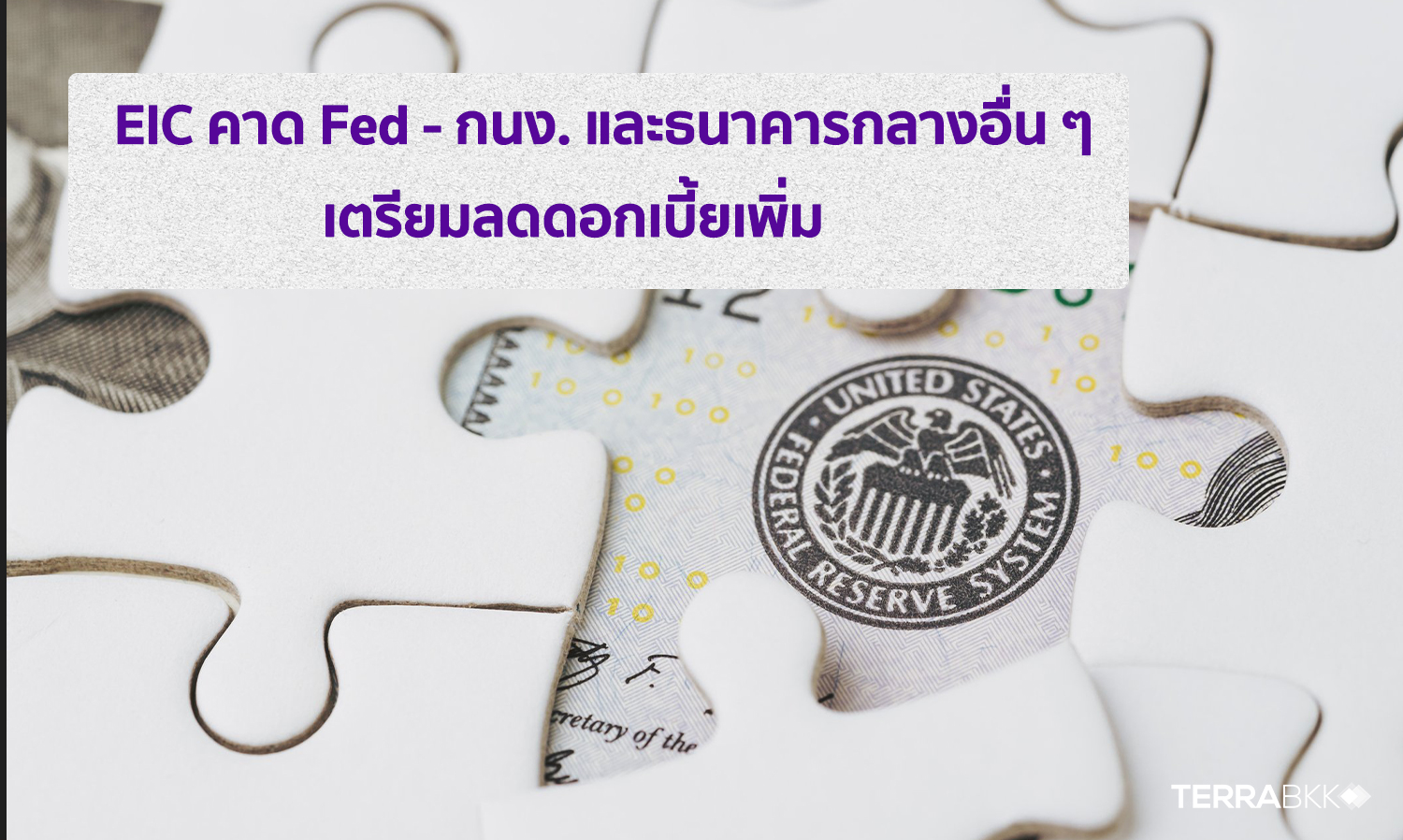
Last week, the U.S. Federal Reserve announced it would support private corporate bonds, even those downgraded below investment grade. This approach is something the Bank of Thailand has confirmed it will not undertake. The Fed's new policy states it will purchase corporate bonds through the "Emergency Lending" program, specifically the Secondary Market Corporate Credit Facility.
Previously, this channel was only used to buy exchange-traded funds. However, given the current situation in the U.S. financial market, which appears to be deteriorating more than expected, the Fed has decided to "support" even low-quality corporate bonds. I asked Dr. Veerathai Santiprabhob, the Governor of the Bank of Thailand, if this means the Fed has gone much further than Thailand's central bank. Dr. Veerathai responded:
"Yes, because the corporate bond market in America is very large, and if there are issues, it will severely impact the overall economy. The Fed will buy corporate bonds that have been downgraded to below investment grade, which we have confirmed we will not do."
It is important to note that besides the Fed, many other central banks are also purchasing corporate bonds. Governor Veerathai further clarified that "another difference is that our objective is to maintain financial system stability. We do not buy long-term bonds like those sold to general investors; instead, we provide bridge financing for a short period, not exceeding 270 days, and at a higher interest rate than the general bond issuance. Our BSF measures are merely a safety net."
On the same day, Federal Reserve Chairman Jerome Powell warned that the American economy is facing a recession, one that carries "significant uncertainty" regarding its duration and severity.
The longer the recession lasts, the more severe the impact will be on the labor market and various businesses. He testified before the U.S. Senate Finance Committee that the Federal Reserve's role is to use "all available financial tools" to mitigate the economic impact of the COVID-19 pandemic.
Ultimately, a serious recovery cannot occur if the public lacks confidence that COVID-19 can be effectively controlled. Since March, the Federal Reserve has implemented several interest rate cuts, bringing rates close to 0%. Additionally, it has purchased $2 trillion in U.S. government bonds to inject liquidity into the economy, a level of intervention unprecedented in its history.
Equally concerning is that COVID-19 poses severe risks to small and medium-sized enterprises (SMEs), which are crucial to the U.S. economy.
Powell also predicted that the U.S. economy would contract in the second quarter and continue into the latter half of the year, despite the U.S. government expecting a V-shaped recovery in the third and fourth quarters.
President Donald Trump countered his own central bank, tweeting that the Federal Reserve is often inaccurate and frequently makes wrong predictions. Trump expressed his belief that the U.S. economy will thrive in the latter half of the year and emphasized that next year will be one of the best for the American economy. Trump has no choice but to say this, as there are less than five months until the election, and he is doing everything possible to win another term.
The Fed anticipates that the U.S. economy will contract by 6.5% this year before expanding by 5% next year, with no interest rate hikes expected until 2022. Thailand must closely monitor global developments and design measures that address the changing circumstances both internationally and domestically. What we once thought powerful nations would not do must now be reassessed, as COVID-19 has forced us to think and act in a truly New Normal way.
SOURCE: www.thaipost.net