Ministry of Commerce Confident in Bright Future for Thai Exports Post-COVID-19, Especially Agricultural Products and Rice
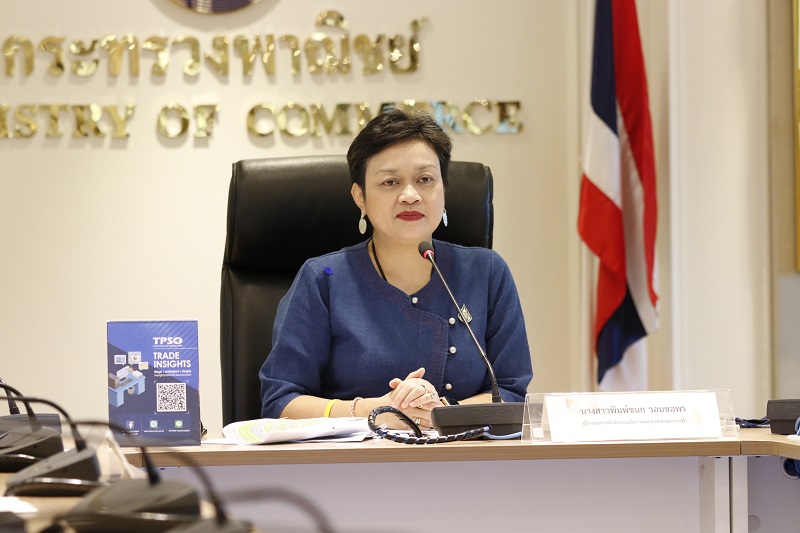
Ms. Pimchanok Wonkohporn, Director of the Office of Trade Policy and Strategy (OTPS) stated that Thailand's exports in April 2020 were valued at 18.948 billion USD, growing by 2.12% despite still being in the midst of the COVID-19 pandemic and the oil war. Compared to other countries around the world, Thailand's exports have managed to hold up quite well, with agricultural food products and rice shining once again as they grew by 4% and 23.1% respectively. Meanwhile, in the industrial sector, excluding gold, electronic products have performed well. Currently, there are various orders for Thai products waiting abroad, but they are hindered by international transportation issues. If these can be resolved, it will help boost Thai exports in the upcoming periods.
Regarding international transportation and logistics issues, various government agencies, including the Ministry of Commerce, Ministry of Agriculture and Cooperatives, Ministry of Transport, Ministry of Foreign Affairs, Ministry of Interior, and Ministry of Public Health, have collaborated with relevant private sectors to address various problems since the lockdown and border closures, including Thailand. The land transportation issues, which are crucial for exporting agricultural products like fruits, have seen all sectors discuss with neighboring countries and create protocols to increase the passage of Thai goods through Laos and Vietnam to China. Two additional land checkpoints have been opened: Dongxing and Pingxiang railway checkpoint. However, the Pingxiang railway checkpoint has faced minor issues with insufficient train services to meet demand, while the Youyi Guan checkpoint at Pingxiang, adjacent to Vietnam, has begun to ease congestion.
Additionally, land transportation to China still faces other issues that need to be resolved, such as varying strictness in regulations for truck drivers across different countries, differing border opening and closing times, and other practical issues. The Thai private sector has requested the government to push China to open another port at Guanlei on the Mekong River to facilitate the import of fruits from Thailand, but there are still obstacles regarding the readiness of inspection points and sanitary measures. The Ministry of Agriculture and Cooperatives is aware of this matter and will discuss it with China in collaboration with the Ministry of Commerce and the Ministry of Foreign Affairs. In addition to bilateral discussions, Chiang Rai province has proposed an alternative route: using boats along the Mekong River from Chiang Saen, Chiang Rai to Guanlei port under the framework of the Lancang-Mekong cooperation. Recently, Thailand has sent a letter to the Chinese Consulate General in Chiang Mai to coordinate with relevant agencies to consider relaxing the opening of this route.
As for air transportation, there have been issues with various countries suspending or delaying flights in and out, resulting in a significant reduction in cargo flights, which has led to increased shipping costs. Additionally, pilots must comply with quarantine conditions, making flights less smooth. In this regard, government agencies have clarified that cargo pilots can fly in and out without a 14-day quarantine if they have a clear flight schedule, health certification, and stay in designated locations. Regarding additional air cargo transport, many airlines, including Thai Airways, have converted passenger planes for cargo transport. However, flight routes are quite limited to hub cities, which may require road transport to distribute goods to other cities, thus increasing transportation costs, but it does help alleviate some issues.
As for maritime transportation, initially, the focus was on maintaining the sterility of shipping containers and vessels to prevent contamination. However, this issue has largely been resolved. The current challenge is the significant reduction in international trade volume due to decreased demand in all countries from COVID-19 and lockdowns, leading to reduced maritime transport volume and increased freight rates due to empty containers. Maritime transport operators have initially addressed this by reducing the number of containers and voyages, resulting in lower export volumes. If demand increases again, it is expected that the number of voyages and containers will return to near-normal levels. Additionally, there are issues with documentation and delays in clearance in trading partner countries due to lockdown policies and increased remote work, leading to fewer officials managing checkpoints and longer clearance times for goods. There have also been delays in the transfer of financial documents related to international trade.
Nevertheless, Thai products still have high demand in international markets, especially products that meet the new normal lifestyle and work changes post-COVID-19. For instance, ready-to-eat food is expected to sell better, along with computer equipment, IT products, and related items to support remote working. Thailand should accelerate marketing during this period to attract more customers. Recent examples include the Thai fruit tasting events held in China, Hong Kong, and Korea organized by trade representatives in those areas, which saw significant interest and orders.
Furthermore, online purchasing is another trend that the Ministry of Commerce is promoting across all sectors, making it a key policy moving forward. Therefore, it is believed that if transportation issues are resolved, it will significantly help Thai exports recover quickly and substantially in the remaining months of 2020.
Information from the Ministry of Commerce