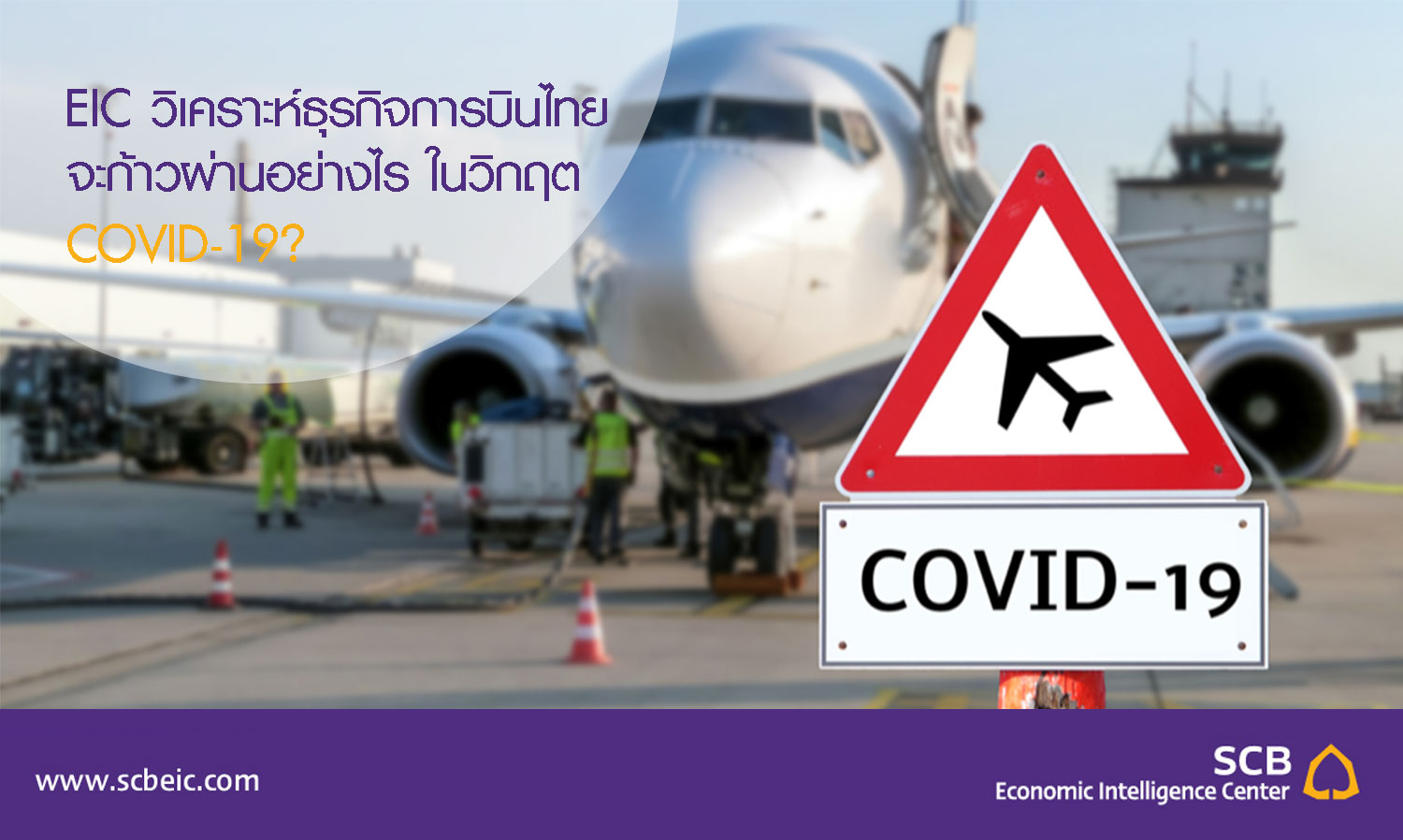
EIC Analyzes How Thai Aviation Business Will Overcome the COVID-19 Crisis
The COVID-19 pandemic has had a widespread impact on the global economy, affecting both the service and industrial sectors, with the airline industry being one of the hardest hit.
As of April 27, 2020, the number of COVID-19 cases worldwide had risen to nearly 3,000,000, prompting many countries, including Italy, France, Saudi Arabia, and India, to implement lockdown measures or even close their borders to prevent the spread of the virus. This led to a significant reduction in international flights to and from countries experiencing COVID-19 outbreaks in March 2020, with China seeing a decrease of over -82% year-on-year (YOY), South Korea -70% YOY, and Italy -60% YOY, among others. Consequently, many airlines worldwide canceled over 80-90% of their international flights from March to at least May 2020. In light of these events, the International Air Transport Association (IATA) estimated the impact of COVID-19 on the global aviation industry as of April 14, 2020, under the assumption that domestic travel lockdowns would be lifted after the second quarter of this year. However, international travel was expected to recover only 50% by the fourth quarter of this year due to the prolonged nature of international travel restrictions and the economic slowdown, resulting in a global passenger transport volume (Revenue Passenger-kilometers: RPK) decline of over -48% YOY, with global airline revenues expected to drop by $314 billion, or about -55% YOY.
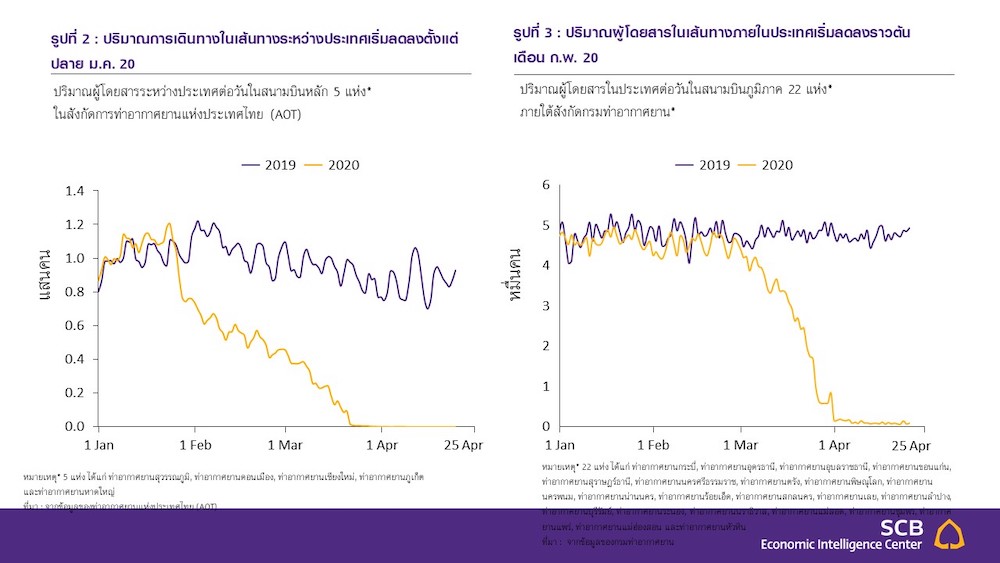
In Thailand, COVID-19 has severely impacted the aviation business, forcing many airlines to temporarily suspend operations from March 2020 until at least the end of April 2020. On international routes, Thai airlines halted all flights, such as Thai Lion Air from March 25 to June 30, 2020, Thai Airways from March 25 to May 31, 2020, and Thai AirAsia from March 27 to April 24, 2020. This was due to a continuous decline in passenger numbers on international routes since late January 2020, which worsened after the Civil Aviation Authority of Thailand (CAAT) issued guidelines requiring travelers to have medical certificates and health insurance. As a result, international passenger volumes at Thailand's five main airports (Airports of Thailand: AOT) dropped nearly -100% YOY. On domestic routes, airlines like Thai AirAsia and Thai Lion Air, which together hold over 50% of the market share in total passenger volume, began suspending flights from late March 2020 as both foreign and Thai passenger numbers decreased, leading to a more than -98% daily drop in passenger volume at 22 regional airports by early April 2020. Airlines that requested temporary service suspensions could seek permission from CAAT to resume flights earlier than planned.
Figure 1: Thai Airlines Announce Temporary Service Suspension Until at Least the End of April 2020
Duration of service suspension announcements by each airline (as of April 21, 2020)
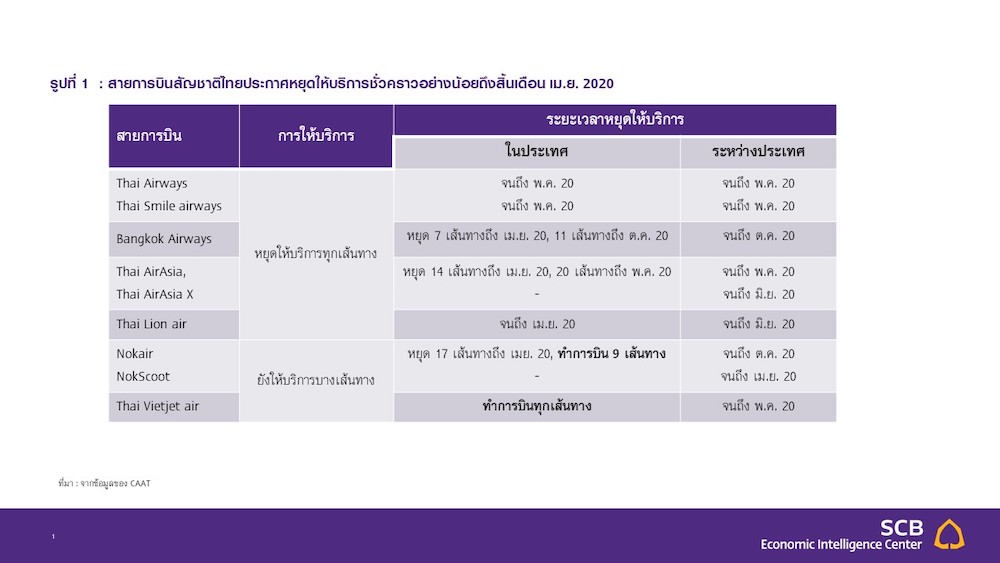
Figure 2: International Travel Volume Begins to Decline Since Late January 2020 and Figure 3: Domestic Passenger Volume Begins to Decline Around Early February 2020
Given these factors, EIC estimates that revenue from Thai airlines in 2020 is likely to shrink by about -60% YOY, down to approximately 121 billion baht, based on a gradual U-shaped recovery scenario similar to EIC's base case forecast for the recovery of foreign tourist numbers in Thailand. The recovery from COVID-19 is expected to be slower than the rapid V-shaped recovery seen after the SARS and MERS outbreaks, as COVID-19 spreads more easily and has affected airlines more severely due to service suspensions, cost reductions, and fleet downsizing. Under this assumption, EIC predicts that: 1.) Revenue from international routes for Thai airlines will decline by over -65% YOY to around 82 billion baht, primarily due to a decrease in foreign tourists, who account for about 80% of all international passengers. EIC forecasts that foreign tourist arrivals in Thailand will drop by approximately -67% YOY from 39.8 million in 2019 to just 13.1 million in 2020, along with a secondary decline in Thai travelers unable to travel abroad due to government travel restrictions amid the COVID-19 outbreak, traveler concerns about infection, and the global economic recession, leading to reduced airline revenues. 2.) Revenue from domestic flights is expected to decrease by -45% YOY to around 39 billion baht, partly due to a reduction in foreign tourists visiting the country and partly due to a slowdown in domestic travel among Thais due to concerns about the COVID-19 outbreak, as well as reduced income from domestic economic conditions.
Figure 4: Market Value of Thai Aviation Business*
Revenue of Thai Airlines*
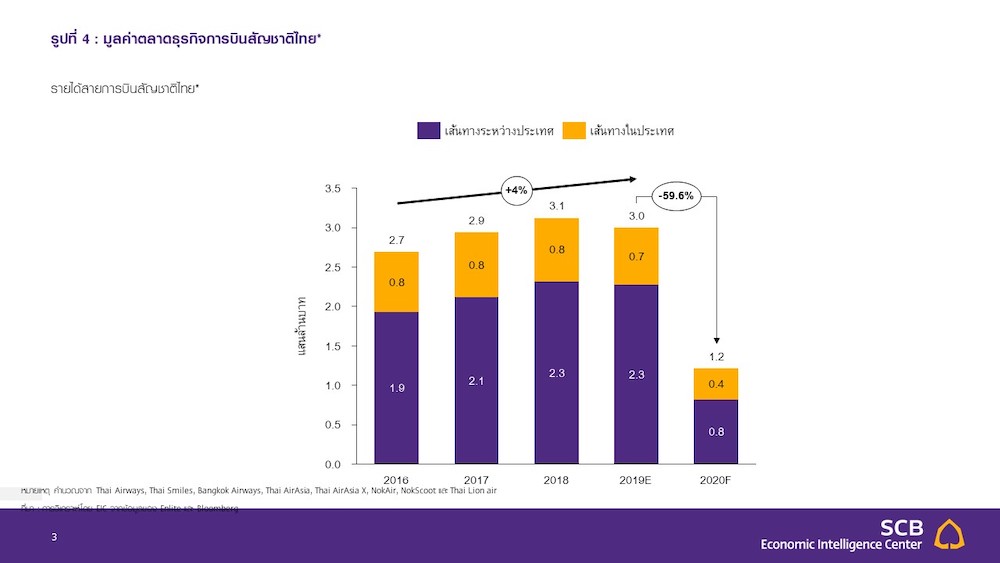
Figure 5: Number of Foreign Tourists in 2020
Forecasted growth rate of foreign tourists in 2020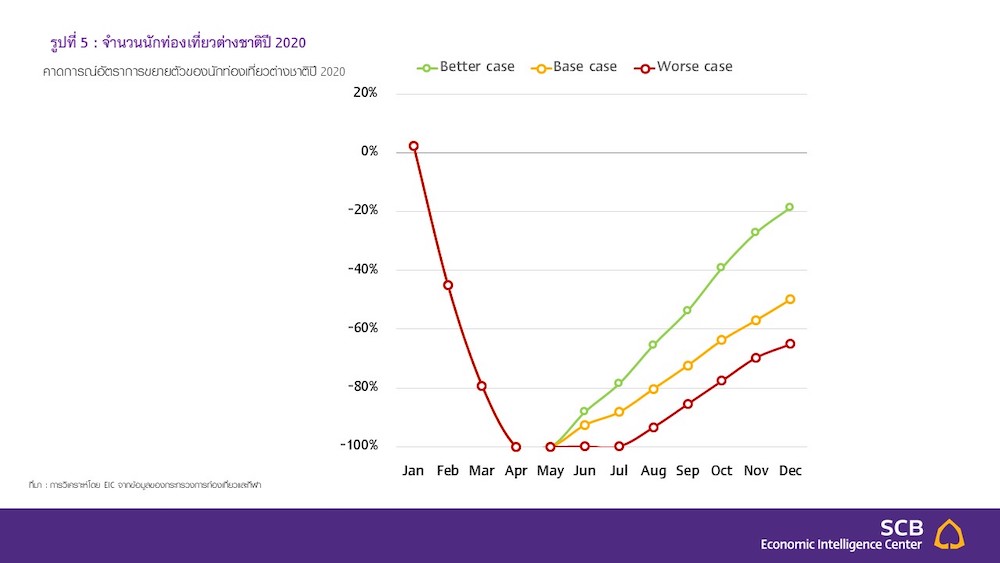
The loss of revenue from service suspensions will significantly reduce the liquidity of most Thai airlines, allowing them to cover only about 30% of their monthly expenses for approximately three months, based on cash and cash-equivalent valuations combined with temporary investments from financial statements at the end of 2019, excluding additional loan facilities. This is alongside estimates of the remaining expenses airlines are expected to incur from service suspensions, which can be divided into: 1. Variable costs, which account for 2/3 of total costs, such as fuel, passenger service fees, air traffic service fees, and travel allowances, which airlines can reduce by about 90%. 2. Fixed and semi-fixed costs, which account for about 1/3 of total costs, such as aircraft leasing, maintenance, parking fees, employee salaries, ticket refunds, and sales and administrative expenses, which airlines can reduce or defer by about 25-30%, such as negotiating salary cuts or layoffs, negotiating with suppliers, outsourcing, deferring aircraft usage, or allowing passengers to change flights or retain credits instead of refunds. Overall, reducing expenses will leave about 30% of total monthly expenses remaining.
This liquidity issue has also led credit rating agencies like Tris Rating to downgrade the ratings of some airlines in early April 2020, expressing particular concern over the liquidity of airlines. Tris Rating commented on one airline that "it will need support from the government in both financial and liquidity aspects to continue operations until air travel returns to normal." Additionally, airlines worldwide are facing similar liquidity issues, with IATA reporting that about 75% of airlines globally have enough reserves to cover expenses for no more than three months.
Many Thai airlines have accelerated their adaptation by reducing costs and seeking additional revenue to survive the COVID-19 crisis. The suspension of both international and domestic routes has forced many airlines to adjust their operational strategies by attempting to reduce remaining expenses, which can be reduced by about 25-30% as previously mentioned, especially in employee costs, which account for 15% of total costs. They are also seeking additional revenue streams, such as Thai Airways focusing on increasing cargo transport services and Thai catering adjusting to sell meal boxes, snack boxes, and baked goods through stores and online. Thai AirAsia has begun selling advance tickets and offering baked goods and beverages through delivery, while Nok Air has launched a promotion called "Buy Now, Fly Later" by selling vouchers for use between June 1, 2020, and December 31, 2020.
Moreover, in early May 2020, several airlines prepared to resume some domestic routes, which may provide slight relief, as domestic travel demand remains sluggish. In April 2020, the load factor for domestic routes was expected to be only around 15%-20%, while the load factor required for Thai airlines to operate profitably under normal circumstances is over 70%-80%, depending on the type of airline, due to intense price competition in the aviation business. Additionally, social distancing measures will further pressure passenger transport per flight, as in the case of the Airbus A320, where prohibiting the use of middle seats would reduce the total seating capacity by about 1/3. This may lead airlines to consider raising fares to compensate for increased costs, which may not be suitable given the current weak travel demand. However, airlines will benefit from reduced costs due to significantly lower fuel prices, along with discounts on government service fees, such as air traffic service fees and aircraft parking fees.
Furthermore, airlines may use this crisis as an opportunity to realign their service plans in line with long-term strategies, particularly in diversifying routes to reduce over-reliance on specific passenger transport routes. They may also adjust aircraft usage plans to suit the desired service routes and leverage modern technologies, such as big data and AI, to adapt services to meet travel demands appropriately and timely.
Governments abroad have provided assistance to airlines in various forms under suitable conditions to help them navigate the crisis and resume operations, which will also benefit other related businesses. IATA has outlined reasons why governments should support the aviation industry, such as helping to reduce layoffs in the aviation sector, maintaining transportation services in remote areas, ensuring the continuation of air cargo transport, especially for medical supplies, and importantly, preserving air connectivity, which will benefit other related businesses post-COVID-19 recovery, such as hotels, restaurants, and retail businesses. An analysis of lessons learned from abroad shows that supporting airlines through the crisis has primarily been done in two ways. For larger airlines with relatively strong financial positions, they can increase liquidity independently through fundraising, such as Singapore Airlines raising about 345 billion baht by issuing common shares and convertible bonds, while Qantas Airways issued bonds secured by aircraft worth about 20 billion baht. Alternatively, they may pursue mergers and acquisitions (M&A) to strengthen their positions. However, for airlines with relatively weak financial positions, governments in many countries have announced assistance for airlines under specified conditions. The forms of assistance abroad can be categorized into three types:
- Reduction of fees and taxes in the aviation business, such as reducing aircraft parking fees, air traffic service fees, other utility fees, and aircraft and airport taxes. For example, the Australian government provided over $460 million in assistance to airlines in this regard, while Singapore provided over $250 million. In Thailand, the government, AOT, and other related parties have already provided some assistance to the aviation business and have also implemented additional measures for airlines that have temporarily suspended operations, such as reducing/exempting landing and parking fees, reducing air traffic service fees, and extending the reduction of fuel excise tax.
- Support for aviation personnel expenses to reduce layoffs or furloughs. For example, under the U.S. Coronavirus Aid, Relief, and Economic Security (CARES) Act, the government approved $25 billion in wage assistance for passenger airlines in the form of 75% grants of the total amount and low-interest loans for the remaining amount, along with various conditions, such as capping compensation for personnel and prohibiting layoffs until September 30, 2020. There are also special conditions for airlines receiving more than $100 million in assistance, requiring the government to receive warrants for 10% of the loan value. Under Singapore's resilience budget plan, the government provided approximately $280 million in assistance to cover 75% of employee salaries, capped at $3,252 per person. Under Canada's Emergency Wage Subsidy plan, the government will assist businesses with a revenue drop of at least -15% in March 2020 and -30% in the following month by covering 75% of salaries for three months without conditions.
- Consideration of short-term loans to increase liquidity for airlines. For example, under the U.S. CARES Act, the government approved over $25 billion for loans/loan guarantees, subject to conditions for warrants or shares. In Australia, the government provided about $65 million in loans to small airlines, and in New Zealand, the government provided about $550 million in loans to Air New Zealand.
For Thailand, cooperation between the government, the aviation business sector, and related parties in planning operations will be a crucial factor in ensuring an effective recovery of the aviation business. By exchanging views between the government and airline operators on the recovery of air travel, a coordinated operational direction can be established, enabling timely and appropriate preparations for the resumption of services by operators. EIC anticipates that the recovery will be gradual for the remainder of 2020, influenced by pandemic prevention measures and economic pressures leading to recession. It will begin with domestic routes if lockdowns are lifted, similar to China and South Korea, where airlines have started domestic operations, particularly in response to business travel demand, which may decrease due to the use of video conferencing. If the pandemic situation improves and concerns about infection decrease, people who have been home for an extended period will likely want to travel, leading to increased travel demand. For international routes, recovery is expected to be slower due to the prolonged nature of international travel restrictions. Business and educational travel demand will likely recover first, followed by leisure travel on short-haul routes, as tourists plan their trips with shorter lead times or to countries that are safe from the outbreak and offer visa-free entry. Finally, long-haul travel will begin to recover, with international travel expected to recover only 50% by the end of 2020.
Additionally, the government may collaborate with airlines to provide air services on essential routes covering important destinations, which will help ensure a comprehensive recovery of the business while addressing and facilitating various regulatory issues, such as air travel permits, personnel license renewals, and negotiations with foreign regulatory agencies. Lastly, establishing a cooperation mechanism among the government, the airline business sector, and public health authorities to assess the pandemic situation and determine appropriate air travel guidelines during the recovery phase will be crucial to prevent a resurgence of the outbreak, such as planning passenger screening, developing seating policies to ensure social distancing, and improving in-flight meal packages.
However, the government must consider various dimensions regarding the appropriateness and forms of assistance for Thai airlines affected by the crisis. The aviation business is one of the most critical sectors for the Thai economy, as it supports many other businesses, such as tourism, hotels, and restaurants, which generate income for the country and quickly distribute income to communities. Therefore, government assistance is quite necessary. However, the government must carefully consider several issues before providing assistance, including the form of assistance, the level of appropriateness, and the benefits to be gained. Additionally, the government's fiscal position must be considered, as funds may also need to support other businesses and many citizens affected by the outbreak.
The COVID-19 crisis has severely impacted air travel worldwide, including in Thailand, leading airlines to ground more planes than ever before. The revenue of Thai airlines is expected to shrink by about -60%, particularly on international routes. Furthermore, the lack of revenue will leave average liquidity sufficient to cover remaining expenses for only about three months. Many Thai airlines have rapidly adapted by significantly reducing costs to maintain their financial status. Meanwhile, governments in various countries have implemented measures to assist airlines and aviation personnel under suitable conditions. For Thailand, the government faces several challenges that require comprehensive consideration when providing assistance to affected airlines, including the form and level of appropriateness of assistance and the benefits to be gained, while also considering the implications for the country's future fiscal position.
Analysis from EIC website: https://www.scbeic.com/th/detail/product/6791
Presented by
Punyanapob Tantipidok, Analyst, Economic Intelligence Center (EIC), Siam Commercial Bank Public Company Limited
EIC Online: www.scbeic.com
Line: @scbeic