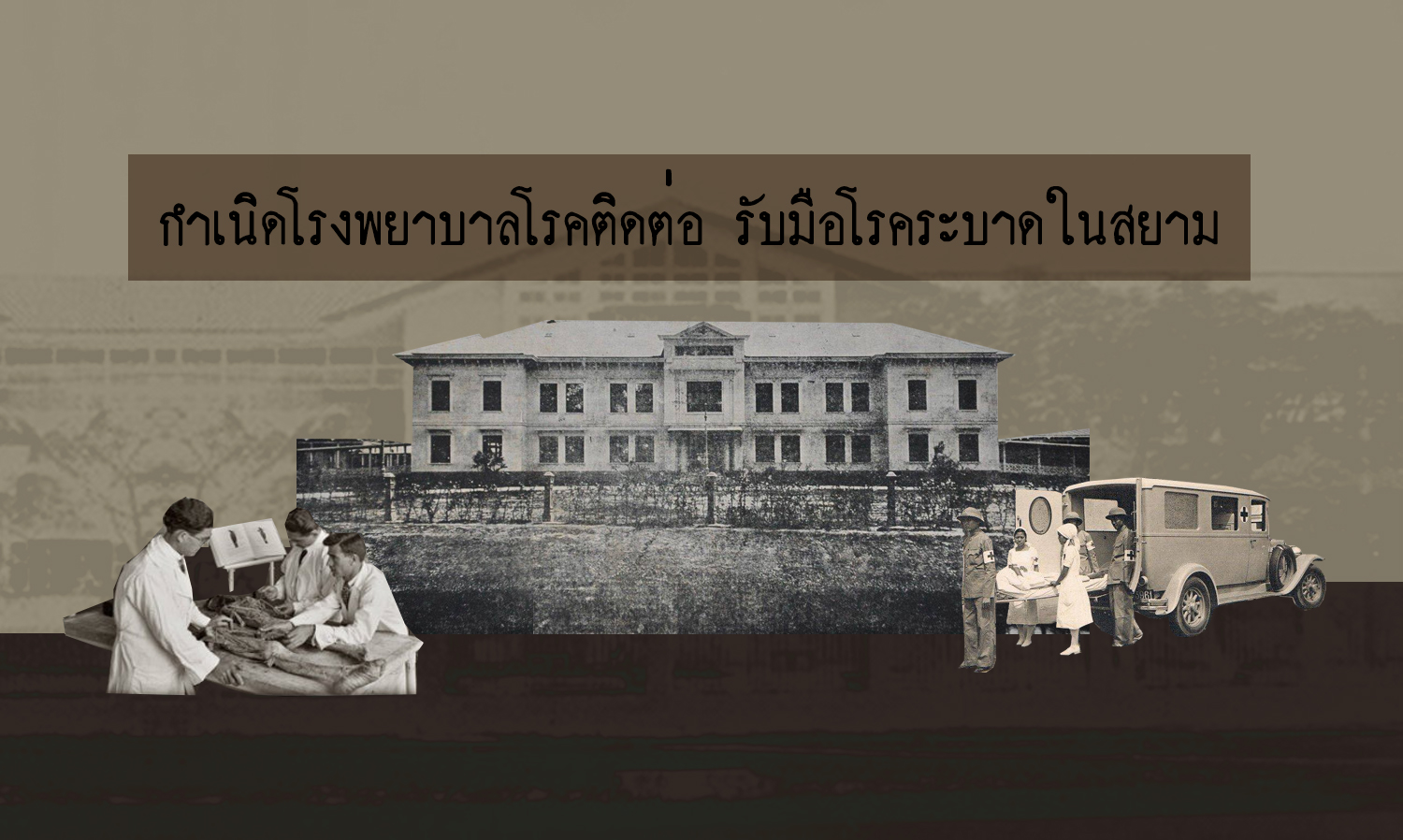
The Establishment of the Infectious Disease Hospital to Combat Epidemics During the Reign of King Rama V: The Origin of 'Bamrasnaradura Hospital'
During the reign of King Rama V, cholera outbreaks occurred four times: the first in 1873, coinciding with the fourth global outbreak (1866-1878). This global outbreak was caused by Muslim pilgrims returning from Mecca, bringing the disease to various countries, including Thailand.
The second outbreak occurred in 1881, coinciding with the fifth global outbreak (1881-1896), which is also believed to have originated from Mecca. During this time, His Majesty graciously appointed Prince Chaturonrasmi, along with 48 members of the royal family and other officials, to help establish a hospital for the large number of patients in Bangkok. The third and fourth outbreaks occurred in 1892 and 1900, respectively, but there are no records of these events.
During the reign of King Rama V, several hospitals were established, including Siriraj Hospital, Bang Rak Hospital, Central Hospital, Sam Sen Hospital, and the Mental Hospital. However, there was still no hospital specifically for treating dangerous infectious diseases such as cholera, plague, and smallpox. Therefore, King Chulalongkorn decided to find a location to build an infectious disease hospital. A suitable piece of land was found in the Pak Khlong San area of Khlong San District, Thonburi Province, which belonged to Khun Phra Sajja, the son of a military nobleman. The land was an abandoned building covering about 5 rai. Khun Phra Sajja was away on diplomatic duties, leaving the building vacant. Eventually, it was transformed into an infectious disease hospital, marking the establishment of the first infectious disease hospital in 1905.
"Initially, the constructed building was a patient ward made of wood, consisting of 5 units, with each unit accommodating about 20 patients, and if necessary, up to 50. There were also accommodations for doctors, nurses, a morgue, and a kitchen. Later, in 1947, the five patient wards were consolidated into three, and in 1950, additional rooms for medicine, pathology, and toilets were added to meet the demands during epidemics."
In the early days of operation, the infectious disease hospital was under the Department of Nursing, Ministry of the Interior, with Dr. Carthew (Phra Ya Uthayawetwajuk) as the administrator. Later, in 1922, the Ministry of the Interior merged with the Ministry of the Interior, leading to the transfer of the hospital to the Department of Public Health.
In 1937, the hospital's operations were transferred to the Bangkok Metropolitan Administration, coming under the Public Health Division of the Bangkok Metropolitan Administration, and was renamed “Municipal Hospital” from then on.
At the time of the hospital's establishment, Dr. Carthew, who was the director of the Department of Public Health at that time, oversaw the hospital and rotated medical interns from Siriraj Hospital as directors. It was noted in Dr. Carthew's report that the first doctor was named Dr. Muan. Subsequently, doctors from the Department of Public Health rotated every 3 to 6 months because, before 1932, there was no Phutthayotfa Bridge across the river, making travel difficult. Therefore, doctors had to rotate to the hospital, and patients were transported by boat from the Marine Department to Khlong San, landing at the hospital's pier. If the canal was dry, they would disembark at the police station at Pak Khlong San and then walk to the hospital.
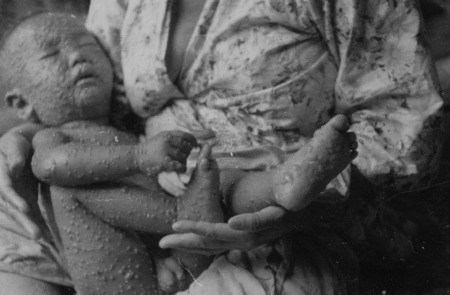
The severe smallpox outbreak caused many children to fall ill and die.
When the infectious disease hospital was first established, it aimed to treat patients with dangerous infectious diseases. However, during outbreaks of cholera and smallpox in the capital and Thonburi, the hospital could not accommodate all patients due to transportation difficulties before 1932. Consequently, it became necessary to set up special hospitals in various locations, such as at Thepsirin Temple, Sutthas Temple, and the residence of Prince Chai Nat Narenthorn. During the cholera outbreak in 1958-1959, other hospitals continued to assist in receiving patients because the infectious disease hospital could only accommodate 200 patients at full capacity.
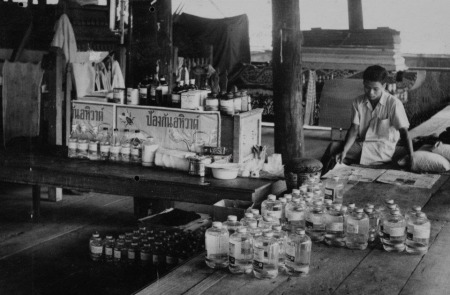
Preparing saline to combat cholera outbreaks, as cholera patients often die from dehydration due to continuous diarrhea.
During times without dangerous infectious diseases, this hospital regularly admitted patients suffering from severe diarrhea or sometimes had to quarantine individuals who had been in contact with infectious disease carriers arriving from abroad. For example, in 1946, 95 passengers who were found to be carriers of the disease from a ship from China were quarantined.
Due to the limitations in accommodating patients during severe outbreaks of smallpox and cholera that occurred in 1944, it later led to the construction of a new infectious disease hospital on Din Daeng Road in Sam Sen Nai, Dusit District, Bangkok, named “Phaya Thai Infectious Disease Hospital,” which began operations on September 29, 1949.
It was later relocated to Talad Kwan District, Nonthaburi Province, and renamed “Bamrasnaradura Hospital.”
During the outbreak of MERS (Middle East Respiratory Syndrome) in 2012 and the current outbreak of the novel coronavirus (COVID-19), Bamrasnaradura Institute continues to serve as a frontline defense against epidemics in Thailand.
The history of “Bamrasnaradura Hospital” dates back to the reign of King Rama V, who recognized the importance of combating epidemics. The establishment of the infectious disease hospital has lasted for over 115 years, and the modern communication technology of this era will play a crucial role in raising awareness among the public about the importance of self-protection against the COVID-19 virus to prevent the increase in the number of Thai infections, as every process relies on the cooperation of all Thai citizens.
References: Commemorative Book of the Ministry of Public Health, 20 Years, 1942-1962, Ministry of Public Health, 1962.
Department of Health, Ministry of Public Health. (1960). Commemorative Document for the Opening Ceremony of Bamrasnaradura Hospital. Knowledge Management and Disease Control Standards Institute (KMDCSI).
And Hfocus website, in-depth health system analysis.