Prime Minister Announces Emergency Decree to Tackle COVID-19 Starting March 26
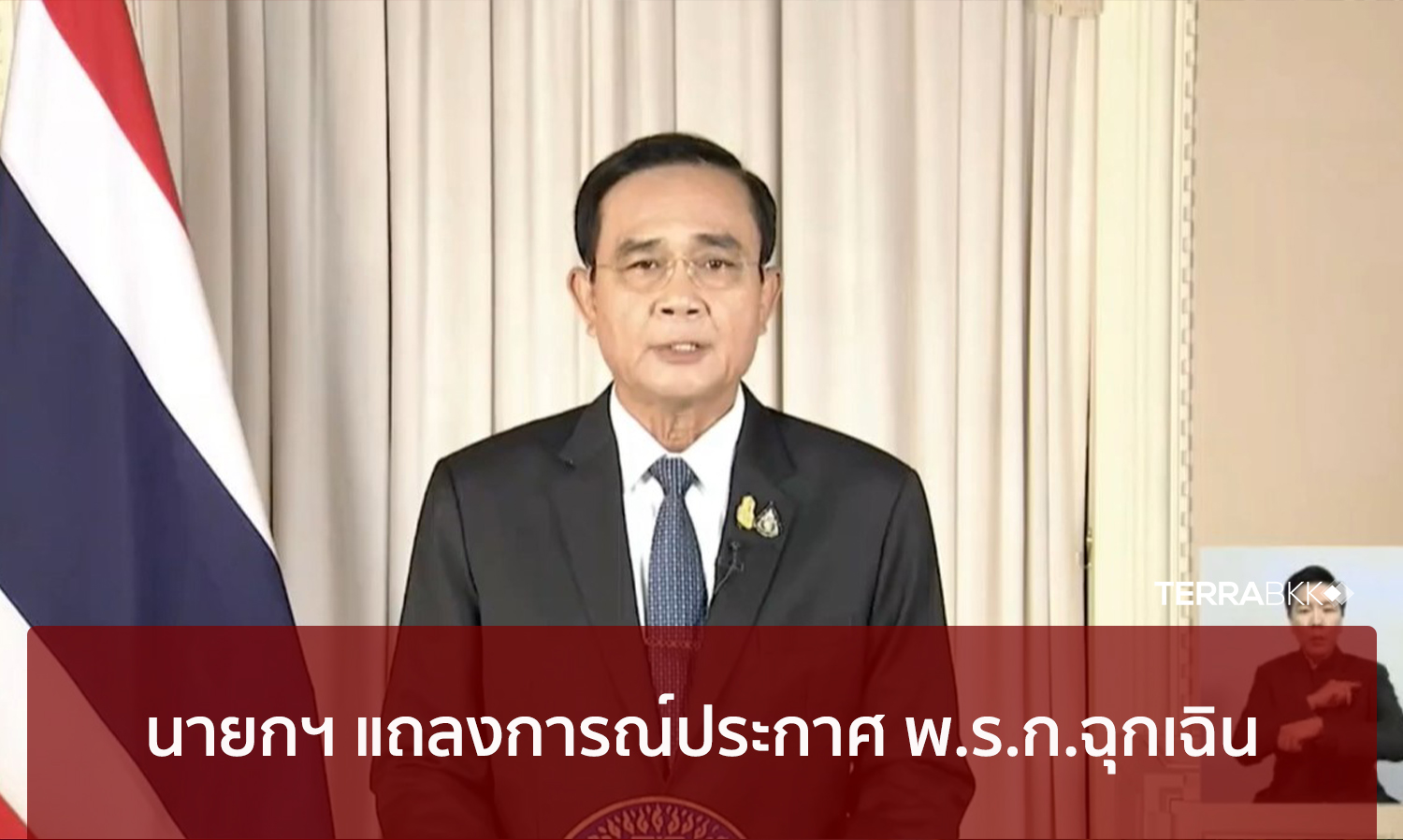
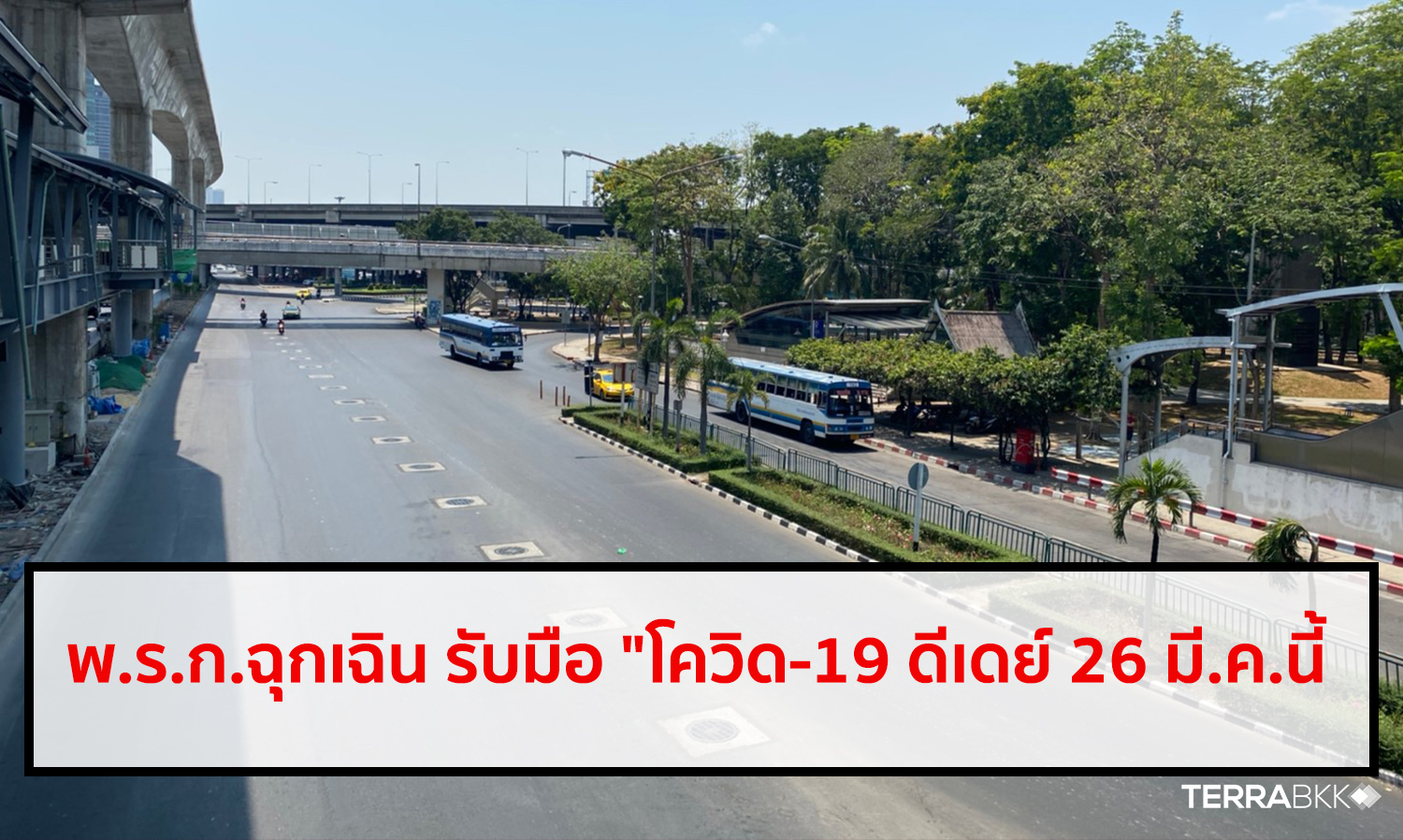
On March 24, 2020, at 2:00 PM, at the Government House, General Prayuth Chan-o-cha, Prime Minister and Minister of Defense stated that the Cabinet meeting has approved the declaration of the Emergency Decree, or Emergency Decree on Public Administration in Emergency Situations B.E. 2548, effective from March 26 onwards, to address the spread of the COVID-19 virus by restricting the movement of people, which could lead to further transmission.
The Prime Minister mentioned that there will be an Emergency Operations Center (EOC) for COVID-19 at the Government House, with measures announced daily after the meeting at 7:00 PM. Regulations can be issued at any time to reduce the spread of the disease, focusing on cooperation for the closure and opening of various places in the future. He also requested cooperation to prevent people from returning to their hometowns, as there will be screening measures with checkpoints as previously announced.
“Emphasis on citizens staying at home, in designated quarantine areas that the government will provide, such as field hospitals and large quarantine areas that can accommodate 100-1,000 people, and ensuring sufficient medical supplies through additional procurement,”
The Prime Minister urged citizens not to panic and to follow news from the government through social media, Twitter, and the “EOC COVID-19” of the Ministry of Public Health and the Ministry of Foreign Affairs throughout the day, with daily summaries provided.
Key points of the law: the government requests that everyone exercise caution in using social media, as there may be distortions. Officials appointed under the Emergency Decree will take action, and from now on, checkpoints will be established with stricter standards, as it is necessary to lock down all areas.
Mrs. Narumon Pinyosinwat, Spokesperson for the Prime Minister's Office stated that the Cabinet discussed guidelines for prohibiting entry into high-risk areas, which may include recommendations to restrict crossing provincial borders. Additional closures may depend on the authority of provincial governors and the Ministry of Interior, and there may be further restrictions on entry points into Thailand, while foreigners can still travel out of the country as usual. Currently, there are no regulations on curfews.
The key points of the Emergency Decree (B.E. 2548) consist of 19 articles.
Article 4 of this decree defines “emergency situation” as a situation that affects or may affect public order or poses a threat to national security, or may put the country or any part of it in a state of crisis, or involves offenses related to terrorism under the Criminal Code, warfare, or armed conflict, necessitating urgent measures to maintain the democratic governance with the King as Head of State under the Constitution of the Kingdom of Thailand, national sovereignty and territorial integrity, national interests, compliance with laws, public safety, the normal livelihood of the people, the protection of rights and freedoms, public order or common interests, or the prevention or remedy of damage from public disasters that are urgent and severe.
Article 5 Paragraph 2 states that the declaration of an emergency situation under paragraph one shall be in effect for the duration specified by the Prime Minister, “but not exceeding three months from the date of declaration.”
If it is necessary to extend the duration, the Prime Minister, with the approval of the Cabinet, has the authority to declare an extension for additional periods of no more than three months each time.
Article 5 Paragraph 3 states that when the emergency situation ends, or when the Cabinet does not approve, or the time limit under paragraph two expires, the Prime Minister shall declare the cancellation of the emergency situation declaration.
Article 6 establishes an Emergency Situation Management Committee, chaired by a Deputy Prime Minister designated by the Prime Minister.
Article 9 states that in cases where it is necessary to resolve the emergency situation quickly or to prevent further serious incidents, the Prime Minister has the authority to issue regulations:
(1) Prohibiting any person from leaving their residence within a specified period unless authorized by officials or exempted individuals.
(2) Prohibiting gatherings or assemblies at any location or actions that incite unrest.
(3) Prohibiting the dissemination, sale, or distribution of any publications or media that may cause public fear or intentionally distort information leading to misunderstandings in the emergency situation.
(4) Prohibiting the use of transportation routes or vehicles or setting conditions for their use.
(5) Prohibiting the use of buildings or entry into or staying in any designated areas.
(6) Evacuating people from designated areas for their safety or prohibiting anyone from entering those areas.
Article 18 states that anyone who violates the regulations, announcements, or orders issued under Article 9 shall be subject to imprisonment for up to two years or a fine of up to 40,000 baht, or both.