Ministry of Commerce Assures Public Not to Worry, Confirms Sufficient Goods and Food for Domestic Consumption
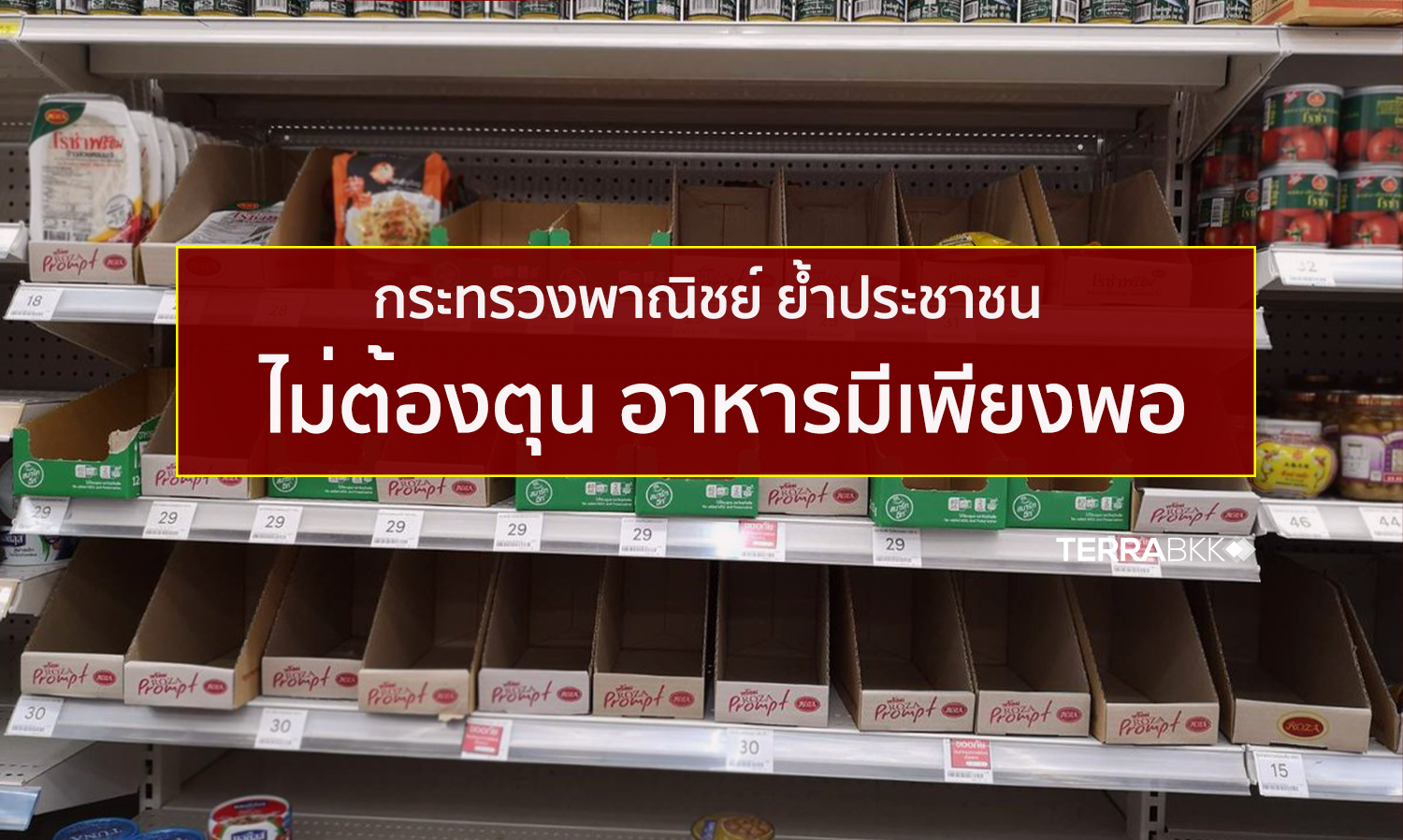
The COVID-19 pandemic has caused panic among the public, leading to concerns about potential lockdowns and resulting in "panic shopping"—stockpiling food and essential goods to minimize outings. Similar incidents have occurred in other countries as well.

Ms. Pimchanok Wonkohporn, Director of the Office of Trade Policy and Strategy (OTP), stated that the OTP has dispatched officials to verify facts nationwide and gather details from agricultural and industrial producers. She confirmed that the public need not worry excessively, as daily necessities are being produced sufficiently within the country.
Officials have been collecting prices for inflation indices through special surveys at stores nationwide. It was found that some items are temporarily out of stock due to a significant increase in demand occurring simultaneously, which has made it difficult for staff to restock items promptly. However, stock levels remain adequate, and prices are stable. The items that have seen increased demand compared to normal times can be categorized into three groups:
Fresh food and seasonings have seen a change in consumer behavior from buying just enough for a few meals to purchasing in bulk to reduce outings, causing stores to struggle to keep up.
Ready-to-eat meals are being stockpiled for emergency situations (Food Security), which is typical when the public feels anxious about current events. Once consumers feel they have enough stock, they are likely to return to normal purchasing behavior.
Essential goods are mostly items that can be produced domestically. Therefore, with appropriate adjustments in production systems and management, supply can continuously meet domestic demand.
As for gels and alcohol that are still insufficient to meet demand, it is believed that the situation will improve as these products can be produced domestically. Additionally, the government has relaxed regulations to allow excess alcohol from the energy sector to be used in the production of these items, ensuring that supply will meet public demand.
Furthermore, direct inquiries were made with producers of ready-to-eat meals and essential goods, revealing that the production capacity for these items remains normal, with sufficient raw materials for domestic consumption. This aligns with the capacity utilization rates for these products, which are still below their potential (averaging between 50-68%), while many items are now being produced at full capacity (100%) to meet demand. Price data is still being surveyed and processed, and updates will be provided to the public.
"Based on the information received, I confirm that the public does not need to panic or worry about shortages of food and essential goods. While some items may be temporarily unavailable or sell out quickly, this will only be for a short period. As for cleaning and disinfecting products, manufacturers are working to ensure sufficient production to meet demand soon. The Ministry of Commerce will closely monitor the situation for all product categories at all times. If additional measures are necessary, we will act promptly to avoid impacting the public,"
Source: Office of Trade Policy and Strategy (OTP)