
Why Do Tires Bulge? What Causes It and Can They Still Be Used?
Why do tires bulge, and can they still be used? Can anyone help me with this? Don't worry, TiresBid will explain the main causes of tire bulging.
Tire bulging occurs when air inside the tire seeps into the layers of the tire structure. Let me explain the components of a tire first. A tire consists of the bead, tire structure, sidewall belts, and rubber material. The bead, tire structure, and sidewall belts contain steel wires as their main components. When there is damage or a break, there is a chance that air inside the tire will seep through the rubber layers and enter the gap between the tire structure and the rubber, causing the tire to bulge. There are two main scenarios that can lead to damage to the tire structure.
The first cause of tire structure damage is when we hit or scrape against something. Typically, tire bulging occurs at the sidewall because it is the weakest part of the tire. When there is a collision with a curb or an obstacle, the inner tire structure can break, creating a gap between the tire structure and the rubber. As the air inside the tire tries to escape, it gradually seeps through the rubber layers, leading to bulging. Another cause of tire structure breakage is overloading the tire with an unsuitable tire choice, which can also result in damage at the bead area, especially in budget or non-standard tires.
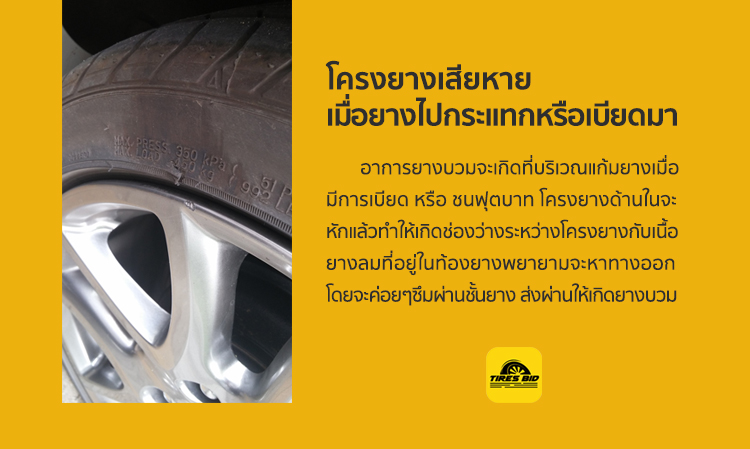
The second cause is when our tire gets punctured by a nail and is repaired improperly, leading to deterioration of the tire structure. After being punctured, the vehicle is usually taken to a tire shop where they typically perform an internal patch repair. However, this method can allow moisture from the outside to enter the tire structure through the external puncture. When moisture enters the steel components of the tire structure, it can cause rust, which reacts with the rubber and separates from it, creating a gap. Air escaping from inside the tire can then seep into this gap, causing bulging. The most vulnerable area for bulging due to a nail puncture is the shoulder of the tire, as this area moves frequently and is the most sensitive, which can lead to the internal patch detaching and creating gaps due to the frequent movement of the tire sidewall.

Now, can a bulging tire still be used? TiresBid recommends that it should not be used aggressively. This is because the main cause of bulging is damage to the tire structure, which affects its strength during use and poses a high risk of tire blowout. However, there are some tires that may not bulge due to the reasons mentioned but could be a result of manufacturing defects or production standards. If the production quality is poor or the tire structure is not strong enough, it can also lead to issues. Fortunately, there has been some improvement as all tire brands sold in Thailand must meet safety standards (TIS) for every tire and size, which provides a certain level of trust due to increased standards. However, purchasing tires is a long-term investment since you won't be using them for just 6 months or a year; typically, they last at least 2 years, possibly even 3-4 years. Therefore, if I may suggest, it’s better to choose tires in the mid-range quality or premium grade for better performance, manufacturing standards, and longevity. If you are unsure which brands fall into which categories, you can inquire at TiresBid.
Contact us via Line@ : @tiresbid, where we have experts ready to advise you on which type of tire is most suitable for your needs and offers the best value. You can also visit our website at www.tiresbid.com. Stay tuned for more articles from TiresBid. Thank you!