Creating Opportunities for Higher Returns with 'Bonds' in a Slowing Global Economy
The year 2020 has been challenging due to the slowdown of the global economy, trade wars, and political tensions in many countries, along with other factors. How will investors manage their portfolios to create opportunities?
“No single asset consistently provides good returns, so diversifying investments across various assets is the best approach as it helps reduce portfolio volatility.”
With this summary, we arrive at the investment portfolio management strategy of J.P. Morgan Asset Management, which emphasizes diversifying investments across various assets to create opportunities for higher returns and to cope with potential volatility. This year, key moments to watch that may impact investments include July, when the world will be watching the Democratic Party's nomination for the U.S. presidential election, which may lean left and could cause turbulence in the capital markets, and the most critical period in November during the U.S. presidential election. Additionally, unexpected risks may arise, such as tensions between Iran and the United States, which could lead to declines in the stock market at certain times. Therefore, diversifying investment risks in 'bonds' will help reduce risks and stabilize the investment portfolio.
'Bonds' are viewed as an asset that still has the potential to generate returns this year, even if not as high as in 2019, which yielded returns between 5-15%. The returns from bonds consist of two parts: capital gains and interest or coupons. Last year, capital gains contributed significantly to returns as global bond yields continuously declined. However, this year, expectations for returns from capital gains are challenging due to the easing of various situations and the reduced likelihood of central banks lowering interest rates further. Thus, we expect that returns from investments will primarily depend on the interest rates set in those bonds. Therefore, investing in bonds with high-interest payments is particularly attractive, especially during a period of low interest rates that have led to negative yields in several countries.
Although the global economy is expected to grow at a slower pace this year, the U.S. economy is still seen as capable of strong growth, with consumer spending being the most crucial driver. This is reflected in various indicators such as employment, wage growth, and housing starts, all of which are performing well, supported by persistently low interest rates that enhance consumers' ability to repay debts. At the same time, rising wages in the U.S. increase consumer income. While there are concerns about a slowdown in investment due to trade wars, it is believed that the impact will not be long-lasting, allowing the U.S. economy to grow better than many developed countries.
However, there are various types of bonds, including high-yield bonds, emerging market bonds, investment-grade bonds, and high-quality government bonds, each offering different returns and risks. Historical data shows that no bond consistently provides the highest or lowest returns. Some years, one bond may yield high returns, while in the following year, another bond may outperform it. Therefore, diversifying investments is the best strategy. While it may not yield the highest returns, the volatility to be managed is also not excessively high, which is the benefit of risk diversification.
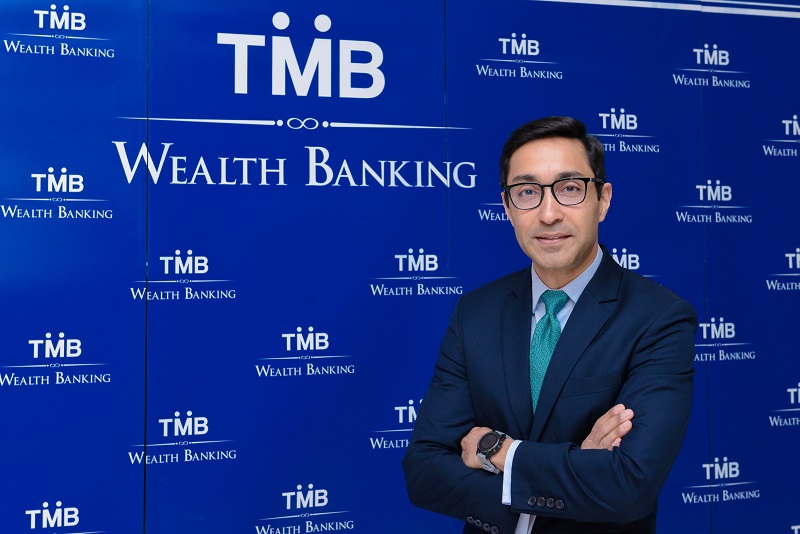
Mr. Supreet Bhan, Head of Southeast Asia Funds and Institutional states that while the investment world currently allows investors to diversify risks across regions, many may face certain limitations. Therefore, investing through mutual funds managed by experts is another option for creating opportunities for higher returns. The TMB Eastspring Global Smart Bond Fund aims to achieve returns by investing in bonds worldwide, with a strategy of diversifying investments across various types of bonds, both public and private, effectively meeting investors' needs. Its strengths include A (Attractive Income Opportunities) with a portfolio yield at a high level (around 5%), C (Controlled Risk) with low volatility, averaging 2.2% over the past three years, and E (Effective Downside Protection) with a low Max Drawdown (risk of loss from investing in this fund) averaging -1.1% over the past three years.
This fund has a flexible investment management strategy, allowing for quick adjustments to the investment portfolio according to the situation, and it has methods for profiting during both rising and falling interest rates. In simple terms, it adjusts the portfolio quickly and profits in both rising and falling interest rate environments while controlling risks and volatility at low levels through diversified investments in various bonds. Therefore, this fund is expected to help clients achieve good returns under a relatively low risk level. Additionally, this fund is managed by experts in regional bonds and each type of bond, which will help create opportunities for higher returns for investment portfolios amid a slowing global economy and to cope with potential volatility that may arise this year.