
"Housework is Everyone's Responsibility, Anyone Can Do It"
Written by Pattharapee Kamlanan, Content Team www.thaihealth.or.th
Some information from the campaign brochure to end violence against women 2019
Interviewed by Ms. Rung Arun Limlahapan, Acting Director of the Bureau of Support for Control of Major Risk Factors, Thai Health Promotion Foundation.
Mr. Ratchawat Kamsamerkosh, President of the Sinsap Community, Dusit District, and Mr. Byron Bishoff, husband of actress Cindy Bishoff
Photo by Natthaporn Chumlu, Content Team www.thaihealth.or.th and archive images
“Dad, please don’t hurt Mom. I feel sorry for her. She works so hard both outside and inside the house. Please don’t hurt her like this. Every time you drink, you act this way. Why? When will you stop your bad habits? Don’t you feel sorry for me and Mom?” The pleading voice of a child came from the television as I was watching a social reflection drama. My hands, which had been dusting the table, suddenly stopped, and my eyes were glued to the screen.
The issue of violence in society continues to be seen in the news, as well as in various media that try to reflect the dangers posed by “alcohol.” Alcohol is a substance that not only destroys the physical and mental health of the drinker but also affects those around them. It can cause stress within families, lead to health problems, and result in financial burdens due to debts incurred from drinking, as well as issues of violence.

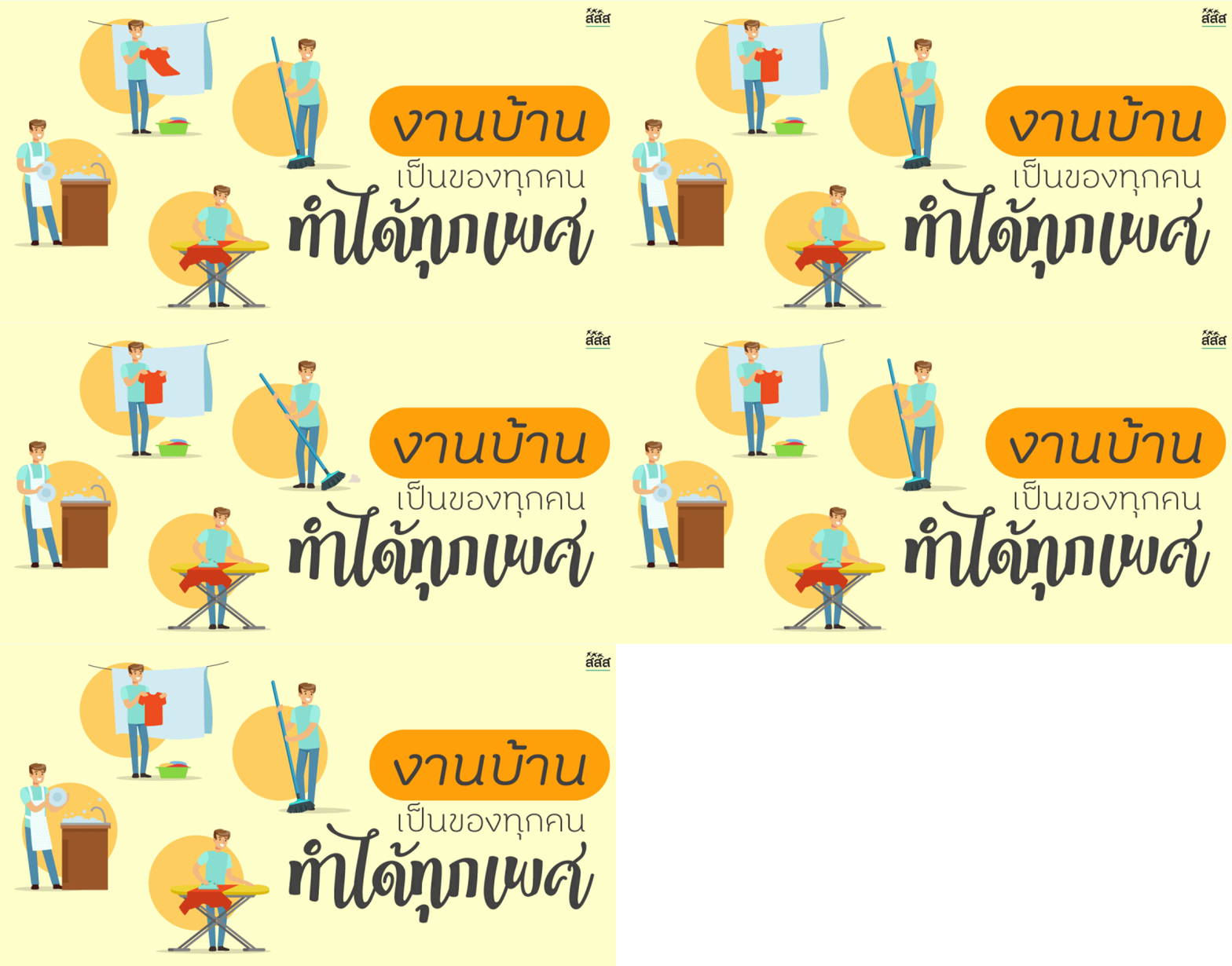
Ms. Rung Arun Limlahapan, Acting Director of the Bureau of Support for Control of Major Risk Factors, Thai Health Promotion Foundation, shared that many people know that alcoholic beverages destroy the health of the drinker and cause road accidents. Today, the Thai Health Promotion Foundation and the Gender Equality Foundation want to affirm that alcoholic beverages are also a significant cause that triggers domestic violence. Research shows that children in families with heavy drinkers are 3.3 times more likely to experience violence than those in typical families. This is why there is a campaign to highlight another dimension of the impact, aiming to change the mindset of those who still drink to gradually reduce or quit, and to engage in other activities like housework, which is everyone’s responsibility and can be done by anyone, regardless of gender or age. Families that start doing housework together will begin to change their mindset and strengthen good relationships within the family.
When it comes to housework, many people might shake their heads because the burden of work outside the home is already heavy. Moreover, doing housework requires both effort and time. It’s hard to even get a full 8 hours of sleep each day. We often see the stereotype of women in the past who were homemakers doing all the housework and rarely going out, while men took on the role of breadwinners. However, nowadays both husbands and wives go out to work, raising the question of whether housework is still solely a woman's responsibility. Some men feel that doing housework diminishes their dignity, while others help their wives with housework wholeheartedly, disregarding societal expectations.

Mr. Ratchawat Kamsamerkosh, President of the Sinsap Community, Dusit District, shared that he used to think that housework was indeed a woman's responsibility. Being someone who enjoyed drinking and had many friends, he wanted his wife to serve him. Often, when he was drunk, he would resort to violence against his wife and family. A significant turning point for him came when his family faced economic difficulties, and he decided to stop drinking during Lent, which helped him become more aware. When he realized that his wife had to work hard both outside and inside the house, he began to help her with simple household tasks like sweeping, mopping, and filling water.
His feelings after helping his wife with housework were initially awkward, but over time he became accustomed to it and felt happy, as if he was exercising. His wife and children were happy to see him change for the better, and he no longer wanted to return to drinking alcohol. He encourages all men to rethink their roles because everyone is equal, regardless of gender. He wants everyone to join in helping with housework, as it can be done by anyone, regardless of age or gender. Mr. Ratchawat stated.
The benefits of sharing housework
1. Sharing housework and raising children reduces gaps and fosters good relationships within the family. It allows both partners to understand each other's struggles, lightening each other's burdens and increasing opportunities for communication, thereby reducing gaps and strengthening family bonds.
2. Men helping with housework promotes gender equality. In the past, housework was defined as a wife's duty. The division of responsibilities based on gender led to inequality. Helping with housework breaks down these outdated beliefs and leads to tangible gender equality.
3. Instilling the habit of helping with housework in children from a young age, without gender division, teaches them to help each other and be responsible. Boys who are taught to help with housework will have a lower chance of resorting to violence in the family as they grow up.
4. Start with manageable tasks while women should encourage rather than criticize. Criticism can demotivate the other party. It’s better to change to appreciation and encouragement. If there are areas that are still not tidy, use the opportunity to discuss and adjust together, which can also help build a good relationship.

On the other hand, Mr. Byron Bishoff, husband of actress Cindy Bishoff, shared with us that he was surprised and puzzled to hear that housework is a woman's job. He wondered if men shouldn’t do housework or if there was some superstition involved. He wants to change his mindset and challenge himself to try things he thought he couldn’t do, which could lead to positive outcomes.
The housework that he finds easy includes tidying up the house, cleaning, and doing laundry. In reality, housework is not about physical strength; it’s more about technique and ability. If you’ve never done it, nothing seems easy, so you have to give it a try. If you have children around and you ask them to do something, but they don’t see you doing it, you can’t expect them to do it. One day, when they are alone and there’s no housekeeper, they will have to take care of themselves. He doesn’t want to raise children who can’t help themselves, so he believes in starting with these small tasks.
Byron also emphasizes that housework is not something to be ashamed of or feel strange about. Many people who live alone without a wife or housekeeper ultimately have to do it themselves. Therefore, don’t think of it as something only women should do. When you can do it and challenge yourself, your wife will feel very good about it.

On the occasion of the International Day for the Elimination of Violence Against Women, which falls on November 25 each year, for families facing violence issues, it is encouraged to start reducing violence from small, close-to-home actions, such as sharing housework. Not only does this reduce gaps within the family, but it also helps strengthen good relationships among family members and reduce domestic violence.

The Health Promotion Foundation (Thai Health) together with the Gender Equality Foundation supports the campaign "Housework is Everyone's Responsibility, Anyone Can Do It" to end violence against women, hoping to reduce gaps and create better understanding within families and partnerships.
Thanks for the information from www.thaihealth.or.th