Discover 2 Prime Locations in Laos: Tips for Investing to Make Millions
“Laos”<\/strong><\/span> is Thailand's neighboring country on the left bank of the Mekong River. Today, Laos is experiencing growth in various sectors including the economy, tourism, and lifestyle, making it a new investment destination worth considering. With a continuously growing GDP and abundant natural resources, Laos is often referred to as a "gateway for trade or land link" due to its extensive borders with key countries such as China, Vietnam, Myanmar, and Cambodia, facilitating transportation and logistics.
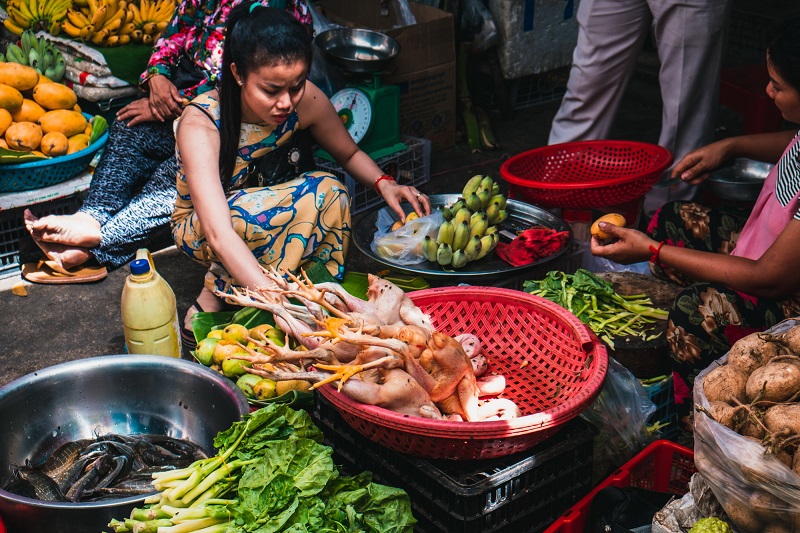
Although Laos has a population of only 7 million, the purchasing power in the region has significantly increased, particularly in the lifestyle product segment <\/span><\/strong> where Thai brands<\/strong><\/span> have captured the hearts of Lao consumers for generations.
 <\/p>
<\/p>
The Department of International Trade Promotion (DITP)<\/strong><\/span> in collaboration with the New Era Trade Entrepreneurs Development Institute (NEA) and the Thai Chamber of Commerce organized a seminar titled “Intensive Training... Understanding Laos Deeply”<\/strong><\/span> to provide Thai entrepreneurs with insights into investment opportunities and consumption patterns of Lao people.
 <\/span>
Explore New Markets in 2 Regions of Northern Laos<\/strong> <\/strong>
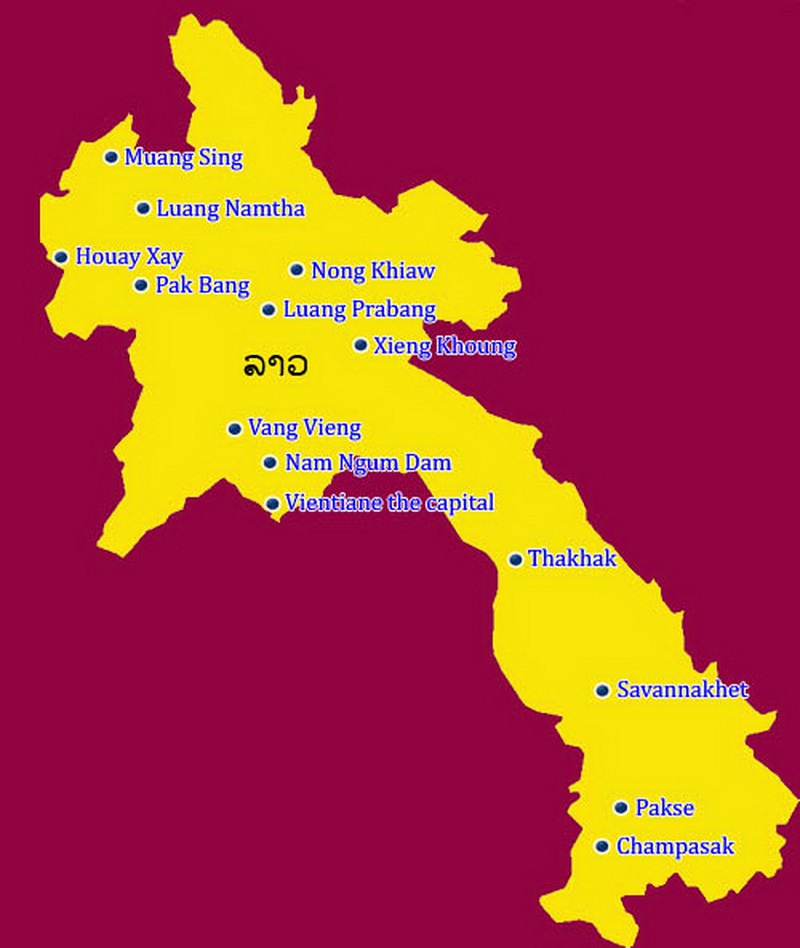
The Udomxay Province<\/strong><\/span> is located in the northern part of Laos, bordering China's Yunnan Province. The majority of the local population is engaged in agriculture and industry, but it has recently been designated as a special economic zone, attracting significant foreign investment. Currently, there are 36 foreign investment projects in Udomxay, including the development of smart cities, which is expected to draw even more investors. Additionally, Udomxay is a key area for the China-Laos high-speed train, which will be expanded into a logistics hub to facilitate increased goods transportation and drop-off points, supporting the high-speed rail service expected to commence in 2021. Therefore, the logistics business in this province is poised for growth.
 <\/p>
<\/p>
<\/strong>
The Luang Namtha Province<\/span> <\/strong>is located to the north bordering China in Yunnan Province and to the west bordering Myanmar. With its geographical advantages of connecting multiple countries, it is another city where the Thai-Chinese-Laos railway passes through, resulting in faster travel and transportation. This makes Luang Namtha a highly attractive area for investment. In the future, it will become an important border checkpoint with a significant influx of Chinese tourists. Furthermore, Luang Namtha is situated along the R3 transport route, which connects Thailand (Chiang Rai) to Laos and China (Kunming), making the Boten international checkpoint a crucial point for goods transportation into China, both by land and via the Mekong River.
 <\/span>
Winning Strategies to Capture the Hearts of Lao Customers<\/strong> <\/strong>
When it comes to product selection, Lao consumers tend to prefer high-quality items and have a strong loyalty to brands they have used before, believing that new formulas must always be better than the old ones. Therefore, if a new product is launched, it must be clearly labeled as “new formula” <\/strong>and the quality must surpass that of the previous version, while maintaining consistent quality standards. Otherwise, poor quality can negatively impact sales, as Lao consumers often trust word-of-mouth recommendations over advertisements. If someone close to them endorses a product, they are likely to purchase it. Thus, if a product does not meet expectations, it will undoubtedly affect sales. Additionally, Lao people also believe in the significance of names, so product names should carry auspicious meanings such as “wealth” or “luck” and should be easy to remember.
Moreover, Lao consumers already have a strong confidence in Thai products, which provides an advantage for Thai goods to penetrate the Lao market. As for online marketing, entrepreneurs should not rely solely on Facebook for sales, as only 2% of Lao people use Facebook. If advertising is necessary, it is better to use persuasive messaging or large, visible billboards in accessible locations, such as on transport vehicles or along roads. However, care must be taken with language, as while the Isan dialect of Thai is similar to Lao, some words have different meanings.
 <\/span>
Ms. Yani Srimeechai, Director of the Office of International Trade Promotion in Vientiane, Laos<\/span> <\/strong>stated that when people think of Laos, they often only consider Vientiane and the UNESCO World Heritage city of Luang Prabang, as these two cities are prominent in tourism. However, for those looking to do business, Thai entrepreneurs should seek new locations with growth potential in transportation and goods handling, particularly in northern Laos, in Udomxay and Luang Namtha provinces, as both cities border China and are set to have a 421-kilometer Laos-China railway.
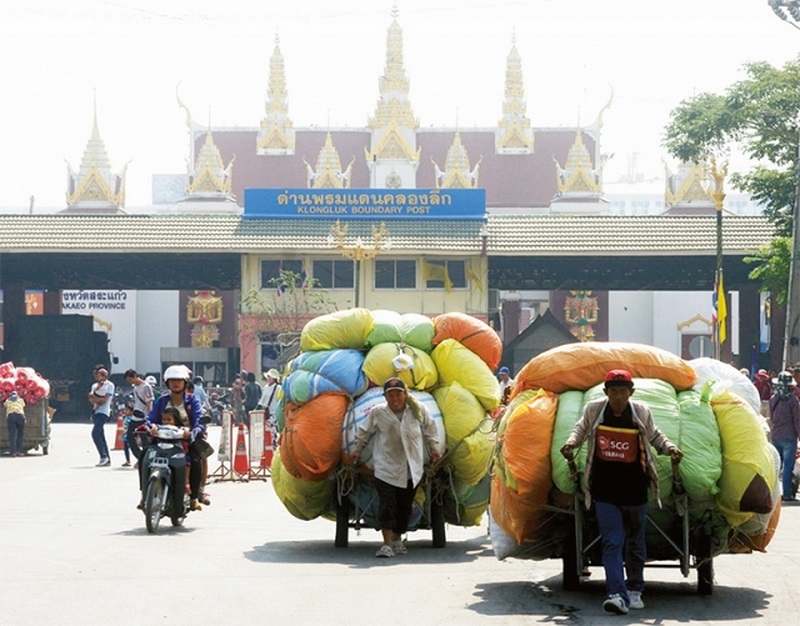
The high-speed train will have a route from the Boten international checkpoint in Luang Namtha and Udomxay to the Thanaleng railway station in Vientiane, which serves as a border crossing point to Thailand at Nong Khai. Therefore, this presents an excellent opportunity for Thai entrepreneurs to invest or even relocate production bases along the high-speed rail route, especially in the special economic zone in Udomxay. Additionally, Thai entrepreneurs should prepare to promote Thai products for expansion into other countries, including China and Vietnam.
 <\/p>
<\/p>