"Ruenwadee Suwanmongkol" Secretary-General of the SEC Explains Policies to Drive the Capital Market in the Digital Era, Enhancing Investor Protection and Supporting SMEs' Access to Capital Markets
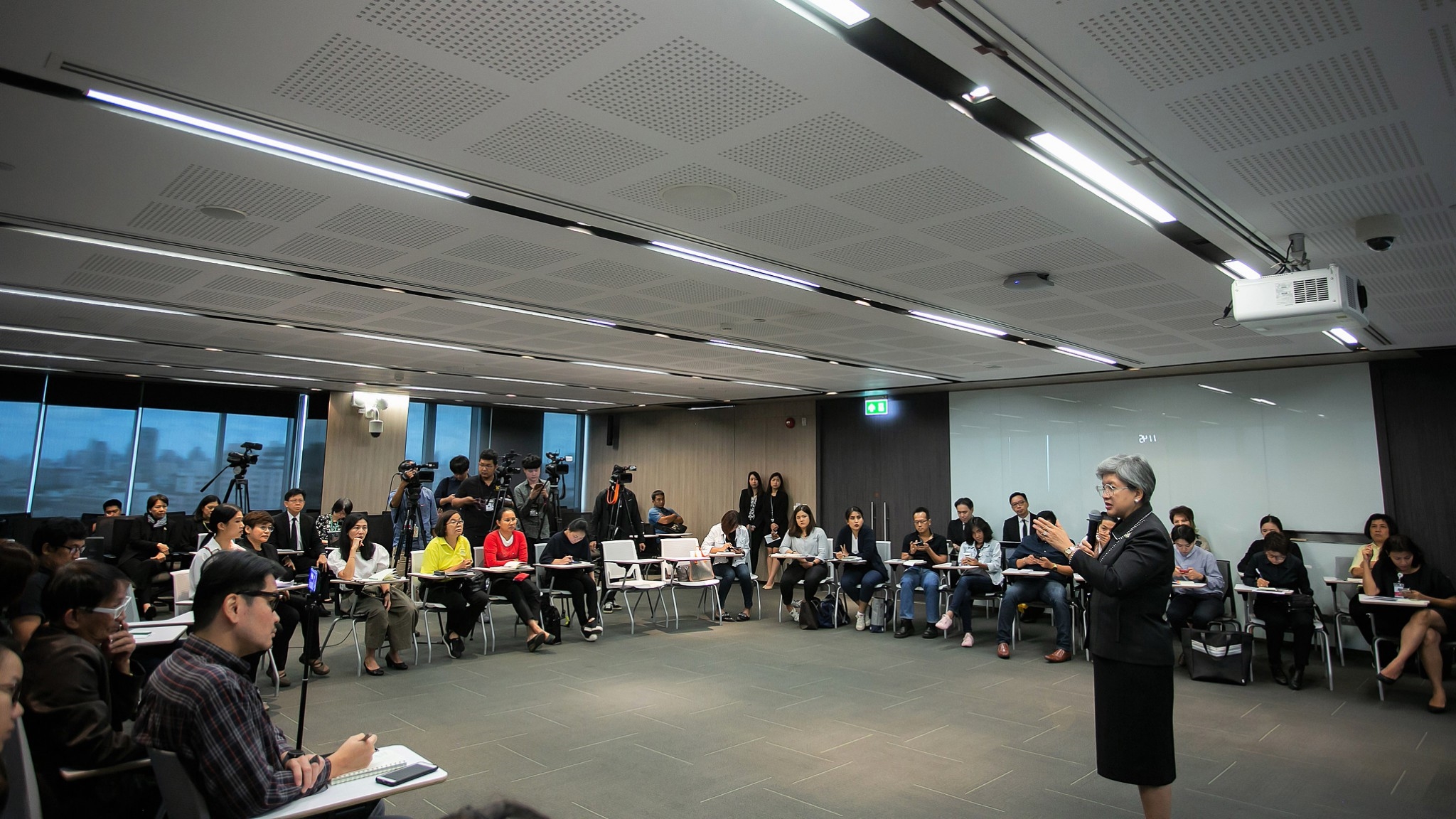
Today (June 10, 2019), Ms. Ruenwadee Suwanmongkol, Secretary-General of the Securities and Exchange Commission (SEC), held a press conference to announce policies aimed at driving the capital market. She stated that her term as Secretary-General of the SEC is four years, starting from May 2, 2019, until April 30, 2023.
"The selection of the Secretary-General of the SEC was announced at the beginning of the year, allowing for advance planning. Therefore, upon assuming the position on May 2, 2019, I was able to start working immediately."
Explaining Six Working Principles
Ms. Ruenwadee stated that her working principles include: First, aligning with the 20-Year National Strategy. The SEC's operations must be connected to this strategy, particularly in the economic sector, which falls under the second strategic goal of enhancing competitiveness, including improving access to financial services and markets.
The second principle is the capital market development plan, which the SEC has already made significant progress on, focusing on accessibility, connectivity, competitiveness, and sustainability. The goal is to drive initiatives within the SEC's context and address any delays, ensuring that all relevant agencies in the capital market, including various associations, work together to achieve these objectives.
The third principle is crucial as it relates to the implementation of the Securities and Exchange Act (No. 6), which came into effect on April 17. It is essential to ensure that the timelines specified in the law are adhered to.
"The Securities Act changes six significant principles. One aspect discussed is market regulation regarding the selection of the board of directors of the stock exchange, which involves six SEC board members, while the other four are elected by market members. These matters have specific deadlines, and it is the responsibility of the Secretary-General to ensure that the legal requirements are effectively implemented," Ms. Ruenwadee stated.
The fourth principle addresses the rapidly changing ecosystem. Technology is evolving quickly, and the SEC, as a high-cost organization, must prepare to adapt to these changes continuously. Stakeholders in the capital market, including the public, must also be ready. It is the SEC's responsibility to raise awareness and enhance knowledge among the public.
"Today, the SEC's major challenge is creating a capital market for all. There must be clear target groups, and I have reported to the SEC Board and explained to the entire SEC team that I intend to leverage my 15 years of experience in public service to enhance efficiency and strengthen our operations," she added.
Working under these principles, the first focus is to familiarize herself with all areas of Thailand to enhance operations, particularly in improving access to financial services and markets beyond Bangkok. We are discussing the potential of savers and investors across the country, considering the aging society and the need for the capital market to accommodate changing demographics comprehensively.
"The second focus is on law enforcement within the context of criminal and civil justice processes, where I will share my experiences. The third focus, which is my strength, is integration. The SEC's compass from May 2 onwards must be collaborative. Success will come from working together, integrating with government agencies, independent stakeholders, and most importantly, the public. Therefore, I will apply my 15 years of experience in public service to enhance the work of the SEC's management and encourage broader thinking while not forgetting the SEC's fundamental mission," Ms. Ruenwadee stated.
Ms. Ruenwadee mentioned that she previously worked with the SEC for 12 years, from 1992 to 2004, where she was instilled with the important concept of transparency and the absence of conflicts of interest in her work.
Furthermore, changes are not occurring solely in Thailand, so she encourages the younger generation at the SEC to learn and collaborate more with international counterparts.
The fifth principle is to develop towards sustainability, which is a significant challenge initiated by the United Nations, focusing on environmental, social, and governance (ESG) aspects. Therefore, the department has changed its name from CG (Corporate Governance) to ESG, also considering human rights.
The sixth principle will continue the ongoing work in two areas: one-stop services and one report. Clear timelines will be established, with the one-stop service starting on September 24, 2019, providing a single point of contact for comprehensive and accountable responses, with a logbook for data recording. Speed must accompany quality.
"For the one report, it is the SEC's direct responsibility. Currently, there are multiple reports, so we will consolidate them into a single report that can be submitted digitally. Initially, this will be voluntary, but after 2020, it will be mandatory, while minimizing the burden on the private sector. At the same time, we must ensure that investors receive adequate protection, enhancing investor protection significantly," Ms. Ruenwadee stated, adding that the goal of the final working principle is to ensure rapid results.
Enhancing Investor Protection
Ms. Ruenwadee stated that she has consistently adhered to a framework in her work, which aligns with the organization. The first principle is the four Rs: proactive, fast, careful, and collaborative. Proactive means working proactively because the ecosystem is changing rapidly. If we do not work proactively, we will not keep up with changes; the capital market comes with speed.
The second R is fast, meaning working quickly to accommodate changes for all stakeholder groups. The third R is careful, ensuring quality in our work. The final R is collaborative; one cannot work alone.
The second focus is to develop alongside investor protection, facilitating and promoting development because there is a significant challenge to develop the capital market to compete with international markets. This includes 1) Access to the capital market, where operations must align with the national strategy, with small and medium-sized enterprises (SMEs) being a key policy supported by the government to enable their access to capital markets.
Studies on registration criteria reveal that the same criteria apply to all companies, while SMEs have already established accounting systems and entered the tax system, providing them with opportunities to access the capital market. Therefore, we will revise the IPO offering criteria to align with SMEs because if SMEs cannot meet the IPO criteria, their access to the secondary market will be unclear. The SEC has met with the Department of Industrial Promotion and other agencies overseeing SMEs to jointly find solutions, with a memorandum of cooperation to be signed next month.
"This year's work on access to the capital market involves relaxing criteria and improving IPO standards to accommodate SMEs. However, we must engage with stakeholders and business operators on the ground, with the stock exchange involved, as there are various platforms supporting small business trading, including crowdfunding," Ms. Ruenwadee stated.
2) Enhancing investor protection involves considering risks and ensuring investor protection. Therefore, we will elevate investor protection. Drawing from my legal experience, I want to see investor representatives taking action on related cases because Thailand has laws on class action lawsuits that originated from capital market litigation. We will coordinate with investor protection associations, as consumer representatives in other countries perform this role, and the investor association has a structure that could fulfill this function.
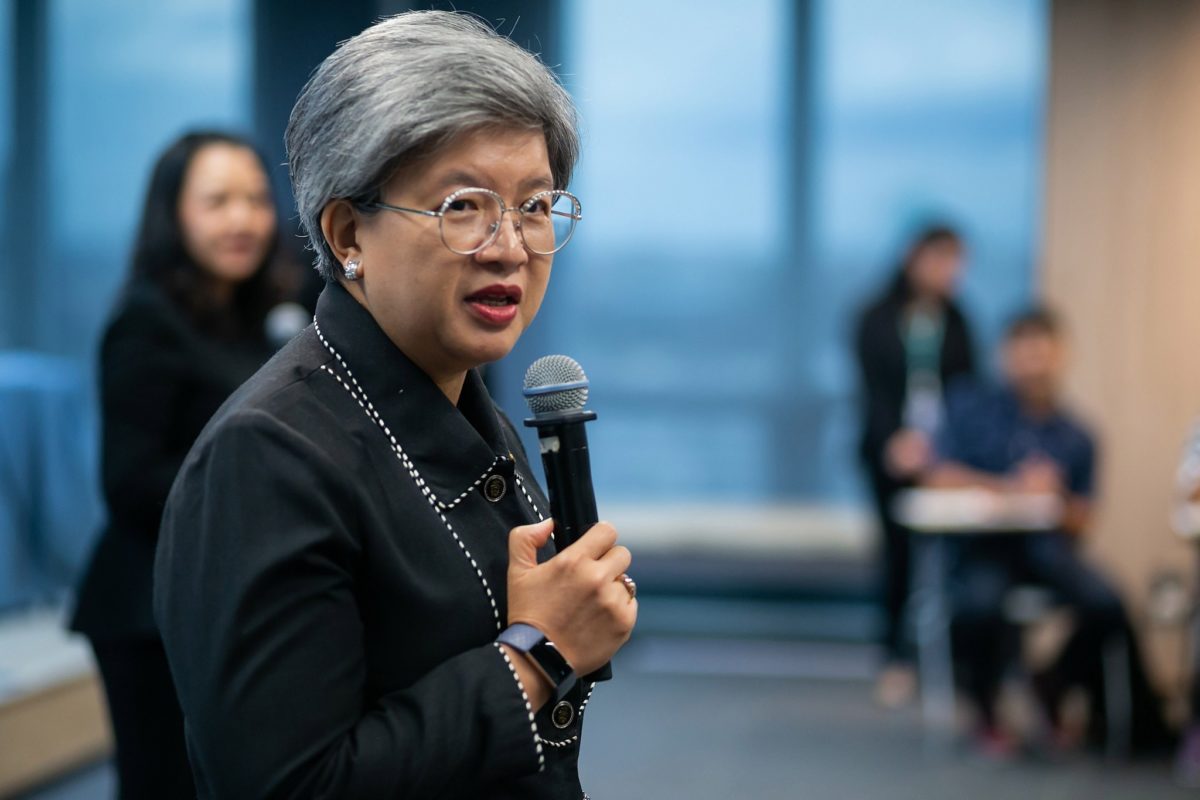
"With my familiarity in legal work, I have opened a direct complaint line available 24/7 at 1207. In the future, this will connect with complaints processed through the government house, as currently, investment assets come in various forms, including digital assets. From the complaints received, there have been issues related to investments in various coins, so I want the public to have knowledge and understanding of investments. I have also proposed collaborative ideas to the Lawyers Council," Ms. Ruenwadee stated.
Additionally, we are studying the feasibility of establishing an Investor Protection Fund to provide measures for compensating damages incurred from investments in various assets.
Building Networks to Expand Missions in Provinces
3) Expanding missions to cover more areas is a project approved by the SEC Board, launching the SEC Caravan to promote access to capital markets for SMEs, which account for 40% of GDP, and to inform them of alternative options beyond loans. This will be accompanied by educating the public about suitable investments to prevent fraud, seeking cooperation from partner networks in provinces from the provincial level to various associations.
4) Developing innovations involves streamlining processes and improving forms, as the challenge here is enhancing competitiveness in business. Reducing forms facilitates operations, and these innovations provide convenience for businesses and instill confidence in the public, which will continue as a priority.
5) Strengthening the competitiveness of the Thai capital market is a focus approved by the SEC Board on June 6, establishing a Capital Market Competitiveness Center, which will analyze using SWOT, forming part of the evaluation framework for both IMD and the World Bank, connecting all stakeholders, including experts and representatives from TDRI and international financial specialists to enhance competitiveness.
6) Data analysis using big data must connect capital market data with national data. Big data can assist in various areas, including law enforcement and assessing the likelihood of legal violations, forming part of the country's financial data.
7) Strengthening international collaboration is crucial as Thailand has been recognized as a leader in the capital market. The SEC Board has approved a proposal to host the IOSCO meeting in three years, coinciding with the SEC's 30th anniversary, providing an opportunity for Thailand to showcase its capital market potential.
Next year, Thailand will host the IOSCO Asia-Pacific regional meeting, which is closely linked to Thailand and addresses similar issues, such as risky actions that are still permissible. Additionally, there will be meetings with SECs in the region, starting with Cambodia, Laos, and Myanmar. This year, Thailand is the ASEAN chair, and the SEC has already hosted one ASEAN Capital Market meeting in March and will host another on October 1, further enhancing international recognition.
The Thai SEC has also revived negotiations on cross-border mutual fund sales, known as Mutual Recognition of Mutual Fund with Hong Kong, which had been discussed in 2004 but paused (to focus on multilateral frameworks like New Zealand, Australia, and South Korea). This will create a fast track system between the two countries, allowing funds approved by the Thai SEC to be quickly considered in Hong Kong and vice versa, providing investors with more options. If these negotiations conclude successfully, this model will be applied to other countries.
8) Sustainability of enterprises is increasingly important as institutional investors are placing greater emphasis on businesses that focus on ESG.
9) Enhancing the development and enforcement of laws is currently under study, including witness protection and the Investor Protection Fund, to determine if legal amendments are necessary. Actions must accommodate changes in the ecosystem, and securities laws and related laws must facilitate this, including public company laws where responsibility lies with the board of directors. Coordination with the Department of Special Investigation (DSI) is already underway, and it is the SEC's crucial duty to enhance efficiency.
10) Organizational development towards digital transformation is underway, with the Board approving the establishment of a new unit. Currently, several digital laws are in effect that impact the SEC's operations and stakeholders, such as cybersecurity. Additionally, the SEC will transition to a paperless system starting October 1.
Thank you for the information from thaipublica.org