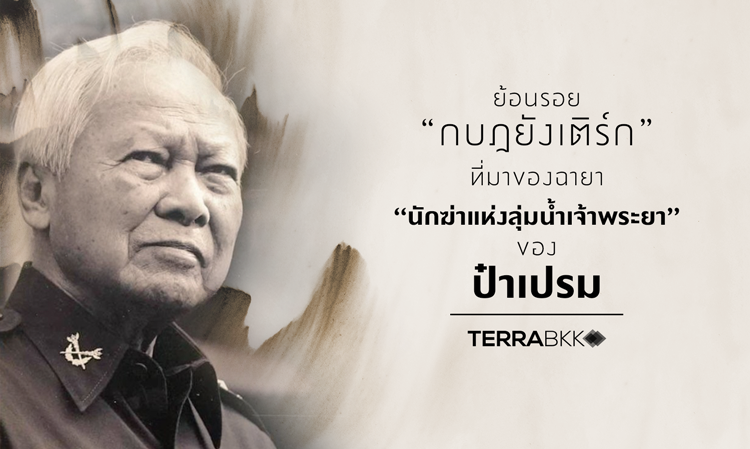
Tracing the 'Yung Turk Rebellion': The Origin of the Nickname 'The Assassin of the Chao Phraya River' for General Prem
This article commemorates the significant contributions and achievements of General Prem Tinsulanonda, a statesman of Thailand, who is recognized for his pivotal role in promoting the policy of 'politics leading the military.' This led to the issuance of Prime Ministerial Order No. 66/2523, which defined the policy and adjusted the stance against communism, including the enactment of an amnesty law for defectors, allowing students who fled to the jungle after the events of October 6, 1976, to return.
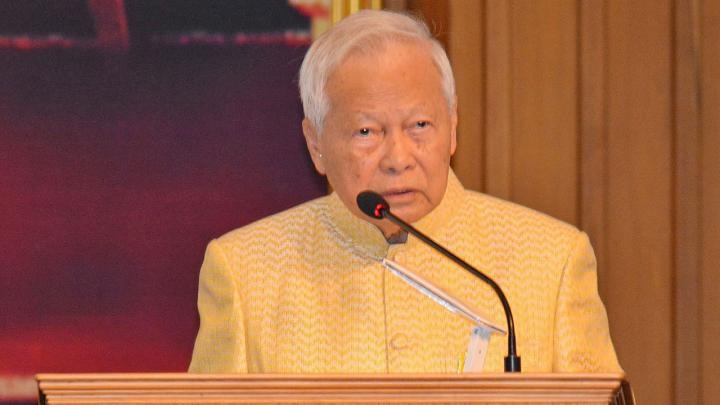
General Prem Tinsulanonda (August 26, 1920 - May 26, 2019) was known for his reserved personality. During his tenure as Prime Minister of Thailand, he rarely gave interviews to the media, earning him the nickname 'Tammy the Mute' and another moniker, 'The Assassin of the Chao Phraya River,' due to the events of the Hawaiian Rebellion and the September 9 Rebellion. After leaving office on August 3, 1988, His Majesty King Bhumibol Adulyadej graciously appointed General Prem as a Privy Councillor on August 23, 1988, and later honored him as a statesman on August 29, 1988. On August 4, 1998, he was appointed President of the Privy Council.
General Prem first took on a ministerial role in General Kriangsak Chamanan's government as Deputy Minister of the Interior in 1977 and continued to serve in various ministerial positions throughout that government. Towards the end of General Kriangsak's administration, he held the position of Minister of Defense alongside Commander of the Army in 1979.
During this time, General Prem gained recognition from various factions. After General Kriangsak resigned as Prime Minister on February 23, 1980, the House of Representatives conducted a vote to find a new Prime Minister, electing General Prem. His Majesty King Bhumibol Adulyadej graciously appointed General Prem as Prime Minister on March 3, 1980, making him the 16th Prime Minister of Thailand.
General Prem Tinsulanonda assumed the role of Prime Minister on March 3, 1980, succeeding General Kriangsak Chamanan. Throughout his administration, he achieved numerous significant accomplishments, such as revising tax codes and excise laws to promote social equity, creating jobs through rural development projects, and establishing a joint committee between the government and the private sector to enhance the role of trade and investment within the country.
He effectively suppressed communist terrorism in Thailand by implementing the 'politics leading the military' policy as per Prime Ministerial Order No. 66/2523, which ultimately weakened and dissolved the Communist Party of Thailand. General Prem issued this order on April 23, 1980, emphasizing the need to address social injustices and to treat captured communist terrorists or defectors as fellow citizens, explaining the government's policy on this issue to facilitate their reintegration into society. This order marked a significant shift from the previous government's hardline policies towards a more conciliatory approach, although its implementation took several years.
Another significant event was the 'Hawaiian Rebellion,' also known as the 'Yung Turk Rebellion,' which was an attempted coup from April 1 to April 3, 1981, aimed at seizing power from Prime Minister General Prem Tinsulanonda. The coup plotters included military officers from the 7th class of the Chulachomklao Royal Military Academy, known as the 'Yung Turks,' such as Colonel Manun Rupkachorn, Colonel Chupong Matwapan, Colonel Prajak Sawangjit, and others, led by General San Jitpatima, the Deputy Commander of the Army.
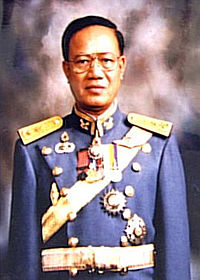
The reasons behind this rebellion were attributed to General San's dissatisfaction with General Prem, as the Army had extended General Prem's term as Commander of the Army for another year on October 1, 1980, which eliminated General San's chance to ascend to that position. Consequently, he rallied officers from the 7th class to initiate this coup.
The coup began at 2:00 AM on April 2, when they detained General Serm Na Nakorn, the Supreme Commander, along with several other high-ranking officers, at the Army Auditorium and issued a revolutionary statement.
“Due to the country's situation being chaotic and deteriorating due to the weakness of the country's leadership and the fragmentation of political parties, which has shaken the stability of the government, this has created an opportunity for individuals with ill intentions to move against the government to establish a permanent dictatorship. Therefore, for the safety and survival of the country, the revolutionary group, consisting of the army, navy, air force, police, and civilians, has taken the initiative to seize power.”
General Prem Tinsulanonda requested the presence of His Majesty the King, Her Majesty Queen Sirikit, and the royal family at the Second Army Area Command in Nakhon Ratchasima.
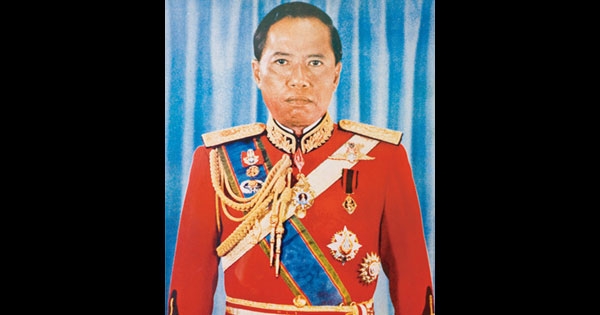
He also annulled the constitution, dissolved the parliament, dismissed the cabinet, appointed high-ranking officials, and broadcasted 'inspirational music' on the Thailand Radio continuously.
Meanwhile, various locations in Bangkok were fortified with sandbags, and troops were on high alert with weapons, while the Thai national flag was raised as a symbol.
The government, led by General Prem Tinsulanonda, established a command center to respond and used its authority to dismiss the coup plotters from their military positions, receiving support from Major General Arith Kamnang, the Deputy Commander of the Second Army Area. The government's counter-response began with the deployment of F-5E fighter jets to Bangkok for surveillance, leading to minor clashes between the two sides, resulting in one coup plotter dead and one injured, along with one civilian casualty and one injured.
Ultimately, the rebellion ended swiftly in the early morning of April 3, when 155 coup plotters surrendered to the government, marking a total of 55 hours from the start of the incident to its conclusion.
Meanwhile, the leaders of the coup fled the country, with Colonel Manun Rupkachorn seeking asylum in Germany, and General San Jitpatima, the leader of the group, escaping to Myanmar, later receiving royal pardons for 52 of the main leaders on the occasion of the Coronation Day, along with amnesty and restoration of military ranks.
Subsequently, these military officers brought incense and candles to apologize to General Prem at his residence in Si Sao Thewet on June 22, while General San, upon returning to Thailand, did not perform such an act and refused to give any interviews.
It is noteworthy that this rebellion involved a military force of up to 42 battalions, the largest in history, and some sources indicate that the evening before the incident, one of the coup plotters, Colonel Prajak, met with General Prem at his residence to persuade him to join the coup as its leader and to assume the position of Prime Minister to eliminate the influence of politicians, but General Prem declined and managed to escape, with some sources suggesting that he even jumped out of a window!
When the rebellion concluded without significant fighting, it occurred and ended so quickly that it felt like a dream or a performance, coinciding with early April, which is known as April Fool's Day in Western tradition, a day when people play tricks on each other, leading to the media sarcastically dubbing it the 'Hawaiian Rebellion.' Following the incident, Major General Arith Kamnang, who played a crucial role in countering the military forces, gained General Prem Tinsulanonda's trust and was promoted to Lieutenant General, commanding the First Army Area and becoming the Deputy Commander of the Army six months later.
The Off-Duty Military Rebellion or the September 9 Rebellion
The off-duty military rebellion, or the September 9 Rebellion, also known as the 'Two Brothers Rebellion,' was another coup attempt during General Prem's premiership on September 9, 1985, led by a group of off-duty military officers, including Colonel Manun Krith Rupkachorn (then known as Manun Rupkachorn), Air Lieutenant Colonel Manas Rupkachorn, General Kriangsak Chamanan, General Serm Na Nakorn, General Yoth Tephasadin Na Ayutthaya, Air Chief Marshal Kaset Intharat, Major General Thongtem Phobsuk, Colonel Prajak Sawangjit, and Colonel Sakorn Kitwiriyah, along with some active-duty soldiers and civilian labor leaders, such as Mr. Sawat Lukdod and Mr. Pratin Thamrongchoi, with financial support from Ekkayuth Anchanbutr. This rebellion aimed to seize power from General Prem Tinsulanonda's government while the Prime Minister was on an official trip to Indonesia, and General Arith Kamnang, who was the Commander of the Army at the time, was on a mission in Europe.
This rebellion is considered the last unsuccessful coup attempt referred to as a 'rebellion.' It also marked the final coup attempt against General Prem Tinsulanonda's government following the failure of the Yung Turk Rebellion in 1981.
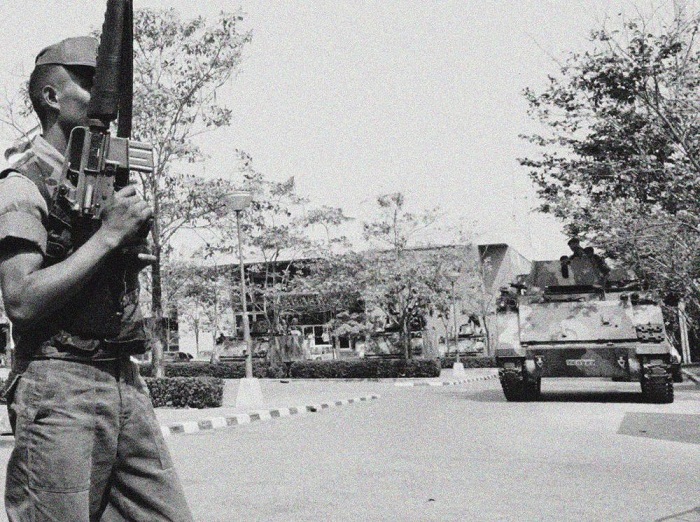
Beginning of the Incident
The coup began at 3:00 AM, with 22 tanks from the 4th Cavalry Regiment (Royal Guard) and over 400 soldiers from the Air Force's 1st Airborne Division taking control of the Supreme Command Headquarters, the Public Relations Department, and the Mass Communication Organization of Thailand (MCOT), reading a statement from the revolutionary group naming General Serm Na Nakorn as the leader of the coup and detaining Air Chief Marshal Prabhan Thupatemee.
Meanwhile, civilian leader Ekkayuth Anchanbutr led a portion of the military and labor union leaders to seize the Bangkok Mass Transit Authority (BMTA) and detain Mr. Pichit Sathirachawal, the director of BMTA at that time, to bring transport vehicles to pick up labor groups to join the coup.
Subsequently, government forces, led by General Tianchai Sirisampan, the Deputy Commander of the Army acting as Commander of the Army, and Major General Chavalit Yongchaiyudh, the Deputy Chief of Staff, coordinated with the government, with General Prajuab Sunthornangoon, the Deputy Prime Minister, acting as the Prime Minister, establishing a counter-command at the 11th Infantry Regiment (Royal Guard) in Bang Khen and deploying forces from 1st Battalion, 2nd Infantry Regiment (Royal Guard) to counter the coup, issuing a counter-statement on behalf of General Arith Kamnang, with the main forces of the government led by a group of military officers from the 5th class of the Chulachomklao Royal Military Academy, including Major General Sujinda Kraprayoon, Major General Isarapong Noonphakdee, and Air Vice Marshal Kaset Rojanil. The government declared a state of emergency on September 9, 1985, signed by General Prajuab Sunthornangoon, the Deputy Prime Minister acting as Prime Minister, and General Sithi Jiroj, the Minister of Interior, and lifted it on September 16, 1985, at 6:00 PM.
At approximately 9:50 AM, the coup's tanks stationed at the Equestrian Statue began firing at radio antennas and buildings of the 1st Infantry Division's broadcasting station and shot machine guns into the area of the Paruskawan Palace, the location of the National Intelligence Agency, resulting in the deaths of two foreign journalists: Neil Davis from Australia and Bill Ratch from the United States.
Both sides engaged in intense clashes, and negotiations took place at 3:00 PM, with Major General Pichit Kullavanit representing the government and General Yoth Tephasadin Na Ayutthaya representing the coup plotters. Both sides reached an agreement and withdrew their forces back to their positions at 5:30 PM.
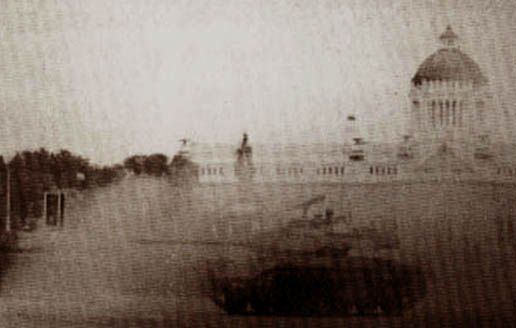
General Prem Tinsulanonda returned to Thailand that night and immediately met with His Majesty King Bhumibol Adulyadej at the Tak Sin Rajanivej Palace in Narathiwat Province.
After the failed coup, the coup plotters, Colonel Manun Rupkachorn and Air Lieutenant Colonel Manas Rupkachorn, sought asylum in Singapore and later moved to West Germany, while the remaining members claimed they were coerced by the coup plotters. A total of 39 individuals were prosecuted, and 10 fled.
It is believed that behind this power grab, Colonel Manun Rupkachorn acted merely as a front to seize power, waiting for reinforcements from influential figures to join later, and the failure of this coup was due to someone who "made an appointment but did not show up."
Thank you for the information from: King Prajadhipok's Institute and Wikipedia