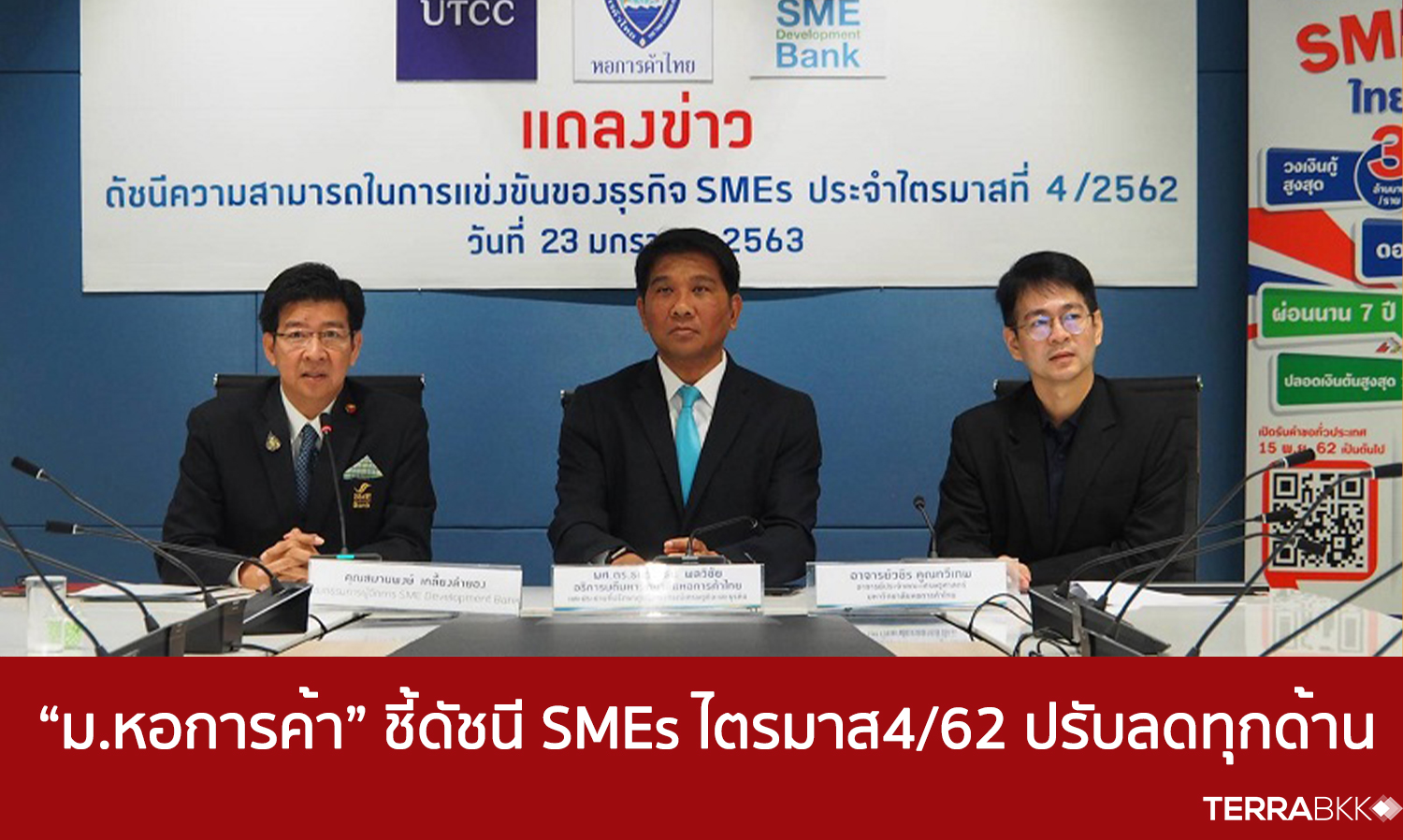
"Chamber of Commerce" explains how traditional retailers are burdened by debt, squeezed by modern trade and online commerce
On March 27, 2019, Mr. Thanawat Polwichai, Senior Vice President for Academic Affairs and Research and Director of the Economic and Business Forecasting Center at the University of the Thai Chamber of Commerce, revealed the results of a survey on the status of traditional retail operators. According to data from the Office of Small and Medium Enterprises Promotion (OSMEP), there are approximately 395,000 traditional retail stores, or "mom-and-pop" shops, spread across all regions of the country, facing similar challenges. These include new competitors such as small and large retailers, online commerce, and modern trade, as well as changing consumer behavior, lack of marketing efficiency, accounting issues, poor management of sales space, rising product costs, and decreasing revenues.
The survey of 1,246 traditional retail operators found that 61.7% reported income solely from in-store sales, while 38.3% had additional income from other services, such as vending machines, mobile top-ups, bill payments, photocopying, and fax services. On average, they saved 7,280 baht per month, with 59.16% saving every month. The survey also indicated that the competitiveness of traditional businesses compared to their competitors over the past year was generally low, especially when compared to online sales, modern convenience stores, and modern trade in terms of product pricing, service, and product condition.
“Although competition is low, over the past five years, 24.48% of traditional retail operators have made no adjustments at all, believing there is no need and having limited capital. Meanwhile, 39.77% have made minimal adjustments, citing existing loyal customers and lack of funds for development. Only 22.62% have made moderate adjustments to improve products and services for customer convenience, while just 13.12% have made significant changes to modernize their businesses and impress customers, such as renovating stores, increasing promotions or additional services, clearly labeling prices, and ensuring a diverse range of products with consistent quality checks,” Mr. Thanawat stated.
Mr. Thanawat further noted that 23.97% of the sample group engaged in online sales due to changing customer behavior, while 76.03% had not ventured into online sales, citing reasons such as increased costs, satisfactory sales performance, lack of knowledge on how to proceed, belief that their products are not distinctive, and fear of being scammed. Regarding the current status of traditional retail businesses compared to the previous year, most reported that their sales remained the same and expected them to remain unchanged in the next six months. When asked about the reasons for positive customer responses, they cited standard product quality, good service, reasonable prices, product variety, and ease of access, in that order.
As for the costs of running a traditional retail business, they stem from product costs, rent, management fees, labor, and transportation, averaging 21,700 baht per month. About 53.13% carry debt, averaging 462,000 baht per individual, with an average monthly repayment of 11,600 baht. This includes 218,000 baht in formal debt from financial institutions, with monthly repayments of 37,500 baht, and 347,000 baht in informal debt from loans from investors, relatives, or informal lending groups, with monthly repayments of 5,750 baht. The burden of both formal and informal debt has increased due to reasons such as business expansion, working capital needs, purchasing products, repaying loans, and starting new ventures. Most respondents indicated that this debt burden negatively impacts their business operations.
Additionally, regarding the demand for loans and access to credit, 38.13% of traditional retail operators assessed their ability to access credit as high. Within the past year, 47.99% expressed a need for loans, with nearly all seeking formal loans to increase business liquidity and repay debts, with an average desired loan amount of 182,000 baht. While 57.06% believed they could secure formal loans, 42.94% felt they could not due to insufficient collateral, lack of account activity history, their projects not being of interest to banks, being new businesses, and not having bank approval.
Regarding the need for financial institutions to improve loan services, they suggested reducing interest rates, simplifying loan application processes, shortening approval times, and easing collateral requirements. They also expressed a desire for government support in areas such as stimulating and developing the economy and improving citizens' living standards, reducing costs, setting prices, and developing transportation systems for goods or raw materials, advancing technology and personnel capabilities, and agricultural support such as water sources, irrigation canals, and agricultural product pricing. Suggestions for the Small Business Development Bank included reducing transaction steps, such as document submission and various conditions, lowering interest rates on loans, providing long-term loans, supporting funding for operators and various professions, and developing products, knowledge, and personnel within organizations.
Thank you for the information from https://www.thaipost.net/main/detail/32342