Long-Term Leasehold Condominiums: A New Option for Urban Consumers
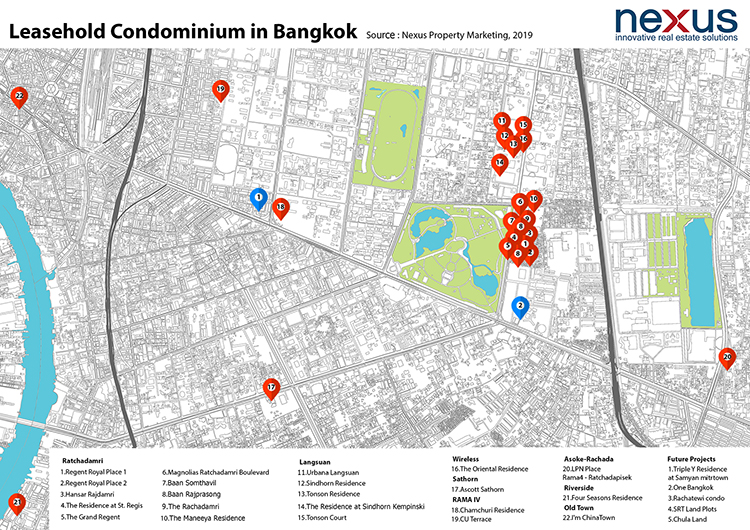
Nexus has revealed survey results regarding long-term leasehold condominiums, which currently account for less than 1% of the total condominiums in the Bangkok market. Most of these are concentrated in the city center, in high-potential locations where freehold land is unavailable. The majority of this land is owned by government agencies and the Crown Property Bureau, with only a few parcels owned by private entities. The main areas for these condominiums include the Ratchadamri, Lang Suan, and Rama 4 districts.
Mrs. Nalinrat Chareonsuphong, Managing Director of Nexus Property Marketing Company Limited stated that the supply of long-term leasehold condominiums in central Bangkok totals 4,500 units across 22 projects, with over 67% located in the Lang Suan and Ratchadamri areas. Analyzing the supply of new condominiums launched in the past 2-3 years reveals that these projects are situated in special locations with high potential, targeting specific demographics. Examples include projects under the Sindhorn Residence brand, the I Am Chinatown project in Yaowarat, and the Four Seasons Private Residence along the riverside.
Regarding the pricing of long-term leasehold condominiums, there is significant variation depending on several factors such as location, construction quality, and project standards. Many projects in the super-luxury segment often collaborate with five-star hotel chains for management or include hotel or grade-A serviced apartments to enhance value and attract foreign buyers. Generally, long-term leasehold condominiums have a lease term of 30 years, and while the resale price may decrease as the remaining lease term shortens, many long-term leasehold condominiums do not see a price drop; instead, prices may increase due to the quality of the units and ongoing maintenance by the project owners. Demand for condominiums in these locations remains strong, and it is observed that prices for long-term leasehold condominiums often rise even as the lease term decreases, sometimes outperforming freehold condominiums in the market. This results in annual returns on investment for long-term leasehold condominiums ranging from 7-10%, which is higher than that of freehold condominiums in the same area.
Mrs. Nalinrat further noted that the appeal of long-term leasehold condominiums is expected to grow due to several factors, including the increasing scarcity and high prices of urban land, prompting private landowners to prefer leasing land long-term rather than selling it outright. The government also continues to offer land for lease. In terms of pricing, long-term leasehold condominiums are generally priced 30-40% lower than freehold condominiums, making it easier for buyers to make purchasing decisions. Additionally, the location of long-term leasehold condominiums, especially those in the super-luxury segment, remains highly desirable, such as in Lang Suan or Ratchadamri, and continues to receive positive responses from buyers. When analyzing the lifestyle preferences of millennials in Bangkok, who seek convenience and accessibility, it is evident that they may transition to single-family homes as they age. Thus, purchasing long-term leasehold condominiums presents an attractive new option for this demographic. Furthermore, as Thai society transitions towards an aging population, this group will increasingly show interest in long-term leasehold housing, as many are still working and possess significant purchasing power. Overall, buying long-term leasehold condominiums is seen as more cost-effective, as this demographic prioritizes safety, convenience, and easy access to healthcare. Nexus anticipates that we may see more long-term leasehold condominiums designed for seniors in the future.
From an investment perspective, long-term leasehold condominiums typically require a higher deposit and contract payment than freehold condominiums, approximately 30%. Banks will finance 70% of the remaining amount. This condition, when compared to the new policies of the Bank of Thailand regarding the purchase of a second or third residence, indicates that long-term leasehold condominiums are no longer at a disadvantage compared to freehold condominiums in terms of initial investment. In terms of investment returns, long-term leasehold condominiums generally yield higher annual returns due to their lower selling prices and their locations being in high rental demand. Additionally, the savings from purchasing a less expensive condominium can be reinvested elsewhere for greater returns. The appropriate room size and design that meets market demand in each location will be crucial for the success of rental condominiums. Lastly, the foreign market is expected to have a bright future for long-term leasehold condominiums due to various factors, including the familiarity of foreigners, such as those from Singapore and Hong Kong, with this type of living arrangement, the ease of ownership of long-term leasehold condominiums, and purchasing conditions such as not requiring money transfers from abroad, particularly for Chinese buyers, for whom transferring money to purchase a condominium can be challenging.
Thank you for the information from nexus.co.th