Smart Mobility: The First Step Towards a Smart City?
Associate Professor Dr. Ankit Sripakakorn, Intelligent Transportation and Vehicle Research Center, Chulalongkorn University
Smart City: Today's Urban Development Trend
Nowadays, smart city is recognized as a well-known urban development model that has gained traction since the concept emerged with the proliferation of digital technology starting in 2008 in Amsterdam. Currently, smart cities have been developed in various cities around the world, not only in Europe or America but also in countries like India and China, which aim to establish smart cities in 100 and 500 cities respectively. In Thailand, there are plans for development in several major cities, such as Phuket, Khon Kaen, and Chiang Mai, along with many other provinces to follow.
So, what exactly is a smart city? Is the city we live in smart? And when we visit a smart city, what futuristic atmosphere can we expect? In this article, I would like to highlight an essential piece of the smart city puzzle: smart mobility. Let's explore what we can discover when we encounter smart mobility, what different feelings it evokes, and how modern vehicles, such as electric vehicles or autonomous vehicles that are frequently in the news, can lead us towards smart mobility and smart cities.

What is Smart Mobility?
So, what is smart mobility? To explain smart mobility, we might need to refer back to smart city. For those interested in following the development of smart cities, one of the first questions that often arises is: how do we define a smart city? What qualifies as a smart city? It seems there is no fixed definition, even though development is actively happening worldwide.
To understand both smart city and smart mobility together, I would like to share an interesting observation: a smart city is a concept for urban development that exhibits both global and local characteristics. The global aspect reflects the awareness and development from cities around the world, where common components are often found. However, there is also a local aspect, as each component varies based on the unique nature, background, and characteristics of each city. The problems that smart cities aim to solve and the methods to address these issues differ from one city to another.
Therefore, in this article focusing on smart mobility, let's look at the common components of smart mobility that can be found in smart cities worldwide.
What Can We Find in Cities with Smart Mobility?
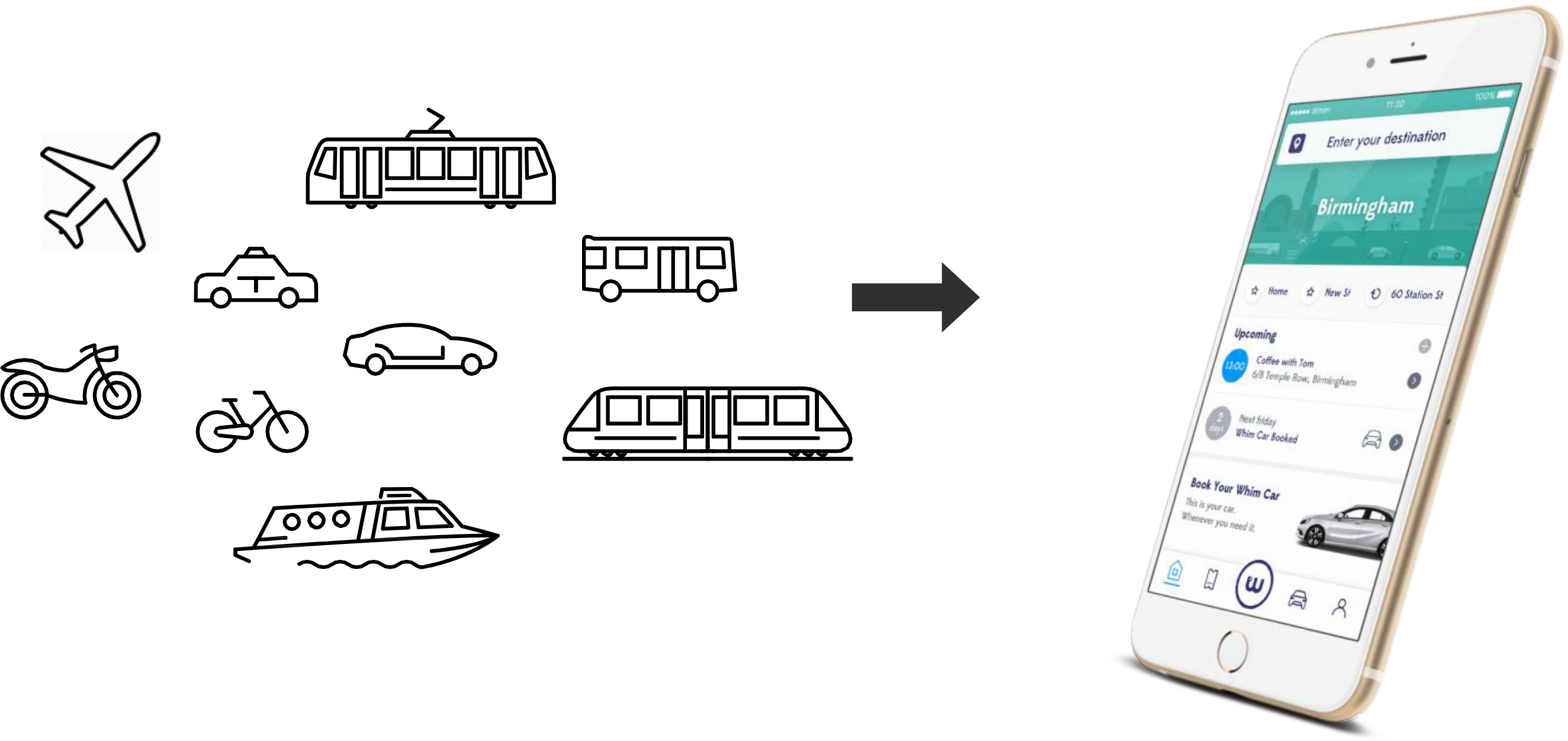
In smart mobility, the first component we encounter, which is a product of the digital age, is what is known as MaaS, or “Mobility as a Service.” Traditionally, if someone lived in the suburbs, traveling between work and home would require purchasing a car. For short trips around the neighborhood, one would need to buy a bicycle. Other travel options would typically involve separate public transportation systems, where one would pay separately for a boat ride or a bus ride.
However, with smart mobility, MaaS refers to the integration of various travel options presented in the form of service packages rather than selling vehicles for ownership. For example, bike-sharing services like “Pun Pun” in Bangkok are a popular example. Users can subscribe and load money onto their accounts, then unlock a bike at various stations throughout the city. Upon reaching a station near their destination, they can lock the bike and be charged based on the duration of use. This allows for travel without the burden of purchasing and maintaining a bicycle. In the context of MaaS, public transportation systems will also differ. It is essential to integrate various transport systems to support seamless travel from the starting point to the destination, providing cohesive information and payment methods.
From the first component, the second equally important component is the vehicles themselves. To support MaaS, which is a product of the digital age, vehicles must be electric, meaning they need to fully embrace digital DNA and be ready for integration between transportation and energy systems to meet smart environment needs.
When we are on the move, we can see the interaction between people, vehicles, and roads. The people are the travelers themselves, and if the vehicles are electric, the roads must also become smarter through what is called intelligent transport systems (ITS), which is the third component of smart mobility. This system connects IT and communication with roads, traffic lights, and smart signage to create interaction between vehicles, people, and roads, providing information and alerts to ensure convenience and safety during travel.
The final component, which may be intangible but is visible and significantly beneficial, is open data. In a smart city, data does not only come from the government as it used to. The government must invest in installing detectors in the road network, but travelers using vehicles connected to the ITS will generate data that feeds into a central database. Even the location and daily behavior of individuals will produce similar data through their mobile phones. All of this will be collected into an open database that the public and businesses can utilize through pre-agreed arrangements.
These four components are essential elements of smart mobility that can be seen in cities with smart mobility.
What Different Feelings Can We Expect from Smart Mobility?
With the various new components found in smart mobility, the experience of smart mobility will differ from what you are accustomed to. The first feeling under smart mobility is the relief from the burden of vehicle ownership (ownership), including costs (car payments, insurance), concerns (theft, breakdowns), and inconveniences (finding parking), transitioning to the convenience of accessing services (usership).
Not only is there convenience in accessing vehicles, but the second feeling is the use of multiple modes of transport (intermodality). Previously, travel often relied on a single mode, such as only using a private car or motorcycle taxis to get from point A to point B. In the atmosphere of smart mobility, the traveler is at the center, with a plethora of travel options available, and each option is interconnected in terms of travel information and payment systems.
Another feeling that will be distinctly different is the increased travel options, allowing everyone to be a part of it in a changing role known as prosumer. Previously, the role of travelers was merely as service recipients, but in the era of smart mobility, simply owning a vehicle and having a mobile phone allows individuals to become service providers, transitioning from being mere consumers to prosumers. For example, the arrival of Uber has enabled ordinary car owners to provide transportation services. Although this has led to conflicts with traditional taxis in many areas worldwide, such services have been confirmed to enhance the quality of travel options, surpassing existing taxis.
In the realm of smart mobility, travel does not rely on vehicle ownership, and there are options for travel through various modes, or even the ability to become a service provider. Another observation is that travel in these smart mobility systems is made possible by a new ecosystem emerging from various business segments that were previously distinct and seemingly unrelated. Today, automotive manufacturers, software companies, IT and telecommunications firms, and logistics companies are all interconnected, whether through product or service collaborations, cross-company investments, or sometimes even acquisitions. This interconnectedness in the ecosystem often benefits consumers by providing access to services and promotions from multiple interconnected companies, but it also poses challenges for the government in managing consumer data privacy and the potential for unfair competition arising from such collaborations.
Expectations for Smart Mobility
All the differences in experiences and behaviors in smart mobility aim to address the pain points of urban travel, whether it be traffic congestion, lack of travel options, severe air pollution, or road accidents that claim many lives, all resulting from the rapid growth of large cities or megacities today. Thus, smart mobility represents the efforts of growing cities worldwide to tackle the crises that are either imminent or already occurring in those cities.
Moreover, new travel models also signify new business opportunities that will arise simultaneously, as evidenced by the emergence of new businesses providing MaaS travel services, collaborations among businesses in the new smart mobility ecosystem, or even the participation of urban residents as prosumers, all indicating new opportunities for job creation and income generation. It is estimated that the value of travel transactions conducted through applications in our Southeast Asian region could reach $70 billion. 2
However, there are risks that these new businesses may be dominated by multinational corporations that come with more robust financial resources or advanced technology and business models before local businesses can adapt. Examples of mobility businesses already entering Thailand include Singapore's Grab, which facilitates over 2.5 million rides and deliveries daily, and Indonesia's Go-Jek, which does not own a fleet but operates over a million vehicles, including motorcycles. Early market entry and continuous consumer data accumulation provide significant business advantages. Therefore, if we have not yet developed smart mobility, it is crucial to focus on accelerating the development of Thai businesses before smart mobility takes shape, lest the financial resources and data value end up in foreign hands.

Modern Vehicles – The Starting Point of Smart Mobility?
The trend in vehicle development is gaining momentum, with both major and emerging manufacturers actively engaged in what is referred to as next-generation vehicles. Each manufacturer may have different terminologies, such as CASE for Mercedes or ACES for BMW.
However, all of these encompass “E” for electric vehicles, which today is not a future concept but a current reality. With seven years of modern electric vehicles (starting with the Nissan Leaf in 2011), global sales have surpassed 4 million units, and many businesses have transitioned to electric vehicles for cost-effective returns without waiting for government incentives. Modern vehicles also include “C” for connected vehicles and “A” for automated driving, where the first refers to connecting the vehicle's IT with surrounding infrastructure, while the latter indicates that the vehicle's operating system is entirely replaced by artificial intelligence. The final component of modern vehicles is the shift in vehicle usage economics towards shared services, represented by “S” for Sharing.
With this scope of modern vehicles, it is evident that the four components of modern vehicles align with elements found in cities with smart mobility. Therefore, to answer the earlier question, are modern vehicles the starting point of smart mobility? The quick answer is yes, but it is not sufficient.

Next-generation vehicles. Image source: www.daimler.com/case/en/
While the benefits and opportunities of smart mobility are often presented attractively by consulting or technology firms, these developments are social experiments dependent on various factors and may not yield the expected results or could even have unforeseen negative impacts. A clear example is that many cities facilitate MaaS services like Uber, which positively enhances travel options, especially in areas where public transportation is lacking and taxis are scarce. However, in many areas, the volume of vehicles on already congested roads has increased due to the influx of MaaS vehicles, and it has been observed that these MaaS vehicles often drive empty for longer distances than regular taxis, leading to increased energy consumption and pollution.
Thus, if we compare it to cooking a Thai soup, having lemongrass and kaffir lime leaves is necessary but not sufficient. The cooking technique is equally important. If that is the case, how do we create smart mobility?
How to Create Smart Mobility?
For those interested in following the development of smart mobility or smart cities, it is common to find that articles highlight the installation of technologies showcasing cutting-edge innovations. While this is not surprising, the true “intelligence” of a smart city lies in the clever application of technology to achieve beneficial outcomes. Therefore, to genuinely establish a smart city, one must view smart mobility through the lens of innovation, or in other words, smart mobility reflects the innovation in the management of that city.
“Smart city represents city innovation in management and policy as well as technology.”
Nam and Pardo, 20113
Today, many people talk about innovation, but what is innovation? In the context of this topic, if we want innovation, the answer lies in the name itself. Innovation can be defined as “new ideas that work.” Innovation requires new ideas, and technology is part of that newness. However, there are plenty of technologies that do not work. The question is when will there be enough new ideas to make it work? The image of innovation at the intersection of three aspects indicates that the set of ideas must encompass more than just technology; it must also include business viability and address human needs. When inputs from all three areas are combined harmoniously, innovation will emerge.

The observation from this image of innovation is that not only will new and advanced technologies change human lives, but if innovation is to work and effectively address long-standing problems, it will require managing changes in both social and business ecosystems.
For example, consider the innovation of smartphones. The advent of smartphone technology has enabled us to accomplish many tasks from a device in our hands. The subsequent changes in the business ecosystem, such as the emergence of app markets or mobile payment systems, necessitated significant adjustments in software and banking businesses. Moreover, each country must manage the changes in social behavior concurrently to avoid new issues arising, such as how to use mobile phones in public spaces like trains or how to enforce photography restrictions in certain areas.
Creating Smart Mobility Through Innovative Strategies
From the image of innovation surrounding us, when it comes to smart mobility, the process is similar. To enable smart mobility, it may consist of four essential components. The first component is technology, which has been discussed above as necessary for the functioning of smart mobility. To ensure that benefits are realized without creating subsequent issues, the other three components involve managing the application of technology.
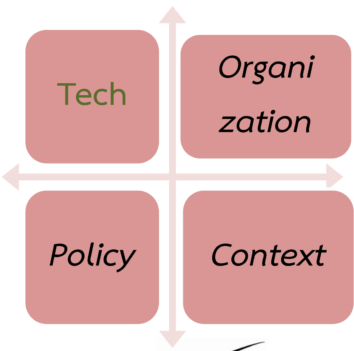
Context: The Context of Smart Mobility
This aspect is often a critical point of success or failure in developing smart mobility. As mentioned earlier, the image of smart mobility development often revolves around installing three or four types of technology that are frequently repeated. Many times, the development of smart mobility appears to be an investment in technology. If a city’s smart mobility is merely a response to technology installation, that is a critical failure.
Conversely, if the government, as the leader in smart city development, collaborates with the business sector and is clear about the objectives of development, focusing on what the solid goals are to address the needs of the public, and if budgets are being allocated to achieve those goals, then even if the technology or methods may falter, the collaboration will have a clear purpose that can sustain the development of smart mobility.
For example, in the development of electric vehicles, the government must clarify whether the goal is to develop the electric vehicle industry, promote the adoption of electric vehicles, address pollution issues, or enhance knowledge in new technologies. It is evident that these various objectives relate to different ministries, such as industry, energy, environment, and science and technology. With such diverse objectives, confusion and/or conflicts may arise in implementation. However, if there is alignment towards a common direction, as seen in China, it can lead to success. For instance, developing electric buses for public and public transport systems (addressing environmental concerns) while strengthening and growing domestic business mechanisms (addressing science and technology) and subsequently expanding to passenger cars (addressing industry and energy) can comprehensively meet the needs of both the public and businesses.
Policy: Policy Innovation
Often, we see the image of smart mobility development as a pathway to a dream city. However, in reality, smart cities/smart mobility are like any innovation that reaches consumers; everything carries risks. Risks often arise from various causes, many of which are not technical. Lessons from different cities clearly indicate that transitioning towards better quality of life or environmental conditions becomes challenging without voluntary change if the economic ecosystem and living behaviors remain unchanged. It is the government's crucial role to intervene.
Thus, not only must the government be clear about its objectives and define the context of smart mobility to garner cooperation from the public and business sectors, but it must also create policy innovations that intervene in various ways, from public policy that effectively shifts societal behaviors from traditional living patterns, to using budgets to support consumer markets, preventing collusion, and sometimes stepping in as a service provider for unprofitable services, as well as investing to sustain future infrastructure, such as connecting infrastructure not only in urban areas with current customers but extending to the outskirts for future city expansion, and supporting the adoption of innovations in emerging businesses or acting as a risk bearer for the private sector in certain operations.
Organization: Organizational Innovation
With the rapid changes in technology alongside societal and economic adjustments, the role of the government in managing smart city development must also evolve. An important reality is that such expectations genuinely anticipate changes within the government, which traditionally operates without competition. The bureaucracy tends to focus on continuity and stability, which contradicts the need for rapid adjustments to achieve expected outcomes in the innovation process like smart mobility.
So, what changes are expected in the role of the government? Traditionally, the government has been responsible for providing transportation services in the form of public administration. Subsequently, the government is expected to shift towards public management to manage services that have become diverse with multiple players, known as enabling. Today, to achieve the goal of becoming a smart city, the government must reach the ensuring role, being agile in adapting to ongoing tasks to ensure that public-beneficial objectives are achieved. Currently, the prevalent model in smart city development is public-private partnerships (PPP), often involving educational institutions as intermediaries to facilitate mutual understanding and knowledge sharing among smart city developers both regionally and internationally.
Smart Mobility – The First Step to Take
This article aims to convey to readers the glocal characteristics of smart city and smart mobility development trends, as well as the components that can be found, the feelings that can be experienced with smart mobility, and importantly, to communicate that there is much more at both the public and national levels that will be missed if our city does not embrace smart mobility.
In today’s innovative society, even though we are close to innovations as many believe, creating real innovation is not easy. To create innovation in smart mobility requires a shift in the thinking and working methods of government oversight, along with changing the behaviors of the people in society, of which we are a part. This is undoubtedly challenging for smart mobility, but on the other hand, with globalization, if we do not change, we will be changed without even realizing it.
To illustrate a scenario, the technology being developed will inevitably permeate from companies eager to sell their products. Once it becomes a transportation service, those who hold the business value and data, sometimes referred to as the currency of the innovation society, may not be Thai businesses. In this scenario, we would not want to repeat the era of oil vehicles where we were major manufacturers but essentially just assemblers (with most business value flowing to parent companies). When it comes to smart mobility, we would not want to have smart services nationwide but merely be operators (with business value residing with project management companies). Alternatively, the barriers of law and/or societal behaviors may hinder the entry of smart mobility, and cities that continue to grow will lead themselves into more severe urban issues.
Despite the technology components of smart mobility being visible throughout the country, no one has stepped up to tailor it to fit our cities or our country.
References
[1] Giffinger, R., et.al. (2007). Smart Cities: Ranking of European Medium-Sized Cities. Vienna, Austria: Centre of Regional Science (SRF), Vienna University of Technology.
[2] “Smart cities in Southeast Asia”, McKinsey Global Institute, July 2018
[3] Taewoo Nam and Theresa A. Pardo. 2011. Smart city as urban innovation: focusing on management, policy, and context. In Proceedings of the 5th International Conference on Theory and Practice of Electronic Governance (ICEGOV ’11)